Gray hair planning
Gray hair blending ideas: a free cover-or-grow-out plan
Choose between full coverage, a softer blend, and deliberate grow-out by mapping your real pattern, maintenance limit, contrast, and transition timeline.

Gray hair blending ideas become useful only after you decide what you want the next six months to feel like. You can keep opaque coverage, soften the border between colored and natural hair, or let the silver pattern grow without adding more color. None of these paths is automatically younger, more authentic, more professional, or more flattering. They simply distribute contrast, appointments, cost, uncertainty, and visible change in different ways. The right choice is the one that matches your real pattern and the amount of maintenance you willingly repeat.
This free planning guide helps you compare those paths without prescribing a dye formula or attaching an age rule to gray hair. You will map where silver appears, define acceptable root contrast, estimate the transition you can tolerate, test the look in ordinary light, and prepare a focused consultation. Hair Muse is free to download if you want to visualize broad color directions on your own photo; some previews or usage levels may require an in-app purchase. A preview cannot diagnose hair condition, predict chemistry, guarantee coverage, or replace product instructions and professional assessment.
Map the pattern before choosing a percentage
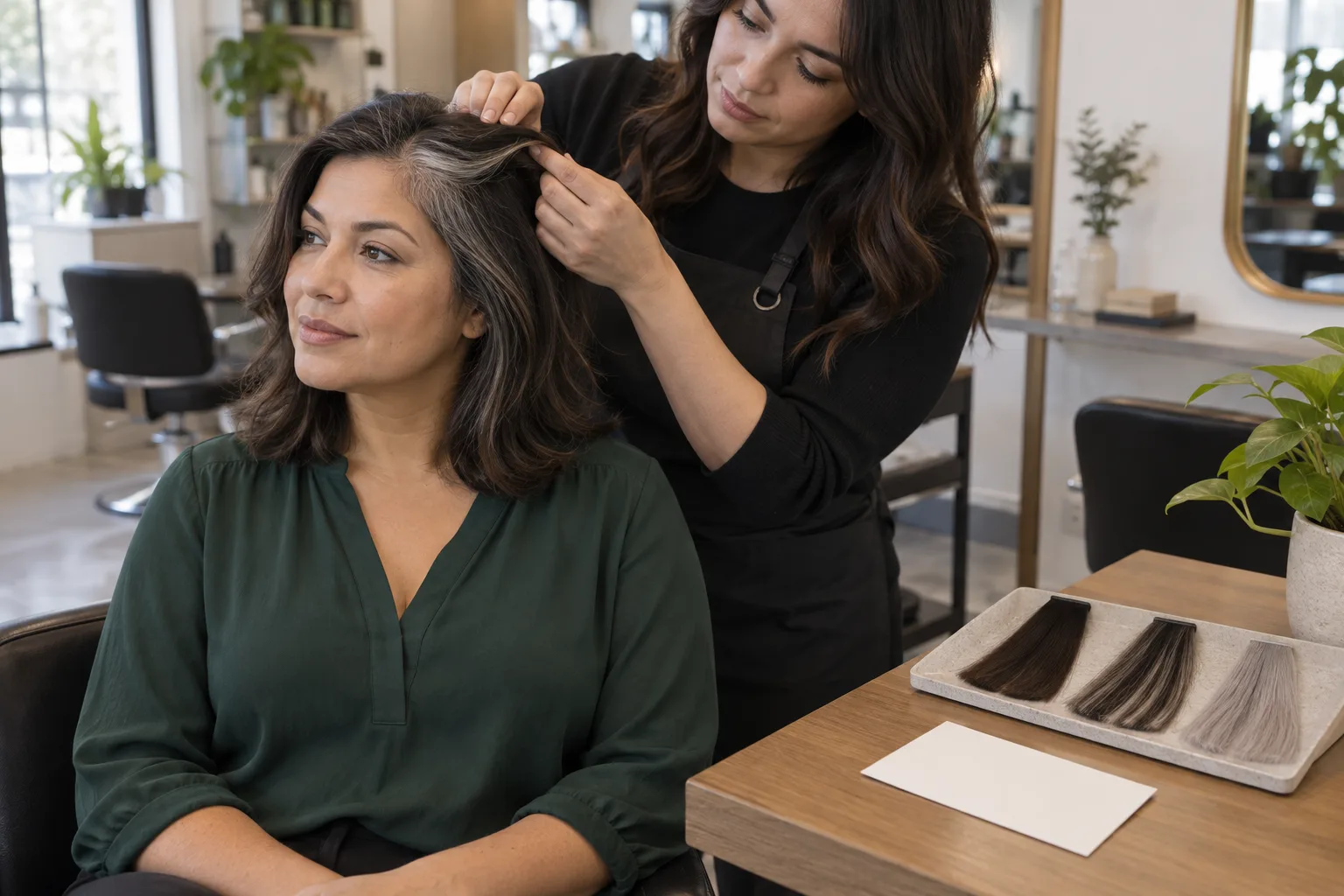
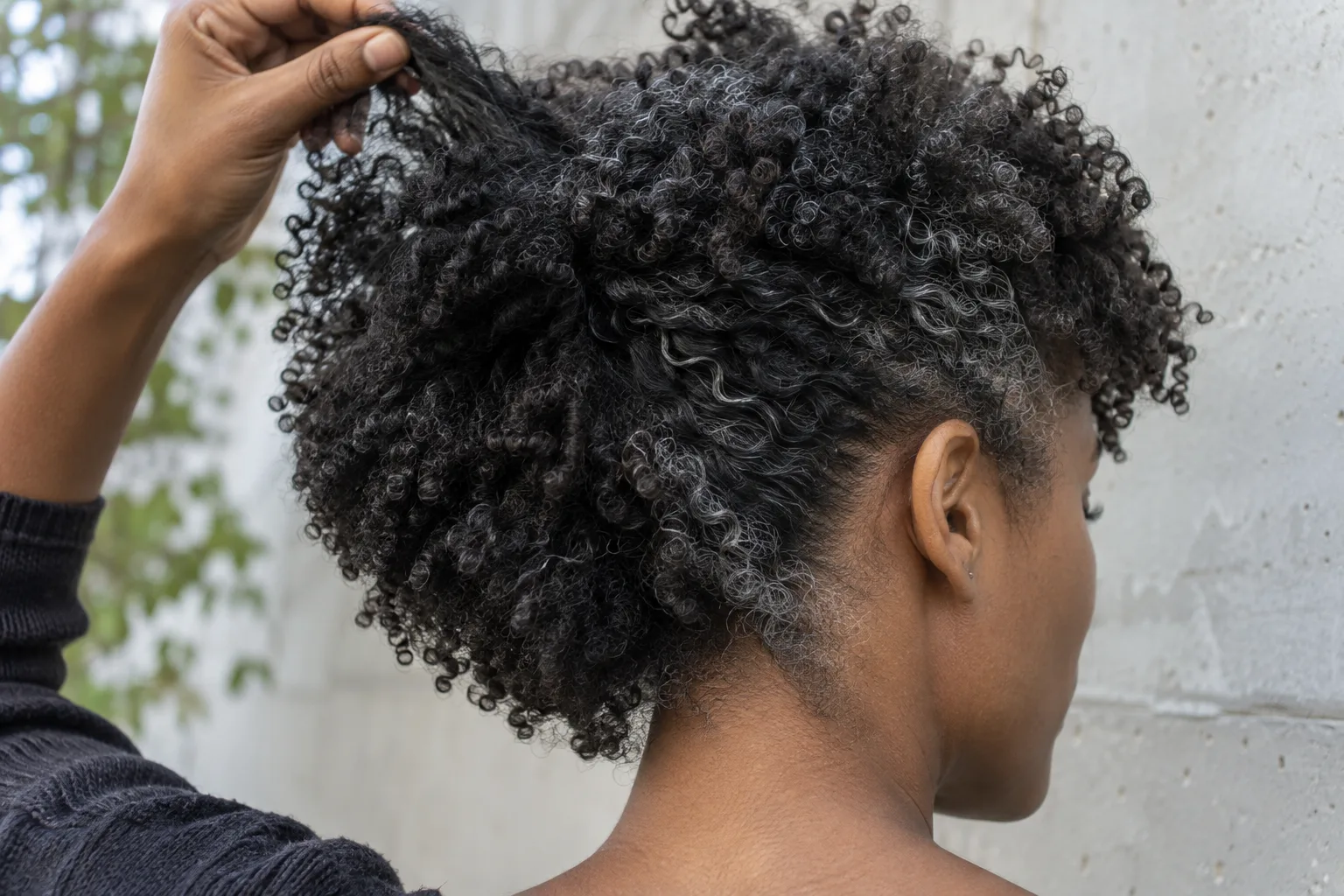
Do not begin with a guessed percentage of gray. Ten percent concentrated at the temples creates a different visual decision from ten percent scattered through the interior, and a bright front streak behaves differently from a uniform salt-and-pepper pattern. Stand in soft daylight and take simple photos of the centre part, both temples, crown, back, and the way you usually wear the hair. Record where silver is densest, where the natural dark color remains strongest, and whether older artificial color is still present through the mids and ends.
Next, observe the pattern in two ordinary hairstyles. Wear the hair down, then use the ponytail, bun, tuck, or parting you rely on most. A hidden interior section may become prominent when the hair is tied back, while a temple streak may disappear under a side part. Your plan should work in daily movement rather than only in a carefully arranged front portrait. Note any zones you actively enjoy and any border that bothers you. The goal is not to judge the gray; it is to locate the contrast you are actually deciding about.
Gray and white strands can also differ in texture and reflect light differently from pigmented neighbours. That does not mean every silver strand is coarse or unruly. Judge the hair in front of you: how it bends, feels, dries, frizzes, or lies against darker strands. If a sudden or unusual change concerns you, discuss it with an appropriate health professional. The American Academy of Dermatology explains common reasons hair turns gray and notes that a dermatologist can assess medical concerns; a beauty plan should not pretend to diagnose them.
Use gray hair blending ideas to compare three paths
Full coverage aims for a more uniform pigmented result and a clear reset at the roots. It may suit you when you genuinely prefer your previous color and accept regular retouching. The key question is not whether coverage is allowed or unfashionable; it is whether the visible regrowth line and appointment rhythm fit your priorities. Ask how resistant areas, previous color, texture, and condition affect the plan. Do not assume that one home shade or one salon formula behaves identically across every part of the head.
Gray blending reduces the contrast between silver and pigmented hair instead of trying to erase every light strand. Depending on the starting point and professional plan, the visual direction may use lighter and darker dimension, a sheer tonal shift, or carefully placed brightness. The phrase describes an outcome, not one universal technique. A convincing blend echoes the real distribution and leaves room for new growth. It still changes over time and may require toning, shaping, or other upkeep, so ask what the result should look like after eight or twelve weeks rather than only on appointment day.
Deliberate grow-out means stopping new coverage and planning around the border between natural roots and older color. It can be the least chemically involved future path, but the visible transition may take time because hair grows from the scalp while old color remains on the length. You can let that border move untouched, adjust the haircut over time, or discuss a professional transition service. Avoid turning one impatient week into an emergency correction. Your current length, prior lightening, fragility, contrast, and willingness to cut determine which route is sensible.
Choose by maintenance, contrast, and uncertainty
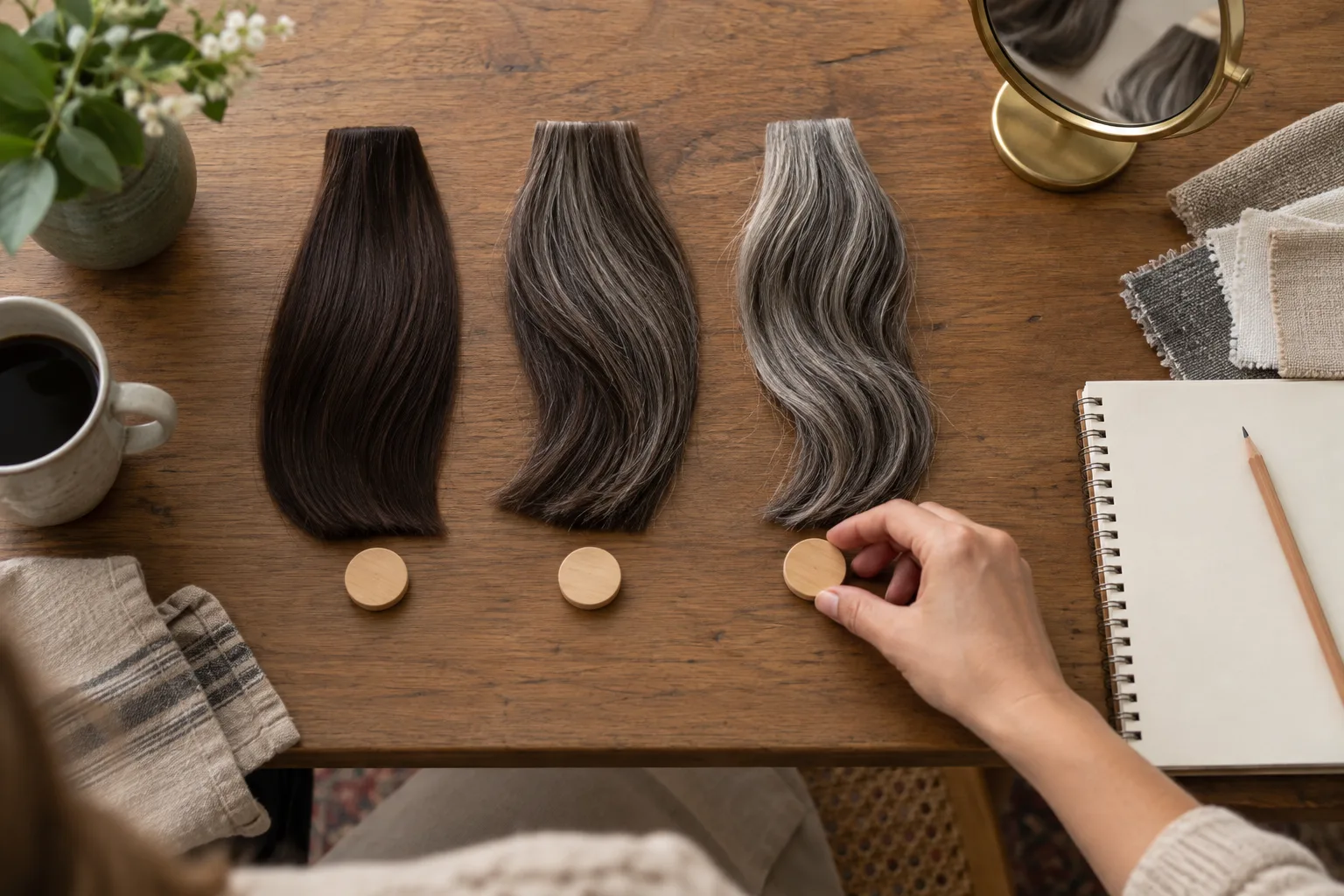
Build a decision table with three columns and four rows: preferred appearance, appointment rhythm, acceptable root line, and tolerance for a changing transition. Give each path an honest sentence. Coverage may offer the most uniform first impression but the clearest new-growth border. Blending may soften contrast but still require a customized process and future tonal care. Grow-out removes the promise of continued coverage but exposes a moving boundary until enough natural length appears. These are not fixed rules; your starting color and plan can change the balance.
- Coverage: Do I prefer uniform color enough to maintain the root line?
- Blending: Which zones need lower contrast, and how will the blend age?
- Grow-out: Can I accept a visible transition for the required length of time?
- All paths: What protects condition and respects previous chemical history?
Preview the direction without mistaking it for chemistry
A visual preview can help with broad relationships: darker uniform coverage, a mixed salt-and-pepper impression, a brighter silver front, or the amount of contrast around the face. Use one sharp, neutral portrait and keep haircut, part, expression, exposure, skin, makeup, and background stable. Compare one color direction at a time. Reject any result that changes density, hairline, texture, face, or lighting enough to make one option look artificially better. The image is useful only when the color relationship is the main variable.
If you use Hair Muse, save no more than three options and label each with the decision it represents. For example: ‘keep darker coverage,’ ‘soften the temple border,’ and ‘show more natural silver.’ Do not ask the preview to select developer, toner, highlight placement, processing time, or a correction route. It cannot inspect strand strength, porosity, old pigment, scalp sensitivity, or the behaviour of resistant gray. The method for comparing one change at a time can help you keep the visual test clean even if you use another planning tool.
A preview can compare color relationships. It cannot prove coverage, condition, safety, fading, or the exact result of a chemical service.
Check the choice in ordinary light and movement
Silver hair can look bright white in direct sun, muted gray in open shade, warmer under household bulbs, and nearly disappear against reflections on dark hair. Colored mids and ends may also shift differently from natural roots. Review your source photos and any preview in neutral daylight, the indoor light you use most, and the environment where the decision matters to you. Keep screen brightness stable. You are checking whether the broad contrast feels comfortable, not trying to predict a salon formula from pixels.

Plan the transition line instead of hiding it
If you are growing out permanent color, measure the natural root length at the centre part and temple once a month in the same light. Do not interpret every photograph as a progress score; use it to understand where the border sits relative to the haircut. A shorter shape can remove old color sooner but may be a larger style change than you want. Keeping length preserves options but leaves more colored hair to travel downward. Choose haircut timing and color timing together rather than solving one with an impulsive change to the other.
Take a clear brief to a qualified colorist
Bring photos of the part, both temples, crown, back, and your everyday tied style, plus the original and no more than three visual directions. State the outcome before the technique: full coverage with an accepted retouch rhythm, a softer border that leaves some silver visible, or a deliberate move toward natural gray. Add your previous chemical history, maximum appointment frequency, budget range, desired haircut length, and condition boundary. Ask what can be achieved now, what may require stages, and how the result should look as new hair grows.
Ask the colorist to examine texture, density, resistant areas, porosity, damage, and the difference between natural roots and treated lengths. Discuss whether a strand test is appropriate and what maintenance each route actually needs. A professional may advise against the image, alter the depth, or recommend a slower transition to protect the hair. That is useful information, not a failed consultation. The purpose of the brief is to reveal trade-offs before a chemical service rather than demand that synthetic strands be copied.
Hair dye can cause reactions. The NHS advises following product instructions and the recommended test guidance and stopping if you become unwell or react. A previous trouble-free service does not turn an image preview into a safety assessment. Follow the instructions for the exact product and seek appropriate medical or professional advice if you have a reaction or concern. Finish by writing one preferred path, one fallback, the maintenance you accept, and the date when you will review the choice. A good gray-hair plan gives change a direction without pretending it can remove uncertainty.