
A calmer morning for curls
Refresh curls without restarting your morning
A flattened section does not always call for another full styling routine. Decide what needs changing, try a small local reset and judge the hair after it dries.

You want to refresh curls because one side looks flattened after sleep, but the rest of your hair is still comfortable and recognizable. It is tempting to wet everything, repeat yesterday's products and keep adjusting until the mirror looks right. That can turn a small morning task into another complete styling session. Begin by naming what has actually changed: one front curl, the outline at the back, or a wider loss of shape that a brief touch-up may not solve.
This routine is for existing waves, curls and coils between washes, not for creating a new texture or replacing cleansing. You can leave good sections alone, make a local correction or decide that washing fits better today. There is no universal spray count, compulsory extra cream or promise of identical wash-day hair. The photographs are editorial illustrations of the handling choices, not before-and-after evidence or a guarantee that every texture responds the same way.
Refresh curls only where the shape has changed
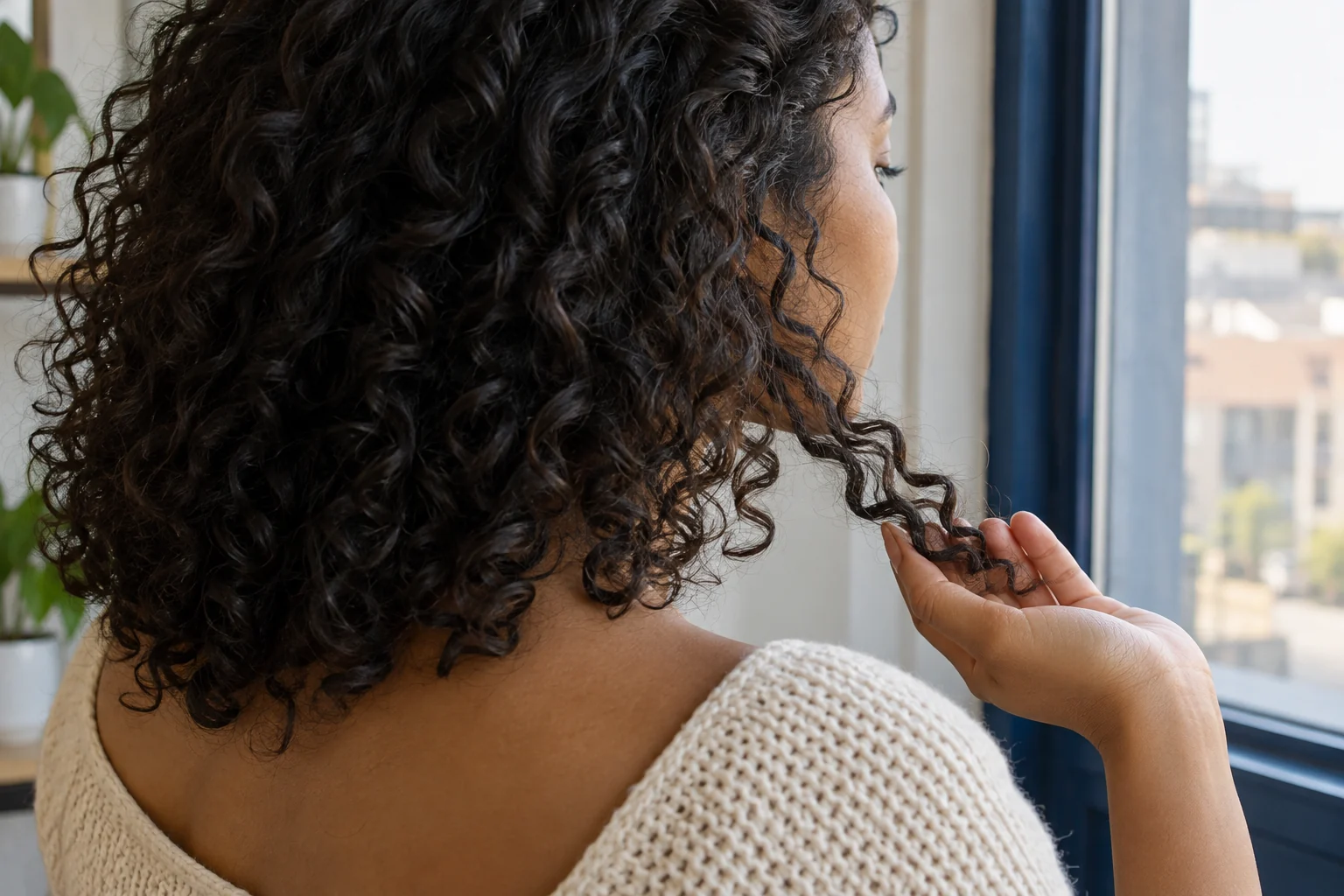
Look at your dry hair before putting water or product on your hands. Check the front, both sides and the back in ordinary light. A little softness at the surface is not automatically a problem. Ask whether the shape interferes with what you want to do today: wearing your hair loose, keeping it away from your glasses or leaving a particular curl group intact. Choose a practical aim rather than trying to erase every irregular strand.
Separate three decisions. If the hair already works, do nothing. If only a few groups have changed, a local refresh may be enough. If most of the style needs rebuilding or you want a clean starting point, allow for a fuller routine instead. None of these choices is a failure. The useful comparison is between the time and handling each option needs today, not between your own morning hair and somebody else's carefully arranged photograph.
Choose one section and a sensible stopping point
Start with an accessible section that represents the problem, rather than automatically beginning at the crown. Bring it into view without pulling it away from the head. Leave the surrounding groups alone while you decide what this one needs. A loose division into front, sides and back can keep the work organized; it does not require tight clips or neat salon partings. Check that you can see your hands and release the section comfortably.
Set the scale of the task before starting. Perhaps you only need the front piece to sit beside your face again, or the back outline to feel less compressed. Include drying in the time available. If you have to leave immediately, soaking a larger area may create a task you cannot finish. Keep a comfortable alternative hairstyle in mind so a single stubborn section does not become a reason to keep adding steps.
Use water as a local trial
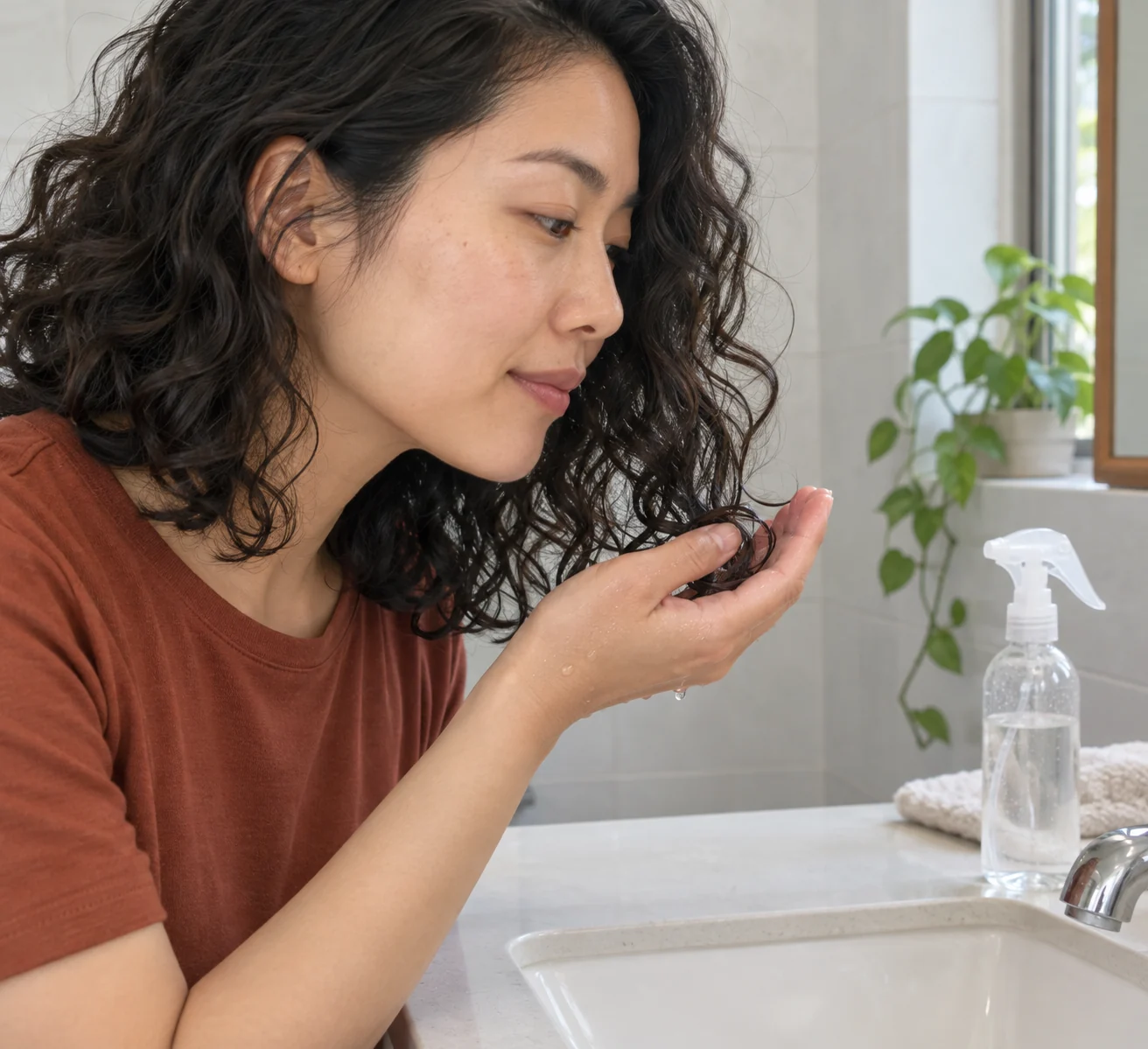
Schwarzkopf's curl-refresh guide describes light misting as an approach between washes. For a local trial, choose the handling that gives you better control over the selected section. With clean damp hands, touch or gently cup the group you want to reshape. With a clean water bottle, direct a light application at that area, away from the face. Pause to see how the section feels instead of trying to reach a prescribed number of sprays.
Aim for enough dampness to arrange the chosen group, not an automatic full soaking. The right amount depends on the starting hair and the work you intend to do. If a fine mist only wets the outer surface of dense hair, make the section more accessible rather than repeatedly spraying the same outside layer. Use plain water for this first trial; you do not need to invent a bottled mixture of conditioner, oil and fragrance.
Let the existing curl group guide your hands
Support the section from underneath and move only as much as the chosen shape needs. You might gently cup the ends, smooth a small loose group between relaxed hands or guide an existing curve back into place. Release it after the movement. You are not required to finger-coil the whole head, make every group equally sized or pull a tight curl into the outline of a loose wave. The rest of your hair remains a useful reference.
Keep the distinction between arranging and detangling clear. If your fingers meet a knot, stop that movement rather than forcing it through. A flattened curl and a tangled section are different tasks. Do not increase pressure because the first attempt looked less dramatic than a tutorial. If the section needs more preparation, deal with it separately instead of using repeated twisting, tugging or wetting as a substitute for a manageable starting point.
Add product only for a named job
Water may be enough for the change you want, so an extra product is optional. Before adding one, identify its job: a little more hold in a loose area, for example, rather than a vague hope that more layers will make the whole style last. Read the directions for that actual product. A rinse-out conditioner, wash-out mask and leave-in styler do not become interchangeable because a social video uses them during a refresh.
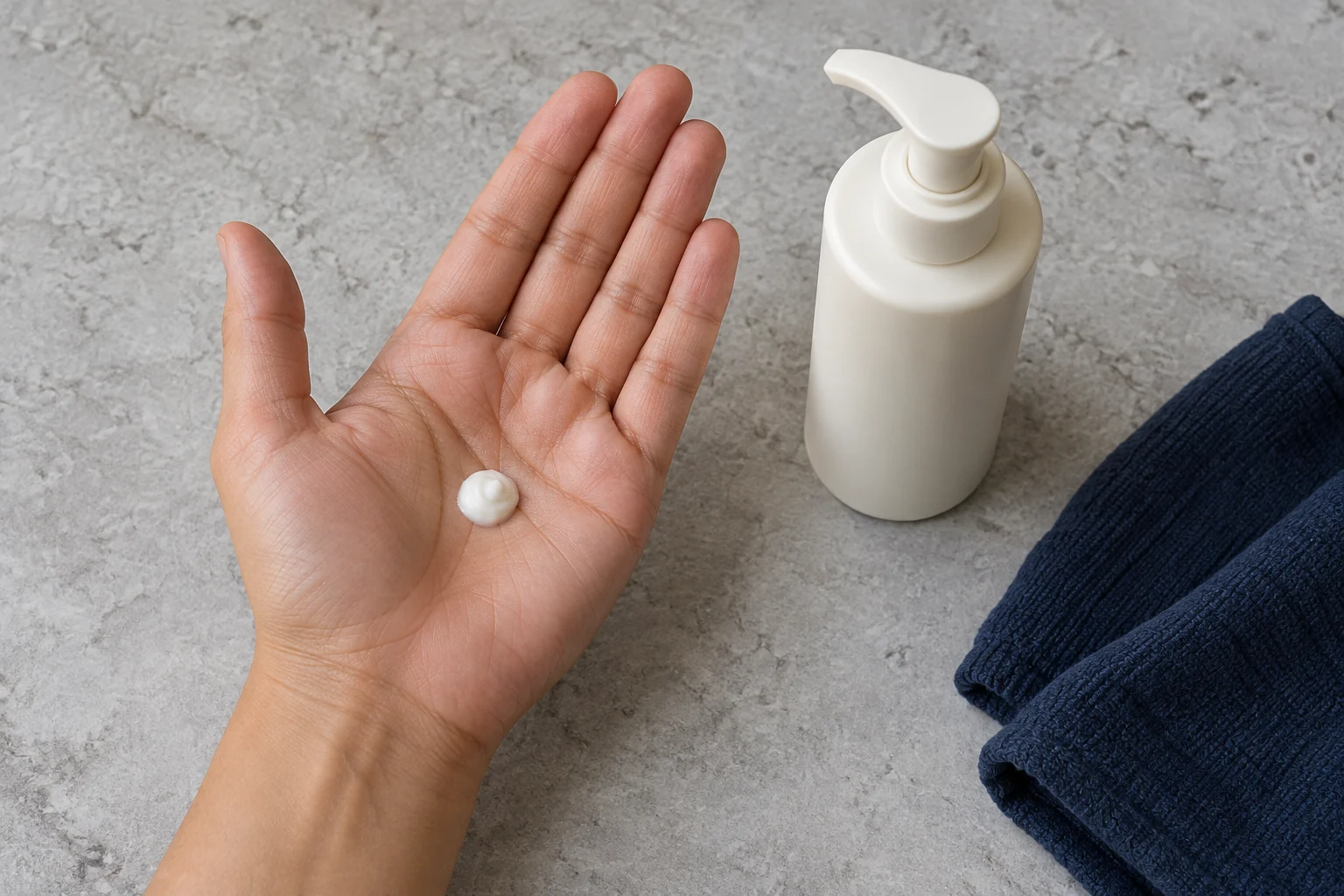
If the directions permit your intended use, begin with a small controllable amount on the selected section. Leave the rest untreated until you can assess the finish. Do not copy a full wash-day dose onto hair that already carries yesterday's styling. Our mousse guide explains how to control an addition without treating pump sizes as universal measures. Keep cosmetic products in their original packaging and follow their instructions rather than storing an improvised diluted blend.
Give the section time to dry before judging it
Once the group is arranged, let it hang without holding it in its preferred position. Put the bottle down and do another part of your morning routine. Repeatedly squeezing, separating or checking the same damp curl makes it difficult to tell whether your first choice worked. Avoid using a collar or a tight accessory to keep wet lengths in a shape you hope they will retain. Choose a drying method you already know suits your routine.
Assess the dry result from the same ordinary viewing distance you used at the start. Does the section sit comfortably beside the untouched hair? Does it move normally when you turn your head? If the selected product leaves a firm cast, softness is a separate later decision; our gel-cast guide covers releasing dried hold gently. Do not keep adding water while also trying to judge the final dry finish. The stop point should be clear enough to recognize.

Keep knots and cleansing outside the quick touch-up
The American Academy of Dermatology advises avoiding dry brushing of curls and describes a wetter, conditioned approach to detangling. A light local refresh is not that full detangling step. If a knot blocks the section, pause the touch-up and choose an appropriate separate method. Pulling harder will not turn a knot into a flattened curl.
Likewise, a nicer outline does not mean the scalp has been cleaned. If washing is what you need today, make room for it instead of covering the decision with more styling layers. Do not use a desired number of days between washes as a competition. Persistent discomfort deserves professional advice. This guide offers a way to organize a cosmetic touch-up, not a diagnosis or a reason to postpone care that your hair or scalp needs.
Fit the refresh around the day you are having
Choose an endpoint that fits your clothes, plans and available time. If a scarf, collar or commute will soon change the outline again, concentrate on comfort and the area that matters most to you. You do not need a more elaborate finish just because you can create one. On another day, you may have time for a wider reset. Treat those as different practical choices rather than evidence that your hair has suddenly become unmanageable.
Waves, curls and coils can also need different amounts of rearranging within the same head. Follow the section in front of you instead of applying a category rule to every part. A front group that falls easily may need less handling than a compressed area at the back. You can accept those differences. A useful morning routine preserves the texture and movement you want without making uniformity its main target.
Keep a small record of what actually helped
After the hair is dry, note the starting problem, the area you changed and whether you used water alone or one permitted product. Include what you left untouched. You do not need a spreadsheet or a photograph of every curl. A short observation such as front only, damp hands, no extra cream is enough to make the next attempt more deliberate. Judge convenience and comfort alongside the visible finish.
On a later morning, change one part of that approach if necessary. Choose a smaller area, allow more drying time or skip an addition that felt unnecessary. If the same section repeatedly needs a complete rebuild, discuss the broader routine with a stylist instead of collecting more urgent fixes. The aim is a repeatable decision: leave it, refresh locally or wash. A morning that ends with comfortable hair and time to leave is a useful result.