
Everyday styling
How to use hair mousse without guessing the dose
Choose between root lift and curl definition, distribute a controlled amount, and judge the finish only after the hair has dried.

Learning how to use hair mousse starts with a smaller question than how big a ball of foam should be: what do you want it to do? Supporting the roots of a fine bob and helping natural curls hold their arrangement are different tasks. Choose one goal, read your product's directions, and work through accessible sections rather than depositing everything on the surface. A light-looking foam can still leave a noticeable styling finish, so its airy texture is not a reason to keep adding more.
You can follow this routine without an app, a new haircut or a collection of products. It is a practical application guide, not a brand ranking or a tested promise of volume. The separate illustrations show portions, access and hand movements; they do not demonstrate one person's transformation. Your formula, existing products, density and drying method all matter. Keep them familiar on the first attempt so you can tell what the mousse changes, and follow the actual package whenever it differs from a general tutorial.
How to use hair mousse for one clear styling goal
Decide whether today's priority is lift near the roots, more organised waves, or support for an existing curl pattern. Those goals suggest different places to distribute the product. Root-focused styling does not automatically require coating every tip; curl styling should not leave the underneath lengths untouched. Describe the result in ordinary terms, such as a front section that does not fall into your eyes. A specific job is easier to assess than an instruction to make all your hair look better.
Check that the mousse is intended for that use and your hair type. A firm-hold curl formula and a flexible volumising foam need not feel alike. Mousse is a styling option, not a replacement for washing or conditioning, and it cannot make naturally straight hair behave exactly like a curl reference. If your lengths already feel overloaded before styling, reconsider the conditioning steps separately instead of asking another layer of foam to correct everything. Keep the styling decision small enough to understand.
Let the bottle set the method, not a universal handful
Read the dispensing position, any shaking instruction, the recommended hair condition, where to apply and whether to leave it in. Check the warnings as well. Aerosol cans and pump foams are not interchangeable mechanisms, and a photograph of an upside-down can is not an instruction for every dispenser. Use the labelled method, keep the nozzle away from your face and do not treat the product as a scalp treatment unless it is explicitly intended for that purpose. Store it as directed when you finish.
For a concrete example, John Frieda's US Curl Reviver directions specify a small amount in the palm, even distribution through damp hair, no rinsing, and either natural drying or a diffuser. That example explains one product's sequence, not our endorsement or a rule for every mousse. Follow the quantity guidance on your own container and dispense controllably rather than copying a golf-ball or tennis-ball comparison from another formula. If the label is unclear, ask the manufacturer rather than inventing an exact dose from hair length alone.
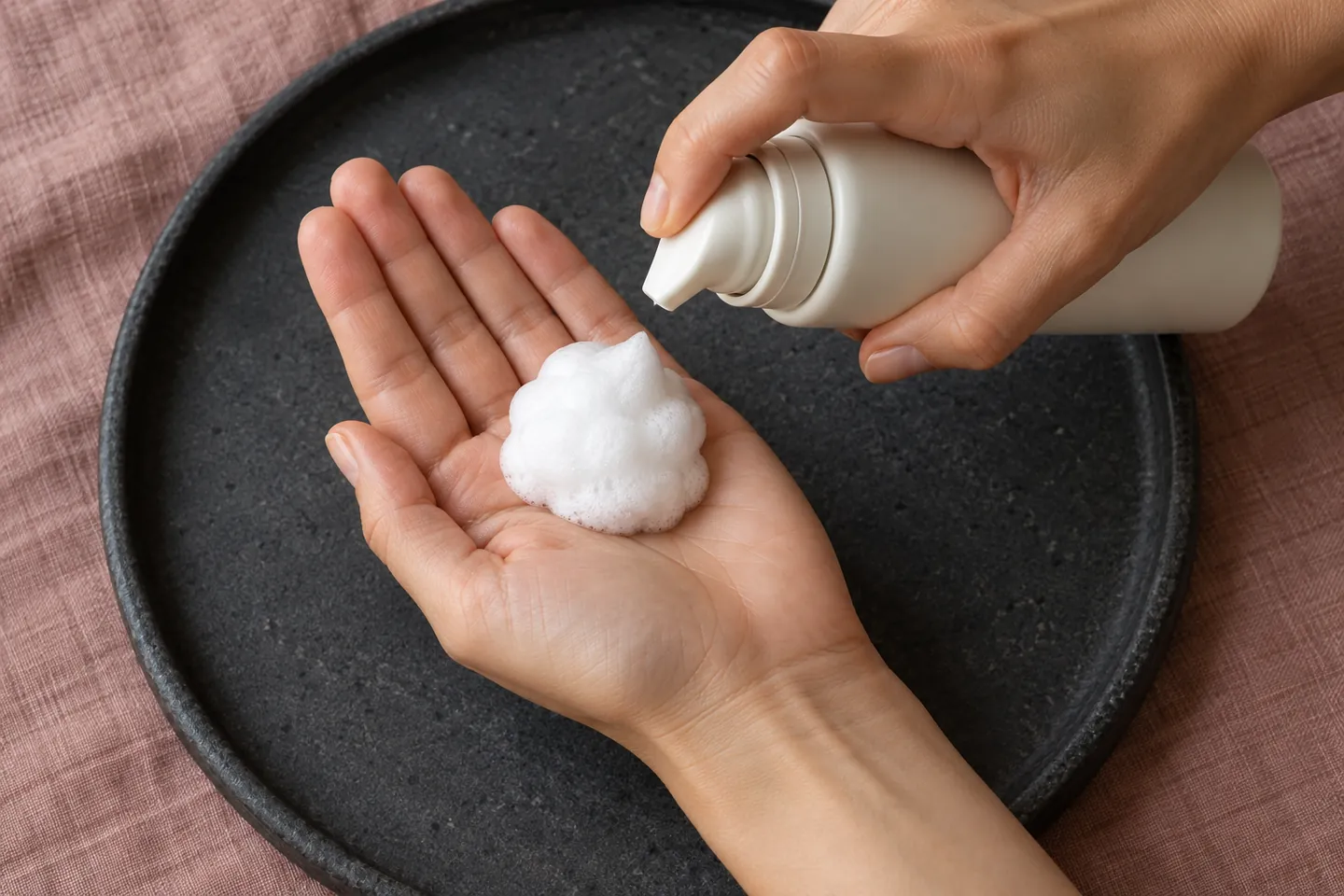
Reach the underneath hair before the surface dries
When the instructions call for damp hair, begin after your normal wash and gentle moisture removal, not while water is continuously dripping from the ends. Do not rub vigorously to reach a supposedly perfect percentage of dryness. Detangle using a method suited to your texture before trying to spread styling foam through knots. A mousse application is not the moment to pull a brush through resistance. Keep the section manageable and stop if your fingers cannot pass without tugging.
Spread the permitted portion over your hands, then apply it to the chosen area in small sections. Long or dense hair may need the upper layer held out of the way so you can reach underneath. Work from an accessible lower section towards the top instead of spending the entire portion on the first handful. Use the product's stated application area; do not massage the scalp simply because you want root lift. Check the back by touch for missed areas without repeatedly raking apart texture that you have already arranged.

For waves and curls, support the shape you already have
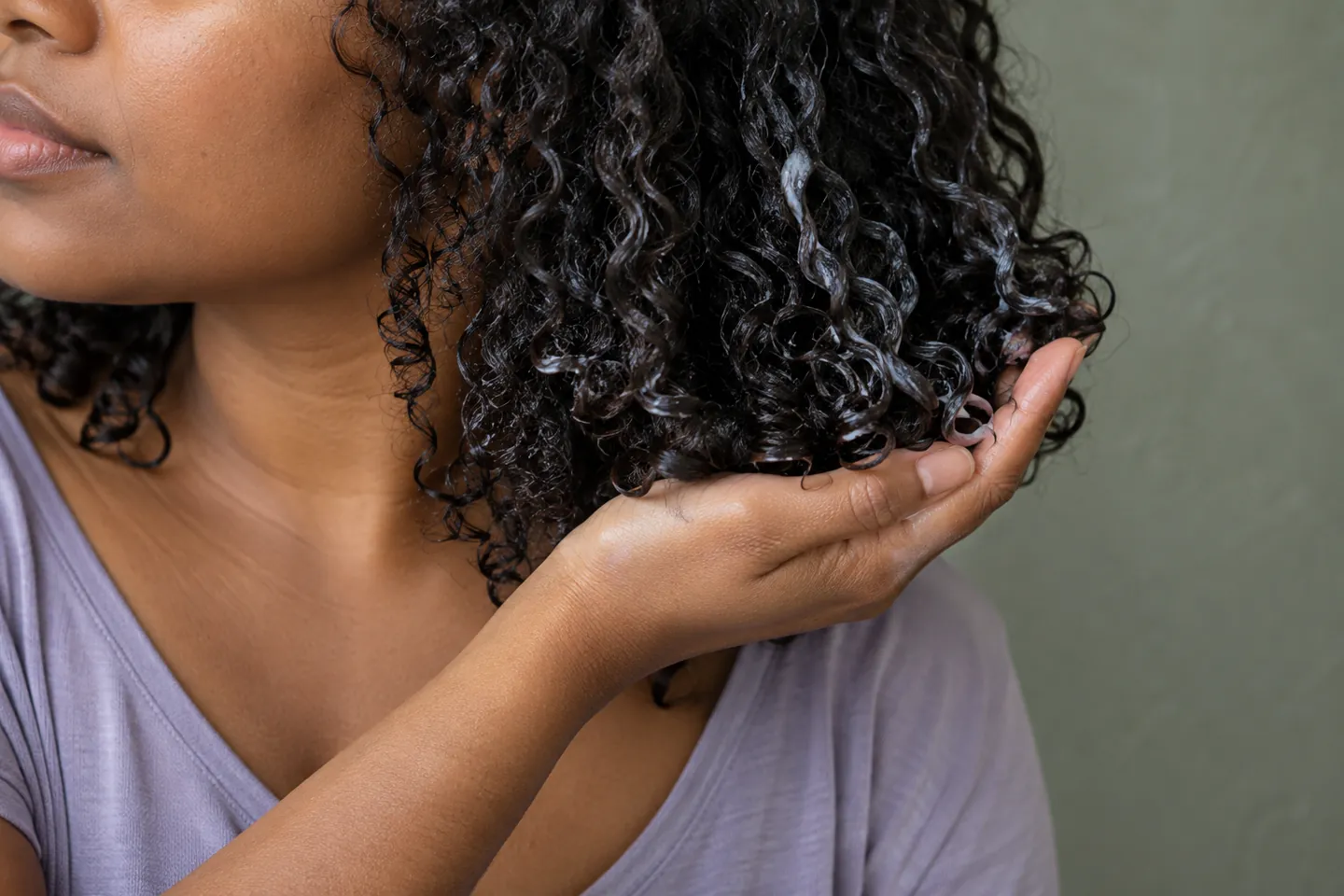
If your directions suit curl styling, distribute the product through the intended lengths before repeatedly scrunching the ends. Cup a group of hair in your open palm, lift gently towards the head and release. You are encouraging its existing arrangement, not squeezing water out or stretching the roots. Choose a comfortable upright position; hanging upside down is not compulsory. Work with the curl groups that form naturally rather than trying to turn each strand into a matching spiral.
Check more than the front. The underside and back can receive much less product if you only look in a forward-facing mirror. Once the sections are arranged, leave them alone while they dry as far as practical. Constantly separating damp groups makes it harder to judge the original application. Do not add another full portion merely because a wet curl looks different from the final reference. The useful comparison comes later, when you can see the whole dry outline and feel whether the chosen finish suits you.
For fine hair, choose the area before chasing volume
Fine describes the individual strand, not automatically how much hair you have. Separate that from density when deciding how many sections you need. If the goal is a lifted front or crown and the formula supports root application, direct the labelled amount towards those hair sections instead of saturating all the ends. Keep your fingers off the skin where possible. A concentrated patch on top can look different from an evenly distributed application even when the total amount is the same.
Use your familiar part and usual drying approach for the first attempt. Changing the part, adding rollers and trying a stronger foam all at once gives you several possible explanations for the result. Mousse does not supply a haircut, thicker new strands or a guaranteed all-day silhouette. If it leaves your bob too separated for your taste, that is useful feedback about the finish. You may prefer a smaller labelled application area, a different hold level or no mousse on an ordinary day; none of those choices is a styling failure.
Finish drying before deciding what needs changing
Use a drying method permitted by the product and suited to your routine. Natural drying and diffuser drying are different processes, not interchangeable promises of the same result. If you use a dryer, follow its instructions and keep the heat conservative. The American Academy of Dermatology recommends gentle moisture absorption, limiting excessive heat and low or medium heat settings. Do not assume every mousse provides heat protection; check the actual label and any additional product instructions instead of inferring protection from the word styling.
Wait until the hair is fully dry before judging stiffness, definition or apparent volume. A damp section can feel cool and look more compact than the final shape. If a dry styling coating feels firmer than you want, gently cup and release the lengths with clean hands rather than brushing through forcefully. Stop if hair catches. You do not have to remove every trace of hold, and extra oil is not a compulsory finishing step. Decide whether the resulting feel is something you actually want to repeat.

Troubleshoot residue without layering on a rescue routine
If the dry result is sticky, heavy or patchy, note where the problem appears. A tacky underside may still be damp; one coated front section suggests uneven distribution; visible residue may involve the amount or the combination with other products. These observations are clues, not a diagnosis of an ingredient problem. Do not keep adding foam, oil and spray until the original application is impossible to recognise. If you dislike the finish, cleanse according to your normal needs and start again another day.
For the next attempt, change one factor: portion within the directions, access to underneath sections, or another product used alongside it. Do not increase heat to force an overloaded style into place. Stop using a product that causes irritation and seek professional advice for persistent scalp symptoms. White particles alone do not identify dandruff, and burning is not evidence that a styling product is working. A routine should be tolerable as well as visually useful; no hairstyle needs you to ignore discomfort to complete a trial.
Keep the useful version easy to repeat
Make a short note of the product, hair condition, approximate labelled portion, area covered and drying method. Add one sentence about the fully dry feel. You do not need a photographic experiment or a timed endurance claim. Repeating a familiar version on an ordinary day tells you more about whether it fits your routine than rebuilding a tutorial for a special occasion. Allow yourself an alternative that uses no mousse when time or the desired finish is different.
If you later gather the dry lengths, choose an accessory that fits rather than relying on product to make an unsuitable clip hold. Keep that fastening decision separate from mousse application. The aim is a manageable sequence you can repeat and undo, not a surface that never moves. Your notes should help you simplify the next wash day, not create another list of products you feel obliged to buy.