Everyday hair care
Hair mask vs conditioner: 5 checks before you choose
Choose a useful conditioning step by its purpose, application area, timing, rinse instructions and place in your routine—not by the size of the jar.
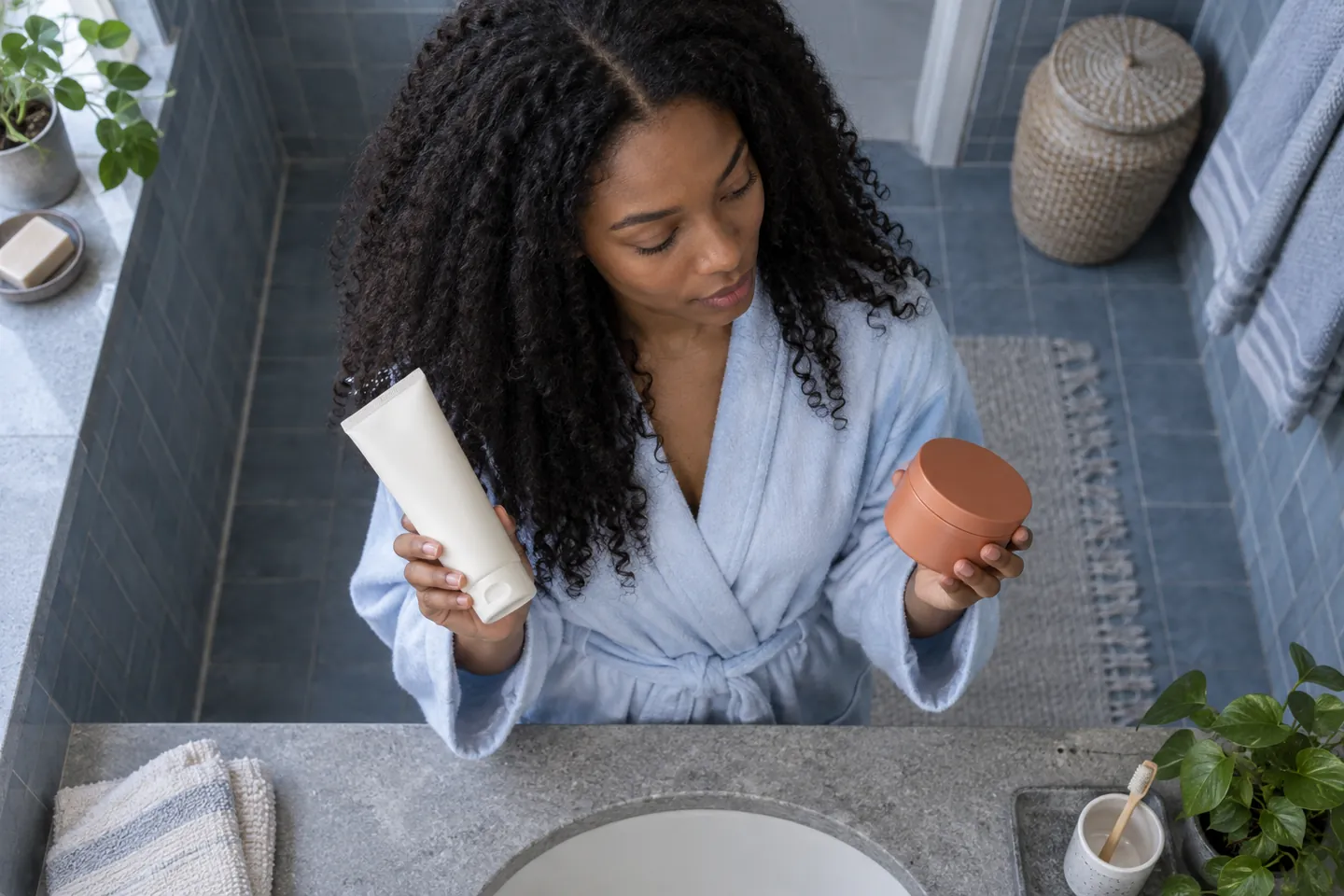
Hair mask vs conditioner comes down to use: regular conditioning after shampoo, or the particular treatment mode a mask describes. These uses can overlap; a mask is not automatically stronger, better or an additional step. The practical question is what each product asks you to do, which part of your hair needs attention and whether another step actually adds anything. A bigger jar, thicker cream or longer suggested pause does not by itself tell you how the finished routine will feel.
Use the five checks below to choose a clear plan before getting your hair wet. This is not a product ranking, an ingredient analysis or a treatment for scalp problems. You do not need a hairstyle app or a new collection of products. The photographs illustrate separate actions, not a tested formula or a promised transformation. Keep the directions for the exact product in your country in front of you; advice for a similarly named product is not a substitute.
Hair mask vs conditioner starts with the job, not the package
Describe the problem in everyday terms before choosing a category. Perhaps the ends are difficult to handle after washing, your usual routine leaves the lengths comfortable, or an extra product makes an already manageable wash unnecessarily complicated. Each description gives you a different starting point. If the current conditioner does the job you need, the existence of a matching mask is not a reason to add it automatically. If you want to try something different, decide which observation would make that change worthwhile.
Some products explicitly offer more than one use. For example, Garnier's British Banana Hair Food page lists conditioner, rinse-out mask and leave-in modes. That is an example of overlapping instructions, not our recommendation to buy it or evidence that all masks replace conditioner. The useful lesson is to inspect the actual mode you intend to use. A container marketed as a mask may offer several options, while another product with a similar name may have different directions entirely.
Read five things before deciding whether to use both
Read the back of the packaging while your hands and glasses are dry. Separate the product name from the practical instructions. You are looking for enough information to complete one use correctly, not trying to decode every ingredient or compare marketing adjectives. If the container is difficult to read, locate the official page for that exact version. Check that the product, market and stated use match what you own; a changed formula or a different regional version may not share the same directions.
Turn the instructions into a short plan you can remember. If they describe several modes, select one rather than combining their quantities and timings. If they do not answer an important question, ask the manufacturer before improvising. Five checks make this easier:
- Purpose: everyday conditioning, a separate rinse-out step or an expressly permitted leave-in use?
- Application area: ends, lengths or another area specifically named?
- Timing: how long does this chosen mode say to stay on?
- Removal: rinse out, or leave in only under the stated directions?
- Sequence: does it replace a step, follow one, or require clarification?
Five clear answers are more useful than a universal shampoo–mask–conditioner diagram.

Choose the application area before the amount
Roots and ends do not have to receive the same plan. The American Academy of Dermatology advises conditioner after washing, with the ends as the application area for fine or straight hair and the lengths for dry or curly hair. That general guidance helps separate hair care from coating every available surface. It does not establish instructions for a particular mask, and it is not an invitation to put a hair-length product on an uncomfortable scalp. Follow the product's own limits as well.
Look at the part you actually intend to condition. For long hair, loosely separate the lengths so you can reach them rather than adding more to the outermost layer. Support the section in your hand and distribute the permitted amount gently. For a short cut, think about whether the named application area is realistically accessible without covering everything else. Avoid inventing a fixed spoonful for every head: length, density, the product's directions and your ability to spread it all matter to the practical task.
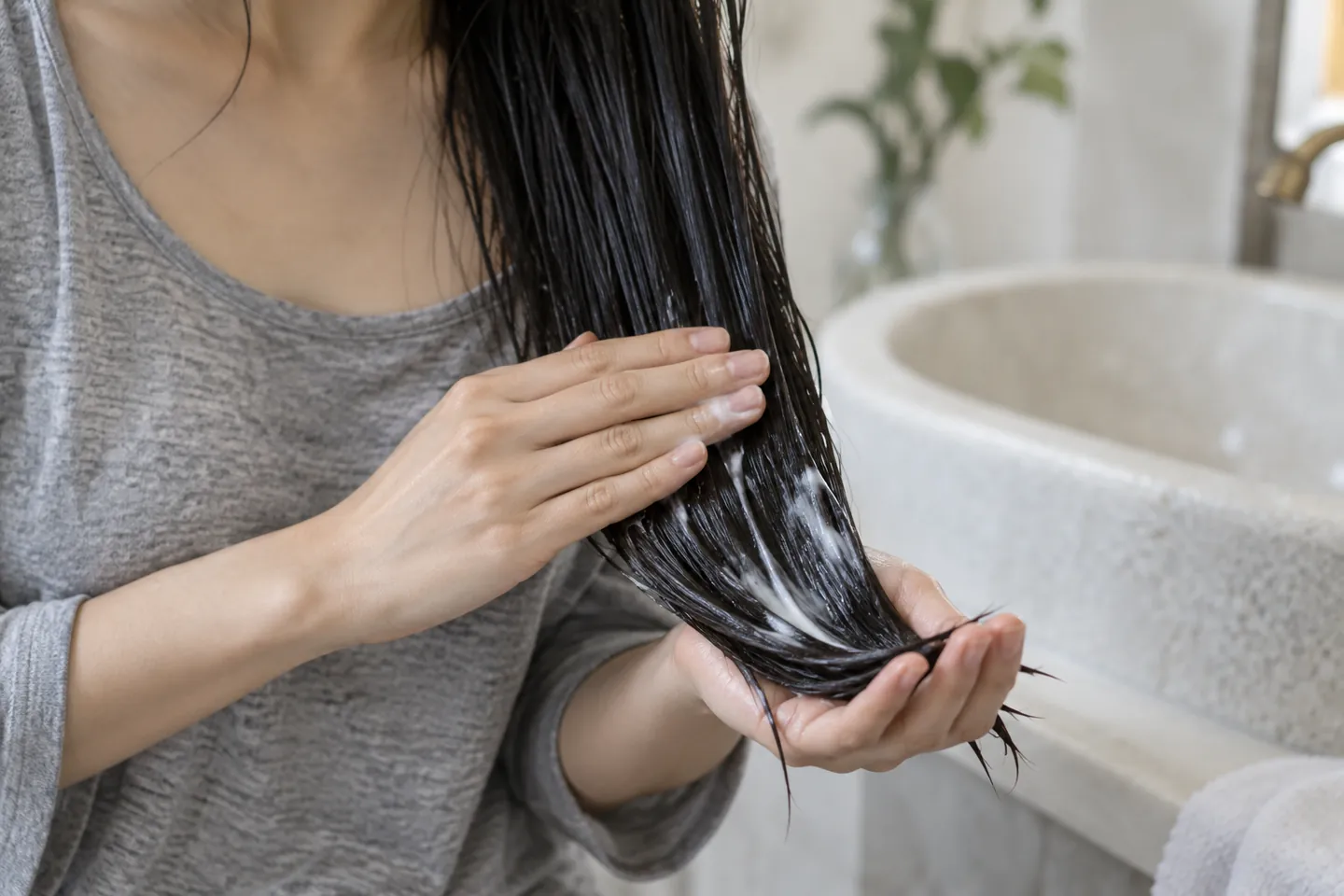
Let the directions settle the order and waiting time
The question about which comes first is really a question about the specific routine. Identify the shampoo step, then the conditioning use that the product describes. If the mask is explicitly offered as a conditioner alternative, do not assume a second conditioner is automatically required. If its instructions call for a follow-up, use that stated sequence. When two products give incompatible directions, do not resolve the conflict by extending the pause or mixing them together. Choose a straightforward permitted use and ask for clarification about the combination.
Set a timer for the instructed time if a pause is part of the chosen mode. Waiting longer is a different procedure, not proof that you have made the same procedure more effective. Do not convert a rinse-out product into an overnight treatment or add heat because an unrelated tutorial suggests it. Keep the container available for the rinse instructions too. A useful routine is one you can follow from beginning to end on an ordinary day, not an elaborate sequence you can only half remember.
Adjust a fine-hair routine without neglecting the ends
Fine hair that you prefer to wear light and loose gives you a specific comparison to make. Keep the rest of the routine familiar, use the stated application area and examine how the dry lengths fall afterwards. If you are considering a mask, decide whether you are testing it in place of a permitted conditioning step or as an additional step. Changing both the formula and the number of layers at once makes it harder to describe what felt useful. There is no obligation to make every wash a treatment session.
Be precise about an unwelcome result rather than naming a cause immediately. Flat roots, lengths that cling together and ends that remain awkward are three different observations. Record where the issue appears and check what actually happened during application and rinsing. Do not jump from a single disappointing finish to a diagnosis about your hair or an ingredient you have not investigated. The next useful adjustment might concern coverage, a missed instruction or the choice of product—not a stronger mask or an extra wash by default.
Give curls and dense lengths access to the rinse
For curls, coils or dense hair, include access in the plan rather than treating a generous outer coating as proof of even application. Work with manageable loose sections if that helps you reach the lengths. Do not force your fingers through a resistant knot to finish faster; knot removal is a separate handling problem. Choose a comfortable position and keep the timing instructions visible. You are organising the task, not trying to stretch the hair into a different texture or prove that more product reached it.
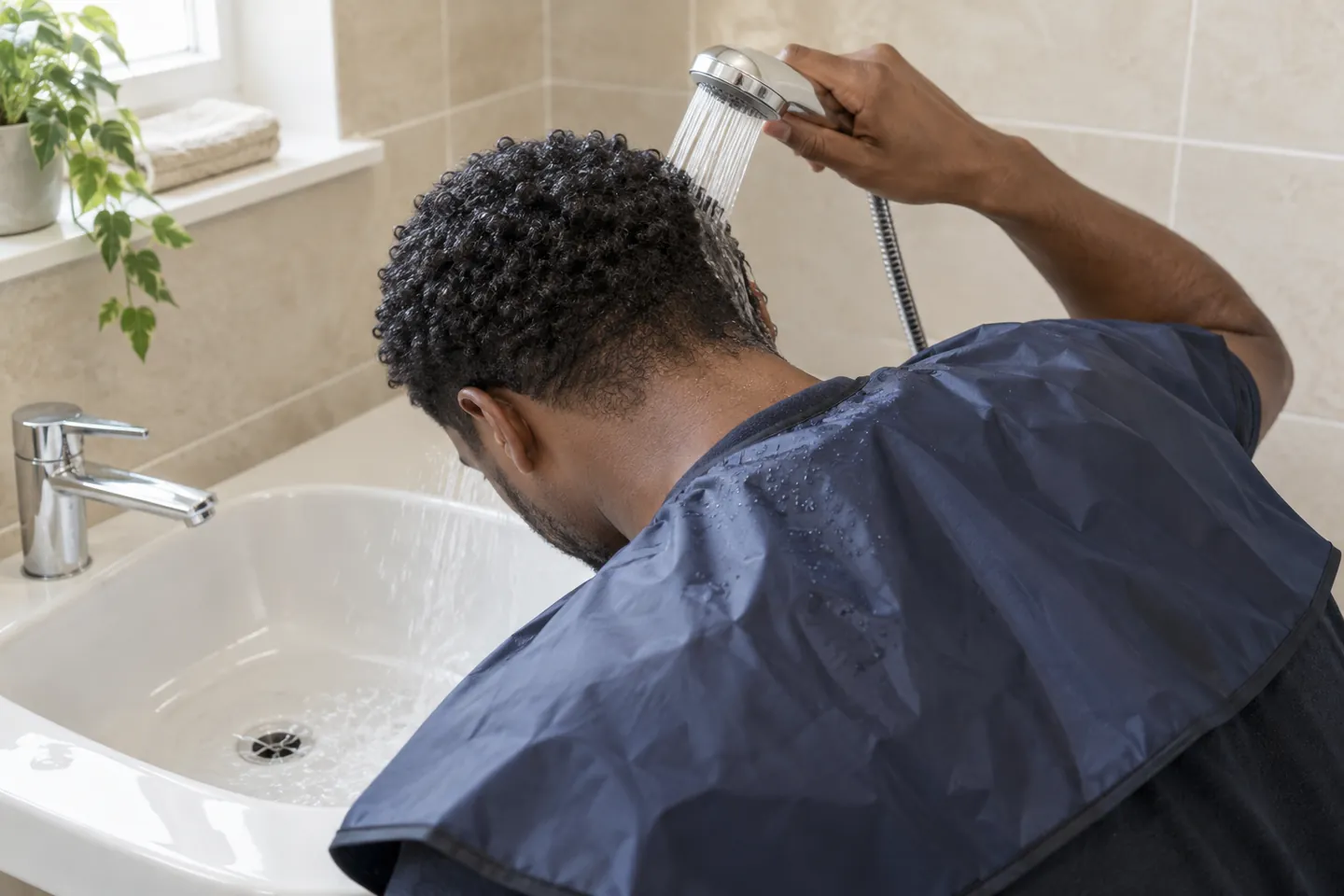
Follow the rinse-out instructions with attention to the places that are easy to miss. Gently move the hair enough to let water reach the intended areas, including underneath sections, without aggressive scrubbing. Do not use foam, fragrance or a particular slippery sensation as a universal test of completion. A product's feel is not an instruction manual. If your arrangement makes the rinse difficult, simplify the sectioning or your position next time rather than treating another layer of conditioner as the solution to an unfinished step.
Keep the first comparison small and comfortable
Choose an ordinary wash when you have time to follow the directions, not the morning of an important event. Keep a familiar way of drying and finishing so that you can describe the new conditioning step without also judging a new haircut, brush and styling cream. A simple note is enough: product and use mode, application area, instructed pause, then how the hair behaves once dry. This is a personal routine observation, not a controlled test or evidence about how the product performs for everyone.
Include what happens after the wash. If you usually gather the hair, let that familiar next step be part of your comfort check without pulling harder to force a smooth surface. Our low-ponytail routine explains a separate choice about gathering and tension; a conditioning product does not settle that choice for you. If a product causes discomfort, stop using it and follow its safety instructions. Persistent scalp symptoms or concerns about hair loss belong with a qualified professional, not with a contest between two containers.
Judge the dry result and keep only the useful step
Wait for your usual dry finish before deciding whether the choice fits your day. Look at movement, ease of arranging the ends and whether the routine took an amount of time you can realistically repeat. A temporarily soft feel is not evidence of permanent repair, and a smooth photograph cannot tell you how another person's hair will respond. You do not need to take matching before-and-after pictures or repeat a disappointing experiment to produce a verdict. The outcome you want is an understandable routine, not a persuasive product review.
Keep what is clear and remove what is unnecessary. You might continue with ordinary conditioner, use a permitted mask mode on selected washes, or decide that the combination needs clarification before another attempt. Avoid changing your wash schedule just to make a product seem worthwhile. If the broader issue is that your cut and everyday washing effort do not fit together, address that as its own planning question. Write down the next simple choice; there is no requirement to maintain a complicated rotation because you already own the jars.