
Style guide
How to choose a hairstyle for your face shape—without rigid rules
Use shape, balance, texture, and maintenance as useful signals while keeping personal style in charge.
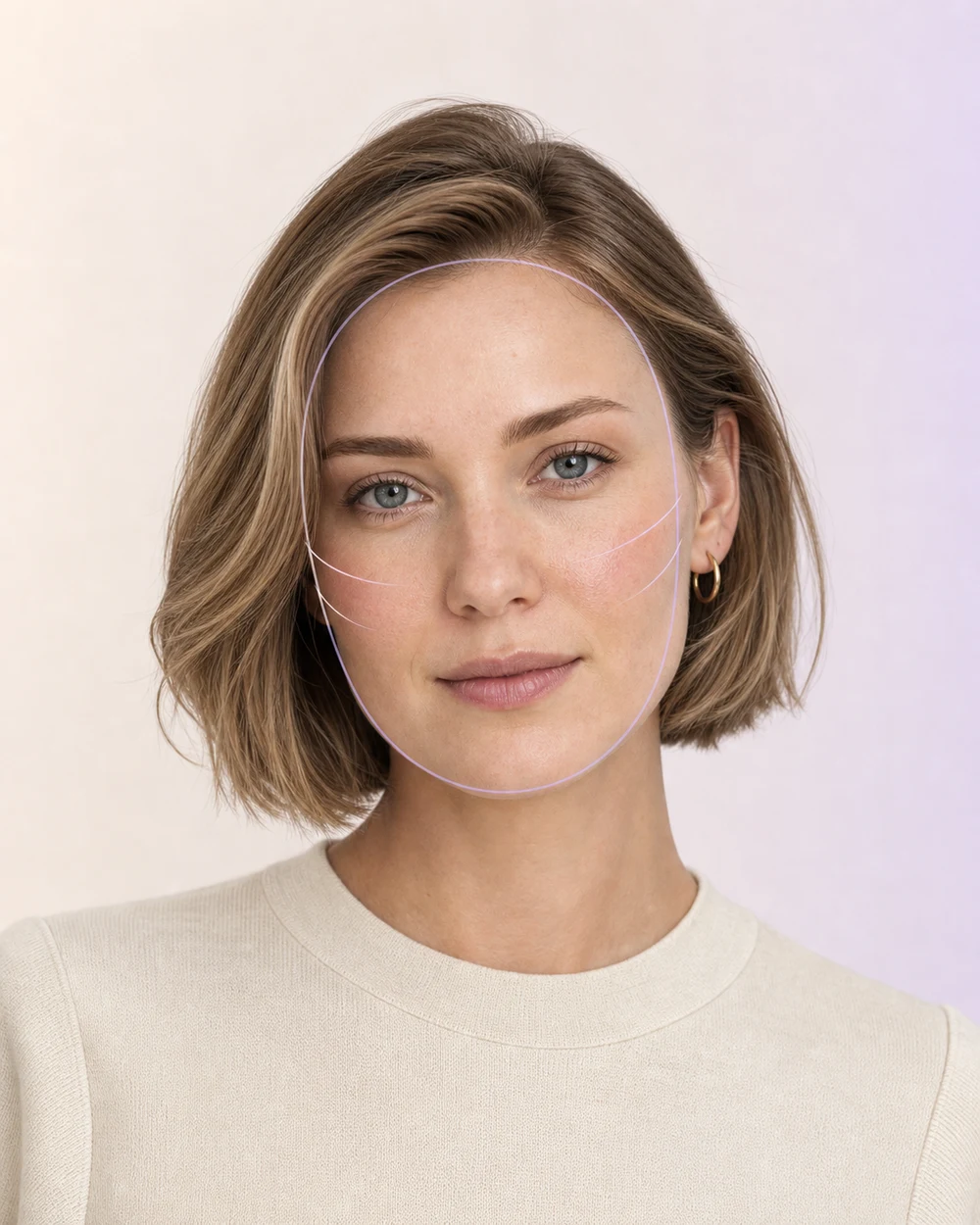
Face-shape advice is most useful as a way to describe visual balance, not as a rulebook. Two people with the same broad shape may prefer completely different cuts because their texture, density, hairline, features, routine, and identity are different.
The goal is not to “correct” a face. It is to understand how length, width, volume, fringe, and movement change the way a haircut frames you—then choose the effect you actually want.
Start with the effect, not the label
Before deciding whether your face is oval, round, square, heart-shaped, long, or diamond, name the result you want. Do you want more softness, stronger structure, visible cheekbones, an open forehead, less daily styling, or a dramatic change?
This question is more actionable than asking for the single “best” haircut. A strong jaw can be emphasized with a crisp line or softened with movement. A long face can be balanced with width or celebrated with sleek length. Both choices can work.
A face-shape category describes proportions. It does not determine what you are allowed to wear.
Oval face: use the flexibility
Oval faces are often described as balanced, with slightly more length than width. Many lengths and silhouettes can work, which makes personal preference and hair behavior especially important.
If you want structure, consider a bob, blunt perimeter, pixie, or clean taper. If you want movement, try long layers, curtain bangs, waves, or a soft blowout. The main question is how much styling and maintenance each version requires.
Round face: decide where to add structure
Round faces tend to read with softer angles and similar length and width. Height at the crown, a side part, layers below the cheek, or an asymmetrical line can create a longer or more structured effect.
That does not mean you must avoid chin-length cuts or full curls. A rounded bob can intentionally echo the face for a bold graphic look. Use an AI preview to compare a balancing option with an emphasizing option.
Square face: choose crisp or soft
Square faces often have a defined jaw and relatively similar forehead, cheekbone, and jaw widths. Texture, waves, wispy fringe, and face-framing layers can soften the outline.
A sharp bob, blunt fringe, slick back, or structured crop can instead amplify the strong geometry. The important choice is whether you want harmony through softness or impact through repetition.
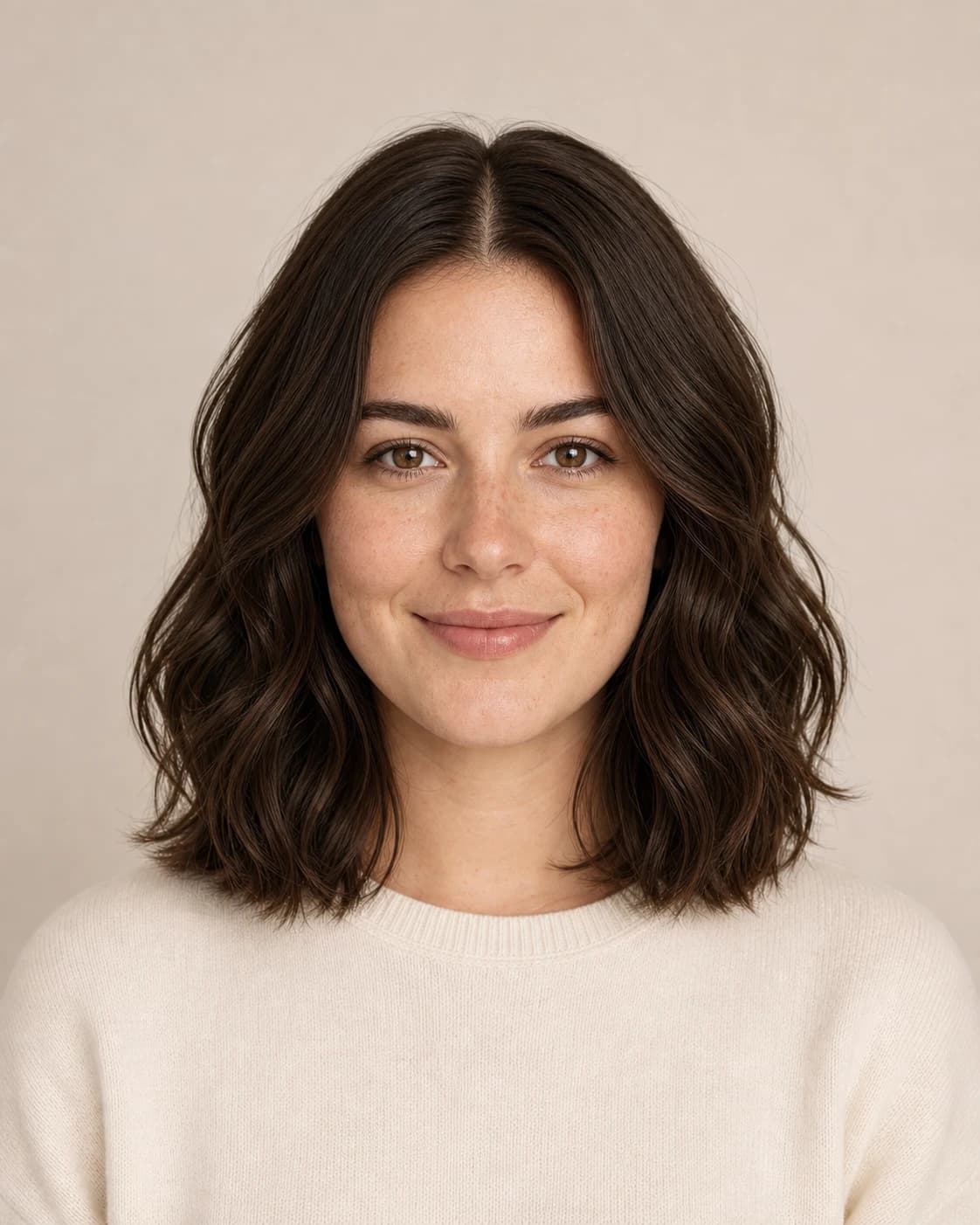
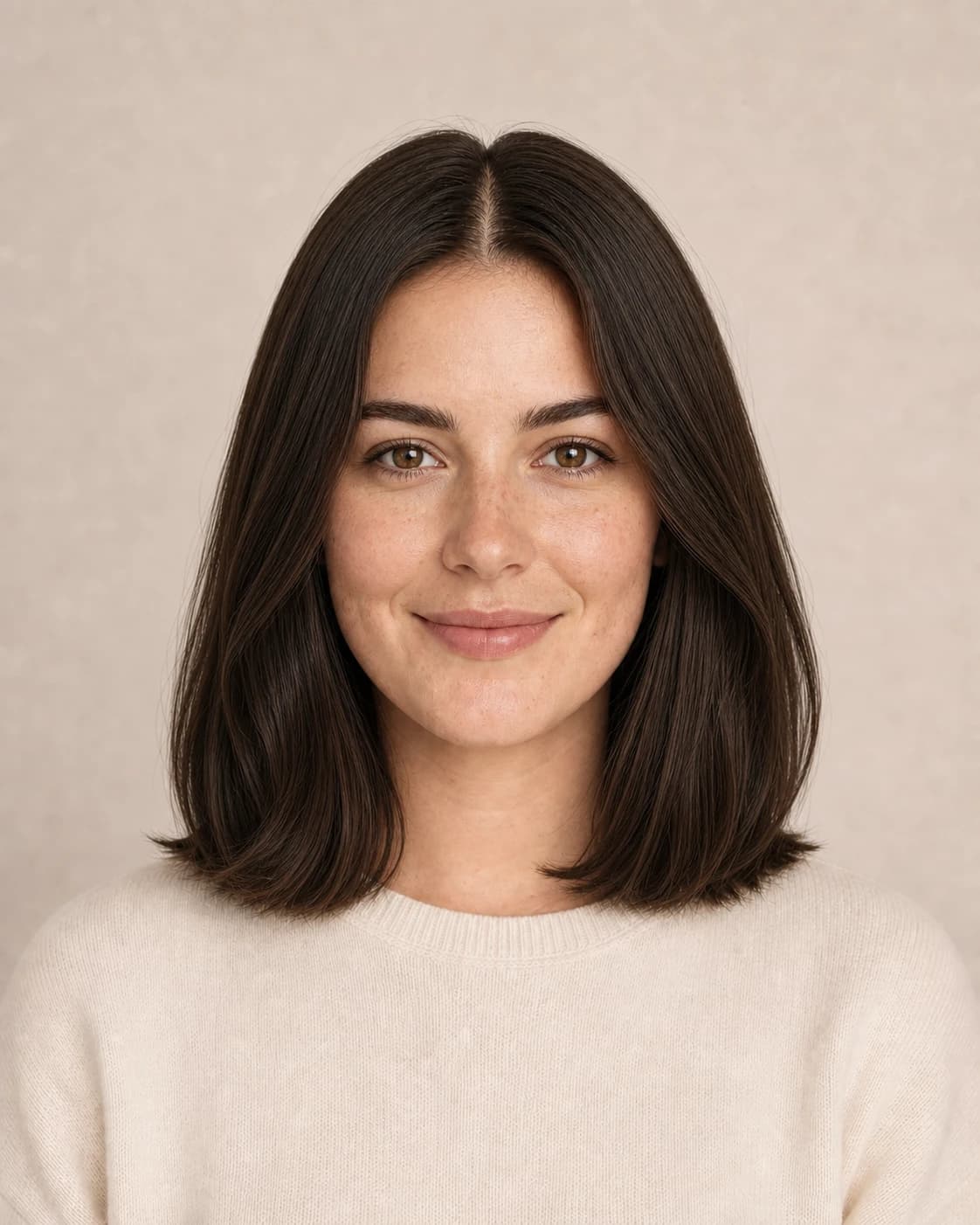
Heart face: balance the upper and lower frame
Heart-shaped faces are often wider through the forehead and narrower toward the chin. Chin-length volume, waves beginning around the jaw, curtain fringe, or a side-swept shape can add visual weight lower in the frame.
Pixies and slicked-back looks can also be striking because they expose the forehead and cheekbones. If you are considering bangs, compare a soft, parted version with a more compact fringe.
Long face: compare width with vertical flow
Long or oblong faces have visibly more length than width. Waves, curls, bobs, collarbone cuts, and fringe can introduce horizontal lines and side volume.
Very long, flat, center-parted hair can reinforce vertical length—but that may be exactly the elegant effect you want. If you prefer balance, test the same length with face-framing layers or fuller sides.
Diamond face: work with the cheekbone line
Diamond faces are often widest at the cheekbones with a narrower forehead and jaw. Chin-length cuts, side parts, tucked styles, and texture around the jaw can create balance while keeping cheekbones visible.
Avoid assuming that volume must be hidden. Strategic width at the forehead or jaw can change the silhouette, while a sleek style can deliberately spotlight the central angles.
Texture, density, and routine can outweigh shape
A reference cut behaves differently on straight, wavy, curly, and coily hair. Density, strand thickness, growth patterns, shrinkage, and chemical history affect the silhouette and upkeep. Bring those facts into the decision.
Ask yourself how often you will style, how frequently you can visit the salon, whether you wear your natural texture, and how the cut should behave on an ordinary day. The best look is one that fits both the portrait and the life around it.
- Preview at least one familiar option and one surprising option
- Compare the effect of fringe, side volume, crown height, and length
- Discuss texture and technical feasibility with a professional
- Treat the AI result as a visual direction, not a guaranteed outcome