
Color guide
How to choose a hair color before your salon appointment
Compare shade families, undertone, maintenance, and feasibility before asking a colorist for a formula.
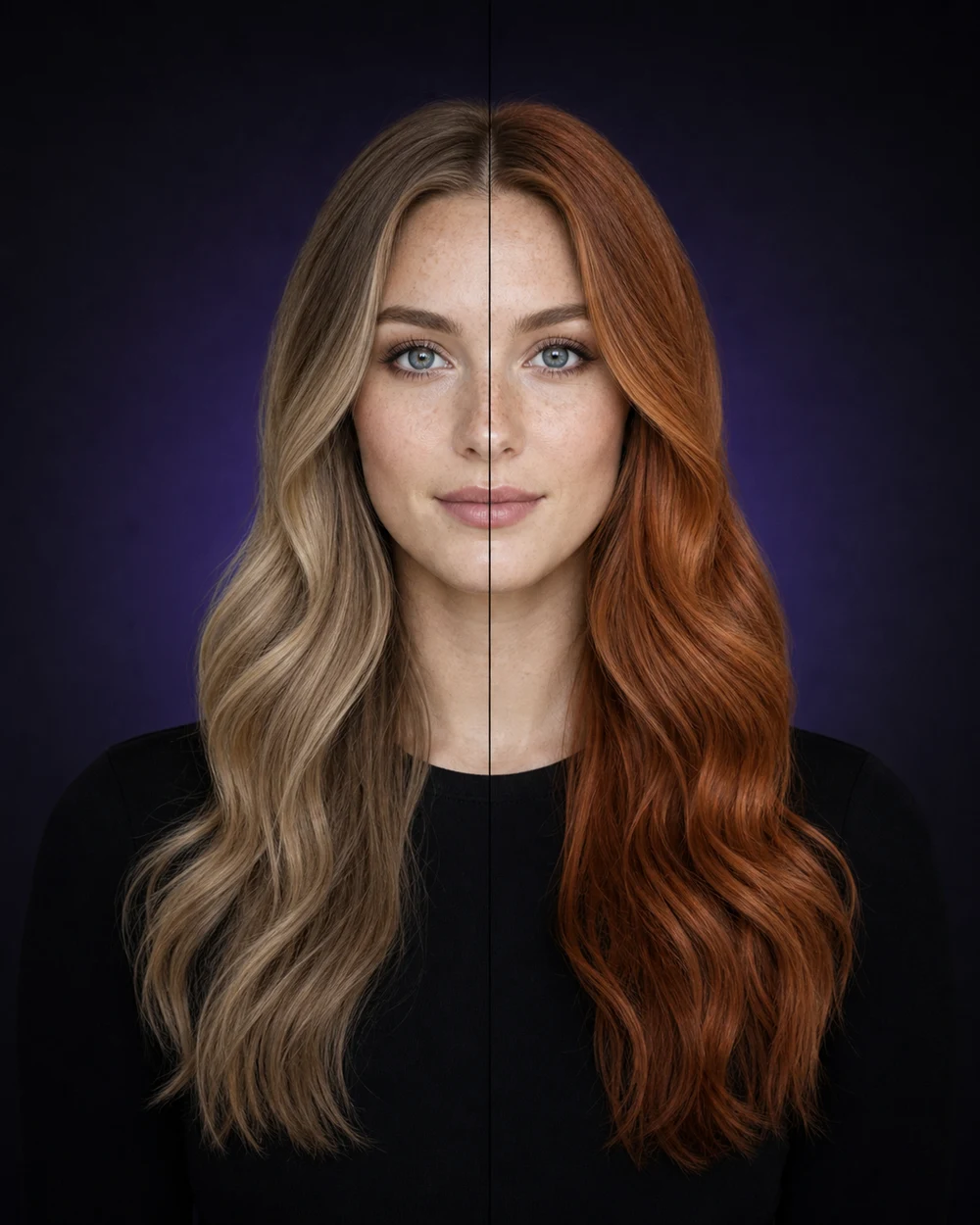
Hair color is not one choice. It combines depth, warmth or coolness, contrast, placement, finish, and maintenance. Saying “blonde” or “copper” gives a direction, but a successful consultation needs more detail.
An AI color preview can help you compare the mood of broad shade families on your portrait. Use it to narrow the conversation, then let a professional colorist assess the formula, safety, timing, and number of sessions.
Begin with a color family
Start broad: black, brunette, blonde, copper, red, silver, pastel, or vivid. Compare two or three families before focusing on a precise shade name. Large differences are easier to judge and help reveal whether you want harmony, softness, contrast, or drama.
If you already know the family, test differences within it. A brunette can read espresso, chocolate, chestnut, ash, or caramel. A blonde can be beige, honey, golden, cool, pearl, or platinum.
Separate depth from temperature
Depth describes how light or dark the color appears. Temperature describes whether it leans warm, neutral, or cool. Two shades at a similar depth can feel completely different when one is coppery and the other is ashy.
Compare temperature in neutral lighting and without a strong beauty filter. Camera white balance and your screen can shift the image, so treat the preview as directional rather than a color-matching instrument.
- Warm directions: gold, honey, caramel, copper, auburn
- Cool directions: ash, mushroom, pearl, smoky brunette, blue-black
- Neutral directions: balanced beige, natural brown, soft black
- Expressive directions: burgundy, violet, cobalt, rose, pastel
Decide how much contrast you want
A color close to your natural depth may create a subtle, lower-contrast change. Going much lighter, darker, or more vivid can create a stronger frame around the face and change how makeup, clothing colors, and brows read.
There is no universally correct contrast level. Preview a near-natural option and a more dramatic option. The comparison is often more informative than trying several shades that are nearly identical.

Consider placement, not only the shade
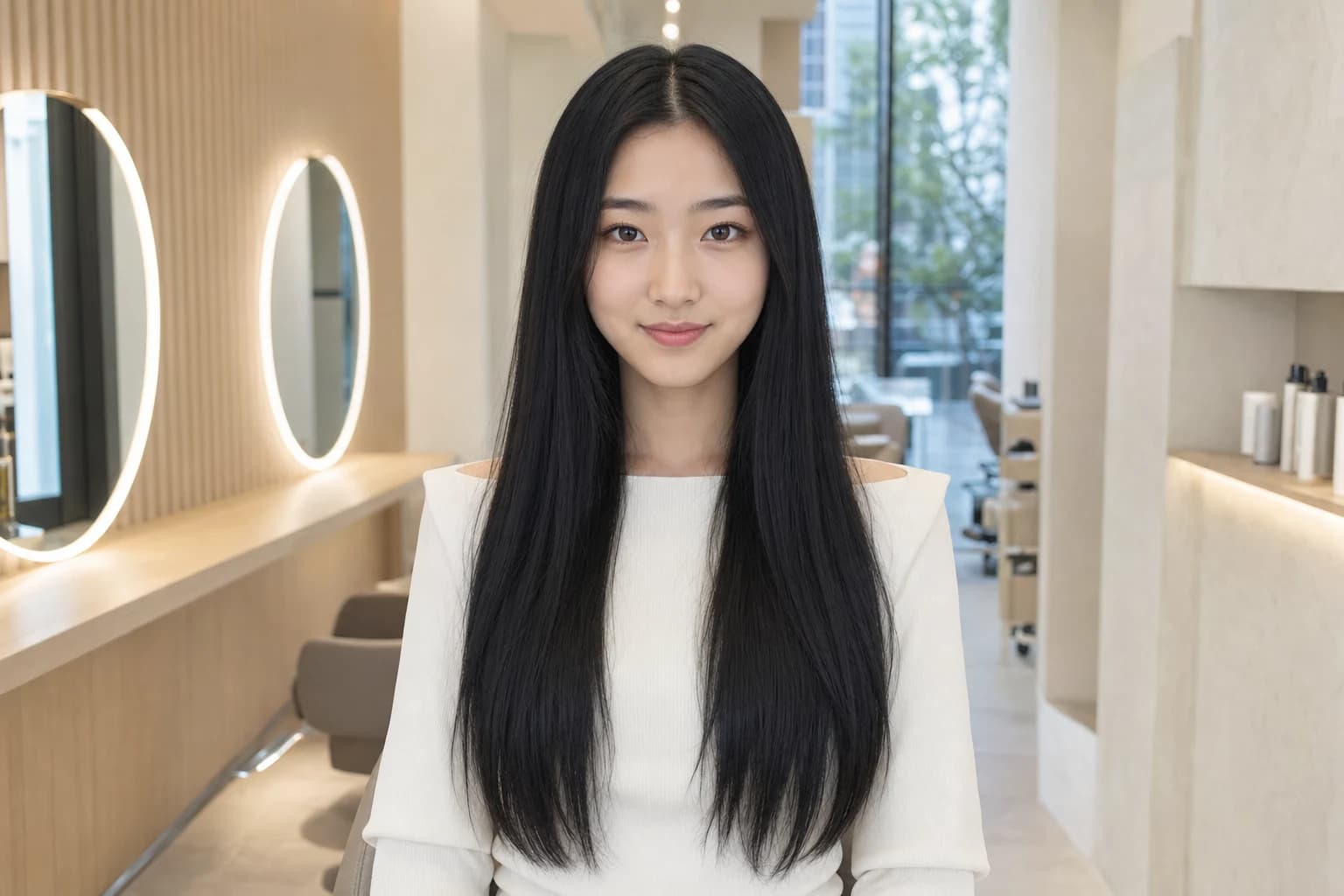
The same color family can be applied as an all-over result, highlights, lowlights, face framing, balayage-inspired dimension, a shadow root, an ombré transition, or colored tips. Placement changes both the visual effect and maintenance.
If you want to preserve depth near the root or reduce visible regrowth, ask how dimensional placement could adapt the idea. If you want a graphic or vivid result, discuss where the strongest color should begin and how it will fade.
Match the idea to your starting point
Your natural level, existing dye, bleach history, porosity, condition, and previous treatments affect what can happen safely. A deep brunette to pale blonde transformation may require multiple sessions; some vivid shades need substantial lightening first.
Bring an honest color history to the consultation. Do not use the generated image as proof that the result can be achieved in one visit. Ask for the closest safe route and what the hair may look like between stages.
A compelling color direction and a safe technical plan are two separate decisions. Use the preview for the first and a qualified colorist for the second.
Plan the upkeep before the service
Ask how quickly the shade is likely to fade, how often roots or gloss need refreshing, which products support the color, and whether heat or sun exposure changes the maintenance plan.
If the full idea is too demanding, explore a softer version: fewer lightened pieces, a deeper root, lower contrast, a warmer gloss, or a placement that grows out more gradually.
- Expected number and length of appointments
- Root, gloss, or toner refresh schedule
- At-home products and heat protection
- How the shade will fade and grow out
- A lower-maintenance alternative