
Everyday styling
Claw clip hairstyles that fit your day
Match the clip to the section you want to hold, try a loose twist or half-up shape, and leave room for the way you actually sit and move.

Claw clip hairstyles work best when the accessory fits the amount of hair you want to hold, rather than when you force your whole head into a fashionable shape. Start with a modest section, a clip that opens and closes smoothly, and a position that leaves your roots relaxed. A loose vertical twist and a small half-up section are two useful starting points. Neither needs a perfectly slick surface, hidden ends or every short layer pinned into submission.
This guide is about making an ordinary accessory useful, not buying a ranked selection or reproducing a photograph exactly. You can follow it without an app, new styling products or heat. The original images illustrate separate decisions, not a tested guarantee of grip or comfort. Choose a familiar dry hairstyle for your first attempt so you can judge the clip without also changing your wash routine. Stop and release it if the arrangement pulls or presses; looking tidy is not a reason to tolerate discomfort.
Claw clip hairstyles start with a job for the clip
Decide what needs to move out of the way. Clearing your face while reading is different from lifting every length away from your neck. The first job may only need two loose upper sections joined at the back; the second asks the clip to hold a much larger fold. Begin with the smaller job if you are learning. You can see the opening, support the section and make adjustments without repeatedly rebuilding a full updo. A few loose lengths can be part of the chosen shape, not unfinished work.
Check your hair as it is today. A layered shoulder-length cut will not gather like long hair with a continuous outline, and a curl group does not have to be straightened to enter a clip. Bring the chosen section together gently in your hand before reaching for the accessory. If it only meets when you pull firmly, reduce the section or change the meeting point. For a longer-term haircut decision, keep the question of which lengths need to reach a gathering point separate from today's fastening technique.
Compare the inner space, not just the outside length
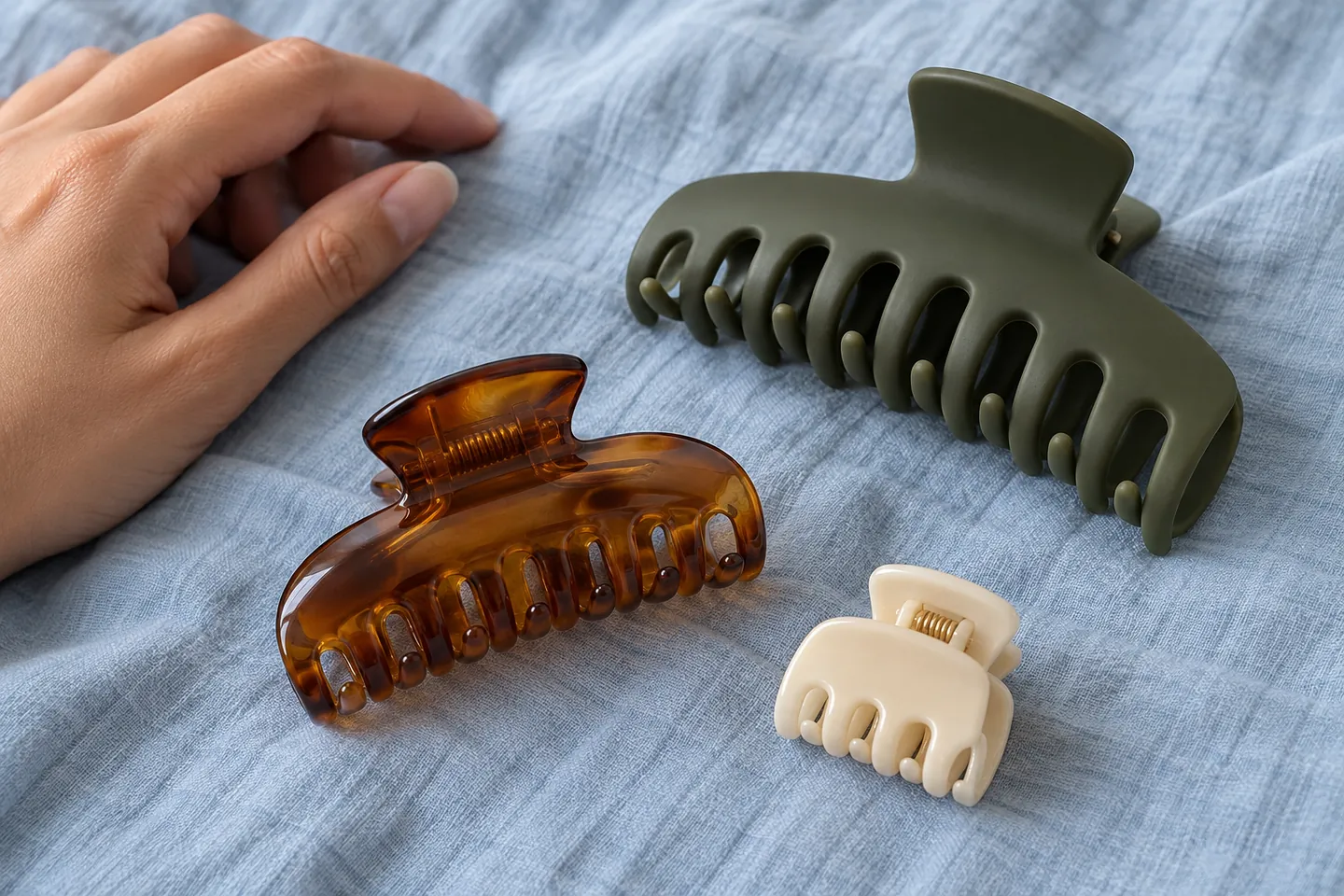
Open the clip away from your hair first. Inspect the tips, hinge and meeting edges for broken teeth or rough spots, and set aside a damaged accessory. Notice how much usable space sits between the jaws when partly open. Two clips of similar outside length can hold different bundles because one is deep and curved while another is shallow. The useful question is whether the intended section fits inside without having to squeeze it into a tight rope. A decorative shell is not a measurement of that space.
Kitsch's collection illustrates small, medium and larger clip formats alongside full-up and half-up uses. This is a manufacturer's sizing example, not our recommendation to buy a particular model or accept its grip claims. Start with a clip you already own. Hold the section beside the open jaws to judge the match before fastening. If the jaws stay strained around too much hair, choose less hair or a roomier accessory. If a heavy clip hangs from a tiny section, try a lighter, more proportionate option rather than tightening the roots.
Make one supported twist before adding complexity
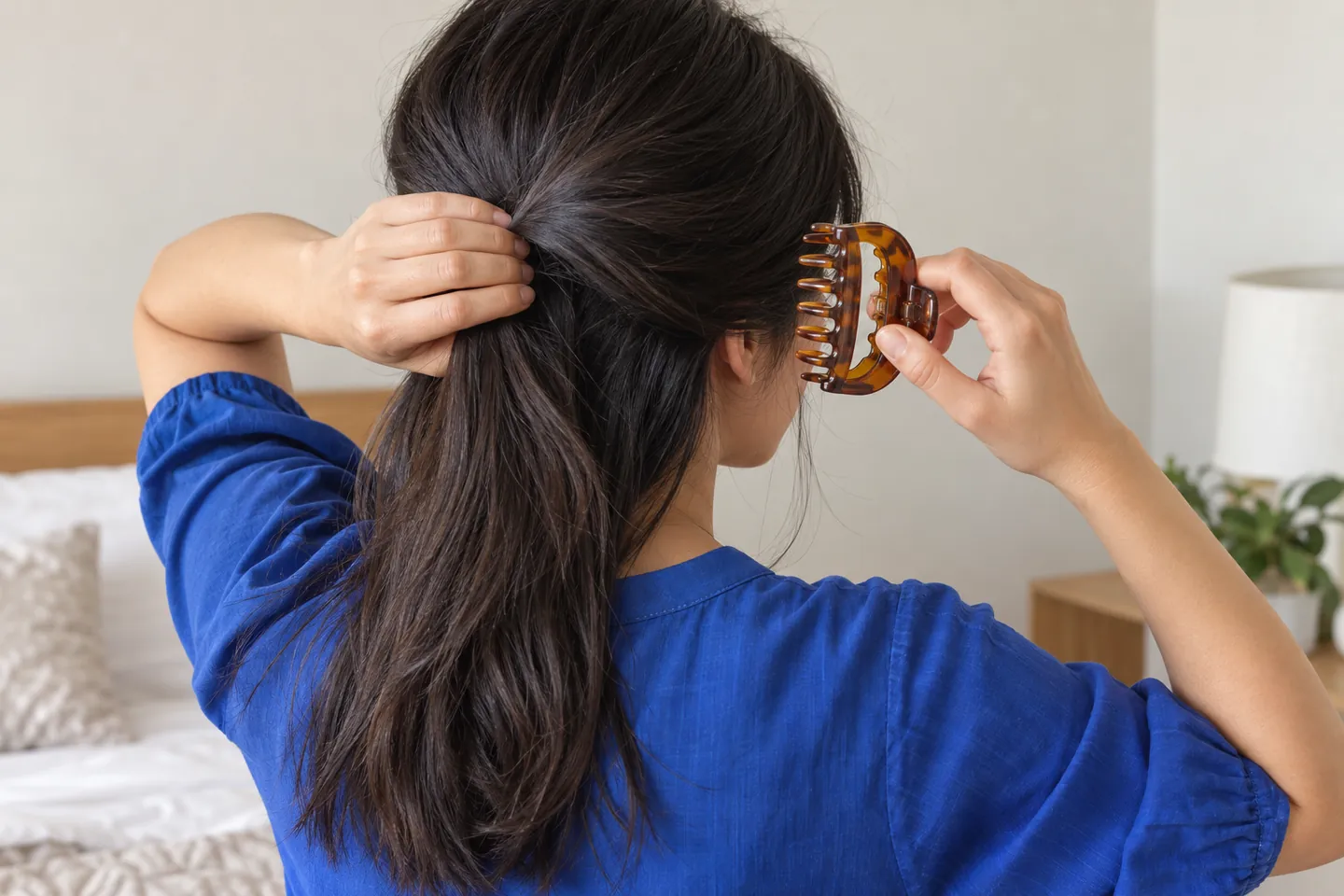
For a simple full-up attempt, gather only the lengths that reach comfortably behind your head. Hold them with one hand and make a loose upward turn, enough to create a fold rather than a tightly wound cord. Keep supporting that fold while opening the clip with your other hand. Place the open jaws around the folded section so they can also catch some nearby hair. Let the spring close gradually while keeping fingers clear of the teeth, then check that the clip is not pinching skin.
The practical test begins when your supporting hand lets go. If the fold drops immediately, open the clip again instead of pushing closed teeth through it. Try a smaller bundle, another angle or a different clip. Leave the ends visible if hiding them creates a bulky knot the jaws cannot comfortably surround. Very long hair may need a different arrangement, not another turn forced into the same space. Practise over a clear surface so a dropped accessory is easy to retrieve, and give yourself time before relying on this as your getting-out-the-door hairstyle.
Use a half-up section when a full twist asks too much
Take a comfortable upper section from each side without insisting on a perfectly straight dividing line. Bring them together at the back and give them a gentle turn if that helps you hold them. A smaller clip can secure this meeting point while the lower lengths stay loose. Check the sides before trying to polish the surface: the hair above the ears should not have to stretch just to match the height of a tutorial. Let a fringe or shorter front layers remain outside when that is how they naturally fall.
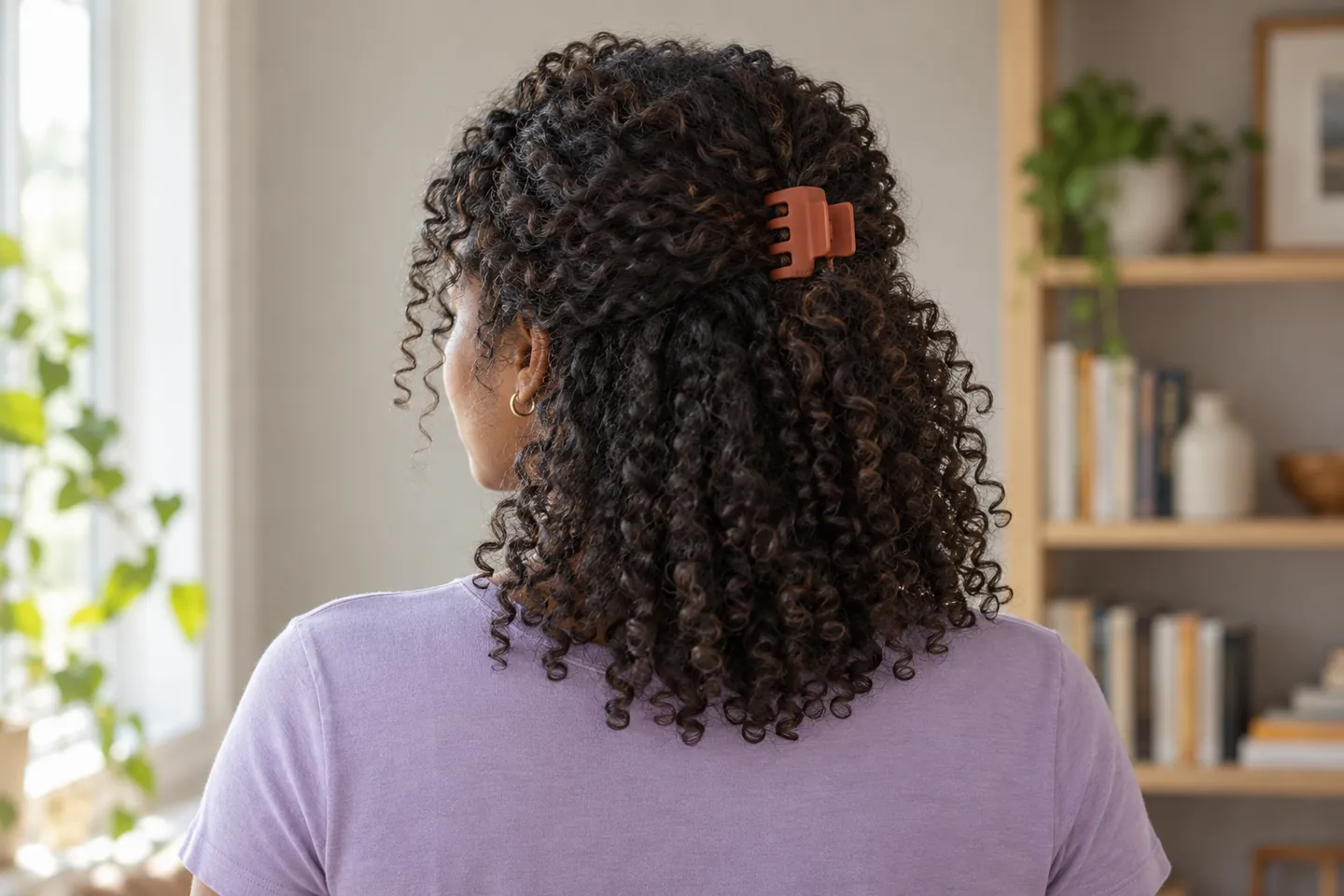
For curls and coils, choose a section you can separate without pulling apart every curl. You may prefer gathering fewer groups and leaving more of the outline visible. With a short bob, a small side section or modest half-up shape can be more practical than a full twist. Do not judge success by how little hair remains loose. The useful result is that the section you chose stays out of your way. If adding another clip becomes a puzzle of overlapping teeth and trapped strands, simplify the arrangement before continuing.
Troubleshoot sliding without making the roots tighter
Treat sliding as information about this arrangement, not a demand for more force. Note whether the entire clip falls, the fold unrolls, or one short piece escapes while the rest remains stable. Each observation suggests a different small adjustment. A fold that unrolls may need a different placement around the supported section; an overloaded jaw may need less hair. One escaping layer may simply stay loose. Repeatedly closing the same clip more firmly cannot create space inside it or make a short strand longer.
For fine hair, look at how much accessory weight the section is carrying. For dense hair, look at the volume inside the jaws rather than trying to flatten it all first. Change one thing and try again while standing still. Avoid adding several products merely to rescue a clip that does not suit the section. Oils, sprays and fresh washing change the styling context and make it harder to understand the original fit. This is not a wear-time test: a hairstyle that holds for a moment is not guaranteed to remain comfortable for an entire day.
Check contact points before you settle into the day
Turn your head normally, put on your glasses and check the collar or headphones you plan to wear. Sit in your actual chair if possible. A tall clip can meet a headrest even when it feels unobtrusive while standing. Remove it before leaning against a surface that presses it into your head; do not change the way you sit just to protect a hairstyle. For activities involving a helmet or other fitted equipment, follow that equipment's requirements rather than assuming a clip can be hidden beneath it.
The American Academy of Dermatology advises changing hairstyles that hurt or pull and seeking professional advice for hair loss. A claw clip is not automatically gentle simply because it replaces an elastic. Release an uncomfortable arrangement instead of waiting for it to feel normal. Persistent scalp symptoms or visible thinning deserve professional assessment, not a stronger accessory. For another way to gather lengths, the low-ponytail guide covers ties and their removal; choose it for its different fastening method, not as a promise that any lower hairstyle eliminates pulling.
Release the clip before moving it through the lengths
Support the gathered hair with one hand before opening the accessory. Press the handles until the teeth are clear of the section, then lift the clip away rather than sliding it down like a comb. If a strand has looped around a tooth or hinge, pause and free that strand with your fingers while the weight stays supported. Pulling harder does not identify where it is caught. Put the removed accessory somewhere reachable before letting the fold unwind at its own pace.
Check the clip for trapped strands and damage before storing it. Follow its care instructions rather than assuming every plastic finish, metal spring or decorative attachment tolerates soaking. Keep a small pouch or clear space for it if your day alternates between wearing hair up and leaning back. That makes changing the style a normal part of the routine, not a failure. Take a rigid clip out before sleeping instead of treating a daytime twist as an overnight method, and choose a familiar loose arrangement for resting.

Keep a repeatable version, not a perfect photograph
After an ordinary short wear, note three things: which section you gathered, where you placed the clip and what you changed when it slipped or pressed. A quick rear-view reference can help you remember the arrangement, but its appearance cannot show pressure or predict grip. There is no need for a dramatic before-and-after comparison. Keep the version you can put in and take out calmly with your own hands, even if its outline is softer than the inspiration image.
Next time, repeat that section and accessory before trying another fold. Keep an uncomplicated alternative for activities that do not suit a clip. You do not need new layers, an entire accessory set or a different care routine. A useful hairstyle has a comfortable purpose and an easy exit; visible ends or curls can be a deliberate choice.