
Hair color planning
How to plan a hair color around root grow-out
Compare root contrast, placement, and upkeep before choosing a color direction you can live with between salon visits.
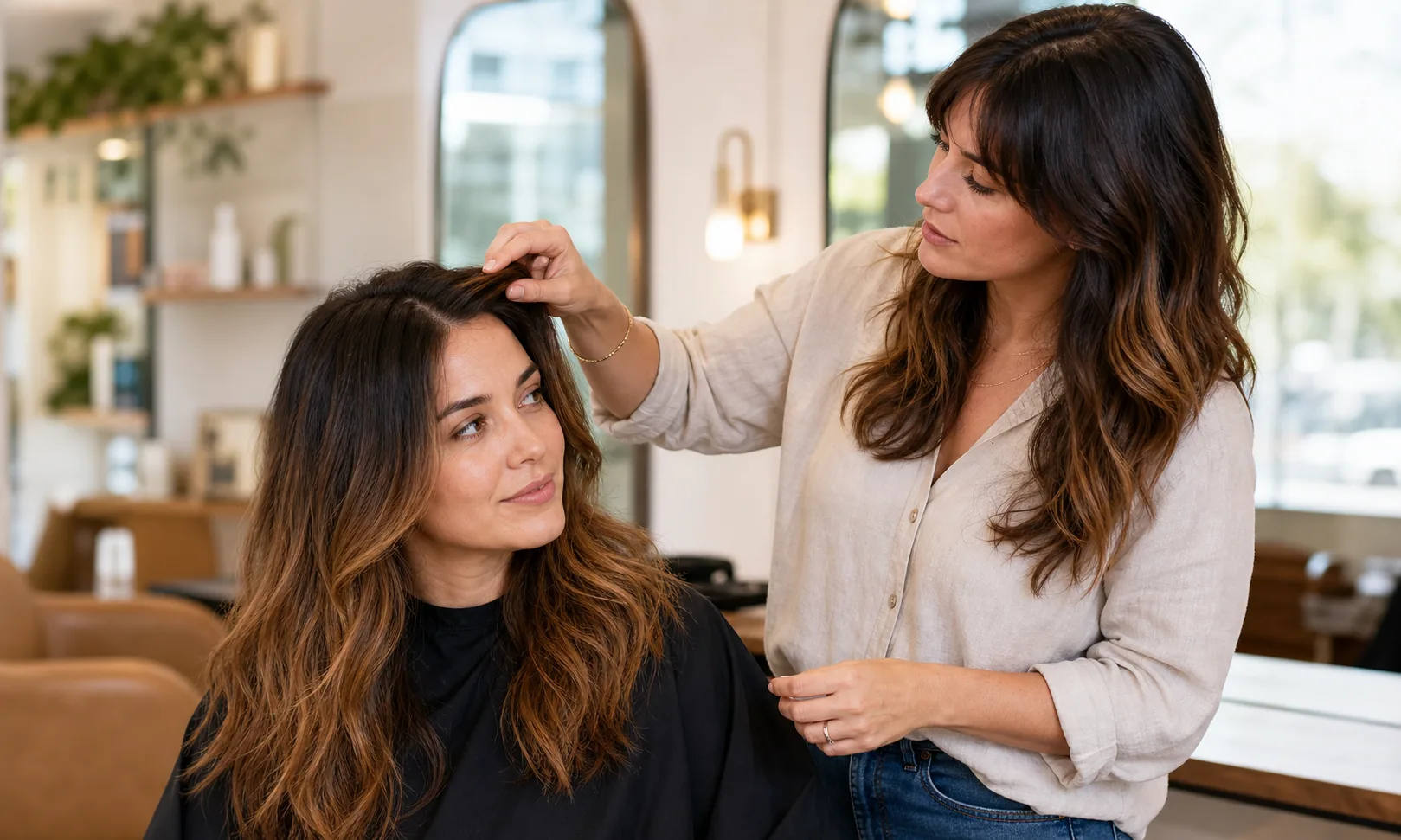
A hair color can feel perfect on the day it is finished and still be the wrong plan for the weeks that follow. As hair grows, the relationship between your natural root and the colored lengths becomes more visible. Whether that transition looks soft, deliberate, high-contrast, or simply overdue depends on the starting color, placement, parting, texture, and the kind of upkeep you are willing to repeat.
A Hair Muse preview can help you compare broad color directions before a real service, but it cannot simulate new growth over time, inspect previous color, or prescribe a salon process. The useful decision is not an exact formula. It is a visual brief that explains how much contrast you enjoy, where you want brightness to begin, and how you want the result to behave between appointments. A qualified colorist can then assess what is feasible and adapt the service to your actual hair.
Define what comfortable grow-out means to you
Start with your tolerance for change at the root rather than a calendar. Some people enjoy a visible darker base because it adds depth and keeps the color from looking uniform. Others notice even a small line at the part and prefer a transition that remains quieter as the hair grows. Neither preference is more correct. The important point is to recognize which visual change makes you want another appointment.
Think about an ordinary month, including work, travel, exercise, and occasions when you wear the hair differently. Ask whether you are happy to refresh the color as soon as contrast appears, whether you want more time between major services, or whether you need a plan that can pause gracefully when life gets busy. Avoid promising yourself an upkeep routine you have not previously enjoyed. Your maintenance preference is part of the design brief, not an afterthought.
- Contrast: subtle transition or clearly visible depth at the root
- Timing: regular appointments or room to extend the interval
- Priority: maximum brightness, softness, dimension, or flexibility
- Fallback: how you want the color to look if a refresh is delayed
Use your real starting point as the baseline
Photograph your current hair in indirect daylight from the front, side, back, and along your usual part. Include the full length and one closer view of the root-to-length transition. Do not hide the root with powder, a strong filter, or a different part just for the picture. If your hair is normally curly, straightened, covered, tied back, or changed through the week, record the versions that matter to your decision.
Write down what you know about previous color services and bring that history to the consultation. The color visible on the surface does not reveal every earlier treatment or the condition throughout the hair. A preview cannot assess those factors, and a photograph cannot establish which process is appropriate. Let the colorist inspect the hair in person before deciding how far the new direction can reasonably move in one appointment or what preparation may be needed.
Plan from the hair you have now, not from a generated starting point. Keep the original daylight photos beside every preview.
Read contrast at the part, hairline, and lengths
Root grow-out is not seen as one even band. It tends to attract attention where the hair separates, where short pieces sit around the face, and where the natural and colored depths meet most clearly. A centered part may create a long visible line, while a side or shifting part reveals different areas. Hair worn back can expose the front hairline more than the same color worn loose.
Compare three zones separately: the first area around the scalp, the transition through the upper lengths, and the brighter or deeper ends. Decide whether you want the change between them to be quiet or graphic. Also notice whether you like contrast around the face but want a softer crown, or the reverse. These observations are more useful than asking for a color to be universally low-maintenance, because the same placement can look different with another natural depth, density, texture, or daily style.
Compare placement ideas by how they might transition
Different visual directions create different relationships with the natural root. Color that appears to begin uniformly close to the scalp can make the returning base more obvious. A direction with deliberate depth near the root, varied brightness, or fewer light pieces through the top may read more gradually. These are visual categories, not technical instructions: the achievable placement and process depend on an in-person assessment.
Create a small comparison set with one brighter option, one softer transition, and one version closer to your current depth. Keep the face, crop, lighting, and hairstyle as consistent as possible. When reviewing them, cover the ends for a moment and look only at the crown and face frame. Then cover the top and decide whether you still like the lengths. This prevents especially glossy or bright ends from distracting you from the area that will change first as the hair grows.
- Brighter direction: shows the maximum contrast you currently enjoy
- Blended direction: keeps more visual depth near the upper hair
- Closer-to-natural direction: tests whether a quieter change still feels worthwhile


Use previews to choose a direction, not a regrowth forecast
Hair Muse can make broad changes in depth, warmth, and overall placement easier to compare on your own portrait. Use the same clear source photo for each option and change one main idea at a time. Save only results that keep the face, hairline, texture, and lighting plausible enough for the decision. If a preview alters the part, adds unrealistic shine, or changes the hairstyle substantially, do not treat its root area as evidence.
A generated still image cannot show how fast your hair grows, how a chosen placement will evolve week by week, or how previous color affects the service. It may also smooth the transition or invent strand detail. Treat it as a vocabulary tool: you can point to the amount of depth you like, the areas you want lighter, and the contrast you want to avoid. The colorist translates that preference into a plan after examining the real hair.
A preview can answer “Do I like visible depth here?” It cannot answer “What will my roots look like in eight weeks?”
Test the plan across parts and everyday hairstyles
Your usual part is the main view, but it should not be the only one. Move the part as you naturally do, tuck the hair behind the ears, gather it at your usual height, and take a clear photograph of each relevant arrangement. A color direction that looks softly blended when the hair is down may reveal a stronger boundary at the temple or underneath when it is tied back.
Texture and styling also change how color is distributed visually. Waves and curls separate into highlights and shadows, while a straighter finish can make transitions read as broader areas. This does not mean one texture is better for grow-out. It means the consultation should include how you actually wear the hair. Ask the colorist to discuss the placement in both your most common loose style and the pulled-back or alternate style you rely on.
Build an upkeep ladder instead of one rigid promise
Ask for three versions of the maintenance conversation: the ideal refresh rhythm, a lighter-touch option, and what happens if you wait longer. The lighter option might focus on a smaller visible area or on tone rather than repeating a major change, but only the colorist can say what makes sense for the proposed service. The purpose of the ladder is to understand which parts of the look depend on frequent attention and which can evolve without losing the overall intention.
Include home styling and any recommended care in the discussion, but avoid assuming that a product or routine can erase structural contrast at the root. Ask what visual signs indicate that the color needs professional attention, what can safely be left alone, and whether the future goal changes the best choice today. If your budget, time, or access to the salon varies, say so before the formula or placement is finalized rather than trying to solve the mismatch afterward.
- Ideal: the plan when appointments happen as expected
- Reduced: what can be simplified without changing the whole direction
- Extended: how the color is likely to read if you postpone a visit
- Future: whether you intend to stay lighter, return closer to natural, or keep options open
Turn the comparison into a salon-ready brief
Bring the unedited daylight photographs, two or three focused previews, and one image of a grow-out stage you personally consider comfortable. For each reference, label the useful detail: root depth, softness at the part, brightness around the face, dimension through the lengths, or a boundary you do not want. Do not ask for a generated image to be copied exactly; some of its light, texture, and placement may not be physically consistent.
Finish the consultation with a preferred direction and an acceptable adjustment. The colorist may recommend keeping more depth, changing where brightness begins, limiting the first session, or planning a different sequence after considering your starting color, history, and hair condition. Ask them to describe the first-day effect and the likely visual transition in plain language. A strong plan is one you understand at the roots as well as at the ends, including what you will do if the next appointment arrives later than expected.