
Preview planning
Too many hairstyle previews? Compare one change at a time
Turn a crowded camera roll into a useful decision: keep one baseline, isolate the variable, save a small shortlist, and carry the right questions into the salon.
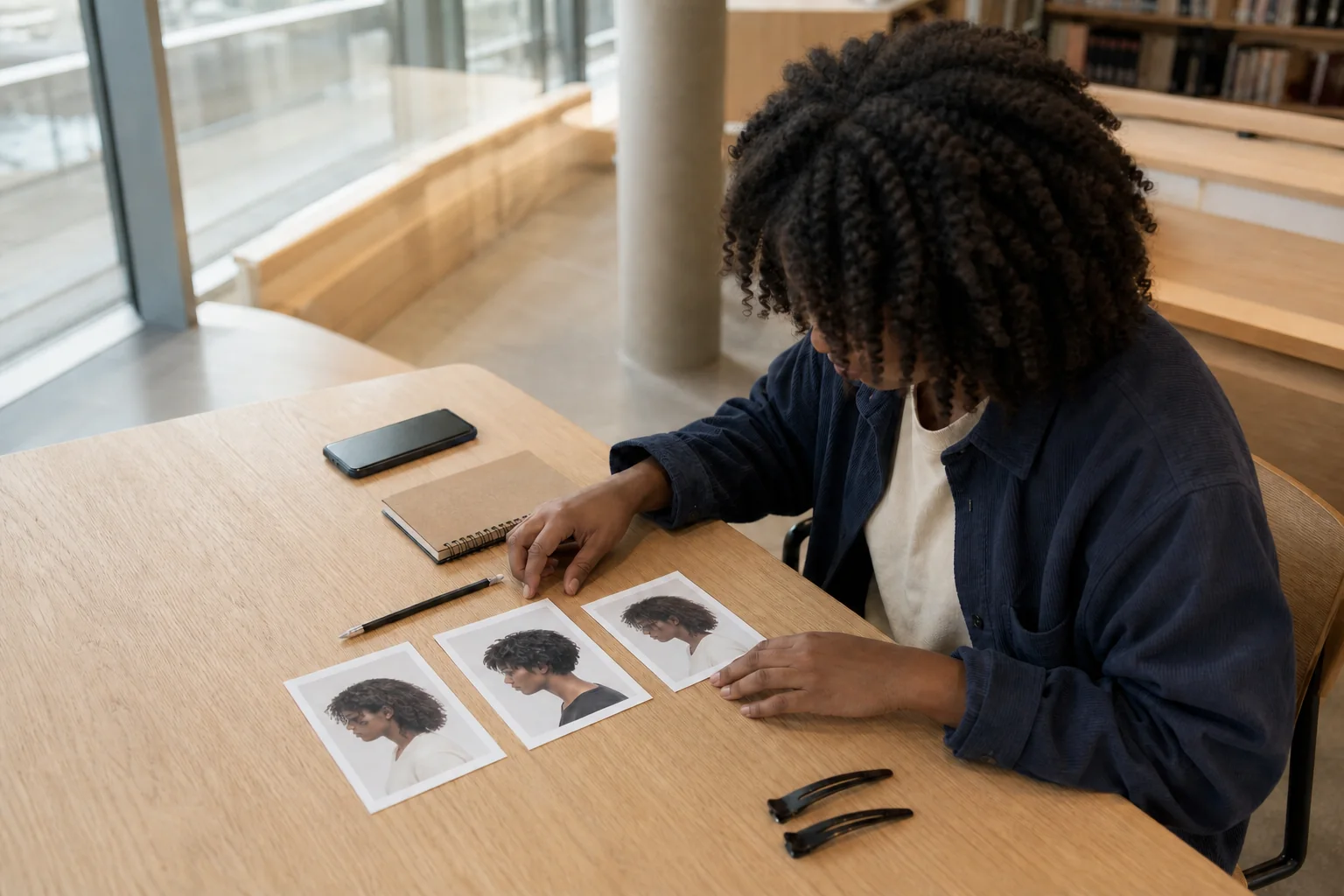
A dozen attractive hairstyle previews can leave you less certain than two well-chosen ones. When length, fringe, part, texture, color, volume, camera angle, and even expression all change together, it becomes difficult to tell what you actually prefer. The useful question is not which image wins at first glance, but which single change improved the direction—and which practical tradeoff came with it.
This guide uses a controlled comparison workflow. Hair Muse is published by the publisher of this guide and is the only app endorsed here. It is free to download, although some previews or usage levels may require an in-app purchase. Use it to explore visible directions on one clear portrait, not as a test of exact strand behavior, growth, maintenance, color chemistry, or salon feasibility. Generated details can vary, and a stylist still needs to assess your real hair.
Start with one decision you can finish
Write the decision in one sentence before opening an app or collecting more references. Useful versions are narrow: ‘Do I prefer the perimeter near my jaw or near my collarbone?’ ‘Do I want the forehead open or partly covered?’ ‘Does volume feel better at the crown or through the sides?’ A question such as ‘What hairstyle suits me?’ contains too many variables to compare honestly.
Name what must remain unchanged for the first round. If length is the question, hold color, part, broad texture direction, fringe, and overall finish as steady as the preview allows. If color is the question, begin with one haircut silhouette. This is not laboratory testing—the generator may still alter details—but a clear rule makes differences easier to interpret and unexpected drift easier to spot.
- One visible variable to compare
- One reason the decision matters now
- One everyday function you need to preserve
- One acceptable fallback if neither option works
Lock a realistic baseline portrait
Choose one sharp, front-facing photo in soft, even light. Keep the full head, hairline, jaw, neck, and shoulders visible against a simple background. Use your ordinary glasses or other identity-defining accessories if they affect how you judge the frame around your face. Avoid filters, portrait blur, strong backlight, a close wide-angle selfie, and an unusually polished look that you rarely wear.
Use that same portrait throughout the first comparison round. Switching photos changes head angle, lens distance, lighting, expression, clothing, and posture, any of which can make one hairstyle seem more successful. A second photo can be useful later as a robustness check, but it should not be mixed into the first A/B choice. Label it as a new round rather than treating it as more evidence for the original one.
The baseline should look like you on a clear ordinary day. Consistency is more valuable than choosing the most flattering photo in your library.
Build an A/B pair before adding a third option
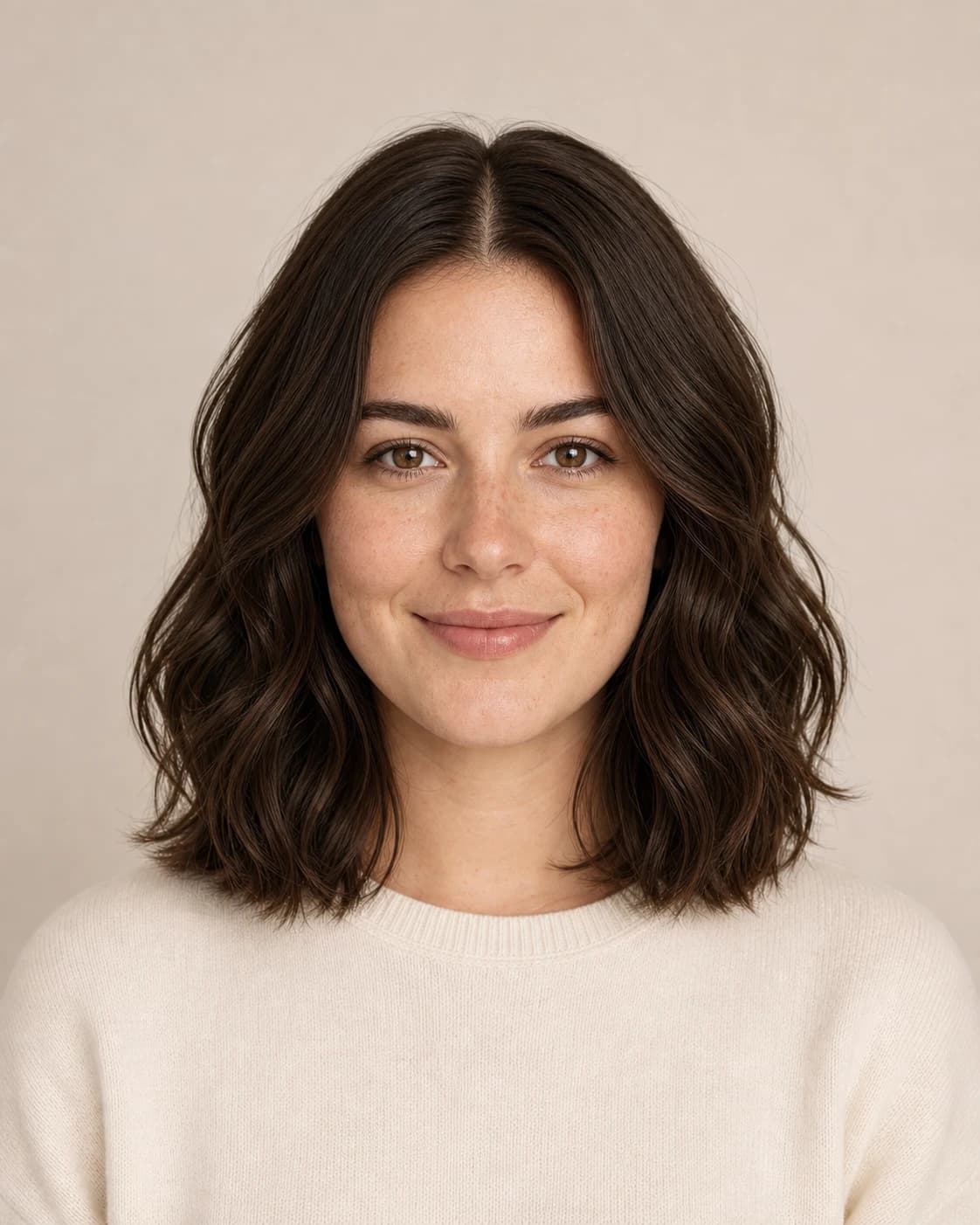
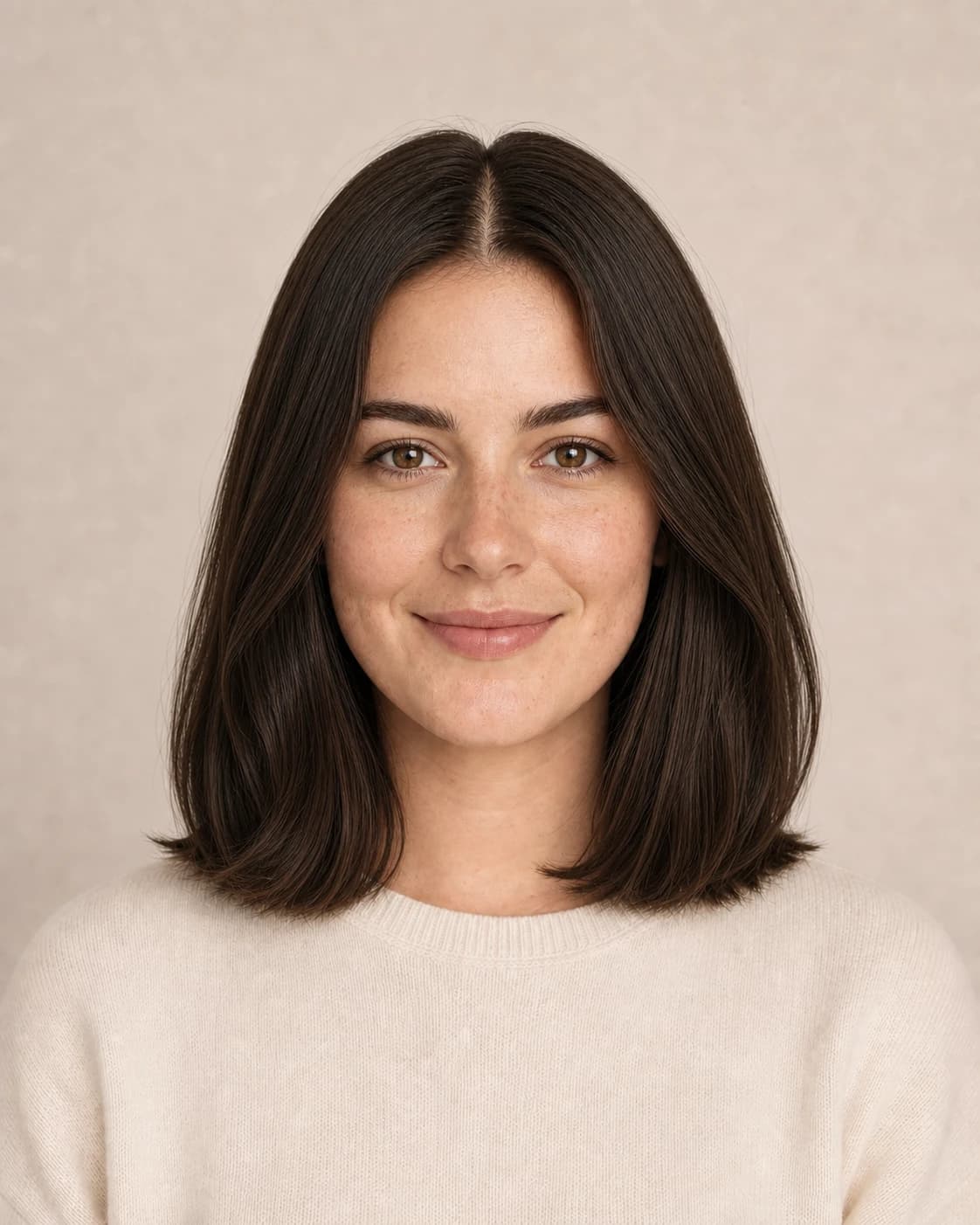
Create two directions that answer the same question with a meaningful gap. For length, compare two endpoints rather than five near-identical trims. For fringe, compare an open forehead with one defined fringe direction. For volume, compare a compact outline with a visibly wider or higher one. If the options are too similar, small generated artifacts may dominate; if everything differs, you will not know what caused your reaction.
Review the original portrait beside both options. First name the intended difference without judging it. Then note how each version changes the face frame, visible neck and shoulders, balance around glasses, and overall silhouette. Wait a few minutes before choosing. Novelty often feels like preference on the first pass, while familiarity can feel safer simply because it resembles the starting photo.
Separate the signal from generated drift
A generated preview may move the hairline, smooth flyaways, change density, adjust facial details, invent symmetry, or render earrings and clothing differently. Those changes are not evidence that a haircut will create the same effect. Reject a preview if the face, pose, crop, or key accessory has changed so much that you are reacting to a different portrait rather than to the intended hair variable.
For usable images, describe only the stable signal: ‘I prefer the space around the jaw,’ ‘the side width feels heavy,’ or ‘I like seeing more forehead.’ Do not turn a clean simulated edge into a promise about frizz, curl formation, hold, shrinkage, or styling time. The image is most useful when it gives you language for proportions and questions for a professional, not when it appears perfectly polished.
If you cannot name what changed, the comparison is not ready to guide a decision. Return to the baseline and simplify the pair.
Add the next variable in a new round
Once one direction wins provisionally, make it the baseline for the next question. You might choose the collarbone endpoint first, then compare a full perimeter with softer layering while keeping that endpoint. Next, compare an open front with a light fringe while preserving the selected outline. A simple sequence prevents the final image from becoming a bundle of unrelated changes that cannot be discussed clearly.
Keep a short decision log: variable, option A, option B, current preference, and unresolved concern. Record uncertainty rather than forcing a winner. If the preferred length only works with a texture or finish you do not normally wear, flag that conflict. The goal is not to manufacture certainty; it is to identify which choices are visual preferences and which require real-hair testing or professional assessment.
- Round 1: overall length or silhouette
- Round 2: perimeter, layers, or volume placement
- Round 3: fringe, part, or face framing
- Separate color round: keep the chosen shape stable
Test the shortlist away from the screen
Take the two strongest directions into ordinary life before generating more. Fold or clip your current lengths loosely to approximate a boundary, move the part without cutting, or use real reference photographs that show similar texture and density from more than one angle. These rehearsals cannot reproduce a haircut, but they can reveal whether you enjoy an open neck, hair near the eyes, reduced tie-back length, or a different amount of side volume.
Add the practical facts the preview cannot inspect: growth patterns, density, shrinkage, previous color, condition, weather response, wash routine, work requirements, headwear, and styling tolerance. Note what must function on a rushed morning, after exercise, and as the cut grows. If a health, scalp, shedding, breakage, or chemical-safety concern is involved, seek appropriate professional advice rather than using a visual preview to assess it.
Save a shortlist, not an archive
Save the original portrait, the best two or three directions, and brief labels describing the meaningful difference. Hair Muse lets you review and save looks, but more saved images do not automatically create a better decision. Remove near-duplicates and any result with distracting facial or hairline changes. Keep one fallback that protects the everyday function you care about most.
Look at the shortlist again on another day and on an ordinary screen brightness. Ask which option still communicates the result without relying on novelty. If two remain close, stop generating. That tie is useful information for the salon: it identifies the exact variable you want assessed on your real hair rather than encouraging another round of random styles.
Turn the comparison into a salon brief
Bring the unedited source photo, the labeled shortlist, and real photographs of your hair from the front, sides, and back in its usual dry state. Explain the order of your decisions: the length you preferred, the secondary variable you tested, the function you need to preserve, and the detail you remain unsure about. Phrase the previews as directions—more open around the face, weight lower in the shape, a softer perimeter—not as construction instructions.
Ask the stylist to assess whether the direction fits your starting length, texture, density, growth patterns, condition, color history, routine, and maintenance budget. Discuss what may differ from the generated image, how the cut will look without salon styling, and how it may grow. Agree on the closest feasible plan and a fallback. The successful outcome is a clearer conversation and an informed choice, not a promise to reproduce pixels exactly.
- The original, unedited baseline photo
- Two or three labeled directions
- Front, side, and back photos of your real hair
- Routine, maintenance, and tie-back limits
- The one variable you want the stylist to assess