
Curly haircut decisions
Curly hair layers or one length? Plan the shape
Decide where you want weight and movement before cutting. Compare a full perimeter, gentle layers and a more rounded curl shape without trusting a preview as a guarantee.

Curly hair layers change where the shape sits; a one-length cut keeps more weight near the perimeter. Neither is automatically better for curls. If the top feels flat while the ends spread wide, some carefully placed layers may move weight upward. If your ends already look thin or you need every inch for a tie-back, preserving a fuller outline may be the smarter first step. Decide on the silhouette you want while the hair is dry, then discuss the exact cutting plan with a curl-aware stylist.
Hair Muse can help you compare the visual direction on one clear photograph: hold color and apparent length steady, look at a fuller outline versus a softly layered shape, and save only a small shortlist. It cannot reproduce your exact curl spring, density, drying routine or the final cut. This guide makes those limits part of the decision rather than hiding them behind a polished picture.
Curly hair layers solve a shape question, not every curl problem
Begin by naming the change you want. Is the crown flat while the lower half feels wide? Does the outline look dense but immobile? Do the ends appear sparse even though the top has plenty of volume? Those are different situations. Layers redistribute visible weight by shortening selected areas; they do not create new hair, repair damage or make every curl behave identically. A one-length cut concentrates more strands at the bottom and can make the edge read fuller, but it may also keep a dense mass low on the head.
Look at your hair on a representative dry day from the front, side and back. Observe the widest point, the shortest curl group, the bottom line and where volume disappears after you sleep or tie it up. If the issue changes dramatically between wash day and day three, your styling and refresh routine belongs in the decision. Do not choose a cut from a straightened reference or a single wet photograph. The question is how the shape works in the state you actually wear.
Choose the goal first: more crown lift, less lower bulk, a fuller edge, or easier tie-back. Then decide how much layering serves that goal.
Compare a full perimeter with gentle and stronger layers
A one-length outline keeps the bottom visually compact. It may appeal when you want a strong edge, have finer density or frequently braid or tie your hair. Gentle long layers can add movement and reduce a heavy lower silhouette while retaining much of that edge. More pronounced layers can move the widest point higher and form a rounder shape, but may leave shorter top sections that escape a ponytail. The words alone do not specify where the shortest curl will land.
Ask for a shape map: which area remains longest, where the first upper layer begins, and whether any weight is removed inside rather than from the visible perimeter. L'Oréal Professionnel describes layers as shorter sections arranged through the haircut and notes that their position and length change how volume reads. Treat that as a description of a cutting option, not a promise that layers will always add volume. Your curl pattern, density, length and styling can reverse the apparent effect.
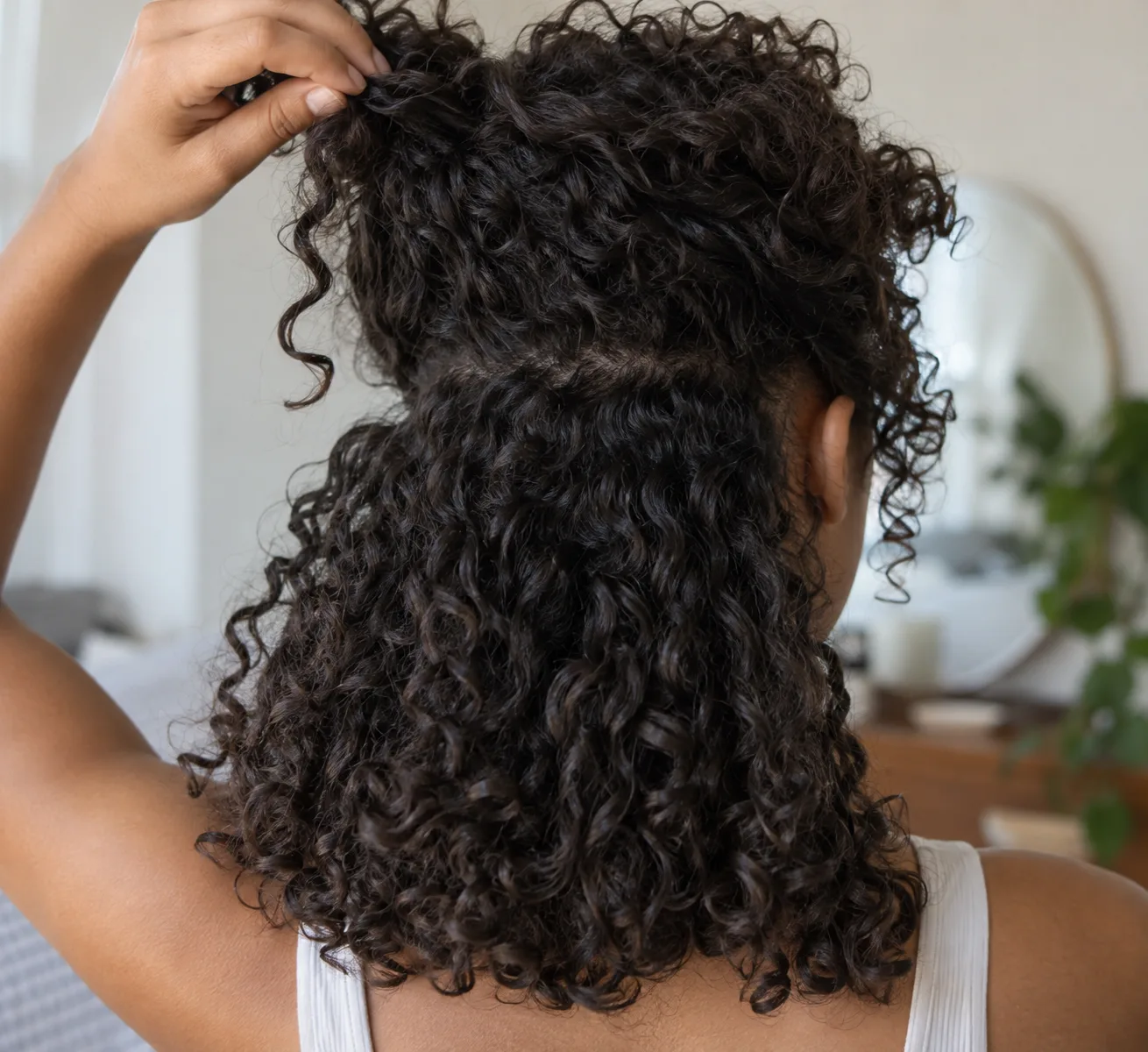
Use dry length rather than the cutting line as your reference
Curls and coils do not end at the same apparent point when wet, stretched and dry. The amount of spring varies across a single head, so a uniform wet measurement can create an uneven-looking dry outline. Take note of the curl groups around the face, crown and nape in their everyday dry state. If you have one area that springs much higher, mention it before the stylist removes length. A visual preview may show an appealing silhouette, but it cannot measure that individual change for you.
When comparing layered and one-length references, keep the longest dry endpoint approximately the same. Otherwise you are judging length and layers at once, and it becomes impossible to know which change you prefer. If preserving a ponytail or specific shoulder point matters, say so explicitly. The stylist can then propose how much layering is compatible with that constraint. A useful consultation asks where each curl group is expected to sit dry, not merely how many centimetres come off wet hair.
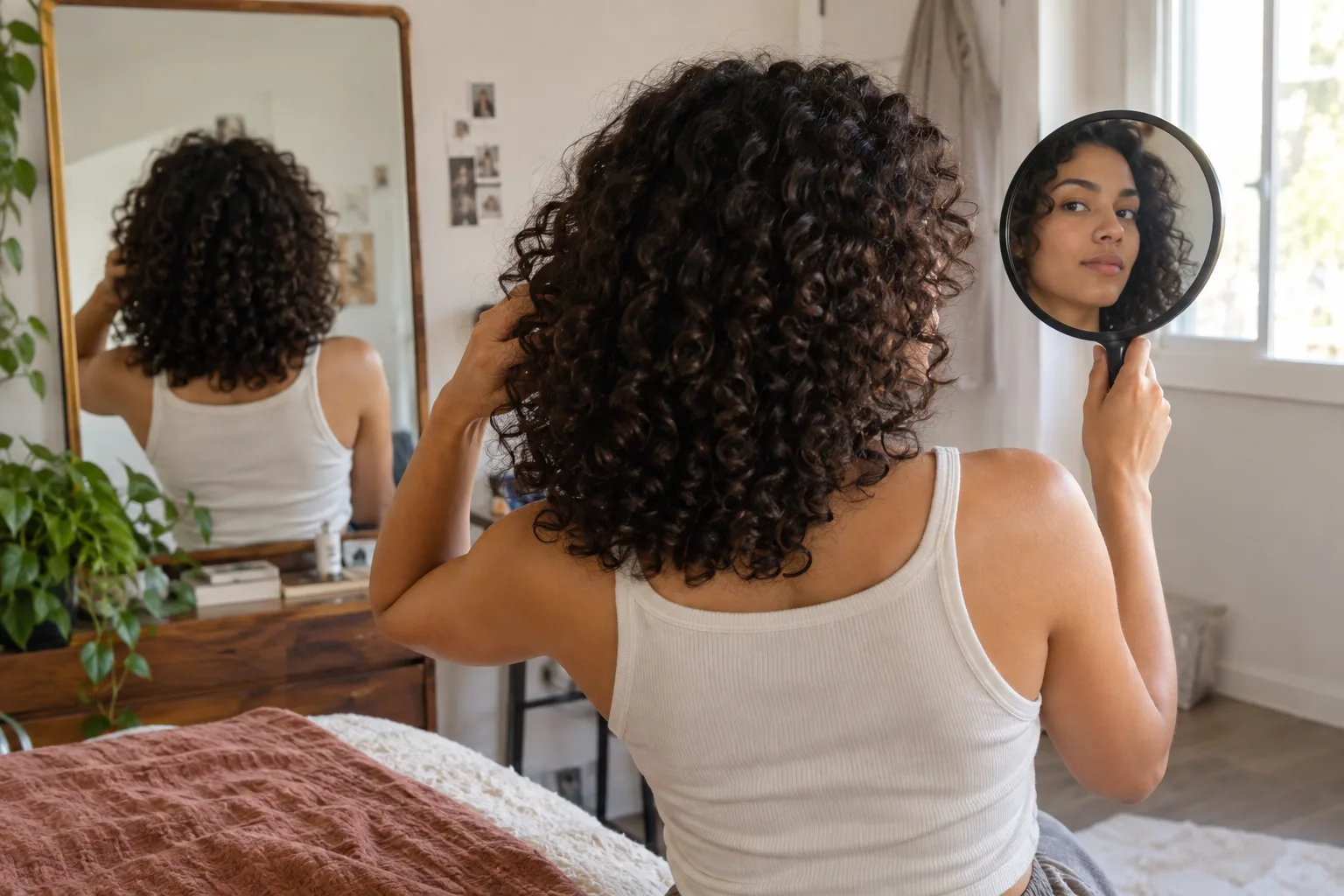
Make a controlled preview with Hair Muse
Start with one clear, evenly lit photo where the full current shape and hairline are visible. Choose a normal styling day, not a freshly stretched or unusually slicked-back version of your hair. In Hair Muse, compare a fuller one-length direction with a softly layered direction while keeping the color, pose and approximate longest endpoint as consistent as possible. If a preview changes several things at once, do not treat it as a fair comparison; make a simpler pair or use it only as a mood reference.
Save the original and at most two or three useful alternatives. Look first at the back outline and the widest point, then at the face-framing curl groups. Ask whether you prefer fullness at the ends, movement through the sides or lift nearer the crown. Write down the one variable that made the preferred version work. A preview is a visual planning aid, not a simulation of strand physics, shrinkage, cutting technique or salon feasibility. The real hair and professional discussion have the final say.
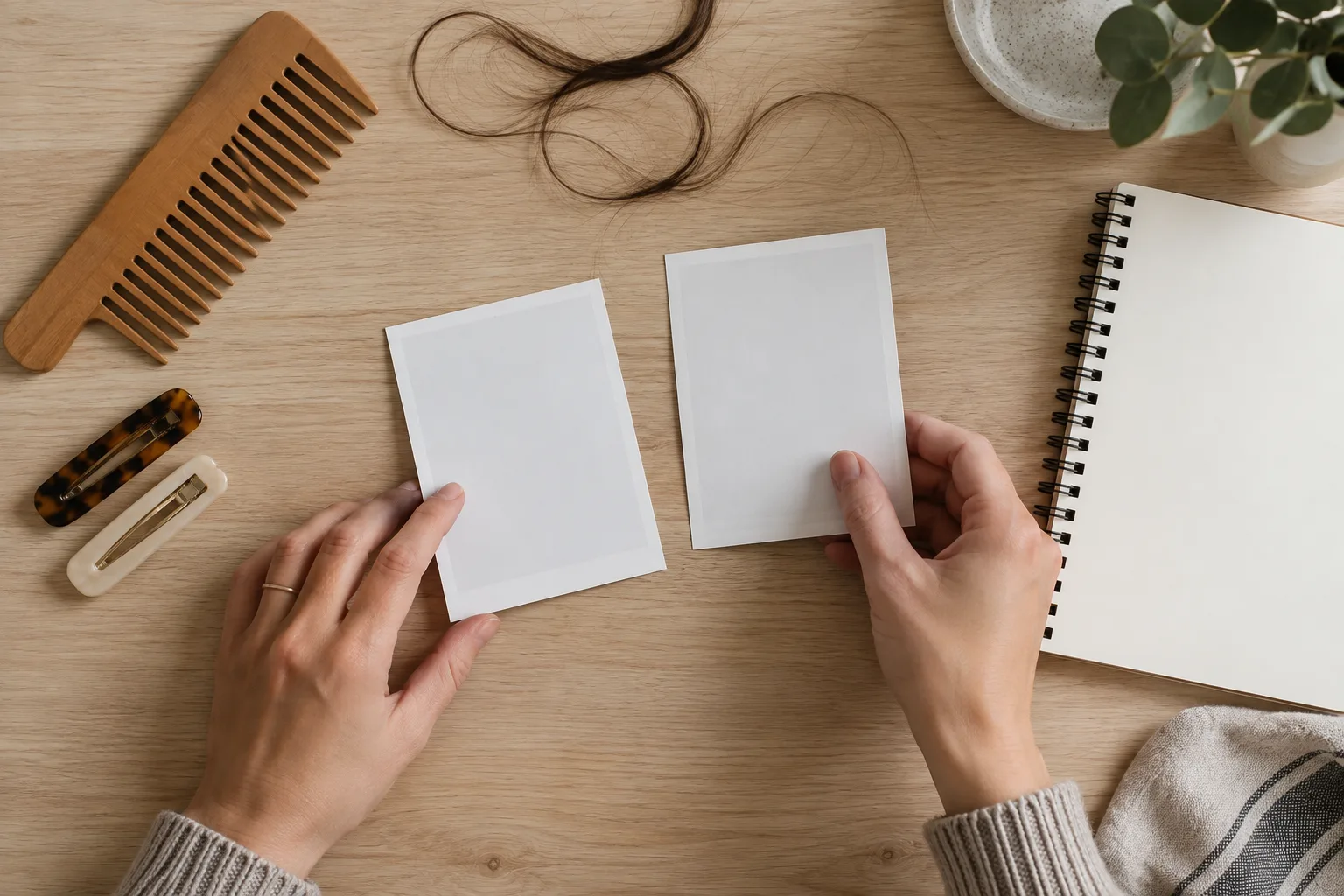
Check density and the ends before asking for more volume
Dense curls can form a broad lower triangle when their weight gathers at one level. Moving selected weight higher may change that balance, but too many short pieces can create a wide crown you never wanted. Finer or lower-density curls may benefit from a strong-looking perimeter; aggressive layering can make the last few inches look transparent. Neither concern can be diagnosed from a generic curl-type number. Examine the actual distribution of your own hair from root to end and tell the stylist what you want to preserve.
Use photographs from a typical hair day rather than a heavily styled best day. Hold the ends against a plain background and notice whether the bottom line already looks light. Check the sides with the head upright, not tilted toward a mirror. If your goal is less bulk, ask whether modest internal shaping or longer layers can help while keeping the exterior outline. If your goal is fullness at the bottom, ask what the stylist can do without sacrificing movement around the face. These are shape questions, not promises of thicker growth.
Test the shape against your real curl routine
A good cut must work on the day after washing as well as the appointment day. Think about how you cleanse, detangle, dry and refresh, and whether you wear a loose tie or protective style. Short crown pieces may dry faster but also lift higher or slip out of a tie. Longer lower sections may retain weight and shape differently as the week goes on. Do not choose a reference that requires daily heat or meticulous re-curling if that is not your routine.
The American Academy of Dermatology recommends gentle detangling of curly or coily hair when wet and conditioned, rather than dry brushing that can add breakage and frizz. It also notes that routines often need individual adjustment. Bring your normal styling products and drying method into the salon conversation; their effect on clumping and apparent length matters. Ask the stylist to show how the planned layers will look when you use your ordinary routine, not only after a salon finish you cannot recreate.
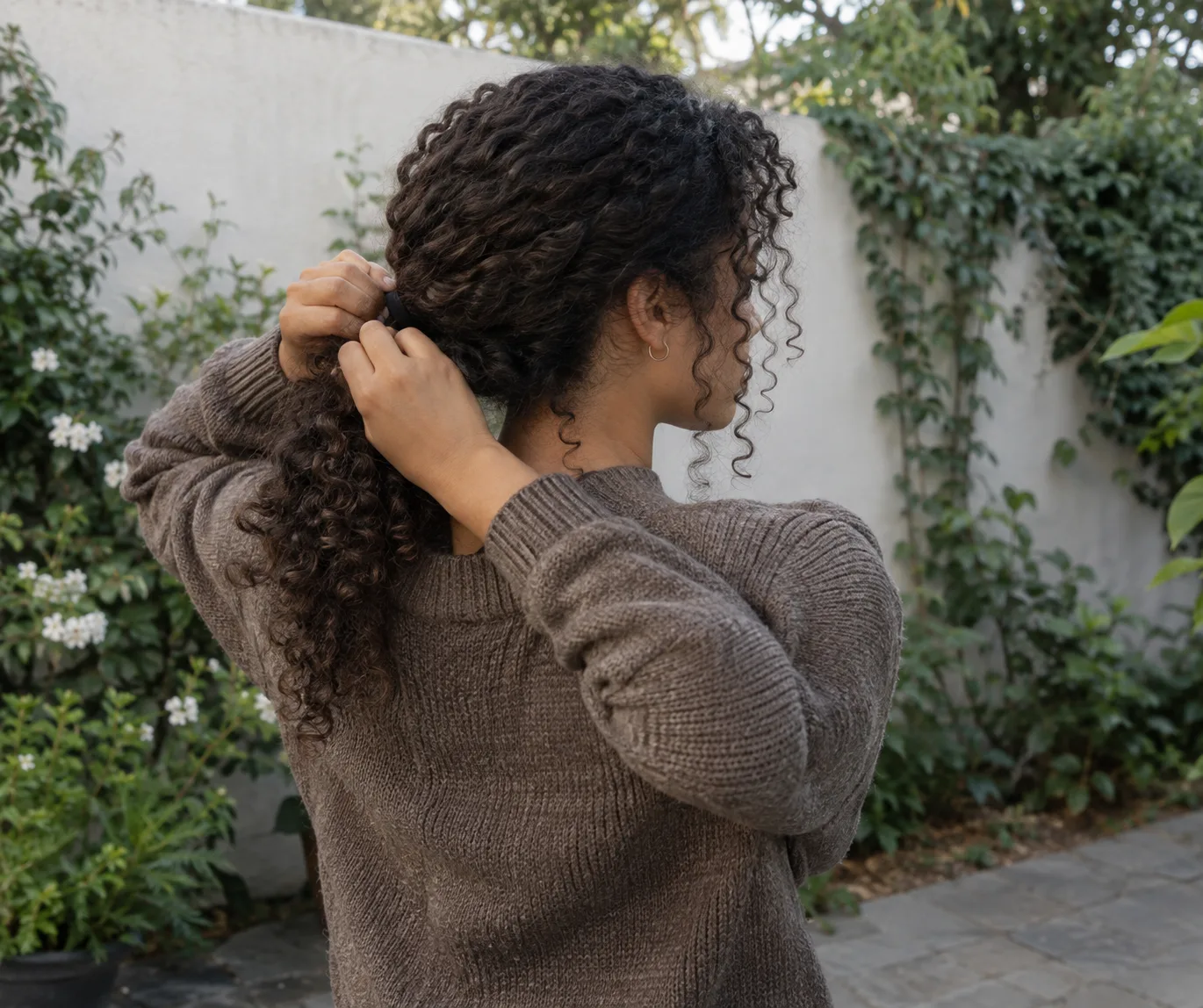
Take a small, useful brief to the stylist
Bring the unedited starting photo, your favourite preview and one alternative you rejected. Point to the precise difference: 'I like the slightly higher widest point, but I want to keep this full edge,' is more useful than 'give me layers.' Explain whether you wear your hair curly every day or alternate with stretched styles, and show how much of the front you need to tie back. Ask where the shortest crown and face-framing curls would land dry and how the shape will grow over several months.
Invite the stylist to adapt the idea for your density and mixed curl patterns. A cautious first layer can be checked in the dry shape before cutting more; removed length cannot be put back at that appointment. If the professional sees a conflict between your reference and your texture, ask what part of the desired effect is achievable without losing the length or edge you value. Your saved images should clarify a preference and open a conversation, not become an instruction to copy every pixel.
Decide by the compromise you can happily maintain
Choose one length when a fuller bottom, easy tie-back and predictable grow-out matter most, especially if the crown shape already pleases you. Choose gentle layers when you want more movement or a less bottom-heavy silhouette but do not want to surrender the perimeter. Consider stronger, shorter layers only if you truly prefer a higher or rounder shape and can accept the maintenance and shorter loose pieces. There is room between the extremes: the stylist can tailor the first layer, depth and interior weight removal.
Revisit the choice after looking at your dry photos, controlled preview pair and daily routine notes. If all three point to the same goal, you have a clear brief. If they disagree, do not force a dramatic cut to resolve uncertainty. Keep the longest shape you still like and ask for a smaller first adjustment. Hair Muse helps reveal what silhouette attracts you; the salon decides what is technically workable, and only your own hair after washing will show how the result truly behaves.