A simpler wash-day routine
Where leave-in conditioner fits after washing
Separate the rinse, conditioning and styling steps. Give a leave-in a clear job before adding another layer to your wash-day routine.

A leave-in conditioner can become the most confusing bottle after a wash. You have already used conditioner in the shower, the ends still need arranging, and a styling tutorial adds a cream, a spray and an oil. Which step has a job, and which one simply repeats what you have done? Start by deciding what stays on the hair, what must be rinsed away and what you expect from the finished style.
This guide follows one ordinary wash through to the next day. Hair Muse publishes it, but no app is needed. The photographs illustrate separate situations, not a product trial. Keep your exact product directions nearby; understanding one useful step matters more than copying an entire shelf.
Put leave-in conditioner after the rinse, not in its place
Draw a simple boundary between the shower and the next step. Finish the wash and the rinse-out conditioning use as directed before deciding whether a permitted leave-in belongs afterwards. Do not keep an ordinary rinse-out conditioner in the hair simply because its name contains the word conditioner. Equally, a product with several expressly stated uses needs the instructions for the particular use you choose, rather than a mixture of all its modes.
The American Academy of Dermatology distinguishes leave-in and rinse-out formulations and advises following their different uses. Its guidance also notes that heat protection needs an explicit packaging claim. Those are useful boundaries for your routine, not evidence that every product will produce the same finish or replace every other step. Read the name and directions together before making the substitution.
If choosing between a rinse-out mask and your usual conditioner is the unresolved question, settle that first with our mask-versus-conditioner guide. The question here comes later: after the required rinse is complete, what practical task remains? Perhaps the lower lengths are difficult to arrange, or perhaps they already feel comfortable and need nothing else. A product does not need to be used just because you own it.
Prepare the hair for the mode you actually selected
Check whether the chosen use calls for damp hair or expressly allows dry application. Do not borrow the dry-hair instructions from another bottle with a similar description. When a damp-hair mode is specified, finish rinsing first and gently remove excess water without wringing the lengths into a rope. Keep the towel action separate from the product step so that you know what you are about to apply and where.
Put the towel down, close the taps and keep the container within easy reach. Read small print before your hands are wet. These preparations help you follow the instructions without guessing while handling a slippery bottle.
Follow the product’s description of dampness rather than calculating a percentage of water. If one section is streaming while another is almost dry, organise the hair before judging application. The photograph illustrates gentle pressing, not scalp rubbing.

Name the area that needs attention
Instead of treating the whole head as one surface, identify the part you are trying to make easier to manage. The underneath lengths may be awkward while the front already falls comfortably. Short ends near the neck may need a different approach from a long section over the shoulder. Explain the task in these ordinary terms before deciding how much of the product to dispense.
Keep a hair-length product within its permitted application area. Do not turn it into a scalp treatment, and do not use scalp sensations as a test of whether the hair received enough. With a short cut, be honest about whether you can reach the stated area without coating the skin. If the product's directions do not fit your situation, ask the manufacturer rather than inventing a new use.
Choose a boundary you can remember, such as the lower lengths resting over one shoulder. This is an organising cue, not a measured distance. It helps prevent repeated applications to the accessible front while the back receives little.
Give the chosen format access to the lengths
A lotion, cream and spray are different ways of delivering a formula, not interchangeable instructions. If the directions describe spreading a cream between the palms, do that before approaching the selected section. If they specify spraying, follow that product's distance and application instructions. Do not spray toward the eyes or assume a mist in the room means the lower hair received an even application.
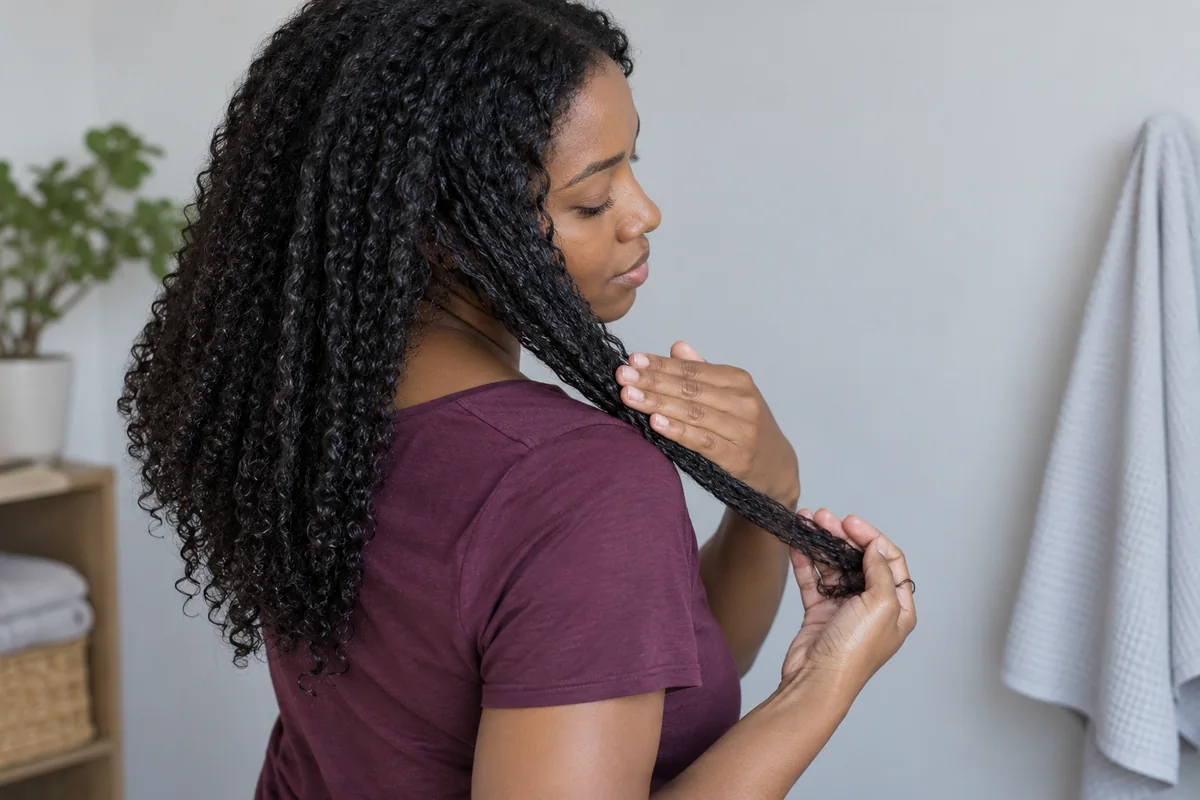
For dense hair or loose curls, access may matter more than adding another large dose to the outside. Arrange a manageable section and support it comfortably so that you can reach the intended lengths. Smooth gently without pulling a curl straight or forcing your fingers through a knot. A resistant tangle needs separate patient handling rather than more force.
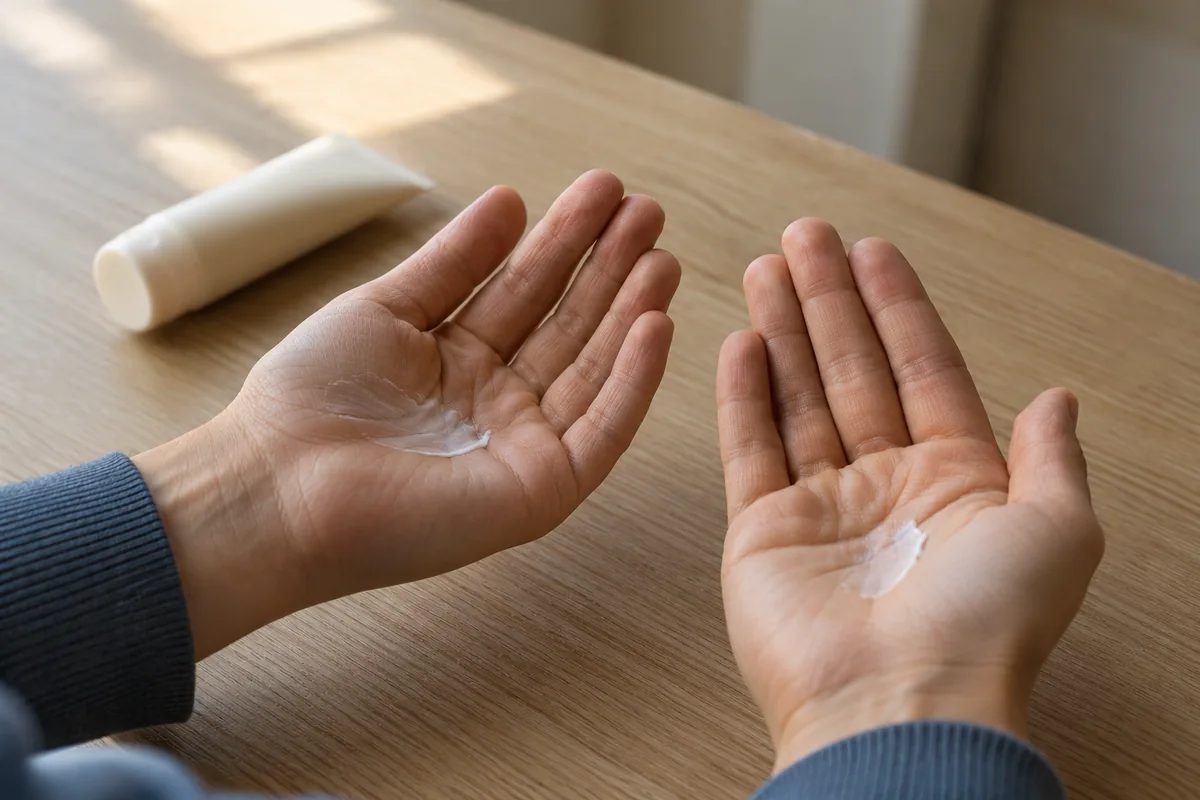
Avoid using the illustration as a quantity scale. The thin film in the hands demonstrates distribution, not an exact dose for your length, density or formula. Keep within the label's directions and stop to check access before reaching for more. A pump is a dispenser with its own output, not a standard unit shared by every product.
Separate conditioning, hold and heat protection
Write down the job of each product you intend to leave on. One may be a conditioning step, another may help hold the style, and a third may carry explicit directions for heat protection. A familiar category name does not establish all three functions. If you cannot say what a layer contributes, keep the first routine simpler instead of adding it because a tutorial used it. If mousse is your chosen styling layer, our separate guide helps you plan that step.
Read the instructions for the exact combination you plan, especially before heat styling. A leave-in description alone is not permission to treat a product as a heat protectant. Follow the relevant product and tool directions, and do not invent a safe temperature or a guarantee that damage cannot occur. If the instructions conflict, ask for clarification or choose a simpler, permitted routine.
Keep products in their own containers. Mixing them into a spare spray bottle creates a different preparation with unclear amounts and keeping conditions. Diluting a rinse-out conditioner does not create a labelled leave-in. Ask the manufacturer instead of inventing a substitute.
Walk through an ordinary morning before changing it
Consider an illustrative morning with fine, shoulder-length hair. The person wants the ends easier to arrange but likes the movement at the roots. Their written plan finishes the usual rinse-out care, follows the chosen damp-hair directions on the permitted lower lengths, and uses a familiar drying method. They do not add a new oil and a new holding cream during the same first comparison. This is a planning example, not a reported result or an instruction to buy three products.
Now change the practical situation: long, dense curls make the underneath sections difficult to reach. The useful adjustment may be arranging accessible sections before application, while leaving the product's instructions intact. That person has a different access problem, not proof that every curl requires a larger fixed quantity. Both plans begin with the real task rather than a universal order diagram.
Before washing, say the plan aloud in one sentence: after this rinse, this permitted leave-in goes on this area, then I use this familiar finish. If you cannot complete the sentence, find the missing instruction now. That is more helpful than stopping halfway through a wet routine to search for an unrelated video or combine contradictory advice.
Treat the next-day refresh as a new decision
The next morning, look at what actually needs attention before reopening the bottle. A flattened front, an awkward parting and dry-feeling lower ends are different observations. None automatically means the whole head needs another application. Decide whether you are rearranging the style, following an expressly permitted refresh use or returning to your normal wash routine.
Check for dry-hair permission rather than assuming yesterday's damp-hair directions apply unchanged. If refreshing is allowed, keep the task local and follow those instructions. Do not keep stacking products to postpone washing indefinitely, and do not invent a universal number of days that every formula can remain on every head. Your normal cleansing routine and the exact product directions still matter.
If the hair feels coated or difficult to arrange, another layer may make the situation harder to read. Note what you used, where it went and whether you changed anything else. You are gathering a useful description, not diagnosing an ingredient intolerance or deciding that your hair needs an aggressive cleaning treatment from a single disappointing morning.
Review the dry finish and keep the useful step
Once the hair is dry, judge the task you started with. Are the intended lengths easier to arrange? Did you keep the movement you wanted? Is the result comfortable enough for an ordinary day? Look at the area that received the product instead of comparing your whole head with a polished promotional photograph. Natural flyaways are not proof that you have failed to apply enough.
Keep a short note of the use mode, application area and other products, together with one observation about the dry finish. On a later ordinary wash, change one practical variable within the permitted directions if clarification is needed. You do not need a score, a perfect photograph or a promise of permanent repair. If the step adds no useful benefit for you, keeping the routine shorter is a valid outcome.
Stop using a product that causes discomfort and follow its removal directions rather than adding something else over it. Persistent scalp symptoms, unusual breakage or hair changes need suitable professional assessment, not a stronger cosmetic layer. The aim is a manageable sequence that respects your own hair and the instructions, with enough clarity to know when a bottle has earned its place.