Planning a fuller bob
Italian bob: decide where the fullness belongs
Choose the dry endpoint and the weight at the ends before copying a polished photograph. A small visual comparison can make your salon questions clearer.

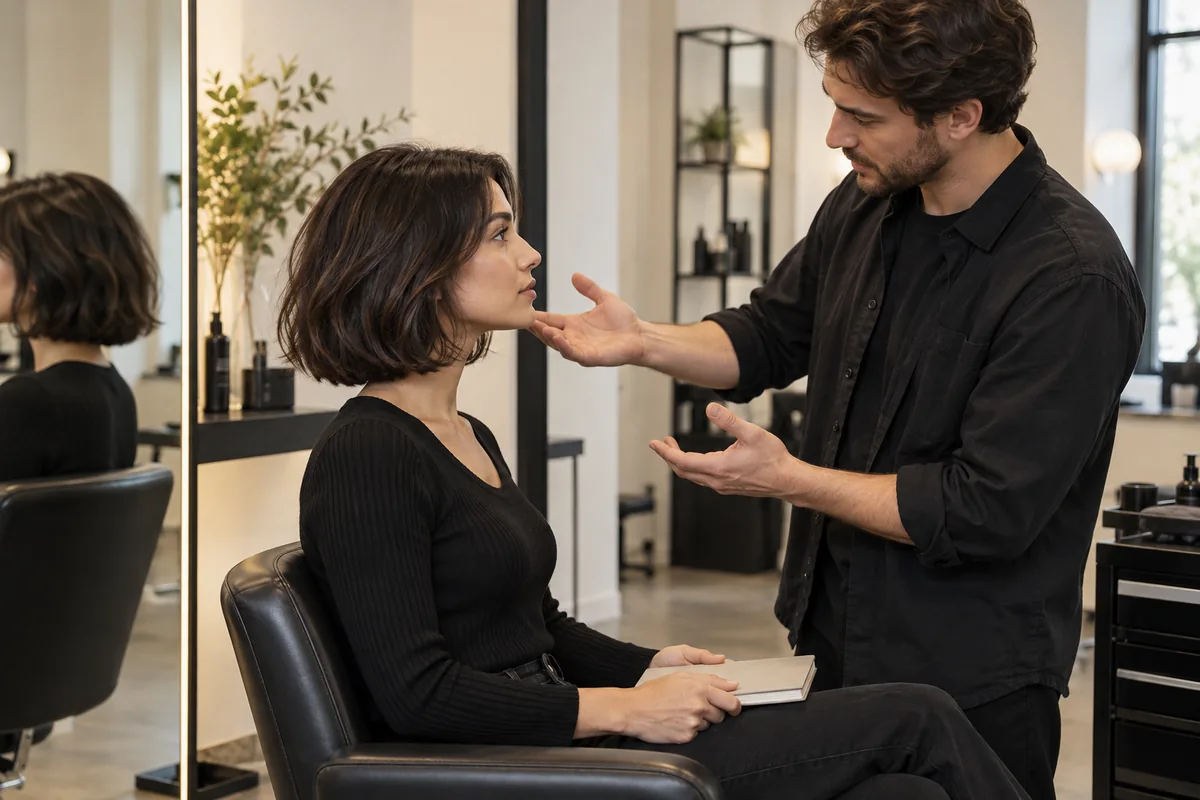
An Italian bob may attract you because the ends look substantial without the outline feeling rigid. Then a second picture shows a longer, looser version and you wonder which detail you actually want. Is it the length beside the jaw, the rounded edge or the way a blow-dry lifts the hair? Those questions are more useful than deciding whether your face belongs in a supposedly suitable category.
This guide helps you separate the cut’s visible perimeter from its photographed finish, compare a few possibilities and prepare a clear salon brief. Hair Muse publishes this article; its optional previews can support a visual comparison, but they cannot measure density, predict movement or establish what a stylist can achieve on your hair. The five illustrations depict separate editorial situations, not a tested transformation or evidence that one result will suit everyone.
Define the Italian bob you mean
Start with the part of the reference that makes you pause. Perhaps you like a substantial lower edge, a little space around the neck or the way the front follows the jaw. Name that feature before collecting more images. Otherwise, a search for one haircut label can become a collection of different lengths, textures and styling habits that would require different salon decisions.
In Modern Salon’s discussion with educator Teresa Romero, the Italian bob is described through its heavy ends and strong lower perimeter. Use that as a description of one interpretation, not a universal cutting formula. Explain what you see in your chosen photograph and ask the stylist how that particular outline relates to the hair you actually have.
Keep a second sentence for what you do not want. You might like the fuller edge but want less exposed neck, or admire the movement without wanting a daily polished finish. A clear boundary is useful information. It is not a reason to find an image that magically proves every preference can coexist.
Choose the endpoint on dry hair
Look at your hair in its usual dry state with your head comfortably upright. Notice where the front and back currently finish relative to your chin, neck and shoulders. A front portrait alone may hide a shorter back or a side that has been tucked behind the ear. Keep those observations separate rather than assuming the entire perimeter sits at the same visible height.
Use a finger beside the hair to indicate a proposed endpoint during the consultation, without pulling the hair down to a new position. Ask the stylist to show the difference between the length you see when it rests naturally and the length needed to produce that finish. Waves, curls, growth direction and styling choices remain questions for an assessment of the real hair.
Do not select a measurement simply because a reference caption provides one. Your own landmarks make a clearer starting point than borrowing another person’s centimetres. If showing more neck is the concern, say that directly. You can prefer a slightly longer version while still exploring the fuller outline that first attracted you.

Read the lower edge separately from the top
Follow the visible line along the ends in your reference. Does it look compact, soft, irregular or turned inward by styling? Then look above it. A lifted crown and a dense-looking lower edge are different visual features, even if a single photograph presents them together. Decide which one matters most when you picture an ordinary day rather than an occasion.
A full-looking perimeter does not mean the haircut creates additional hair. If your ends currently look sparse, discuss their condition and distribution with the stylist instead of expecting an image to diagnose the reason. Likewise, thick hair is not automatically a problem to remove. Describe whether you want the lower outline retained while the stylist assesses how the shape would work.
Our guide to comparing blunt ends and softer layers helps distinguish those priorities in more detail. Use it when you cannot explain why one reference feels substantial and another feels lighter. The purpose is to improve the conversation, not to arrive with instructions for a technique you have not assessed on real hair.

Keep the photographed finish in its own column
Choose one reference with a finish you genuinely intend to wear. Notice whether the ends are curled under, flicked outward or left in their normal texture. A glossy curved edge may reflect a styling session as well as a haircut. It is reasonable to like that finish, but ask what producing it would involve before treating it as the everyday result.
Describe your actual mornings: how you normally dry the hair, which tools you already use and which tasks you do not want to add. Avoid promising yourself a different routine just to make the reference seem practical. If you want an occasional polished look and a simpler normal finish, ask to discuss both rather than choosing one picture as proof of both.
There is no universal maintenance calendar for everyone wearing this label. Ask which changes would indicate that your own outline needs attention and how much reshaping the proposed version would involve. The stylist can assess the condition and intended finish. A label such as effortless does not answer those questions on your behalf.

Build a consistent Hair Muse comparison
Use a clear recent source photo with the face and existing outline visible. Keep the head upright, lighting understandable and background uncomplicated. Avoid changing the expression, camera angle and color between every comparison. If your concern is the lower edge, a different facial expression or a dramatic color change can distract you from the haircut decision.
In Hair Muse, explore one overall direction first, then compare a small number of distinct visual options. Keep the original photo available beside the previews and ask one question at a time: do you prefer the endpoint higher, or do you mainly want a fuller-looking edge? Record the difference in your own words. Do not assume the app offers a physical density measurement or a precise future haircut simulation.
Hair Muse is free to download; some previews or usage levels may require an in-app purchase. You can also do the planning with photographs and notes without using an app. The useful outcome is a small shortlist with clear questions. Generating more attractive images is not, by itself, evidence that the corresponding cut is feasible or convenient.
Reject attractive results that change the wrong details
Inspect the jaw, ears, hairline and outline before judging the general mood of a preview. Has the face changed, has an ear disappeared, or has the hair become much thicker without explanation? A result that changes those details cannot tell you whether the perimeter alone is what you prefer. Remove it from the shortlist or mark the limitation clearly.
Check where the ends actually sit rather than reading their length from a cropped thumbnail. A dark collar, shoulder or shadow can make the edge hard to locate. Enlarge the relevant area and compare it with the original. If the image still hides the part you care about, record it as unknown instead of inventing an interpretation that makes the result work.
Use our guide to a better hairstyle try-on photo if the starting image itself obscures the jaw or hairline. Improving the source can make the visual comparison easier to read. It still does not reveal spring, movement, density, growth direction or the amount of styling required. Those are matters to check with your actual hair.
Test the shortlist against normal movements
Put on your usual glasses or the collar you wear most days and examine your current hair from the side. Show the stylist whether you regularly tuck a section behind an ear or gather it out of the way. A photograph of tucked hair does not prove that a shorter version will stay tucked, and a static preview cannot demonstrate hold through a busy day.
For example, you may prefer a higher outline in the preview but discover that keeping the front available for ear-tucking matters more than exposing the neck. That is a useful planning conflict, not a failed experiment. Keep the visual preference and the practical requirement together in the brief. The stylist can discuss a compromise or explain why another shape would be more appropriate.
Avoid testing the idea by pulling, pinning tightly or hiding large amounts of hair under clothing and calling the result an exact simulation. A loose temporary arrangement can show a broad impression, but it changes how the hair is supported. Tell the stylist what you did and which part of the impression you liked.
Take a short, specific brief to the appointment
Bring the original photo, one main reference and only the alternatives that answer a different question. Identify the endpoint, the desired feeling at the ends and the finish you intend to wear. Separate a request from an uncertainty: I prefer this lower edge is a preference; can my hair hold that outline without this finish is a question.
Ask the stylist to assess the front, sides and back before agreeing the plan. Mention any length you want to keep and ask what would change if it remains. If the answer differs from your preferred preview, ask to see the reasoning against your real hair instead of treating the image as a promise that must be fulfilled.
You can leave the appointment with a revised plan or decide to keep more length for now. The comparison has still helped if it clarifies what you value and what remains uncertain. A successful brief makes the next decision understandable to both people; it does not require agreement with every detail in an illustration.