Choosing a shorter outline
The bixie haircut starts with three length decisions
A short layered top does not tell the whole story. Decide what happens at your nape, ears and fringe before choosing a bob–pixie hybrid.

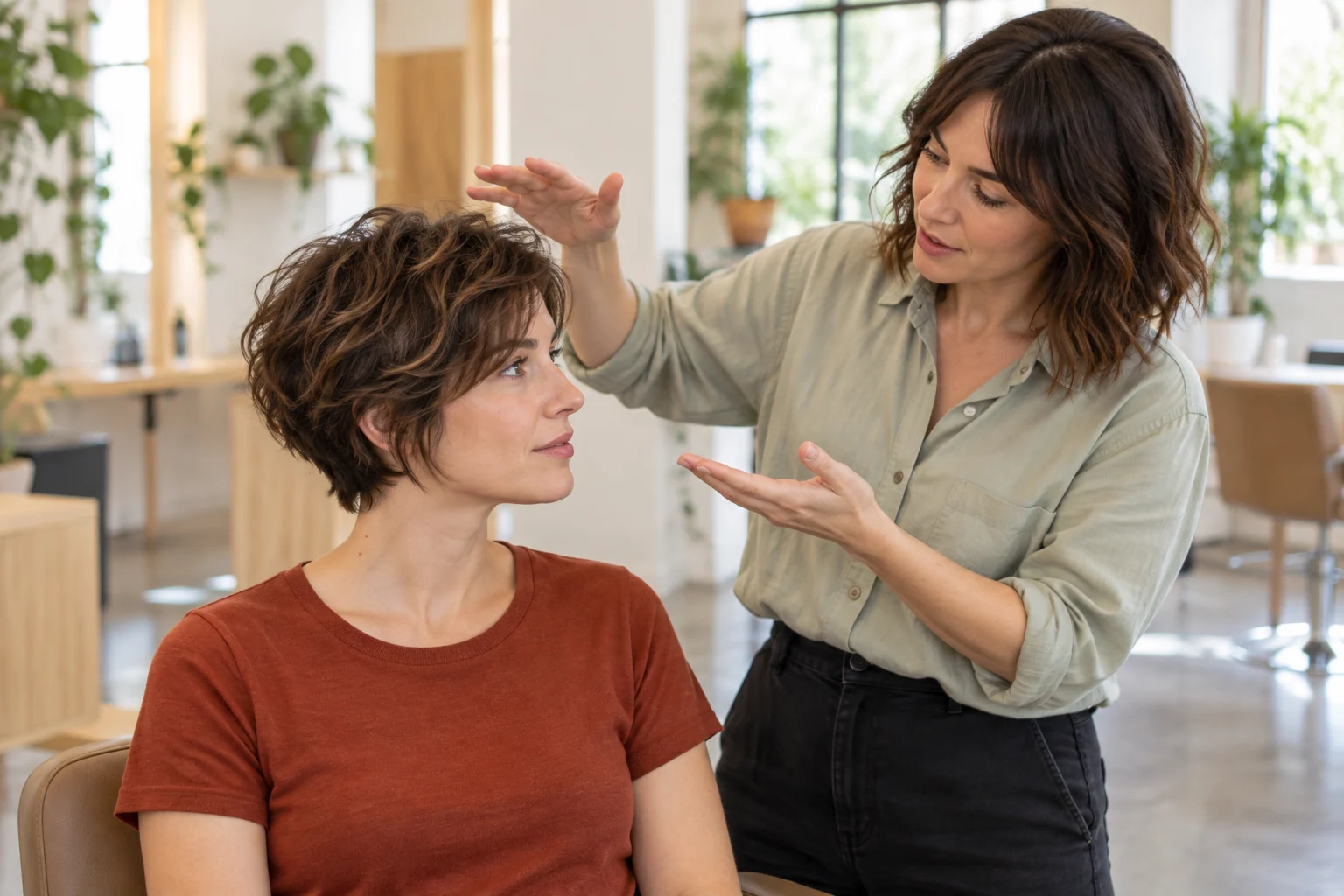
A bixie haircut can look like a reassuringly long pixie in one picture and a very short layered bob in another. You may like the loose top but hesitate over an exposed nape, or want open ears without losing the pieces beside your cheeks. Those are useful distinctions. Before asking for the name alone, decide which lengths you are willing to change and which everyday movements you want to keep.
This guide turns that uncertainty into a consultation plan. First separate the nape, sides and front; then use a consistent photo and a small Hair Muse shortlist to explain your preference. Hair Muse publishes this article, and its previews are optional visual planning aids rather than cutting instructions or predictions of how your hair will behave. The illustrations show separate editorial situations, not a documented transformation or a promise of a particular result.
Define your bixie haircut before collecting more pictures
The name combines bob and pixie, but it does not specify one compulsory outline. Modern Salon's discussion with working stylists describes the blend and shows that the balance can vary. Treat that definition as a starting point, not a measurement chart. A reference with a short front and longer perimeter may describe a different project from a reference with longer cheek pieces and a close nape, even when both carry the same label.
Choose what attracted you first: movement on top, less hair around the neck, a softer short outline or a front piece you can sweep aside. Put that aim into one sentence. Then describe the area you do not want shortened as much. This gives the conversation a direction without requiring professional vocabulary. You do not need to decide whether a photograph technically qualifies as a bixie before deciding whether you want to wear its visible details.
Make the nape a separate decision
A front portrait can hide the biggest commitment. Check how much neck you want visible and whether you prefer a soft edge, a more defined perimeter or extra length that still moves behind the ears. A short nape does not automatically mean a shaved undercut. Tell the stylist if visible skin, clippers or a very close finish are outside your preference. Do not assume that a longer top will cover the same areas in every position.
Use a real rear or rear three-quarter photograph of your current hair for the appointment. Keep your head comfortably upright; tilting it changes the visible relationship between hair and neck. The photo is a record of what is present, not a template for removing a fixed amount. Ask the stylist to show where the proposed dry outline would sit. If an inspiration photograph has no rear view, mark that part as unknown instead of inventing its construction.

Test the side pieces against things you really wear
Put on your usual glasses and let the hair fall without arranging it into a perfect pose. Notice where the side pieces meet the frame and whether you like the ear fully visible, partly covered or mostly covered. Demonstrate any ear-tucking habit with your current hair. A photograph that already has the hair tucked away cannot prove that shorter pieces will stay there after cutting. The stylist needs to assess the actual length and growth direction.
Think about the moments when you want the front out of your face: reading, working at a screen or walking outside. Would a loose front piece be welcome, or would it immediately annoy you? You can ask for a more generous side length while discussing a shorter back. Conversely, an open ear may be the detail you want most. Name the trade-off rather than expecting every short reference to preserve every long-hair habit at once.

Check the top and fringe on your real texture
The top may be the most eye-catching part of a bixie, yet a styled image tells you little about how your own shorter layers will settle. Show your ordinary dry texture, usual parting and any crown or front growth pattern. Explain whether you usually air-dry, blow-dry or alternate. These are observations for the consultation, not reasons to assign yourself a rigid hair-type category or a rule that certain faces cannot wear short hair.
Ask which part of the reference comes from the cut and which comes from styling. A lifted crown, smooth fringe or deliberately separated pieces may involve work you do not want every morning. For curls and coils, agree that the visible dry outline matters; an image cannot calculate the exact movement after removing length. Keep one feature as the priority. Trying to copy the top, fringe, texture and colour from unrelated pictures can produce a contradictory brief.
Take one useful source portrait
For an initial preview, use a current, clear portrait with your whole head in frame and the camera near eye level. Choose even light and a background that separates the hair from its surroundings. Keep your normal expression and avoid a beauty filter that changes the face. Apple's camera guidance explains grid and level tools for composition; those tools help align a photograph, but they do not measure the future haircut or map your scalp.
Retain the unedited original. Take separate real side and back photos if they help explain the consultation, while recognising that a generated side view is not evidence of your actual nape. Our photo guide explains the same consistency principle in more detail. Before selecting a picture for an app, check the background for private details and choose a photo you are comfortable using. A tidy source makes comparison easier without turning a preview into a physical assessment.
Use Hair Muse to compare one visible choice
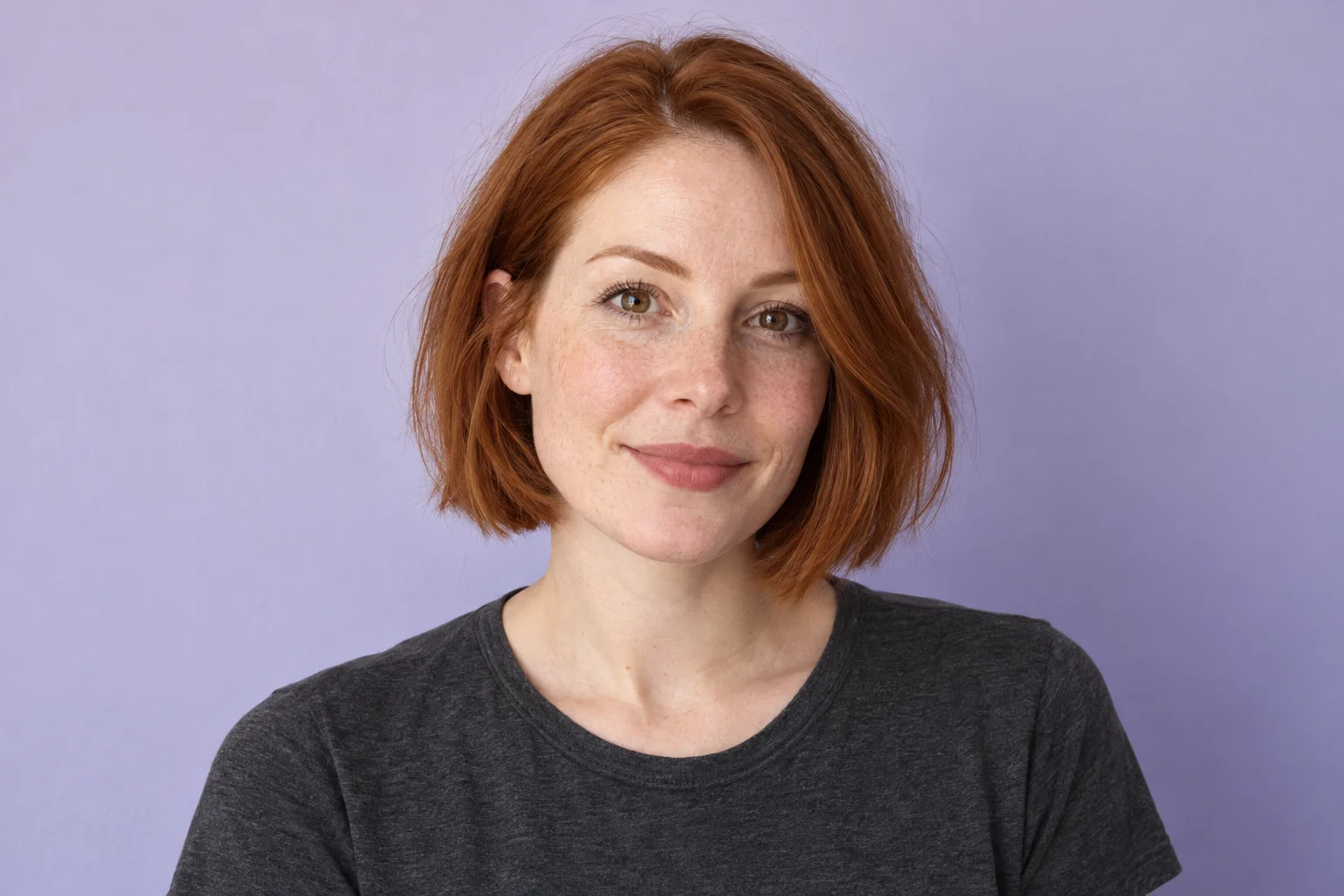
Start with the same source photo in Hair Muse and explore a small number of short-hair directions. The useful question might be whether you prefer a more open side or more length beside the cheek. Keep colour and the overall styling idea similar where possible. If the available results do not isolate your question, describe the difference in words rather than treating the app as an exact length slider. It is a way to make a preference easier to discuss.
Keep a preferred direction and one meaningful alternative using the available save options. Compare them with the original, looking first for changes to the face, hairline or apparent density. Reject a result whose appeal depends on changes you did not ask for. Hair Muse is free to download; some previews or usage levels may require in-app purchases. Another purchase cannot establish whether your real crown, nape or texture will support a particular construction. The salon assessment remains a separate step.
Separate a useful preview from a flattering invention
Look at the ear, temple and front edge in each candidate. Has the image erased the glasses, shifted an ear or hidden the area you are trying to decide about? Is the nape actually visible? A pretty front view may still be a poor reference for your main concern. Mark the useful detail and the unresolved detail separately. You can like the overall mood while refusing to treat the picture as a complete plan for the back of your head.
Do the same with texture and volume. A generated airy top does not demonstrate extra density, and a smooth fringe does not establish that your growth pattern will sit flat. Do not use a preview as permission to cut away a feature the stylist has not examined. If every attractive result changes too much, return to a real reference and a spoken description. Choosing not to use an image is a valid outcome of a careful comparison, not a reason to keep generating indefinitely.
Plan an ordinary morning and the route away from the cut
Describe your realistic styling routine before agreeing on the final shape. Ask what the top and side pieces may need after sleeping, how you would refresh the fringe and which tools you already own. There is no single low-maintenance promise attached to the name bixie. A routine that feels simple to someone who enjoys a daily blow-dry may feel demanding to someone who normally leaves home with air-dried hair. Your own willingness to style is the relevant limit.
Discuss how the outline may change as it grows, without asking a preview to predict a fixed timetable. Which area would you want tidied first, and which length would you protect if moving toward a bob? Our salon guide helps turn those longer-term questions into a concrete conversation. You do not have to choose the shortest possible version now. A more cautious first cut can be the right agreement if it leaves the side or front feature that matters to you.
Agree the outline before cutting begins
Bring the original photo, the small shortlist and a short written brief. For example: soft nape, some ear coverage, longer front piece, and no shaved section. Those are sample preferences, not a universal bixie recipe. Label generated images as previews. Ask the stylist to identify what is feasible on your actual hair and show the proposed boundaries before starting. A name and a flattering image do not replace agreement about where the hair will finish.
Confirm any change that would cross a stated limit, especially shortening a side that you hoped to tuck away or exposing more nape than expected. If the proposal does not fit your routine, pause and revise it. The useful result is a cut you actively chose and can explain, with a practical way to wear it. It does not have to match every pixel of the inspiration or satisfy somebody else's definition of a perfect hybrid.