
Choosing your colour contrast
Blonde hair with dark eyebrows, on your terms
Keep your brows recognisable while you compare blonde directions. Judge the contrast you want, then take a clear preference to the colourist.
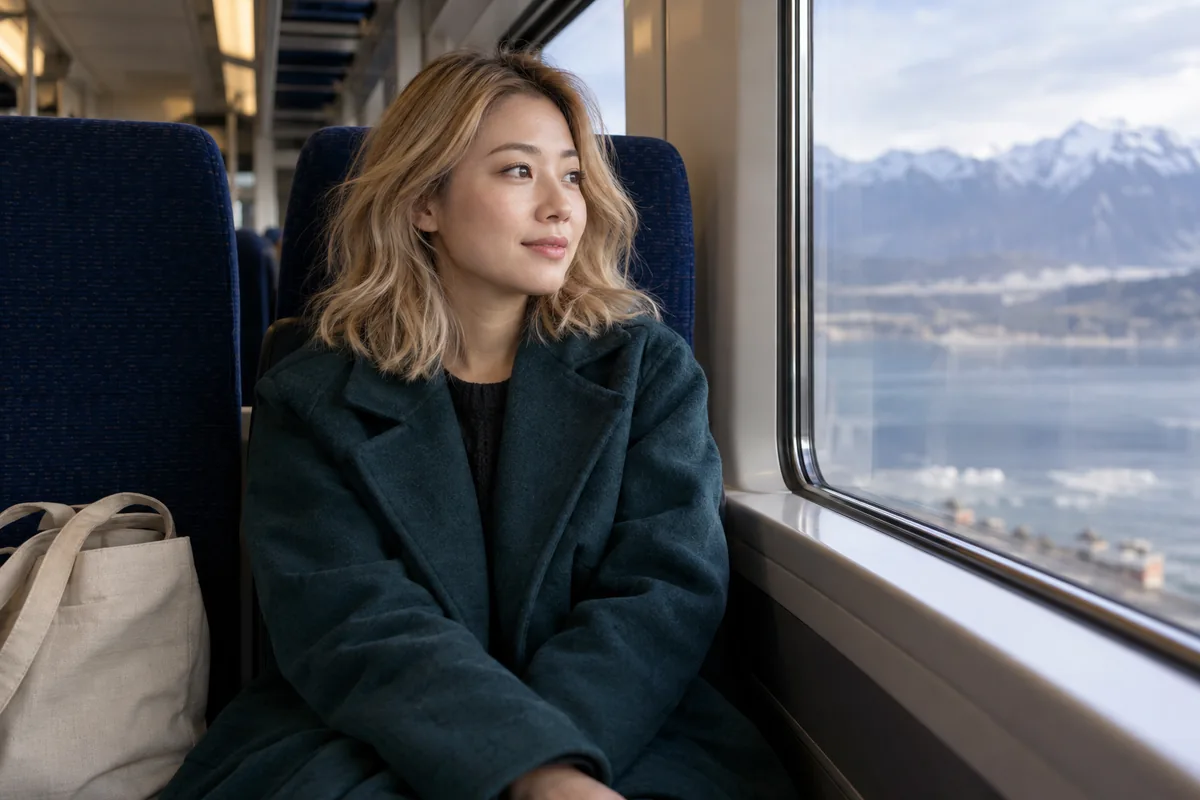
Blonde hair with dark eyebrows can be an intentional combination rather than a mismatch to correct. The useful question is whether you enjoy the contrast on your own face, in the way you normally wear your brows. A photograph of someone else may catch your attention, but it does not tell you which part you like: the lighter hair, a darker area at the roots or the clearly visible brow shape.
Hair Muse publishes this guide. Its optional colour previews can help narrow a direction on your portrait, provided you check that the comparison has not quietly changed your eyebrows, eyes or skin as well. A generated picture cannot decide what suits you or predict a salon result. The illustrations below show different people and situations; they are not before-and-after evidence. Start with your actual appearance and one question you want a comparison to answer.
Blonde hair with dark eyebrows is a contrast choice
Describe your preference without turning it into a rule for everyone. Perhaps you like a clearly defined brow against pale hair, or prefer less difference close to the forehead. Both are useful things to notice. You do not need to prove that the combination looks natural to somebody else before exploring it, and a colour label cannot determine whether you will feel comfortable wearing it.
Look at the hair and brows separately in a reference. Is the brow actually darker, or is it outlined with makeup? Does the hair look light throughout, or mainly around the face? Has strong lighting washed out the forehead? These questions keep you from borrowing an entire appearance when only one visible relationship interests you. They also help you explain a preference without asking for the model's face.
Choose a short sentence that states what stays: my ordinary brow colour and shape remain part of the comparison. You can still consider different hair directions around that fixed point. This makes the task more specific than finding the best blonde in general or applying an automatic rule about how many shades apart hair and brows should be.
Keep a recognisable starting portrait
Use a clear photograph with the face, eyebrows and hairline visible in reasonably even light. Keep the brow grooming and makeup close to what you actually wear on an ordinary day. If you choose a heavily pencilled brow for one image and a bare brow for another, you have changed the very feature you meant to hold steady.
Avoid using a flattering filter as the baseline. A softer skin finish, lifted brow or altered eye shape may make the whole image feel different before any hair colour has changed. Our photo-preparation guide explains the basic setup. Here, the extra check is simple: can you still recognise the brow hairs, outline and position that you intended to keep?
Take the photograph without rearranging the brows into a version you do not want to maintain. This is not a test you must pass. It is a way of asking a clearer question about a possible hair colour alongside your current face. Keep the original available throughout the comparison instead of relying on your memory of how it looked.

Compare lightness before changing everything else
Begin with a limited comparison between a blonde direction that feels closer to your starting appearance and one that feels distinctly lighter. Keep the haircut, pose and brows as consistent as the available images allow. You are trying to notice the hair–brow relationship, not choose between two different faces, lengths and makeup styles at the same time.
Then describe what you see in ordinary language. Does the lighter hair make the brow outline more noticeable to you? Do you like that emphasis, or would you prefer less difference near the forehead? These are preference questions, not measurements of attractiveness. A more dramatic image is not automatically a better answer simply because it catches your eye first.
Leave a separate decision for warmer or cooler blonde directions if you need one. Changing lightness, colour temperature and placement together can hide which element produced your reaction. The point is not to create a laboratory result; it is to make a useful comparison that you can explain afterwards, including what remained uncertain.
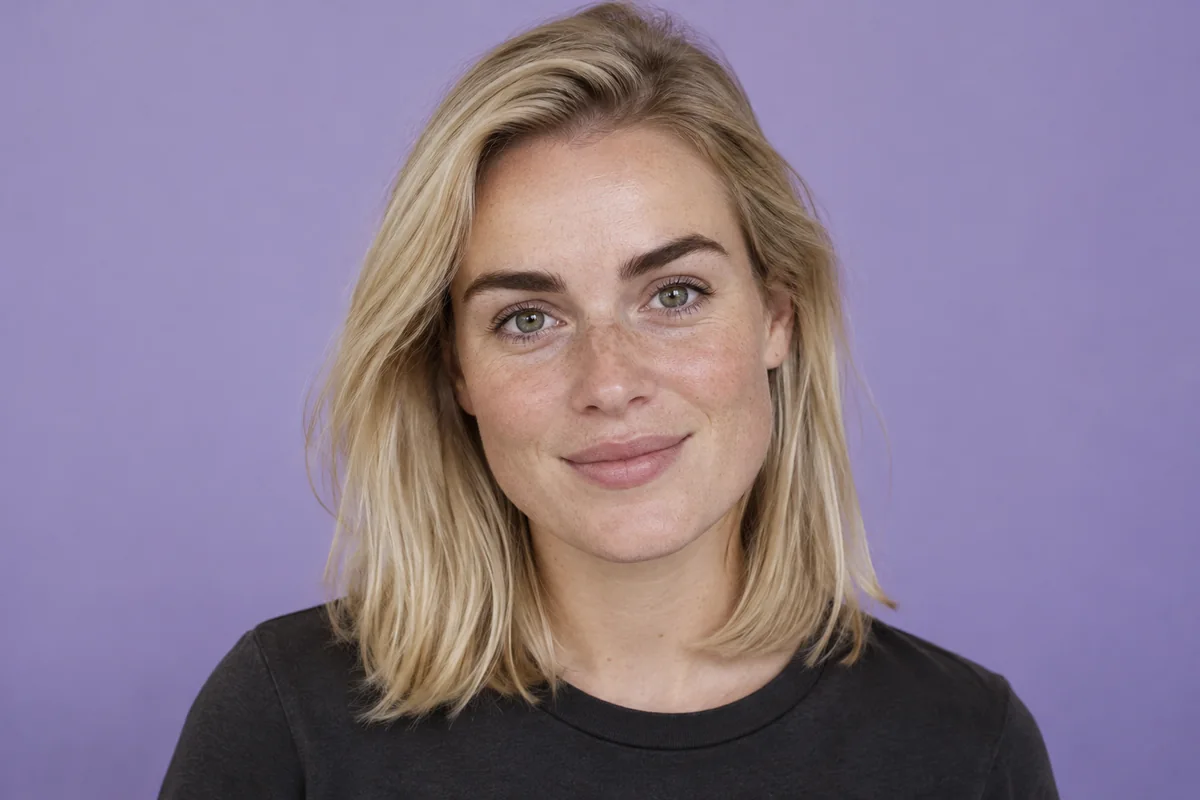
Notice where the lighter colour starts
The area beside the forehead may matter more to your decision than the colour at the ends. Look for whether your reference shows light hair right from the hairline, a visibly darker root area or a softer transition between them. Describe the placement you can actually see rather than assuming a photo caption tells you exactly how it was achieved.
A darker area near the roots can be something you like visually, but it is not automatically a promise of easy upkeep or a recommendation to match your eyebrows precisely. Ask how that particular direction might work with your real starting hair. The brows are a feature to include in the conversation, not a dye formula or a reliable measure of what your scalp hair can become.
If one picture seems easier to imagine wearing, locate the reason. You may prefer the lighter lengths while wanting more of your current depth near the face. Or you may actively want the stronger difference of lighter hair beside dark brows. Write down that preference without converting it into a required technique or a universal rule.

Use Hair Muse for a small, bounded comparison
Hair Muse offers broad hair-colour directions on a chosen portrait and lets you review and keep favourite looks. Use that as a planning aid for the specific contrast question. Start from the clear original and explore a small number of relevant blonde directions available in your version. There is no need to invent a precise salon shade code from an app label.
Keep the goal in view while using the controls that are actually available. This guide does not assume a separate eyebrow lock, pixel editor or guaranteed way to preserve every facial detail. If the output changes those features, the next step is to question the comparison, not pretend you requested that change. The original portrait remains the reference for what stays.
Hair Muse is free to download; some previews or usage levels may require an in-app purchase. You can also discuss suitable reference photographs directly with a colourist. Either way, a shortlist is useful when it records a preference and an unresolved question, rather than presenting an attractive generated image as proof that a technical colour result is achievable.
Reject a preview that changes the wrong feature
Check the brows before judging the hair. Compare their visible colour, thickness, shape and position with the original. Also notice whether the eyes, eyelashes, skin tone or makeup have changed. If several features move at once, you cannot confidently attribute your reaction to the blonde hair. An appealing picture can still be the wrong comparison for this task.
Do not interpret a lighter generated brow as an instruction to alter your real brows. Nor does a smoother complexion prove that a blonde direction improves your skin. Keep the explanation modest: this image changes too much, so it cannot answer my question. Saving fewer images with clearer limits is more useful than collecting many variations that all ask different questions.
Look at the image at an ordinary viewing size as well as close up. The detail check helps identify unwanted edits; the wider view helps you judge the whole impression you would actually notice. Neither view turns the output into a prediction. If you cannot find a comparison that preserves your starting features well enough, return to the original and a salon conversation.
Turn the preference into a practical salon brief
Consider an illustrative planning situation, not a reported test result. Someone likes pale lengths but feels uncertain when a preview also fades their dark brows. Their useful conclusion is not that they must change the brows. They keep the original, reject the altered-brow image and ask to discuss a blonde direction while retaining the natural brow contrast they already have.
A second useful question concerns the forehead area: would they like the lighter colour to begin close to the face, or do they want to discuss a darker transition? Take those two preferences to the colourist alongside an honest account of previous colour and chemical services. A portrait cannot reveal all the information needed to assess a real colour plan.
Use our salon-preview guide to structure that conversation. Ask what direction is realistic, what might need adaptation and what the upkeep would involve for your own starting hair. Do not demand that the professional reproduce every pixel or infer a formula from your eyebrows. A useful brief explains the visual aim and leaves room for an assessment of the actual hair.
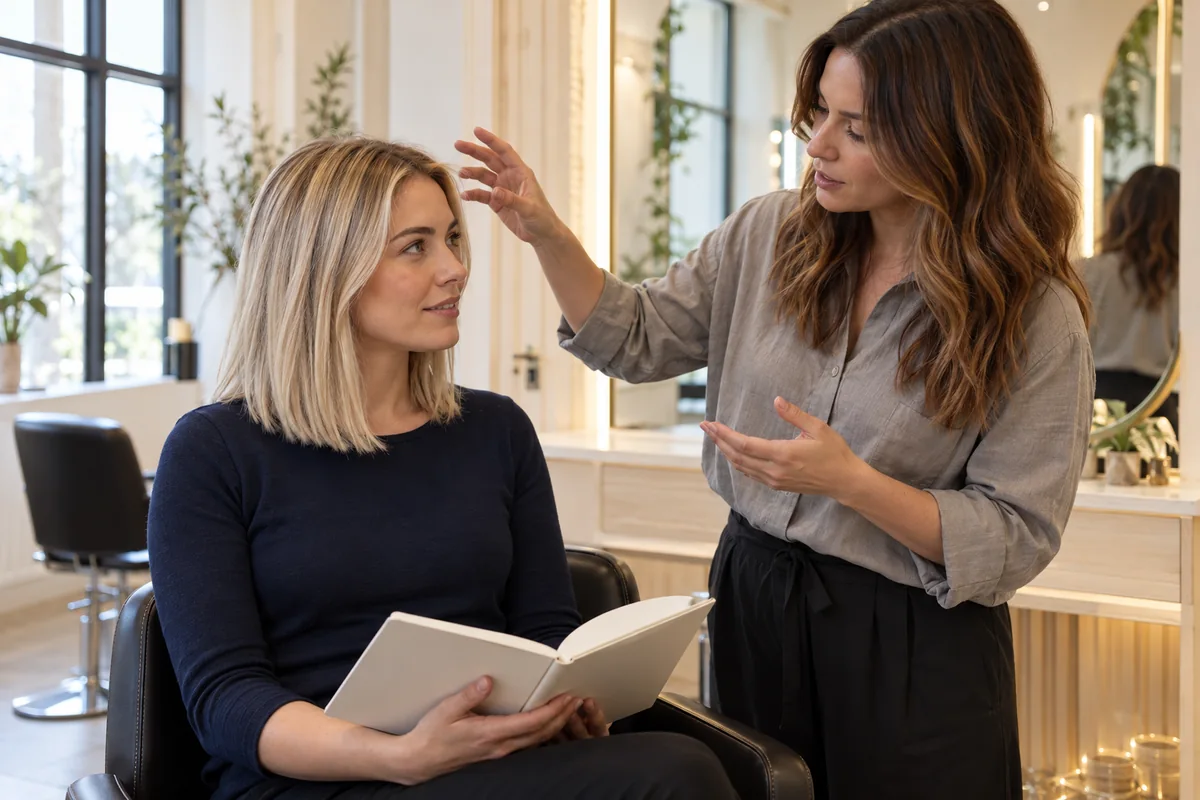
Keep the brow decision separate from hair colouring
You do not have to alter the brows to make a hair-colour exploration legitimate. Keeping them as they are is a complete decision. If you are curious about brow cosmetics or services, treat that as a separate discussion rather than an automatic final step in a blonde-hair plan. A preview alone provides no information about the safety of a product near the eyes.
The American Academy of Ophthalmology describes risks associated with eyebrow and eyelash enhancement, including allergic reactions. Do not turn a visual matching exercise into an improvised dye procedure around the eyes. Seek appropriate professional advice for any separate brow treatment rather than using ordinary scalp-hair colour to copy a generated image.
End with a preference you can recognise in daily life: the amount of hair–brow contrast you enjoy, which facial features stay unchanged and what still needs a colourist's assessment. You can choose a stronger contrast, a quieter hair direction or no colour change for now. The comparison has done its job when it makes that choice clearer, not when it persuades you to change more of your face.