
A rounded short-hair outline
A bowl cut with the outline you actually want
A connected fringe and temple line can feel very different from an open, separated crop. Decide the edge, ear coverage and real-life finish before cutting.

A bowl cut changes more than how short your hair looks. Its recognisable feature is a rounded outline connecting the forehead fringe with the hair at the temples. That joined-up edge can make an ordinary movement, such as turning your head or putting on glasses, feel different from wearing an open crop. Before saving a dramatic inspiration photograph, decide whether you want the continuous line itself, a softer suggestion of it, or simply a shorter haircut with a full fringe.
This guide helps you separate those choices before an appointment. You will check where the outline sits, what happens around the ears and nape, and how much styling belongs in your normal week. Hair Muse can help organise a small portrait shortlist when an available preview illustrates the direction you mean. It cannot measure the cut, reveal hidden sections or guarantee the behaviour of your real hair. The final plan needs a professional assessment, not a bowl, home scissors or a screen-derived measurement.
Find the connected outline in a bowl cut
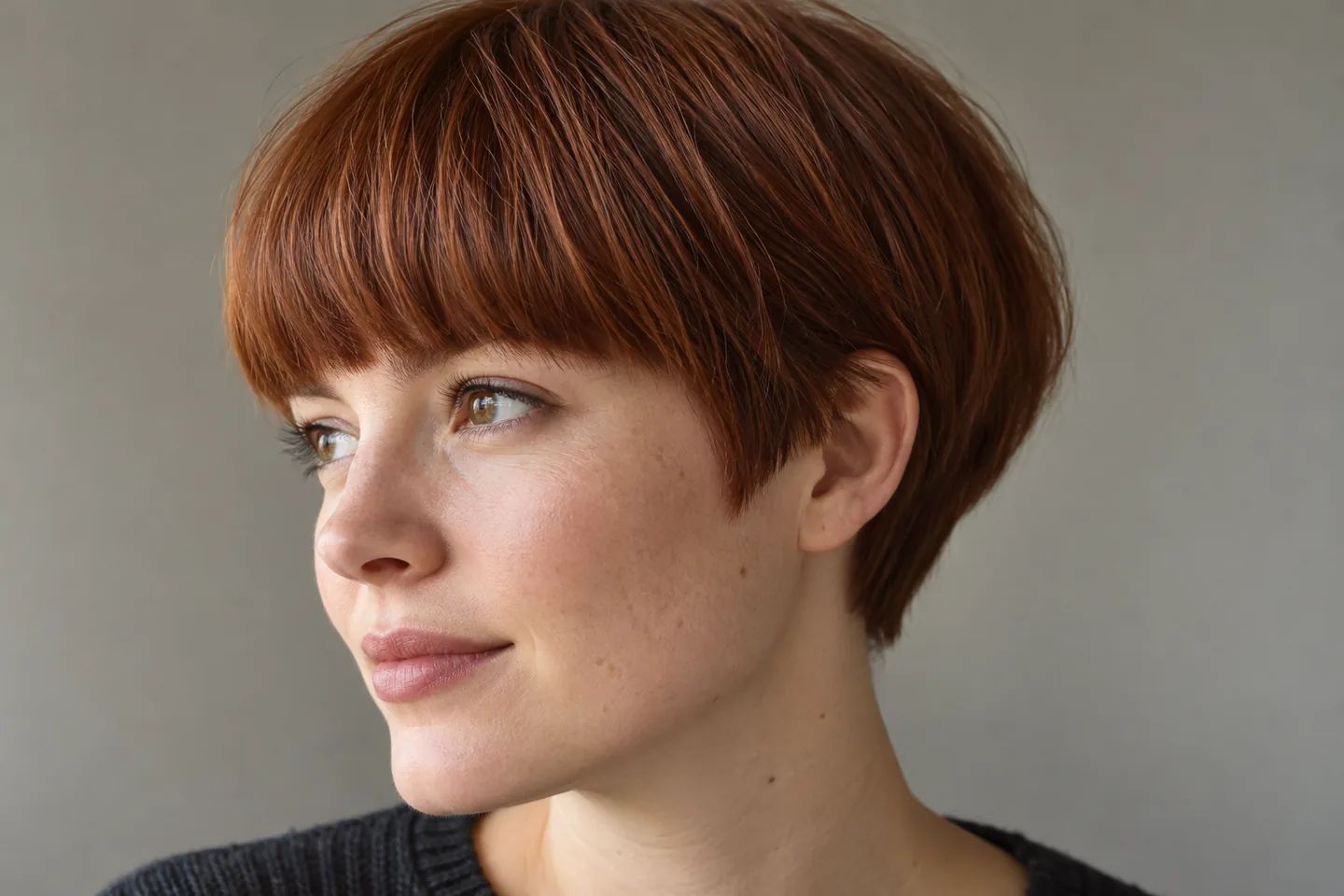
Follow the visible lower edge in the reference, starting at the forehead and moving towards the temple. Does the fringe join the sides as one readable curve, or does it stop before a separate side section begins? Revlon Professional's style overview describes both a defined perimeter and textured or undercut interpretations. Use that range to name the feature you like, not as evidence that every version has the same construction or needs the same routine. Ignore trend claims and look at the actual outline.
A photograph labelled bowl, mushroom or rounded crop may show a different decision from yours. Hair pushed behind the ear can hide a connection; a deep shadow can make the side appear shorter. Choose a reference where you can see the temple without a hand covering it. Unlike a hime cut, the question here is not how to separate a short panel from a retained long back. It is how continuous you want the short perimeter to look. If the references disagree, describe that uncertainty instead of pretending they all show one haircut.
Choose the forehead opening before the side length
Decide how much forehead and eyebrow you want visible when looking straight ahead. A dense lower fringe and a shorter, more open edge are different preferences, even if both join the sides. Use your own eyebrows as a conversational landmark, not a ruler for translating pixels into centimetres. Say whether you want your eyes comfortably clear and whether a shifting fringe would bother you during reading. There is no required amount of face to conceal and no face shape that must be corrected.
Check the same preference with the glasses you actually wear. The frame, bridge and temple arms should remain ordinary parts of the discussion, not props removed to improve an inspiration image. Observe your current hair while looking down and turning gently; do not pin it tightly into an imagined future cut. Explain where contact already annoys you. Ask the stylist how the proposed fringe would sit dry, and what could be changed if the initial reference puts the edge closer to your eyes than you would accept.
Separate ear coverage from an undercut commitment
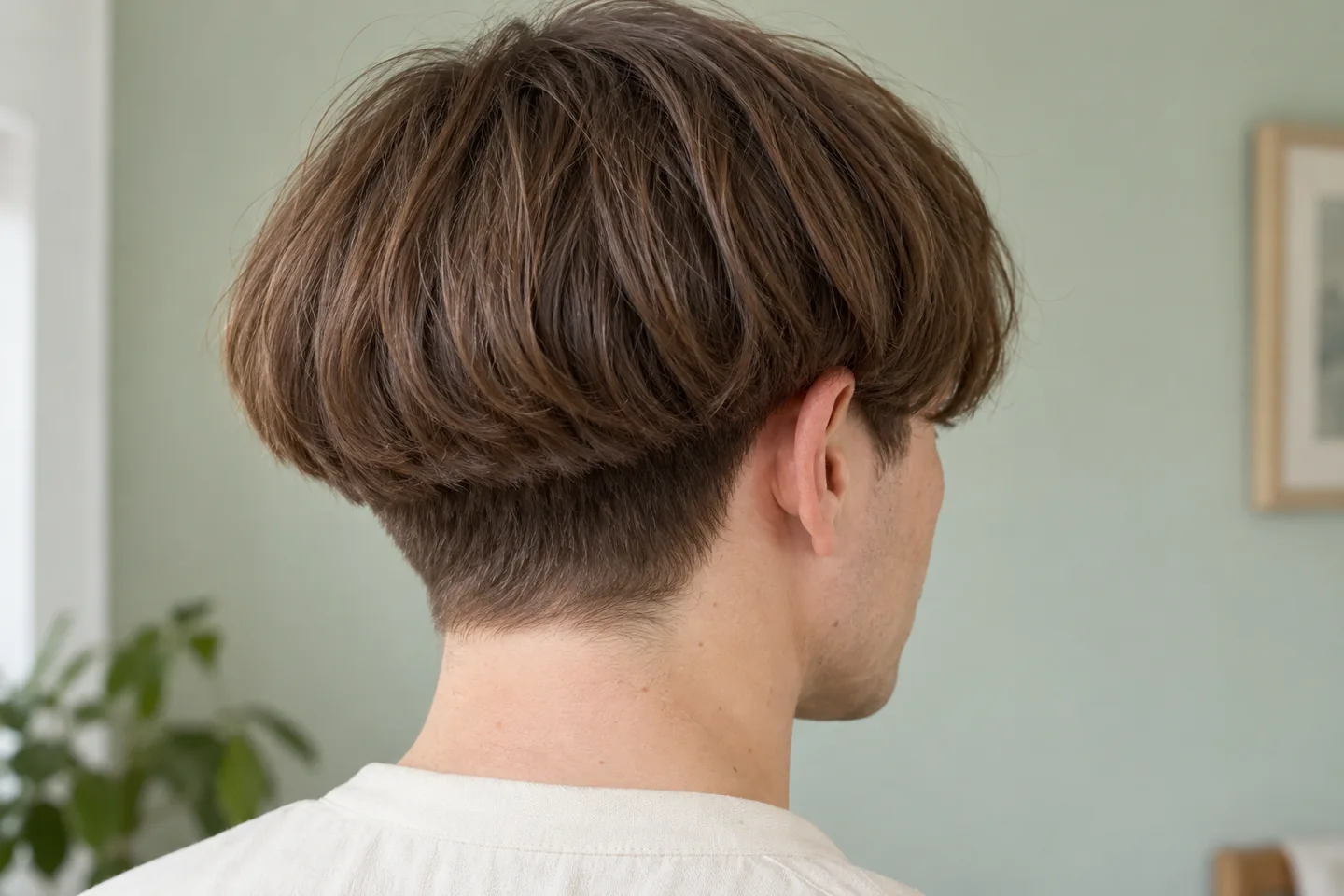
The visible cap and the hair underneath are separate decisions. You might like the rounded outline but not want a shaved area, exposed skin or a strong contrast beneath it. Ask to see what the reference actually shows around the ear and at the back. A tightly cropped underlayer is not an automatic requirement of every rounded shape. Equally, a front portrait cannot prove that a model has retained more hair behind the visible edge. Missing information should become a question, not an assumption.
State what you want left around each ear and at the nape before discussing the finish. If retaining a soft natural nape matters, say so directly. Ask how the upper outline would connect to it and what happens as the underneath grows. The stylist should explain the real section on your hair rather than promise an exact copy from one angle. Bring a rear or side reference when you have one, but never treat an AI portrait's invented back view as evidence of an existing haircut.
Keep natural movement in the decision
A straight polished reference shows a finish, not a guarantee about another person's morning hair. If your hair normally dries with waves, record the wave pattern and where the fringe settles without stretching it. A rounded silhouette can read as a softer collection of bends instead of a single crisp line. Decide whether you enjoy that interpretation. Do not choose a geometric image and then assume your normal texture will automatically reproduce its edge without a different styling routine.
Distinguish liking a soft edge from asking for a particular cutting technique. You can tell the stylist that you want movement, a lighter-looking perimeter or less visual solidity without specifying how much hair to remove from inside the shape. Density, growth direction and existing layers need inspection in person. Ask what the proposed finish would look like on a low-effort day. If the answer depends on a routine you will not repeat, change the reference or the outline rather than agreeing to an unrealistic daily promise.

Record today's hair without staging the result
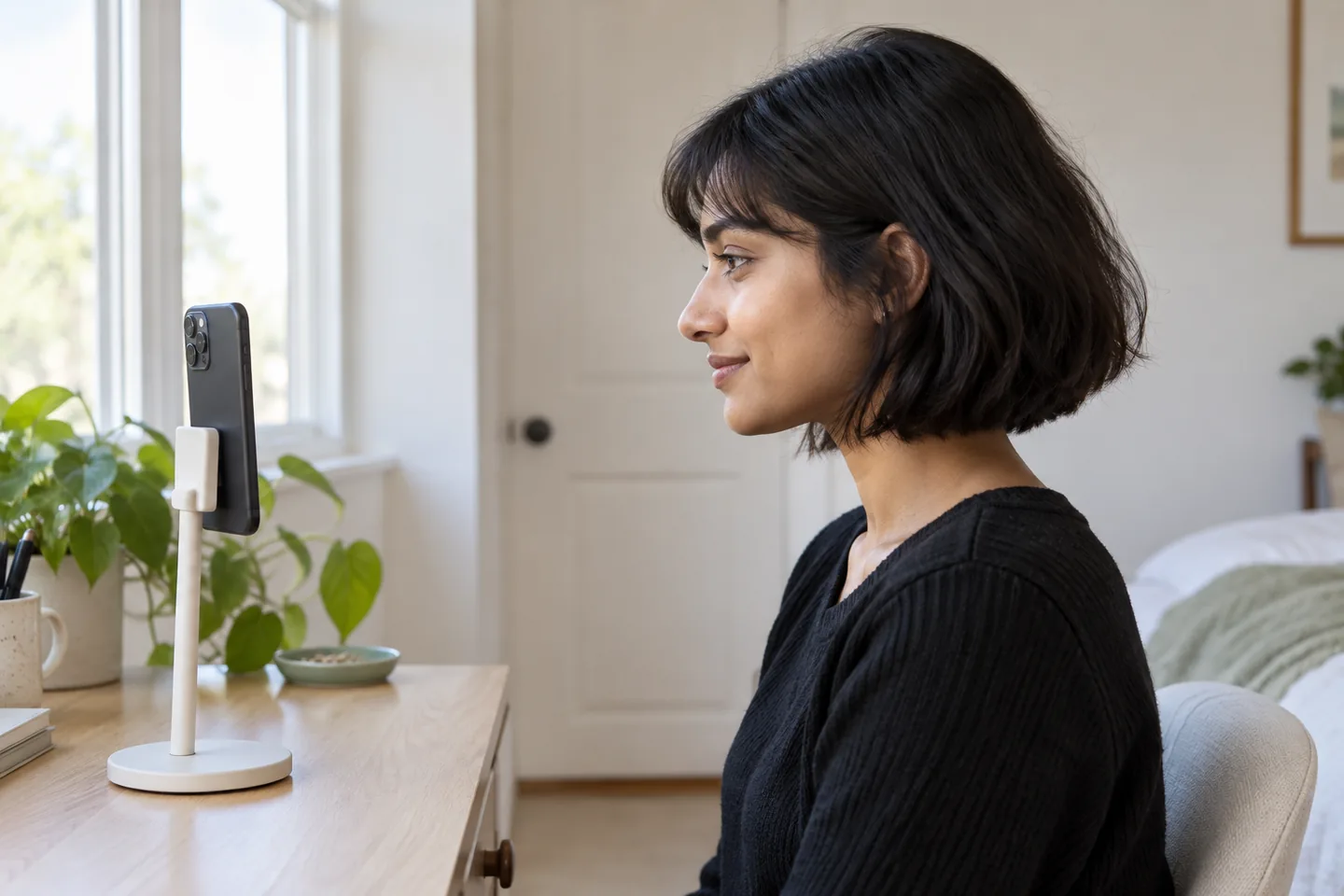
Take a clear current photograph with your head upright, relaxed hair and even light. Keep enough of the head and shoulders in view to make the outline understandable. Move clutter out of the background rather than applying a beauty filter that changes your face or hair. Apple's camera guide explains composition tools such as the grid and level; those can help keep a repeatable frame. They do not assess suitability, measure fringe length or predict a haircut. A timer can help avoid an awkward raised-arm pose.
Keep a separate real side photograph if it explains your ears, nape or growth pattern better than the front view. Do not flatten a wave, pull a cowlick straight or tuck every side strand away merely to make the photo look neat. Those are precisely the details the consultation needs. Use only images you are comfortable sharing, and avoid including other people or private information. The point is to establish a trustworthy starting view, not to manufacture the look you hope the app will produce.
Use Hair Muse to narrow a visible preference
Start with that same clear portrait when exploring available hairstyle directions in Hair Muse. Look for a useful approximation of the rounded, connected outline; do not assume there is a dedicated bowl-cut control or an exact fringe-length setting. If the available results do not illustrate the feature you mean, keep a real reference instead. The app is a visual planning aid. You do not need to generate endlessly or accept an unrelated short style just to make the exercise feel complete.
Compare one meaningful feature at a time: a solid versus softer-looking fringe connection, for example, while keeping attention on the original face and hair colour. Reject a result if changed facial features, implausible density or hidden ears make the shape hard to judge. Save a small shortlist and attach a plain-language reason to each choice. Hair Muse is free to download, while some previews or usage levels may require an in-app purchase. A saved portrait is a discussion prompt, not proof of cutting feasibility or a promise of the final result.
Test the commitment against an ordinary morning
Imagine the cut during an activity you genuinely do: reading at a desk, travelling with glasses or leaving after an ordinary wash. Which part matters most: eyes staying clear, an uninterrupted edge, softness around the ears or a nape you can leave alone? Pick the two requirements that would change your decision. This is more useful than calling a reference low maintenance without knowing how it was prepared. A short haircut can still depend on arranging the fringe each morning.
Ask how the stylist expects you to recreate the agreed finish and what it looks like without that extra work. Discuss growth around the eyes and ears separately from the condition of the longer top. Do not accept a universal return interval based only on the haircut's name. Your tolerance for a changing outline and the real growth pattern matter. If you want to maintain a particularly exact line, ask what appointments that preference may involve before committing, and decide whether the practical arrangement suits you.
Leave the consultation with a clear boundary
Show one preferred reference and explain three things: the fringe-to-temple connection you like, the ear coverage you want retained, and the underneath you do not want removed. Show an alternative only if it clarifies a real choice, such as a softer edge. Ask the professional to point out the proposed outline on your present hair before cutting. If the reference cannot be achieved from the current length or growth pattern, discuss a modified plan rather than treating the image as a contract.
Finally, agree what remains uncertain. A front view does not settle the nape, a preview does not establish section boundaries, and a styled photograph does not prove effortless maintenance. You can postpone a strong undercut while considering the upper shape, or decide that you prefer a more open crop instead. The useful outcome is not the boldest portrait. It is a haircut request you can explain, with clear limits on what may be shortened and an everyday finish you actually want to wear.