
Haircut maintenance
How often to trim hair: read the ends, not a rule
Use your haircut shape, end condition and routine to choose the next trim. A calendar can prompt a check, but your hair should make the decision.

How often to trim hair has no single answer that fits every cut, texture and goal. A sharp bob can lose its intended line while its ends are still in good condition. Long hair may keep a pleasing shape for months but start tangling or looking see-through at the bottom. Curls can hide an uneven calendar length yet reveal a tired dry outline. The useful question is not whether a fixed number of weeks has passed; it is whether the shape, ends or daily handling now make a small trim worthwhile.
This guide gives you a repeatable end check, sensible starting windows and a salon brief. It also separates maintenance from myths: trimming removes weathered length and restores a chosen outline, but it does not change the rate at which hair grows from the scalp. If you see sudden shedding, bald patches, scalp pain or breakage close to the roots, a routine trim is not a diagnosis; seek advice from a qualified clinician or dermatologist.
How often to trim hair starts with three separate signals
Check shape, condition and function separately. Shape asks whether the cut still sits where it was designed to sit: a fringe may enter the eyes, a bob may flip at the shoulders, or layers may stop connecting. Condition concerns the final centimetres: repeated splits, pale dots, roughness and an increasingly sparse edge matter more than one stray fork. Function is everyday behaviour. Ends that knot together, catch during gentle detangling or refuse to hold the usual finish can make a trim useful even when the silhouette still looks acceptable.
Do the check on dry hair in its normal state, not immediately after a polished salon blowout. Look at front, side and back against a contrasting plain shirt. Then feel a small section from mid-length to end with clean fingers. Finally, notice what happens during the next wash and detangle. One imperfect day is weak evidence; the same signal over two or three ordinary routines is much more useful. Write down which of the three changed first so your next interval becomes personal rather than borrowed from someone else's hair.
A date is a reminder to inspect your hair. Book because the shape, ends or handling changed—not because a universal countdown expired.
Use ranges as a starting point, not a promise
A precise short cut or fringe often needs an earlier shape review than long, minimally layered hair. As a practical starting point, you might review a fringe or crisp short outline around four to eight weeks, a structured bob or medium layered cut around six to twelve weeks, and long hair that is growing well around eight to sixteen weeks. These are planning windows, not biological rules. Move earlier when the outline is central to the style or the ends repeatedly snag; move later when condition and shape remain good and preserving length matters.
Chemical lightening, frequent high heat, tight repeated styling, sun, friction and rough detangling can shorten the useful interval because the oldest fibres receive more wear. Protective habits may lengthen it. Texture alone does not set the clock: two people with curls can have very different density, porosity, heat use and shape goals. The best first schedule is deliberately provisional. At each check, record whether you were early, on time or late, then shift the next reminder by a couple of weeks instead of replacing one rigid rule with another.
Read the last centimetres without inventing damage
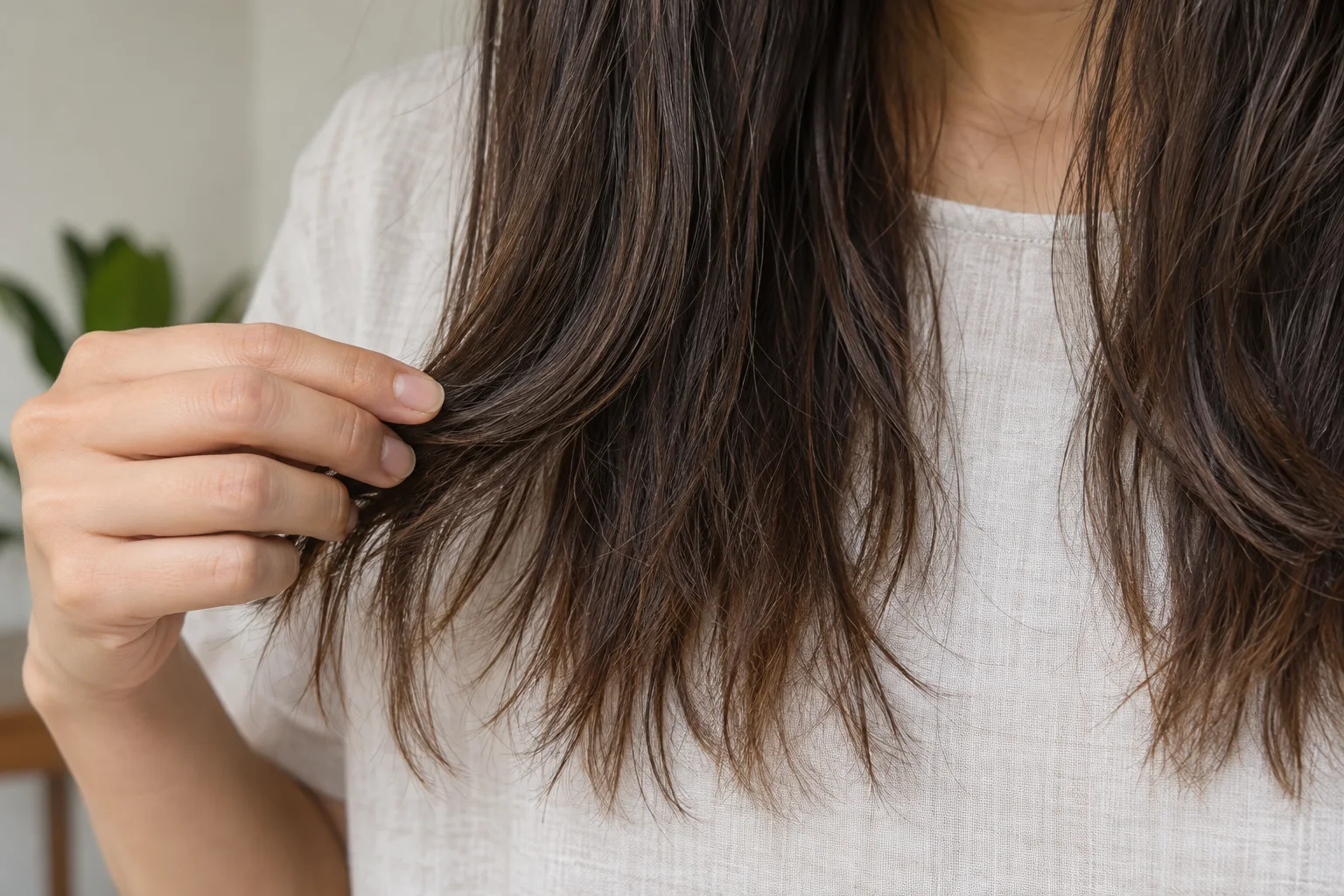
Place dry ends over a light or dark background that contrasts with your hair. A healthy-looking perimeter does not have to be ruler-straight, especially with curls or deliberate layers. Look for a change from your own baseline: more tiny forks across many sections, tapering that has climbed higher, repeated white points where fibres snap, or an edge that has become noticeably transparent. A few shorter hairs can be normal growth, layers or mechanical breakage; do not diagnose them from a photograph alone.
Products can temporarily make ends feel smoother, and a wash can make them feel rougher, so combine sight with behaviour. If the same lower section tangles again soon after careful detangling, or splits keep appearing above the amount you planned to remove, ask a stylist to inspect how far the wear extends. Cutting only the obvious forks one by one may miss a broader weak zone, while taking off more than necessary undermines a length goal. Agree on the smallest boundary that leaves a coherent, manageable edge.
Let the haircut shape set part of the schedule
Maintenance is sometimes about geometry rather than damage. A blunt bob depends on a clear perimeter; a pixie depends on controlled weight around the ears and nape; a fringe has a practical eye-line. Those features can grow out before the fibres become visibly split. Long soft layers usually tolerate more movement between appointments, but face-framing pieces can cross an awkward point earlier. Decide which line is essential to the style and which areas you are happy to let soften.
If you are growing the haircut out, maintenance does not have to mean returning it to the original shape. Ask for a transition trim that balances the perimeter, removes only compromised ends and lets shorter areas catch up. Photograph the cut on a good ordinary day and again when it first becomes awkward. Those two images reveal what actually changed. Our guide to planning a haircut around a wash schedule can help you judge the shape in a representative state rather than choosing an appointment-day finish as the standard.

Distinguish split ends from dryness, frizz and normal texture
Dryness and frizz do not automatically mean every end must be cut. Humidity, buildup, a change in conditioner, brushing, weather and the way hair dried can alter the surface for a day. Split ends are physical separations in individual fibres; no cosmetic product permanently fuses them back together. Yet the presence of one split is not proof that a dramatic cut is needed. Look across several sections and ask whether the wear interferes with the shape or travels above the planned trim line.
Coily and curly ends can look irregular because strands shrink to different points. Straight fine hair may show a sparse perimeter sooner, while dense hair can conceal internal wear. Compare like with like: the same dry state, similar light and the same parting. If your hair suddenly changes texture, breaks extensively, sheds far more than usual or comes with scalp symptoms, pause the cosmetic plan. A dermatologist can investigate health concerns; a stylist can assess cut structure. Neither role should be replaced by a generic online interval.
Protect the interval with gentler handling
The American Academy of Dermatology advises keeping brushing to a minimum and notes that excessive brushing can contribute to split ends. It also recommends limiting heat and handling wet hair carefully, with texture-specific differences. A useful routine is simple: cleanse the scalp as your hair needs, condition the lengths, detangle from the ends upward with patience, absorb water without rough rubbing and use the lowest effective heat. These habits cannot make an existing split whole, but they can reduce avoidable wear between cuts.
Pay attention to repeated friction points. Coat collars, backpack straps, sleep surfaces and the same tight elastic can wear one area faster than another. Rotate placement, use accessories without sharp seams and avoid forcing knots apart. The goal is not to preserve every millimetre at any cost; it is to keep the length you retain comfortable and coherent. If careful handling makes the end check stable for longer, extend the next reminder. If the edge still deteriorates quickly, discuss the damaged zone and routine honestly at the appointment.

Choose the amount before the scissors move
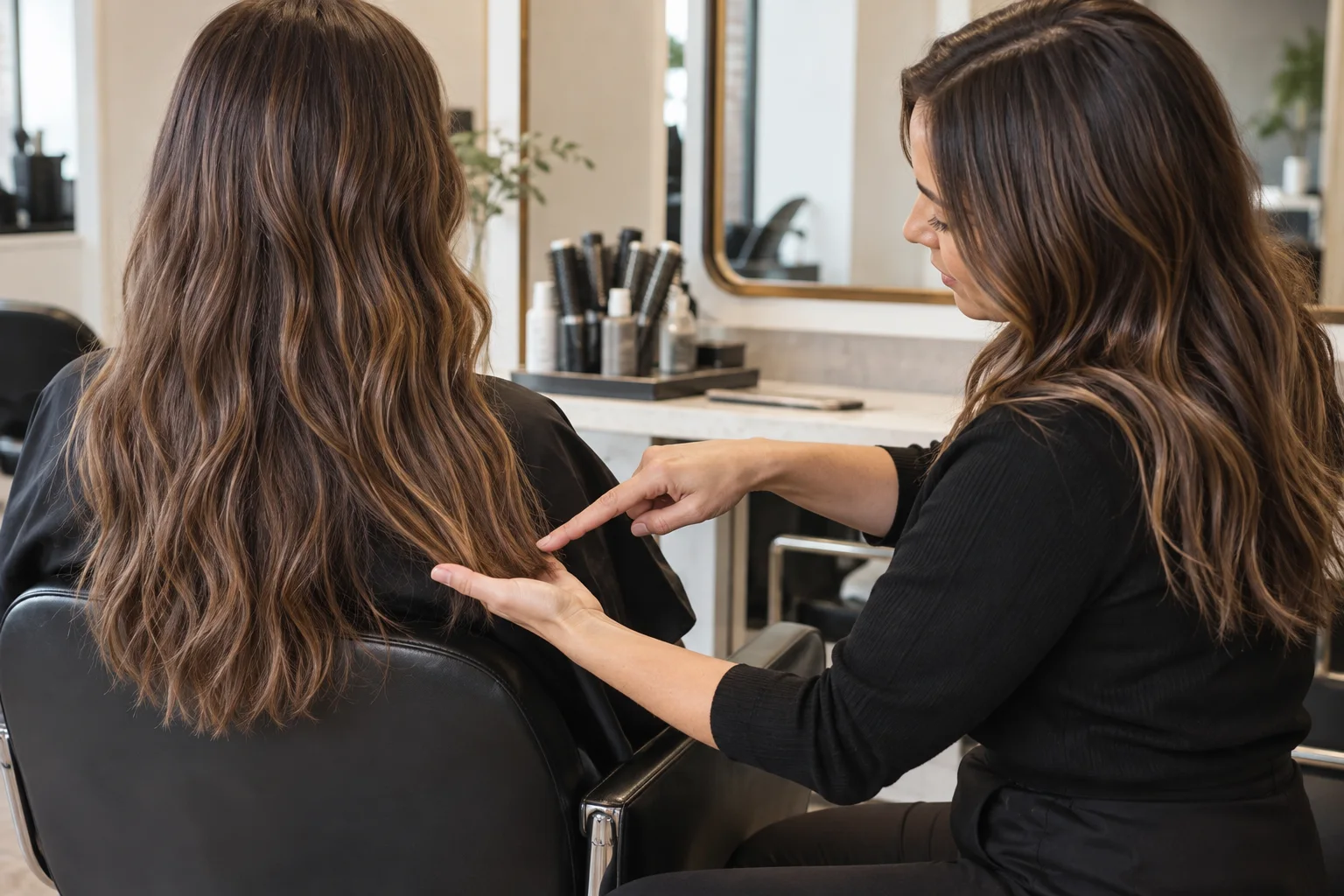
Arrive with two boundaries: the ideal minimal trim and the maximum length you are willing to lose that day. Show both on dry hair with your fingers, then ask the stylist to inspect whether the visible wear stays below the first line. Words such as dusting, trim and tidy-up have no universal measurement, so replace them with a physical point and a goal. Say whether you prioritise a dense perimeter, preserving layers, keeping a ponytail or removing every visibly compromised end.
Ask the stylist to explain any recommendation above your maximum. The ends may be thinner higher up, the shape may need rebalancing, or a previous layer may create a different visual line. You can still choose a staged plan: take the agreed minimum now, improve handling and reassess later. If a major event or journey is near, use our haircut-before-or-after-a-trip guide to account for styling practice and correction time. Good consent stays specific throughout the service; agreement to a trim is not agreement to an undefined loss of length.
Build a trim schedule from evidence
After the appointment, note the date, amount removed, cut shape and how the ends felt. Take one unfiltered photo in ordinary daylight. Set a reminder near the beginning of the relevant review window, but treat it as an inspection rather than an automatic booking. At that check, repeat the same shape-condition-function test. If all three are stable, wait two weeks and look again. If one clearly declined, decide whether a small maintenance appointment solves it or whether a routine change deserves a trial first.
What a visual preview can and cannot tell you
Hair Muse may help when a trim is connected to a visible shape decision, such as restoring a blunt edge, softening long layers or choosing where a bob should finish. Compare one shape variable on a clear photo and use the result to name the outline you prefer. It cannot magnify individual split fibres reliably, diagnose damage, measure an exact trim line or predict growth. Do not use an AI image to decide that healthy hair must be removed or that worn ends can safely stay.