
Layered haircut comparison
Wolf cut vs shag: a free commitment check
Compare crown lift, layer contrast, perimeter, fringe, daily styling, and grow-out before choosing either layered direction.

Wolf cut vs shag is not a choice between one fixed cut and another. Both names describe families of layered shapes, and real examples overlap. A wolf direction usually creates a more obvious contrast between shorter, fuller layers around the crown and face and longer, lighter lengths below. A shag usually distributes movement more continuously through the haircut, so the transition from top to perimeter can feel softer. The useful question is not which label is better. It is how much contrast, fringe, visible separation, and daily direction you want your own hair to carry.
This free commitment check helps you inspect those decisions before a salon visit without pretending that a photograph can design the cut. Hair density, strand thickness, curl pattern, growth direction, condition, current layers, and styling habits all change how the same reference behaves. Use the guide to describe a silhouette, record your real routine, compare a small number of visual directions, and prepare questions. A qualified stylist should still examine the hair and choose the cutting technique, shortest layer, weight removal, and safe fallback.
Wolf cut vs shag starts with a shape map
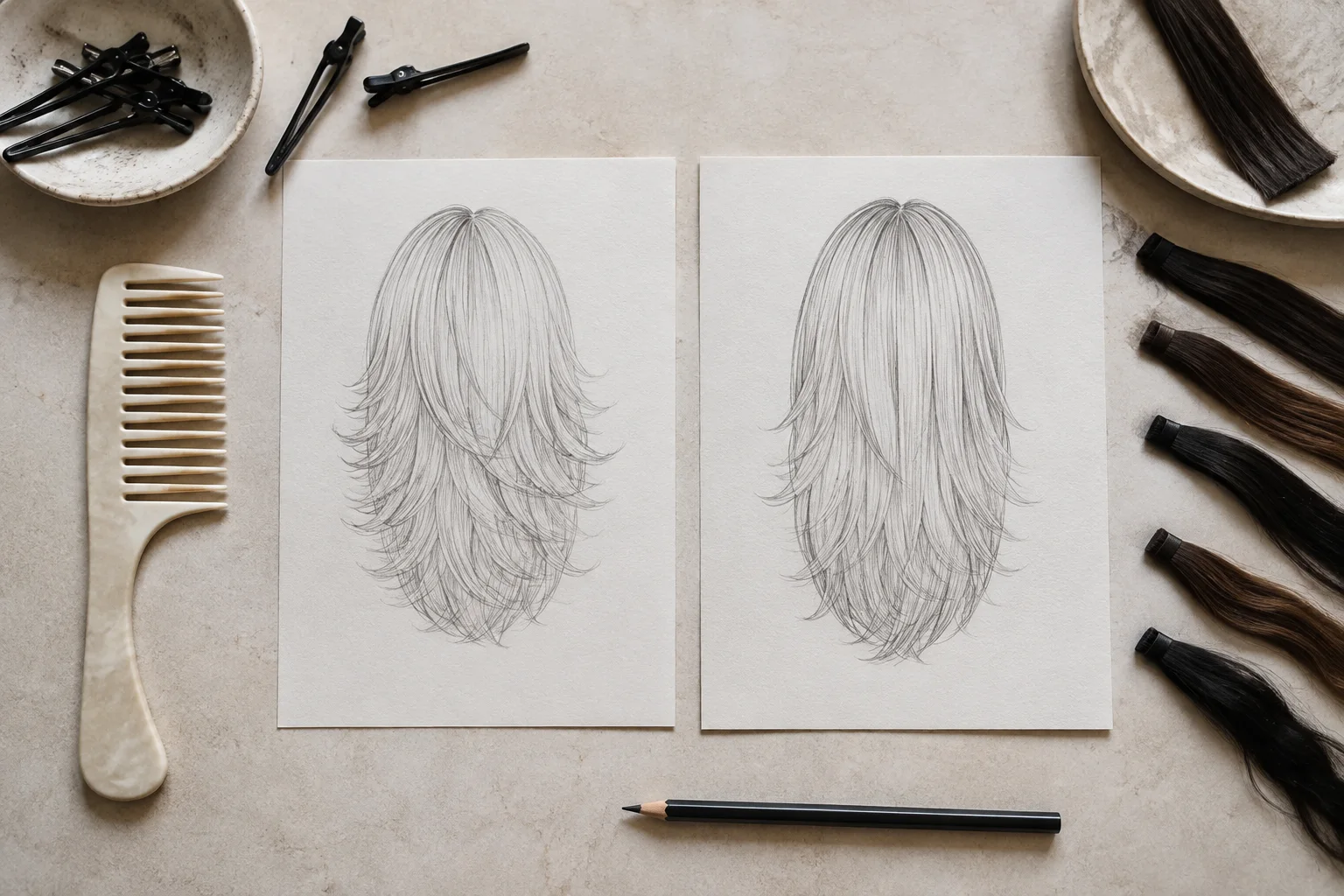
Ignore the trend name for a moment and divide the haircut into four zones: crown, face frame, middle lengths, and perimeter. In a higher-contrast wolf direction, the crown and front may read as a compact upper shape while the back keeps a longer tail or narrow outline. In a softer shag direction, short and long pieces tend to connect through more visible steps across the whole shape. Neither description is universal, but the map gives you concrete areas to point to instead of relying on a label that two stylists may interpret differently.
Draw two rough silhouettes or save two references and mark where each one becomes shorter. Note whether the widest point sits at the temples, cheekbones, jaw, shoulders, or crown. Then look at the bottom edge: full, wispy, broken, rounded, or narrow. A haircut can borrow a wolf-like crown and keep a shag-like perimeter, so allow a hybrid answer. Your aim is to identify the relationship you want between top volume and lower length, not to pass a vocabulary test.
- Crown: subtle lift or a clearly shorter upper layer
- Face frame: open cheekbones, cover the jaw, or connect into fringe
- Middle: blended movement or deliberate disconnection
- Perimeter: full and continuous or narrow and separated
Document the haircut you already have
Before collecting new references, photograph your current hair in its ordinary dry state from the front, both profiles, and the back. Include the crown, shoulders, and full perimeter. Record what happens after a normal wash, on a later day, and after a commute or light activity. Notice where the hair expands, collapses, separates, flips, or collects against clothing. This baseline reveals whether you are asking the new cut to create movement, remove bulk, preserve density, make a fringe easier, or simply change the visual balance.
Read the existing layers as information, not as a mistake to hide. Where is the shortest piece? Does it spring upward, blend smoothly, or sit as a shelf? Which sections still reach a ponytail or clip? If the ends already look thin, a dramatic contrast may remove more visible weight than you expect. If the interior feels crowded, a softer change may not create the separation you want. A separate guide to comparing blunt ends and soft layers can help you describe the lower edge precisely.
Use ordinary hair, ordinary light, and ordinary clothing. A polished blowout can conceal the behavior you will manage most days.
Compare crown contrast and face-framing layers
The crown is often the clearest difference in a wolf cut vs shag decision. Shorter upper layers can reveal movement, create a rounded cap, or make the lower lengths appear more separate. They can also expose growth patterns, require deliberate root direction, or reduce the amount of hair available for tying. Look from the side rather than only from the front. Ask where the upper volume begins, how quickly it narrows, and whether the profile still works when the hair is not freshly styled.
Treat the front as its own decision. Fringe can be full, curtain-like, wispy, long enough to tuck, or absent, and none of those choices is mandatory for either family. Identify the shortest face-framing landmark you can live with: brow, cheekbone, jaw, chin, or collarbone. Test glasses, headphones, skin care, exercise, and your usual part. A dramatic reference may owe most of its identity to styled fringe, while the layered shape underneath is much less extreme.
Decide what the perimeter must preserve
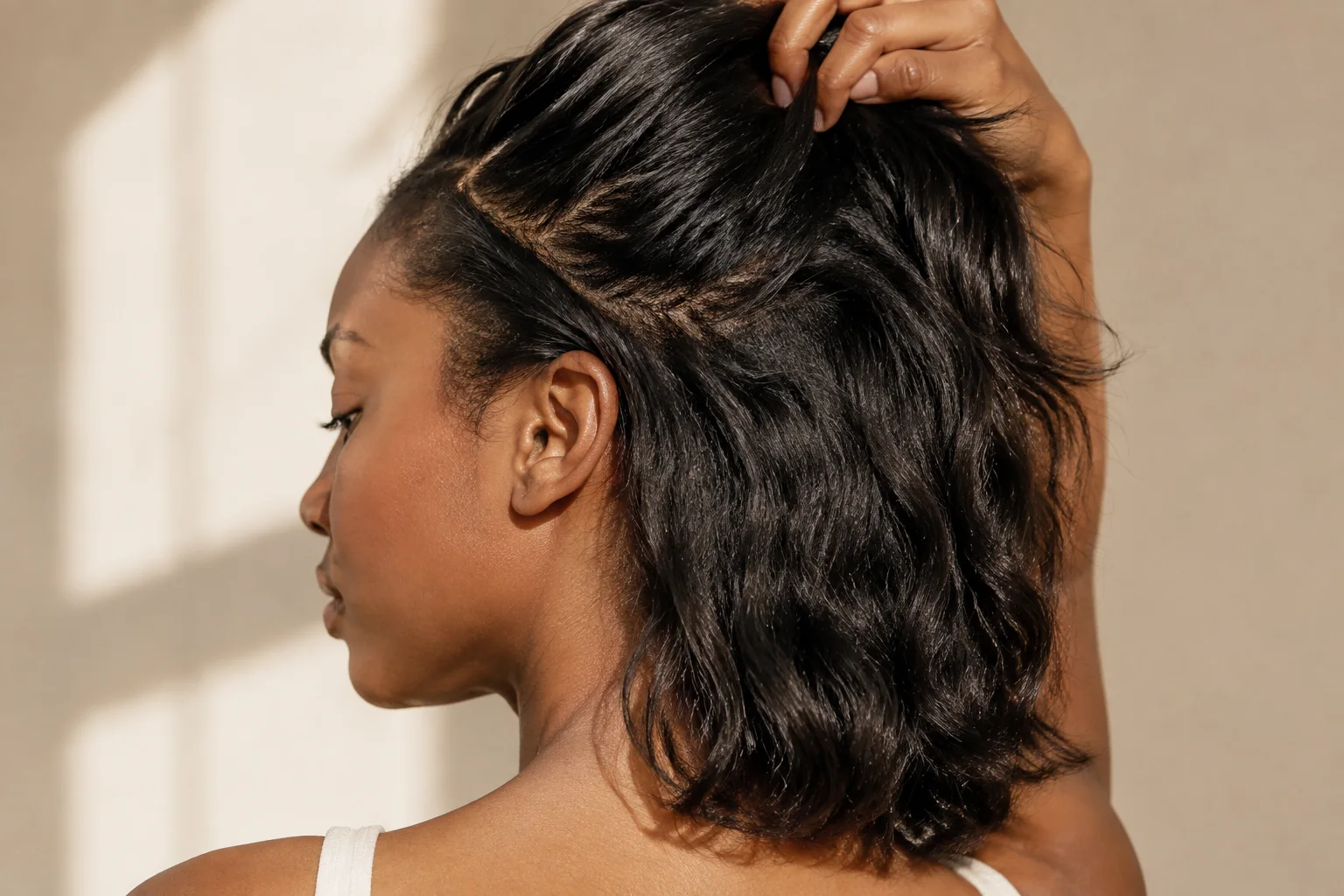
Longer lower sections give a wolf shape much of its contrast, but length alone does not guarantee a healthy-looking or useful perimeter. Decide how much visible density you want at the back and around the shoulders. A narrow, separated edge can feel energetic and intentional when supported by the whole cut; on another head it may feel too sparse or make existing breakage more obvious. A fuller shag perimeter may be easier to tie and grow out, yet it can carry more weight than the reference suggests.
Cover the face in a reference image and study only the outer line. Where does the longest point land? How much space appears between sections? Does the shape stay broad through the shoulders or taper toward the neck? Then uncover the face and see how that lower outline balances the crown. If you wear curls or waves, review the separate guide to choosing dry haircut length for shrinkage, because wet length and a static picture cannot establish the final dry endpoint.
Let texture and density change the plan
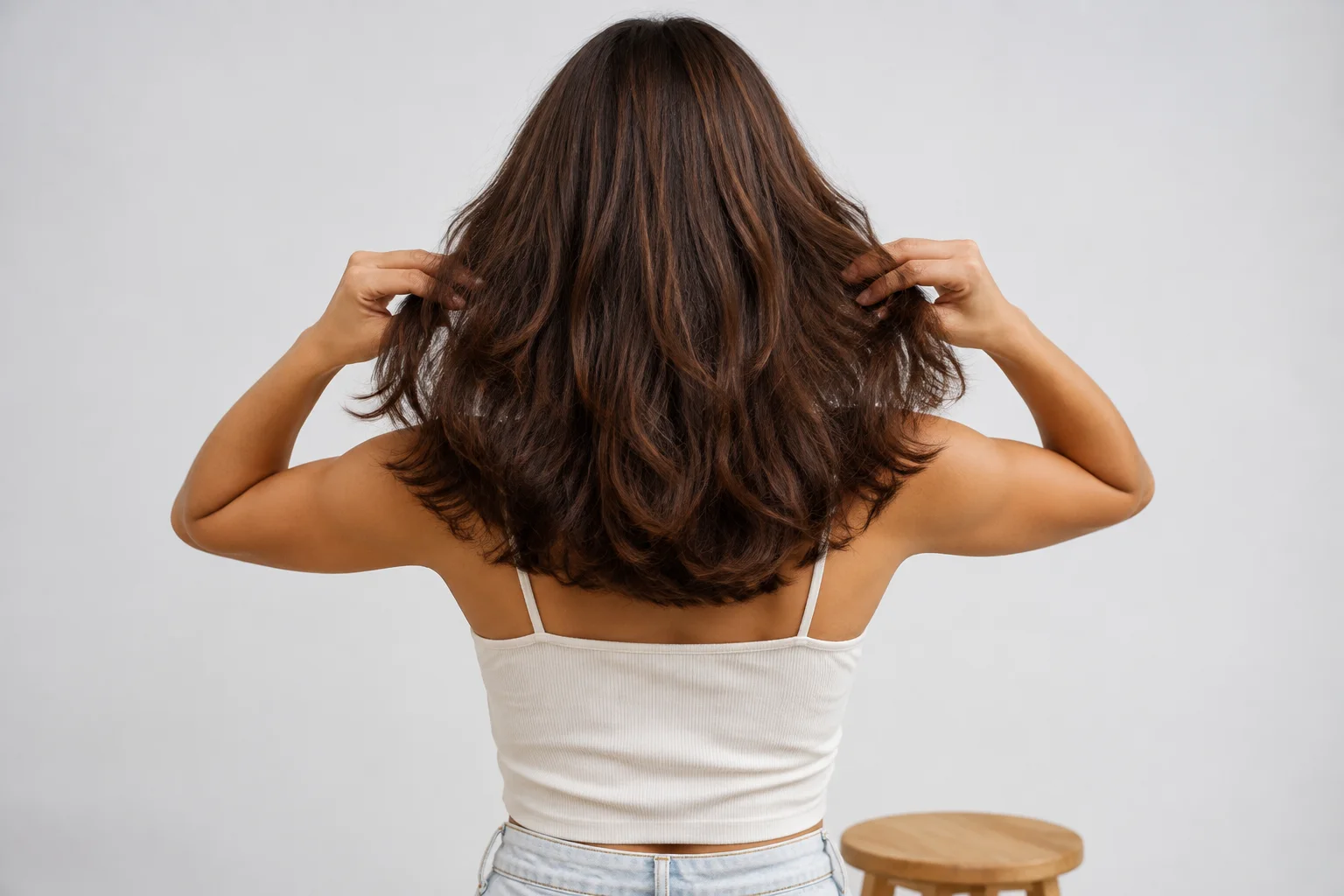
Straight, wavy, curly, and coily hair can all carry layered shapes, but they reveal the construction differently. Straight hair may show each transition clearly and can need deliberate bend or separation to resemble a tousled reference. Waves may activate some layers more than others. Curls and coils can spring to different lengths across the head, so the upper shape may become shorter or rounder after drying. Density, strand diameter, porosity, and previous chemical services also influence whether removal creates lift, softness, gaps, or frizz.
Avoid universal face-shape or hair-type rules. Instead, ask what your own hair does when weight is removed at a specific zone. Bring unedited dry photos and tell the stylist how you normally wash, detangle, dry, and refresh. If your hair is fragile, breaking, shedding unusually, or your scalp is uncomfortable, separate that concern from style planning. A haircut reference cannot diagnose it. The shape should be adapted after direct assessment, with a more conservative first step when condition or response is uncertain.
The same diagram can produce different movement on different heads. Ask for a relationship between zones, not a copied number of layers.
Run a seven-day routine test before the cut
For one week, record the minutes and tools you use on real mornings. Note whether you air-dry, diffuse, brush, heat-style, pin the front, revive roots, or simply leave the hair alone. Include a rushed day and a day after sleeping on the style. Wolf and shag references are often photographed with purposeful texture, lifted roots, and separated ends. If you enjoy creating that finish, the routine may be part of the appeal. If not, ask what the cut looks like with your lowest-effort method.
Test the surrounding functions without pretending to recreate the cut. Clip a small crown section to sense how extra upper lift changes your outline, then release it. Move the front pieces, put on usual accessories, tie what you can, and wear a common jacket or collar. Observe comfort and function rather than judging attractiveness. The goal is to discover non-negotiables: eye clearance, secure tying, predictable air-drying, a maximum styling time, or enough length to soften a future grow-out.
- Morning time you can repeat, not the time available for a special event
- Tools and heat you actually choose to use
- Fringe reset after sleep, exercise, rain, or a hat
- Tie-back, ear-tuck, workwear, and headphone requirements

Use a free preview without mistaking it for proof
A free visual comparison can help when you keep the question narrow. Start with one sharp, front-facing photo in soft even light, with the full head and shoulders visible. Keep color, approximate length, part, and finish stable. Compare one softer shag direction with one more contrasted wolf direction, then add at most one hybrid. Save the original beside the results and write one sentence about crown, front, middle, and perimeter. Stop when the images answer the decision rather than generating endless novelty.
Hair Muse is free to download, while some previews or usage levels may require an in-app purchase. It can help you compare broad visual directions on one portrait, but it cannot inspect density, calculate a cutting map, reproduce real curl response, or guarantee a salon result. Small differences in face, lighting, or rendered strands are generation artifacts, not evidence about suitability. Keep only two or three useful images and convert every uncertain detail into a question for the stylist.
Turn references into a precise salon conversation
Bring your baseline photos, no more than three preview images, and one or two real references with a texture and everyday finish reasonably close to yours. Begin with the relationship you want: more crown contrast while keeping a full lower edge, softer distributed movement with tuckable front pieces, or a hybrid that protects tying. State your maintenance boundary and the shortest layer you feel comfortable testing. Ask what must change in your current cut and whether a staged version would provide useful evidence before a stronger commitment.
A useful salon discussion covers the cut from every angle: crown height, fringe, side connection, back length, perimeter density, drying method, and grow-out. A salon-preview guide offers a simple way to label references. For general handling, the American Academy of Dermatology publishes practical healthy-hair guidance. Treat it as care context, not as a prescription for your haircut or a substitute for individual professional advice.
- What should remain full, long, tuckable, or easy to secure
- Where the contrast should begin and how obvious it may look
- Your natural finish and the styled finish you sometimes want
- A conservative fallback if the reference conflicts with density or condition