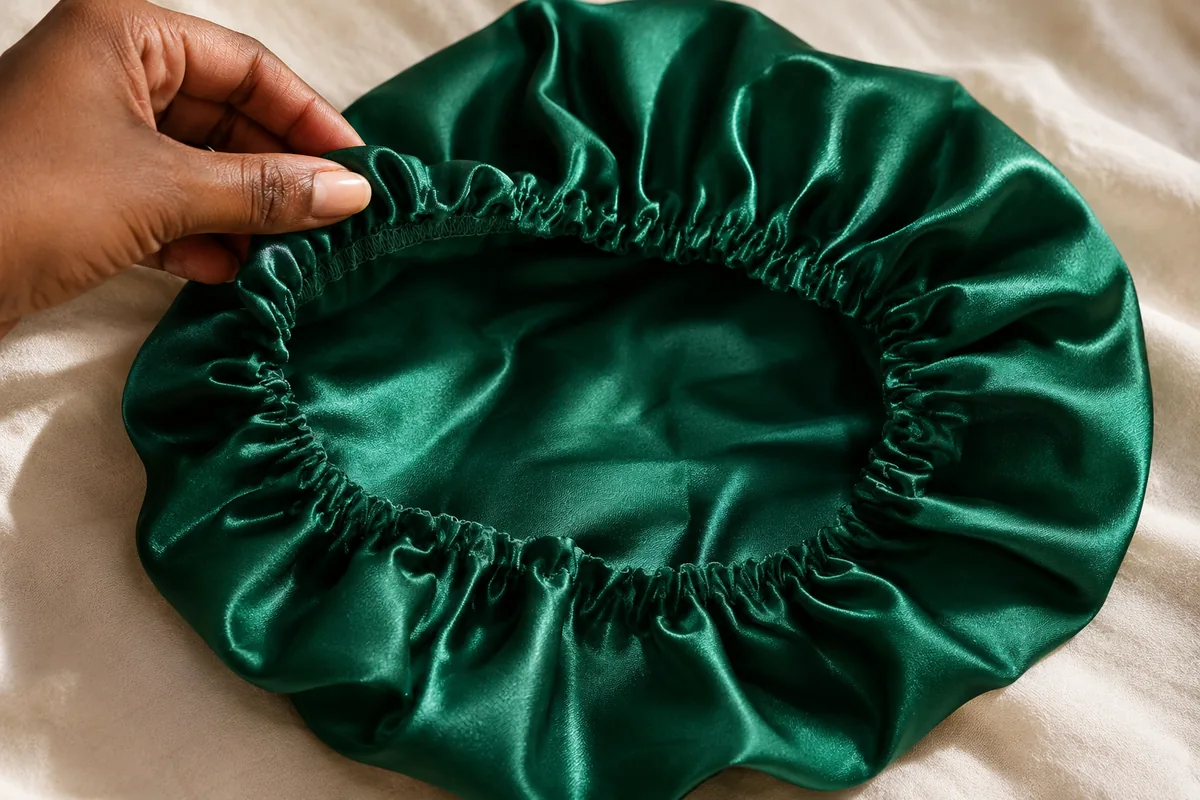
Sleep accessory care
Wash a satin bonnet by following its label
Check the fibre, lining and band before you choose how to wash a satin bonnet. Then give the gathered areas time to dry.
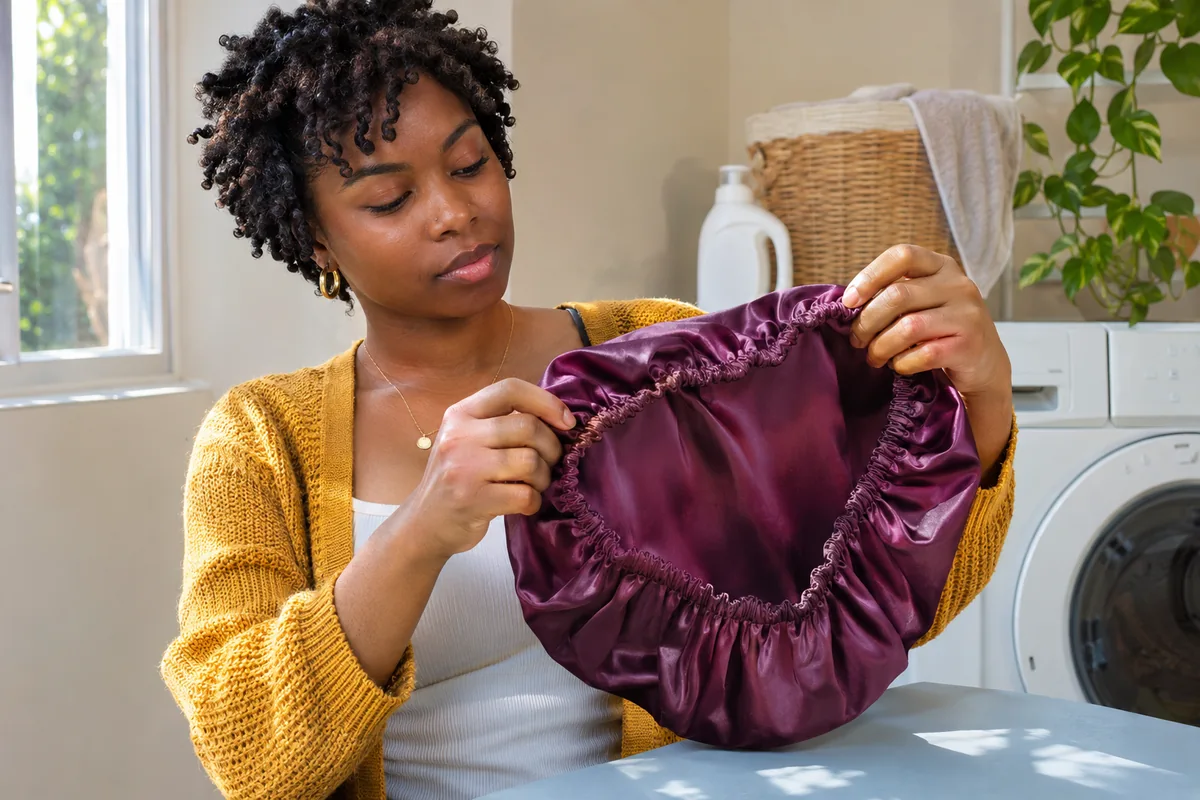
The satin on your sleep bonnet still looks smooth, but the band has picked up some leave-in conditioner. You want to wash it without leaving the lining damp for bedtime or stretching the elastic. To wash a satin bonnet, read the care directions for the whole item before deciding between the sink and the washing machine. The fabric's sheen does not tell you what the band, lining or seams can tolerate.
Start with the label, check the inside where the bonnet touches your hair, and plan where it will dry before you get it wet. If the maker has different directions for your model, use them. This guide helps you apply those instructions and recognise when a different washing method would be a guess.
Read the label before you wash a satin bonnet
Find the sewn label, the packaging or the maker's page for your exact model. Write down the fibre, the permitted washing method, the temperature and the drying instructions. Satin describes the fabric construction rather than identifying the fibre. A silk satin lining and a polyester satin lining can look similar in the light, yet their makers may specify different care. The instructions also need to cover any elastic, ties or fastening.
Look at both sides of a reversible or double-layer bonnet. If the composition label lists two materials, do not choose a cycle based only on the outside. A temperature marked on the label applies within the method specified there. Permission to hand wash at a particular temperature does not also give permission to use a machine at that temperature. Keep the wash and dry instructions together when you save a photo of the label.
NeroLiss publishes its own bonnet care directions, including hand washing. The Bon Don provides care instructions for its bonnets as well. Treat these pages as examples of why you need the directions for the item in your hands. A product listing with the same colour or similar shape is not a reliable substitute. If your label is missing or the instructions contradict the maker's page, check with the maker before immersing the bonnet.
Inspect the lining and band while they are dry
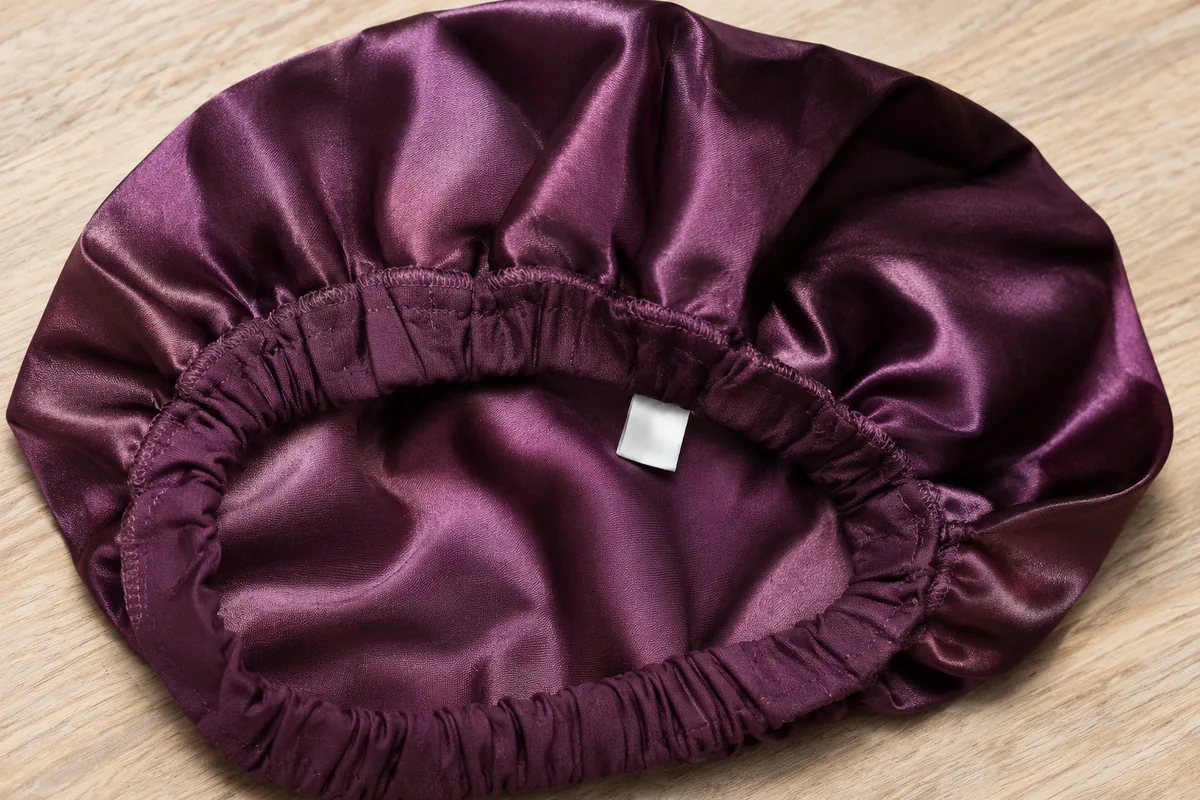
Open the bonnet under good light. Look at the forehead edge, the place where the lining joins the band, and the folds that rest against the back of your hair. Notice loose strands, patches of residue and any split stitching. If the band already sits unevenly, take a photo before washing. That gives you a reference when you check the fit later and keeps you from blaming the wash for a problem that was already there.
Lift loose hairs from the fabric gently. If a strand is threaded through a seam, do not yank it out. A snag, exposed elastic or an open seam is a reason to pause and consider repair before putting the item in a load with other clothes. A sticky area from a styling product may call for washing according to the label. It does not automatically call for a stronger detergent or an overnight soak.
If you regularly apply a leave-in before bed, think about which part of the bonnet touches the product. The wash-day order and the bonnet care are separate decisions. Note where you see residue instead of increasing the amount of detergent every time. If you wear a second clean bonnet while this one dries, keep the labels distinct so each gets the right treatment.
Hand wash when the label calls for it
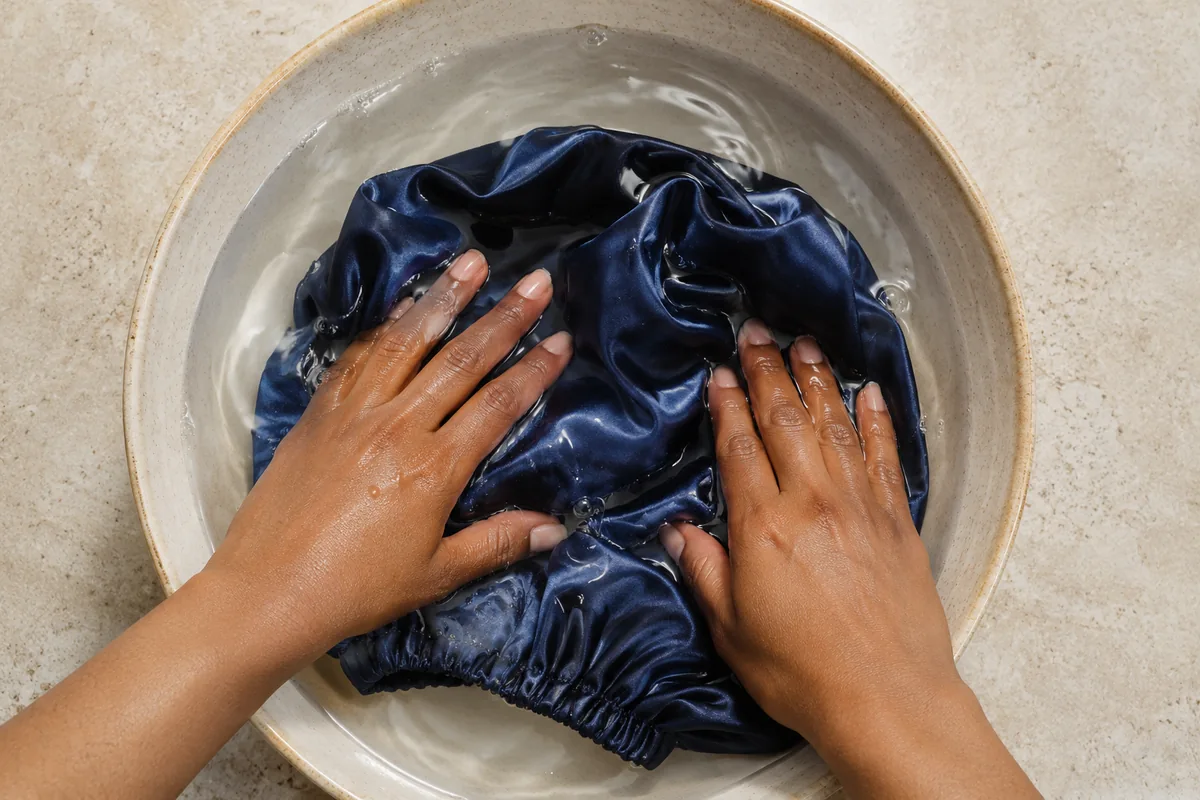
Prepare a clean basin and use the water temperature and cleaner permitted for the whole item. If the detergent has directions for hand washing the stated fibre, follow its dilution instructions. For a small bonnet, avoid guessing from a full machine load. Adding more concentrate directly to the band can leave you with more rinsing to do, and a product approved for one material may not suit another.
Support the bonnet in the water and move it gently so the approved solution reaches the inside. Pay attention to the folds around the band. You can press and release the fabric lightly without scrubbing the surface or pulling the elastic tight. Skip a long soak unless the directions allow it. If you see unexpected colour release or the fabric starts to change, stop and check the care instructions instead of adding a home remedy.
Rinse as directed, using clean water and gentle handling. Lift the bonnet with support beneath the body so its wet weight is not hanging from one point on the elastic. If the instructions allow it, press out excess water with a clean towel that does not transfer colour. Twisting the bonnet into a rope puts force into the same seams and band you need to sit comfortably later.
Machine wash only under the stated conditions
Check whether the maker actually permits a machine wash. If it does, match the named cycle, temperature and other limits to your machine. A delicate setting varies from one machine to another, so check what the cycle does rather than relying on the name alone. Follow any directions about washing separately, and keep rough or snagging items out of the load when the instructions allow you to combine pieces.
A closed mesh bag can keep a small bonnet together with other compatible delicates when the maker allows it. It cannot make a hand-wash-only item machine washable or turn a warm cycle into a cold one. If the required conditions are unavailable, check for another method the label permits. Ask the maker if neither the label nor its care page gives a workable choice.
Think about the next step before starting the load. If the bonnet needs air drying, leave enough time to take it out promptly and open the layers. A load finished just before bed can leave you with an accessory that looks ready outside and still feels damp inside. Doing this wash earlier can solve the timing issue without changing the permitted drying method.
Dry the inside as well as the outside
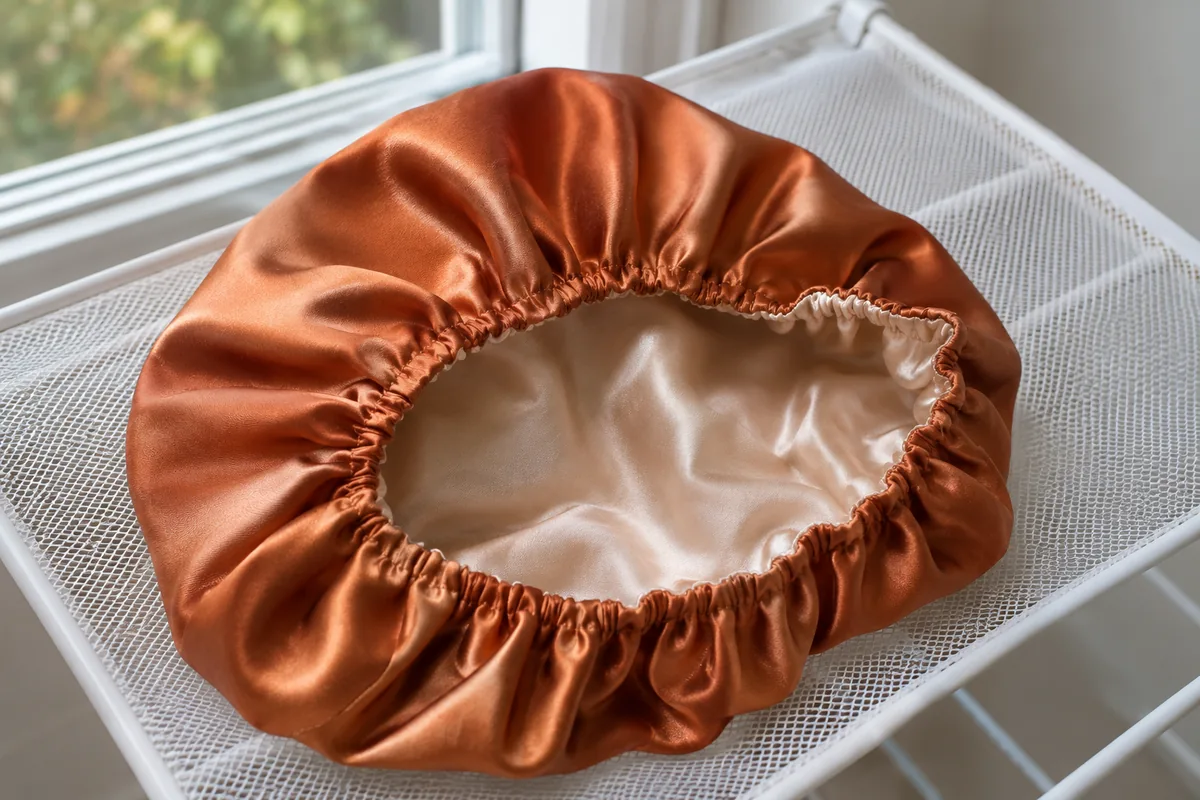
Use the drying position specified by the maker. When flat air drying is allowed, support the bonnet on a clean surface suited to drying and open it gently so the lining has access to air. Avoid hanging the wet weight from a single point on a gathered band unless the instructions specify hanging. Keep it away from direct heat unless the maker explicitly permits that method. A smooth shell does not imply that the elastic can handle a hot dryer.
A double layer can dry unevenly. Check under the band, along the joined seam and in the thickest folds before putting the bonnet away. If those parts still feel damp, leave it open in its allowed drying position and check again later. The outer panel can feel dry well before the gathered area. This is why a fixed number of hours is less useful than checking the actual piece.
Once it is dry, reshape it lightly and try it on as you normally would. Notice whether the band still sits where you expect and whether any seam catches the hair. If the fit has changed, compare with the photo you took earlier. Consult the separate fit guide for choosing room around the hair and avoiding a band you have to over-tighten. Washing cannot correct a shape or size that never fit comfortably.
Set a routine you can repeat
Use the maker's instructions if they give a wash interval. Otherwise, look at actual use: how often you wear it, whether you have applied products close to the band, and whether you notice residue or an odour. A bonnet worn for one evening over dry hair and one worn nightly over product can need attention at different times. Plan the next check rather than assuming that every bonnet needs the same schedule.
Imagine two similar-looking bonnets in the same drawer. The plum one is hand wash only and dries flat. The navy one permits a delicate machine cycle and also needs air drying. When both need a wash, sort them by instructions rather than by colour or shine. Start the plum one when you have time to rinse it and lay it out. Add the navy one only to a compatible load. Keep each open until the band and lining are dry.
Store the dry bonnet in a clean place where the band is not held under tension. Keep a photo of each label if you own more than one style. When you notice a new stain or weakened seam, decide whether to ask the maker about treatment or repair before repeating the usual wash. That small check is more useful than trying to make one recipe work for every accessory.