Fringe planning
Micro bangs with the brow space you want
Separate brow clearance, width and edge before choosing a very short fringe. Use a portrait preview for proportion and your stylist for the cut.
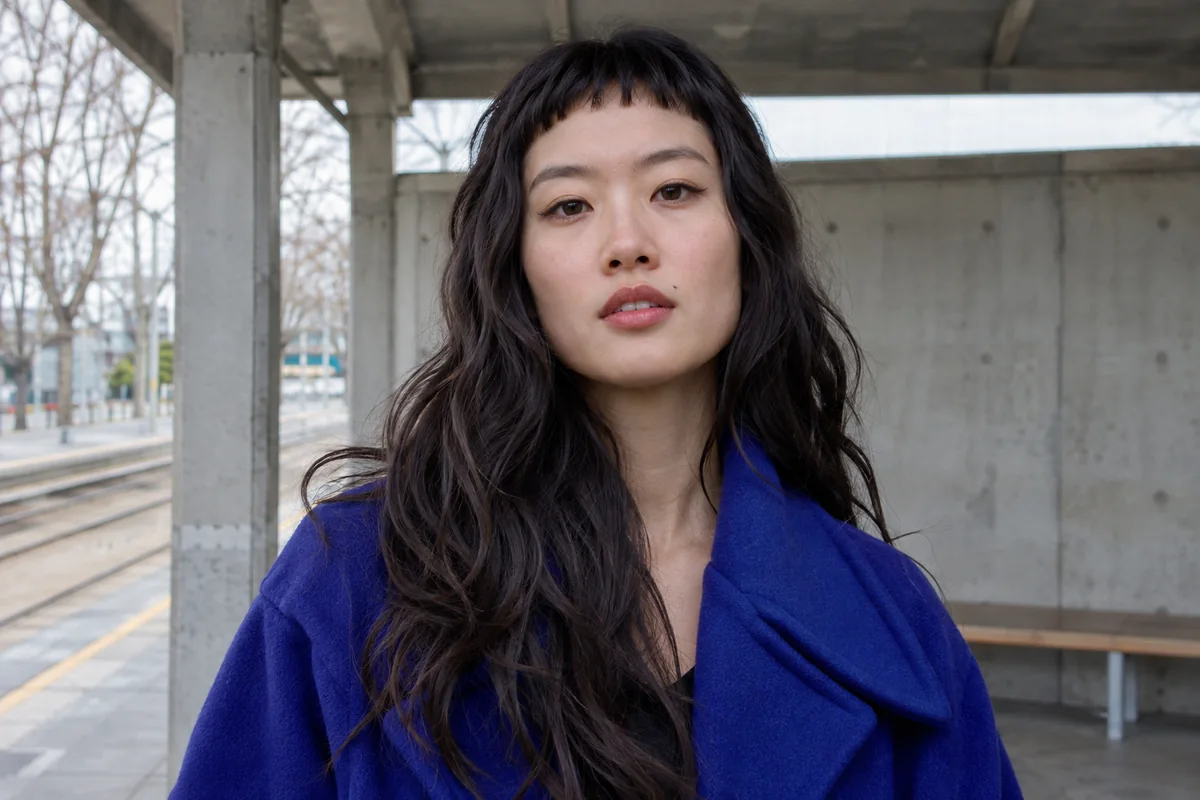
You like the space above the eyebrows in a reference photo, but you are less sure about the solid line across the forehead. That is a useful distinction to make before asking for micro bangs. The name tells a stylist that the fringe is short. It says much less about how far it extends towards the temples, whether you want gaps in the edge, or what should happen where the hair naturally parts.
Make those decisions separately. Start with the height you want to see on dry hair, then look at the width, edge and movement. A portrait preview in Hair Muse can help you compare the visual balance, while your own dry hair and a conversation at the salon help answer the practical questions. Keep the original portrait, one useful preview and one photograph of an actual cut. Each has a different job.
Set a height for micro bangs on dry hair
For this guide, micro bangs leave a visible band of forehead above the brows. Schwarzkopf's French overview uses the exposed brows and forehead to describe the look. That is a better starting point for a conversation than a fixed measurement taken from someone else's photo. Two people can ask for the same amount of clearance and need a different cut because their hairlines and the way their front sections sit are different.
Stand at your usual mirror with your head level and look at your current hair after it has dried the way you normally wear it. Locate the line you would be comfortable seeing at the centre. Then decide whether you want to see the same amount of forehead at the sides. A slightly longer outer edge may be closer to the photo you like than a straight line drawn from one temple to the other.
Find a lower limit for the decision as well as a preferred image. If you like a very high edge on a photograph but feel uncertain about it on yourself, say that clearly. Ask the stylist what a longer first version would look like once dry and whether it leaves room to shorten later. There is no need to choose the shortest version in the chair simply because it makes the reference recognisable.

Choose where the fringe stops across the forehead
Width is the part you can miss when looking only at the gap above the eyebrows. A narrow group of strands can leave the temples relatively open, while a broad edge creates a more continuous shape across the forehead. Compare where the ends of the short section sit in relation to the longer pieces beside the face. Decide whether you want that transition to be distinct or to blend into the side hair.
Look at a reference straight on and at an angle. From the front, the longer sections might hide where the fringe stops. From the side, you can often see whether the short line turns down towards the temple or ends abruptly. Do not stretch the front hair out to the sides to estimate the amount that would be cut. Ask the stylist to show the proposed area on your head before deciding.
Think about how you wear the rest of your hair. If it is usually tied back, the outside ends of the fringe may be more visible than in a photograph with hair loose around the face. Bring a hair tie if that is part of your routine. Compare both ways in the mirror with the stylist before agreeing on how much side hair to include.
Describe the edge in terms you can point to
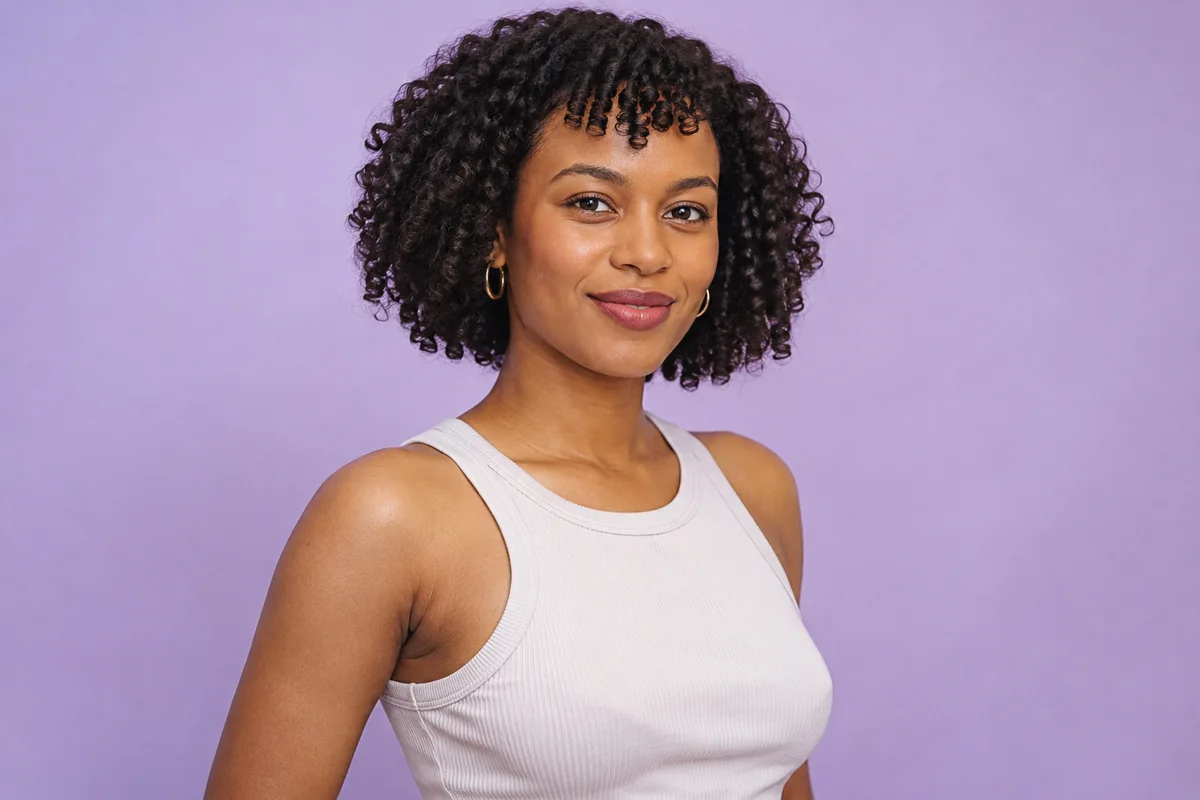
A solid edge has a clear outline even when you view the whole face. A piecey edge is easier to read as separate small groups. A curved edge can also be solid or separated, so the word soft alone may leave too much open. Point to a specific place in a reference and explain whether you mean the direction of the outline, the amount of separation or the way the short hair meets the longer side.
Try writing down one preference and one limit. You might want a readable central line but dislike a heavy edge continuing towards the temples. Or you may like open gaps in the middle while wanting the outer ends to look quite deliberate. Bring a second photo showing the part you want to avoid if you find it difficult to explain in words. Make clear which photo is the positive reference.
Do not take a reference as evidence of how much hair must be included in the cut. A photograph can show an appearance created with light, styling and a particular head of hair. It rarely tells you how the section was taken. You can describe the amount of forehead you want to see and let the stylist explain the section that would produce a plausible version on you.
Check your roots on an ordinary morning
Observe the front section after your normal wash and again after a night of sleep. Look for a place where the hair separates, changes direction or lifts. Note whether you tend to accept the movement or already spend time changing it. If you wear glasses, check how you feel about the gap between the brows, the frame and the proposed fringe while wearing the actual pair you use.
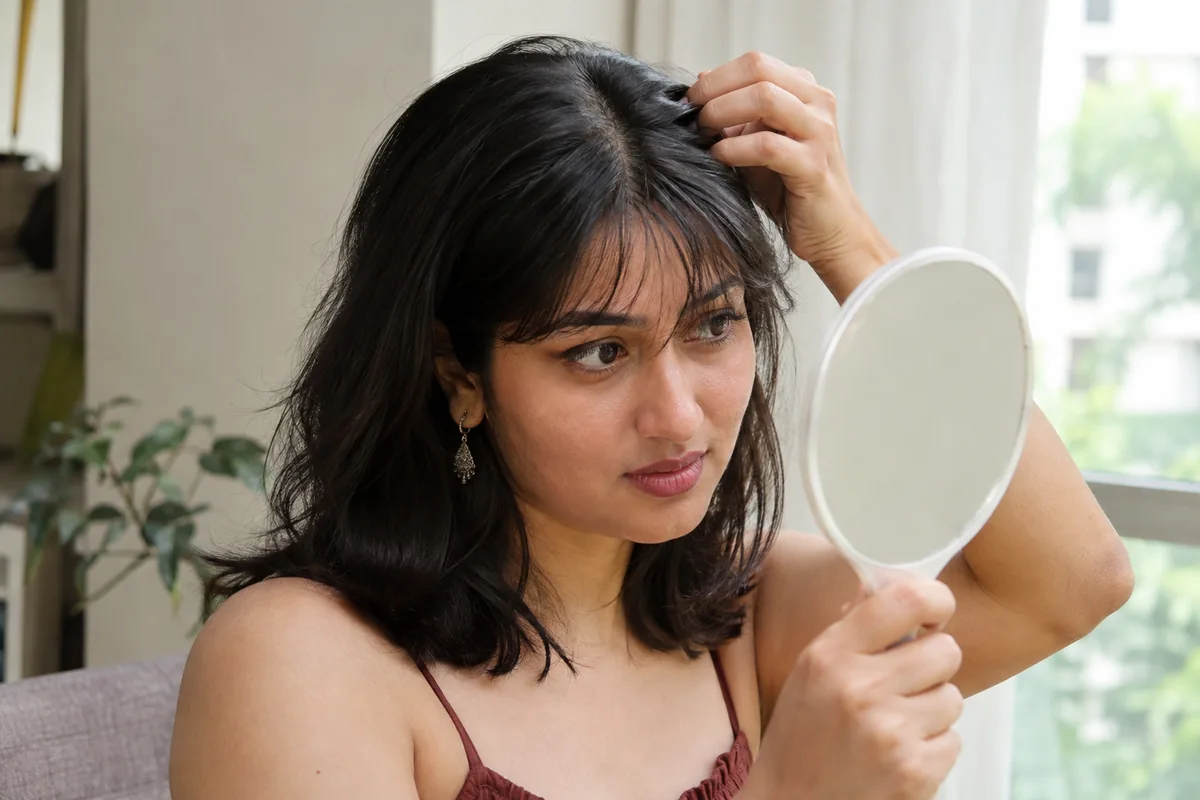
Schwarzkopf's German short-fringe article highlights prominent growth patterns as a practical consideration. Use that as a reason to show your stylist where your hair moves. You do not have to rule out a look because of one strand, and you should not expect a generated image to show precisely how your roots will behave. Ask whether the proposed edge could accommodate the movement you already see.
If you wear your hair wavy or curly, use a reference that leaves the texture visible. Take a current photograph on a day you are happy with how your hair has dried. Ask the stylist to evaluate the finished height in that state. A strand pulled down for an illustration and a strand sitting freely above the brow answer different questions. Keep a realistic account of how much morning styling you are willing to do.
Compare a useful portrait in Hair Muse
Use a clear portrait of yourself taken close to eye level, with the brows visible, the whole hairline in frame and no heavy filter. If you already have a fringe, photograph it in the way you normally wear it. The starting portrait is useful information. Keep it available next to any generated result so that you can spot changes to features you did not want to compare.
Explore looks available in your version of Hair Muse and use any relevant result to consider one question, such as whether you like an exposed band of forehead. Do not assume there is a dedicated micro bangs preset or that you can set exact height, width or density. If the available choices do not show the edge you want, keep your real reference and discuss that detail in the salon.
Check that the preview has not changed your brows, face, hair colour or texture in a way that makes the choice hard to judge. If it has, leave that result out of the comparison. Even a visually useful portrait cannot tell you how much length to remove, how the roots will move when dry, or how often you will want a trim. Use it as a way to show a preference in proportion.
Bring one decision and one question to the salon
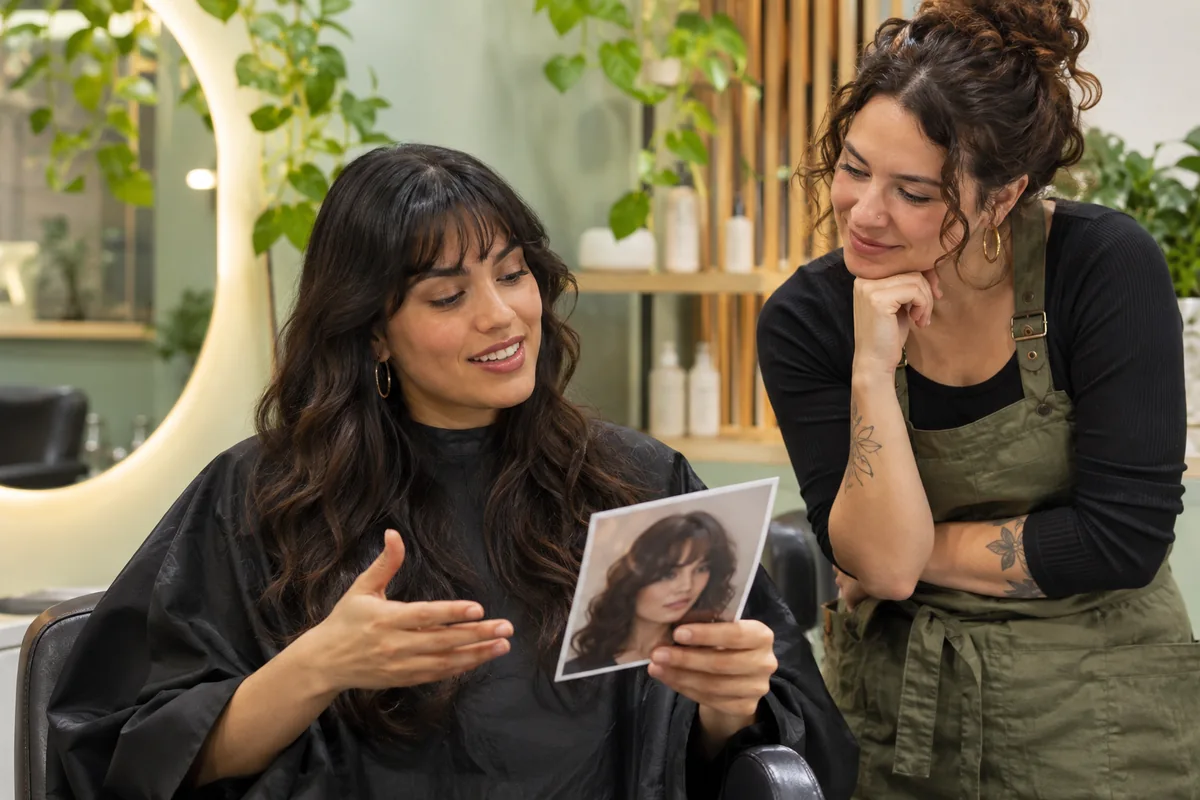
Imagine that your favourite image shows a broad high edge, but the part you really like is the small open space above the brows. The actual preview you find useful may have a narrower edge and longer pieces at the temples. Bring that difference to the stylist. Ask whether you could keep the longer sides and start with less clearance, then see how the front sits when dry.
You can explain the plan in plain language. Say where you would like the centre to finish, point to the place you want the side hair to remain long, and show where your hair opens by itself. Mention the routine you want to keep. For example, if you usually air dry and rarely reset the front, that is worth saying before you choose an edge that only appeals to you when it looks perfectly even.
Ask the stylist to show the proposed outline with you sitting naturally and wearing your usual parting. Agree on what can be adapted, including a longer starting length or a more open edge. Before leaving, ask what ordinary styling and future trims would involve for that version. You can decide to keep the existing length if the compromise does not appeal to you. That is a useful outcome of the consultation too.