
Choose the finish before the format
Hair gel vs wax: which finish fits your day?
Separate shine, hold and the wish to reshape your hair. Read the exact formula, plan one application and assess the result in an ordinary day.

Hair gel vs wax sounds like a simple choice until the shelf offers a glossy wax, a flexible gel and several products with mixed names. You want the front to sit where you put it, perhaps with less shine or enough freedom to change it later. Those are different requests. Choosing a familiar jar or the strongest number on a label does not settle all of them at once.
This independent Hair Muse guide starts with the finish you actually want and follows the decision through application, an ordinary day and the next wash. No app is needed. The images illustrate separate situations, not a product trial or a before-and-after result. Keep the directions for your own formula nearby; the aim is a useful choice you can explain, not a universal winner between two categories.
Hair gel vs wax begins with three separate preferences
Describe the appearance first. Do you want a noticeably shiny surface, a quieter matte impression or simply a little separation at the ends? Then describe the shape: a front section kept back, a compact side part or pieces that can move. Finally decide whether you want to leave the arrangement alone or change it after a hat, commute or long afternoon. Write these as separate wishes rather than asking one product to be strongest at everything.
Hold and shine are different questions. A shiny-looking photograph cannot prove that a hairstyle stays in place, and a matte appearance does not mean the formula is weak. Look for a product that describes your desired combination. If you dislike a hard-feeling finish, make that part of the choice instead of treating discomfort with the texture as a failure to style properly.
Name the area: perhaps only the short top needs separation while the sides already sit comfortably. A curl-arranging task is different from a sleek front. If you are considering a foam format, our mousse guide treats that separate application decision.

Use the category as a starting point, then read the formula
A gel is worth considering when you want a more set arrangement; a wax is worth investigating when workable separation is the priority. These are starting questions, not promises that every gel becomes rigid or every wax stays flexible. Read the actual finish and use description. Words such as paste, clay, pomade and gel-wax should send you back to the specific instructions rather than into a rigid category ranking.
Gatsby's own wax-and-gel explainer distinguishes styling finish and reworking in its examples, including wax finishes from glossy to matte. That illustrates why the category alone does not specify the whole result. Its brand claims and styling examples are not a recommendation or a guarantee for your hair.
Compare descriptions before comparing a hold number. A rating belongs to the manufacturer's own range; do not assume the same number means the same feel across unrelated products. Seek a clear statement about the finish, the hair state for application and whether reshaping is an intended use. When the information is missing, ask the manufacturer rather than making the container colour stand in for an answer.
Match the hair state to the chosen instructions
Find out whether the intended use calls for dry or damp hair. Do not take the method for a different tube with a similar name. Finish the previous rinse or preparation as directed, then organise the hair so that you know which state you are starting from. A very wet front and nearly dry back make it harder to understand a result if you treat them as identical.
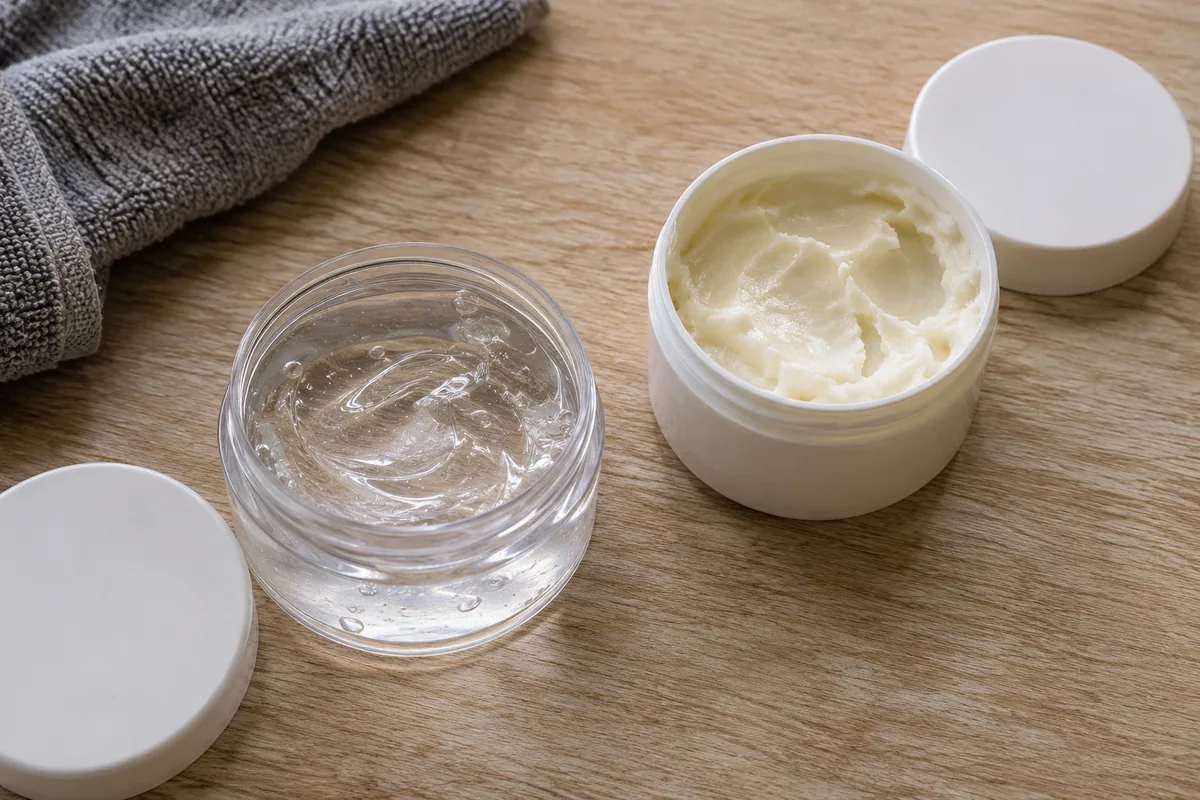
Read the dispensing and distribution instructions before opening the container with wet hands. A pump, a squeeze and a scoop do not provide a universal portion shared by every formula. The still-life image shows different consistencies, not recommended quantities. Neither clarity nor thickness reveals the ingredient list, setting behaviour or washout method of an unidentified product.
Keep the formula in its labelled packaging. Mixing gel and wax or adding water creates another preparation without useful directions. For a multi-use product, choose the relevant method rather than combining steps. Keep the first attempt simple enough to explain afterwards.
Reach the intended area without loading the easy parts twice
Arrange the chosen area so that you can reach it comfortably. If the product's instructions call for distributing it through the hands first, do that before touching the hair. A concentrated amount landing on the nearest front section is different from an even permitted application. More product on that same accessible spot does not solve a part you have not reached.
Use gentle handling and let a small styling area remain a small task. Support longer ends if needed and avoid pulling through a resistant knot to finish faster. A styling product is not an instruction to force a brush through hair. For short cuts, notice how close the intended ends are to the skin and keep within the product's permitted application area.
The illustration shows relaxed fingers arranging a loose section, not a dose or a universal dry-hair method. Follow your directions and avoid continuous top-ups during the initial application. Put the container down to check access or reread a step before adding anything.

Give the finish a chance to become visible
Complete the method the product specifies before deciding what you think. If the use involves a setting or drying stage, avoid repeatedly running your hands through it while asking whether it will stay put. Follow the stated process rather than an invented waiting time. Look at the hair in an ordinary room as well as under the bright light where you styled it.
Judge the preferences separately: does the visible sheen suit you, is the chosen shape where you want it, and are you comfortable leaving it alone? A result can answer one question well and another poorly. That gives you a more useful next choice than declaring that all gels or all waxes are wrong for your hair.
Do not interpret shine as a measure of healthy hair, or a matte finish as proof of cleanliness. They are appearance preferences in this decision. A photo can record the outline and visible surface, but it cannot show touch or guarantee how the style feels. Keep your own brief description beside it instead of expecting the picture to supply every answer.
Plan what happens after a hat or a change of plan
Think about a real point in your day when you usually disturb the hairstyle. After removing headwear, look before adding more product. Is the shape simply different, or do you actually want to change it? If reworking matters, choose a formula that expressly supports that use and follow its method. Do not assume water, warmth or another layer will reactivate every preparation.
Avoid forcing a comb through a rigid or resistant finish. When the labelled use does not allow the adjustment you want, a proper reset may be more sensible than repeated manipulation. The everyday question is whether that process fits you, not whether you can make a photograph remain identical through every activity. A cap in the illustration is a reason to observe, not evidence of a successful restyling test.
Softening a fully dry gel cast on curls is a different task from choosing the initial gel-or-wax finish. Our separate gel-cast guide addresses that decision. Do not borrow it as a promise that every set hairstyle should be broken up or that every gel will give the same final texture. Name the finish you actually wanted before trying to alter it.

Include removal in the choice
Read the removal guidance along with the styling method. A pleasant first appearance is only part of a routine if washing out the product does not suit the time and care you are prepared to give it. Do not assume that a category name establishes an identical washout process for every formula. Ask the manufacturer when the expected method is unclear.
Use your hair-care products according to their own directions and handle the lengths gently. If an application leaves you wanting to scrub aggressively or wash again and again, pause before repeating the same routine. Clarify what the formula requires rather than inventing a removal mixture with household detergent, baking soda or several unrelated treatments.
Keep comfort separate from the styling verdict. Follow warnings and discontinue a product that causes irritation; seek appropriate advice for persistent or concerning symptoms. A sensation on the scalp is not a way to measure hold. The product should fit a routine you understand, rather than making you ignore discomfort because you liked one photograph of the finished style.
Compare two ordinary routines, not two invented victories
Consider an illustrative situation: someone wants a neat short front with a modest sheen for a morning appointment, but normally changes the shape after removing a cap later. They read one gel's description and one wax's description. Instead of deciding by the strongest label, they ask which permitted method addresses the first appearance and the later adjustment. This is a planning example, not a claim that either product has been tested.
For suitable options tried on separate ordinary occasions, keep the haircut and familiar preparation comparable. Record the formula, directions, appearance, later adjustment and removal. You do not need a half-head comparison, several new layers or repeated washes just to manufacture a result.
The conclusion can be narrow. One routine may fit the appointment but not the later restyling wish; another may be unnecessary when the hair already sits comfortably. You can also choose neither for a particular day. A useful answer to the original question connects the actual formula to a purpose and its practical limits, without turning a brand or a format into the winner for everyone.