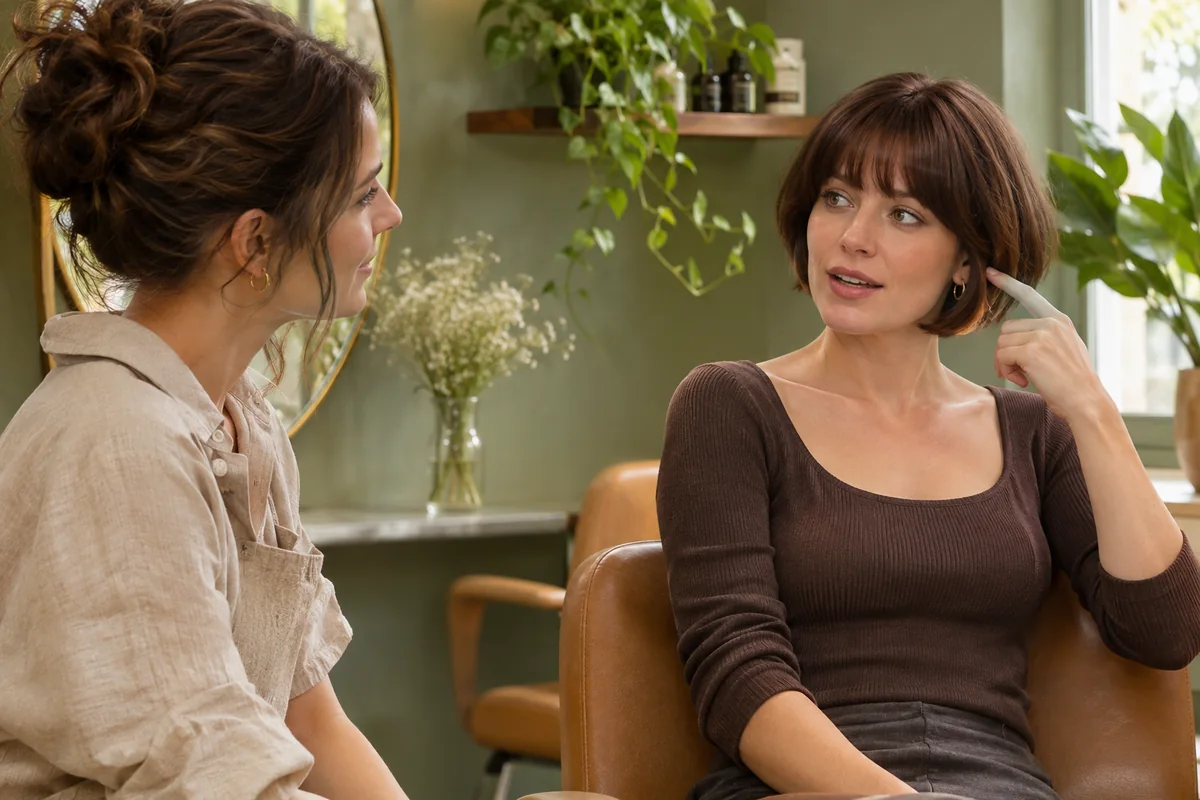
A rounded outline you can describe
Make the pageboy haircut your own
Decide how the curve travels past the ears and around the nape before choosing a short rounded haircut from a portrait.

A pageboy haircut can look wonderfully simple in a photograph: a fringe, a rounded edge and hair curving towards the face. The difficult part arrives when you try to explain which of those details you actually want. Perhaps you like the continuous outline but need your ears covered. Perhaps you want a compact nape without the particular fringe in the picture. Saying the name alone leaves those decisions open, even when both you and your stylist know the style.
Start with the outline you want to live with. This guide separates the ear area, the back and the fringe, then shows how an optional Hair Muse preview can help you describe a preference. We publish Hair Muse; this is our own planning guidance, not an independent app test. The photographs are separate illustrations, not a matched transformation or proof of a salon result. Your real hair and a conversation with the person cutting it remain essential.
Read the pageboy haircut as a continuous curve
Look at the outside edge of your reference first. Follow it from the fringe towards the sides, then ask where it continues behind the head. A front portrait can show an attractive curve while concealing most of the nape. If that is the only view available, record the missing information rather than assuming the unseen edge matches another haircut you have saved.
Schwarzkopf describes the Pagenkopf as a graphic short hairstyle with clear contours. That is useful vocabulary for a consultation, rather than a rule that every version must have identical lengths or a compulsory finish. The name does not tell your stylist how much of your ear you want visible or how firmly you want the ends turned inward.
Compare actual features when another reference is labelled bob or bowl cut. Do not spend the appointment defending a category. Point out the continuous curve you like and the parts you would change. Our bowl-cut guide addresses its fringe and temple outline separately; here the main question is how your rounded perimeter travels through the sides and back.
Choose what happens beside each ear
Decide whether the hair should cover the ear, sit partly over it or leave it open. Use your own ear and jaw as landmarks during the consultation. Length copied from a stranger's photograph cannot establish where the same edge will land on you. Ask your stylist to show the proposed dry position before you agree to remove the length you currently rely on.
Consider whether you tuck the sides behind your ears during work or meals. A short curve might sit neatly when left alone but behave differently when tucked. Tell your stylist which position matters more to you. You can prefer a looser outline in daily use without treating that as a failed version of the haircut.
If you wear glasses, bring the pair you actually use. Show where the arms sit and whether you like hair resting over them. An illustration cannot demonstrate your own fit. Keep both sides in the discussion, especially if your hair naturally separates differently on the left and right. You do not need to force matching movement to request a balanced-looking outline.
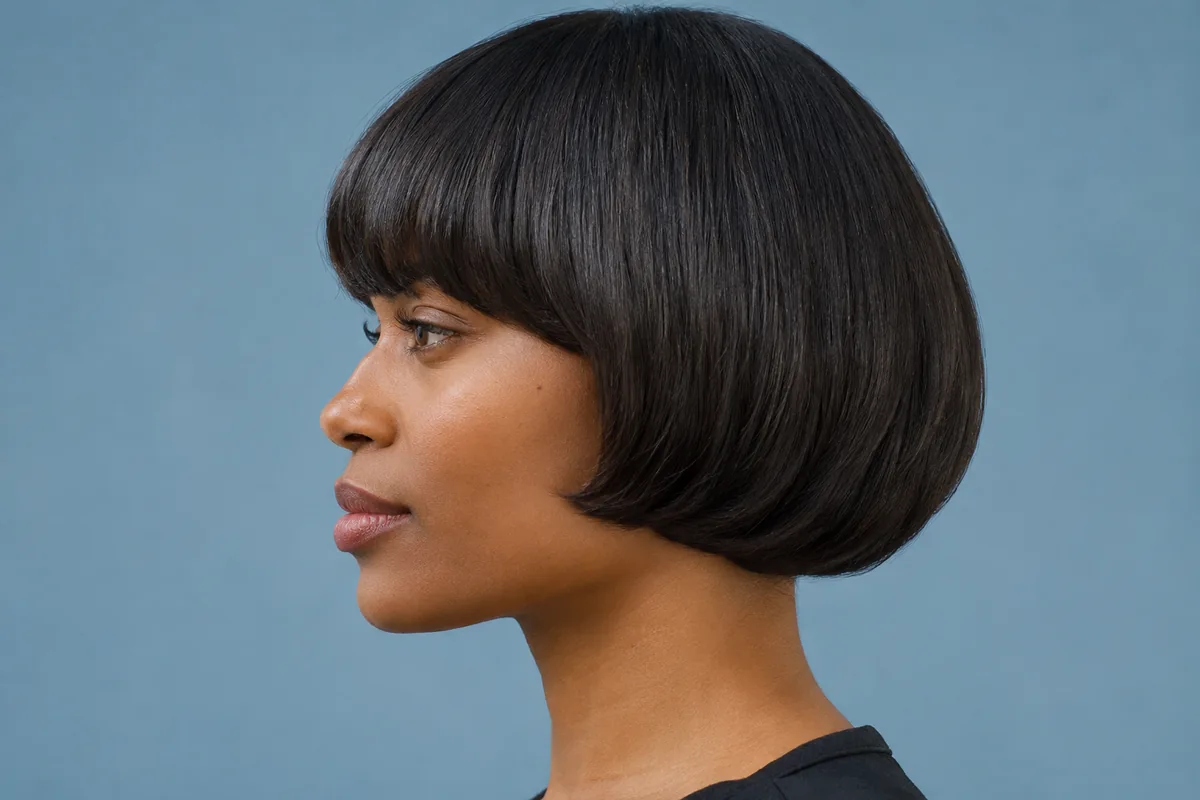
Make the back an explicit part of the request
A pageboy reference does not automatically mean a shaved or exposed nape. Say whether you want hair covering the upper neck and how compact you imagine the back. A photograph taken from above may hide the lower edge, while a raised chin can change the apparent space between hair and shoulders. Ask for a useful rear view if the back is central to your decision.
Use ordinary clothing as a practical check. Do you often wear a high collar, a scarf or headphones? Mention where those meet your current hair. This does not predict exactly how the future ends will move; it gives your stylist a real circumstance to discuss instead of a purely photographic target.
The rear illustration is one possible outline on a different adult, not the missing back of the cover photograph. Avoid joining unrelated images into an imagined construction. If you like the front of one cut and the back of another, describe them as separate preferences and ask whether they belong together on your hair.

Separate the fringe from the rest of the shape
A strong fringe can dominate the first impression of a rounded haircut. Cover it with your hand on the reference and ask whether you still like the side shape. Then consider the fringe independently: how much forehead would you like visible, where should the edge sit, and how do you usually move it away from your eyes?
Explain any split, bend or changing direction you already notice at the front. Let your stylist examine that behaviour in person. Do not flatten your hair for days simply to make it appear suitable for the reference. You need a discussion about your ordinary hair, including what you are willing to style and what you prefer to leave alone.
Keep the request descriptive rather than turning it into home cutting instructions. The exact section, density and cutting method require assessment. If a particular fringe is essential to the appeal but its daily care feels unsuitable, pause the whole decision. Choosing a longer version or keeping your current haircut is a valid outcome of planning.
Record your real hair before trying a portrait
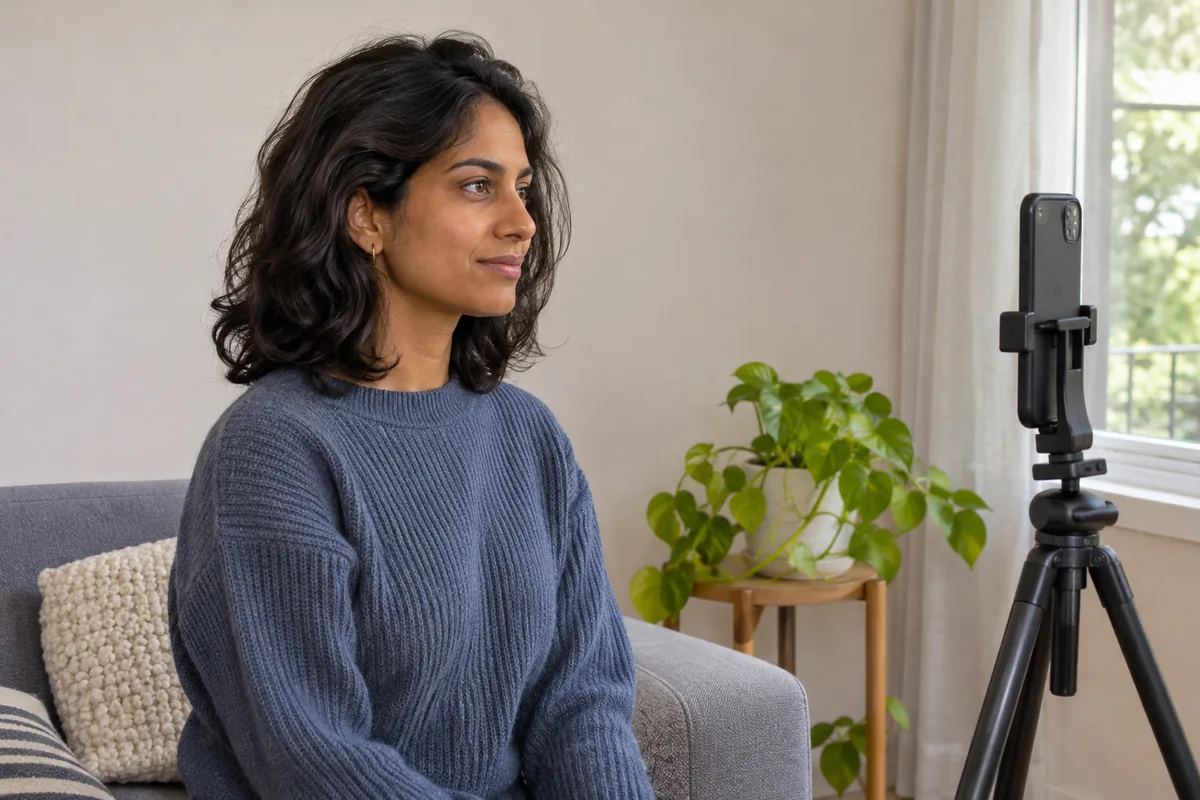
Take a clear current portrait in ordinary even light, with your face and hairline visible. Keep your usual texture rather than adding unfamiliar straightening or a dramatic finish. Also keep a real side and rear photograph for the consultation. Those additional photographs document your starting point; they do not turn a generated front preview into a reliable three-dimensional model.
Our portrait guide explains the setup in more detail. For this decision, the useful evidence includes how the hair lies around your ears, where the back lifts and what your fringe area does without constant adjustment. Write those observations down while looking at the real photographs. They are more useful than guessing hair density from a smooth generated surface.
Only choose a portrait you have the right to use. Keep other people and identifying background details outside the frame. You can complete the entire planning process with your own photographs and real haircut references if you prefer not to use a preview. The goal is a clearer request, not a requirement to generate an image.
Ask Hair Muse one visible question
Hair Muse lets you explore hairstyle ideas on a chosen portrait and save favourite looks. Use the choices actually available in your version to explore a shorter rounded outline. This guide does not promise a dedicated pageboy preset, a custom fringe editor or separate ear and nape controls. If the available option cannot represent the preference, keep the real reference and your written note instead.
Keep the starting portrait the same while considering your shortlist. Ask a question such as whether you like a more compact shape around your cheeks. Do not change colour, fringe, background and length together and then attribute the whole impression to the rounded perimeter. A small useful comparison is easier to discuss than a collection of unrelated flattering portraits.
Hair Muse is free to download; some simulations or usage capabilities may require an in-app purchase. It is optional, and a generated image cannot establish cutting sections, daily styling effort or the behaviour of your own ends. It can help you express a visual preference without proving that a particular haircut will produce that picture.
Reject a preview that changes the question
Look beyond whether the face appears attractive. Has the image changed the ear position, jaw, hairline or natural texture? Is the supposed ear-covering edge actually hidden by a new camera angle? Compare the original beside the preview. If another feature has changed substantially, the image may no longer help you judge the outline you intended to discuss.
Treat inward-curving ends as a rendered appearance, not evidence that your hair will fall that way after washing. A static portrait cannot tell you how the back moves when you turn, whether you will want to tuck a side, or which styling steps you will accept. Keep those as questions for your stylist rather than silently converting them into promises.
Remove images that obscure the decisive area, even if the rest looks appealing. You do not need a large favourite collection. One useful image and a sentence explaining its limitation can be a stronger brief than ten pictures that disagree about the ears, fringe and nape.
Turn the shortlist into a short salon brief
Imagine an illustrative request from someone who likes a rounded side outline but normally wears glasses and air-dries their hair. Their note might read: I want the ear covered when the hair is loose; I am undecided about the fringe; please show me how compact the back can be with my normal routine. This is a fictional planning example, not a reported result.
Bring the real starting photographs, the selected reference or preview, and that note. Ask which features can be combined and which would need a different length or styling approach. Our salon-preview guide helps structure this exchange. Leave room for the stylist to explain an alternative rather than asking for an exact copy of generated pixels.
Before cutting begins, confirm the ear coverage, the nape boundary and the fringe decision in plain language. Ask what ordinary upkeep would involve for the agreed version. If one important point remains unclear, resolve it before shortening the hair. A successful consultation can end with a modified plan, a later appointment or a decision to keep more length.