
Long hair and the back outline
Keep the corners with a U-shaped haircut
Decide how much the sides can rise, what length stays useful and which views belong in your salon brief. A front preview cannot settle the back.

A U-shaped haircut may sound like a small change until you realise that keeping the longest point is not the same as keeping all your length. The centre can remain long while the sides become shorter. If those side pieces currently reach your ponytail, sit over your shoulder or help a braid stay together, their new endpoint matters. Start with that practical trade-off rather than a photograph promising more movement without losing anything. A rounded outline still involves deciding what hair you are willing to remove.
Separate the back curve, internal layers and face-framing pieces. Set length boundaries and record your dry outline. Hair Muse can help explore the visible front impression on your portrait, not verify an unseen rear curve or exact cutting measurements. Keep originals, previews and genuine haircut references separate when preparing your salon brief.
Read a U-shaped haircut as an outline, not a promise of layers
Here, the useful distinction is the lower edge seen from behind: a rounded U rather than a straight horizontal finish or a pointed V. L'Oréal Paris describes the U through sides slightly shorter than the middle; its example also includes subtle layers. Discuss that lower outline and the internal layers as separate choices. Look for the complete lower edge, not only a close-up of curled ends. Hair swept forward over both shoulders cannot show how that edge connects across the back when everything falls naturally.
Ask three separate questions about a reference: what happens at the bottom, what changes inside the length, and what becomes shorter near the face? You might want a gentle rounded base while keeping the front familiar. Another photograph may combine the same base with a fringe and substantial layers. Do not accept those additions by default. Write down the particular curve you like, then identify details you are not requesting. This gives the stylist a clearer starting point than asking to reproduce every visible feature of someone else's finished hair.
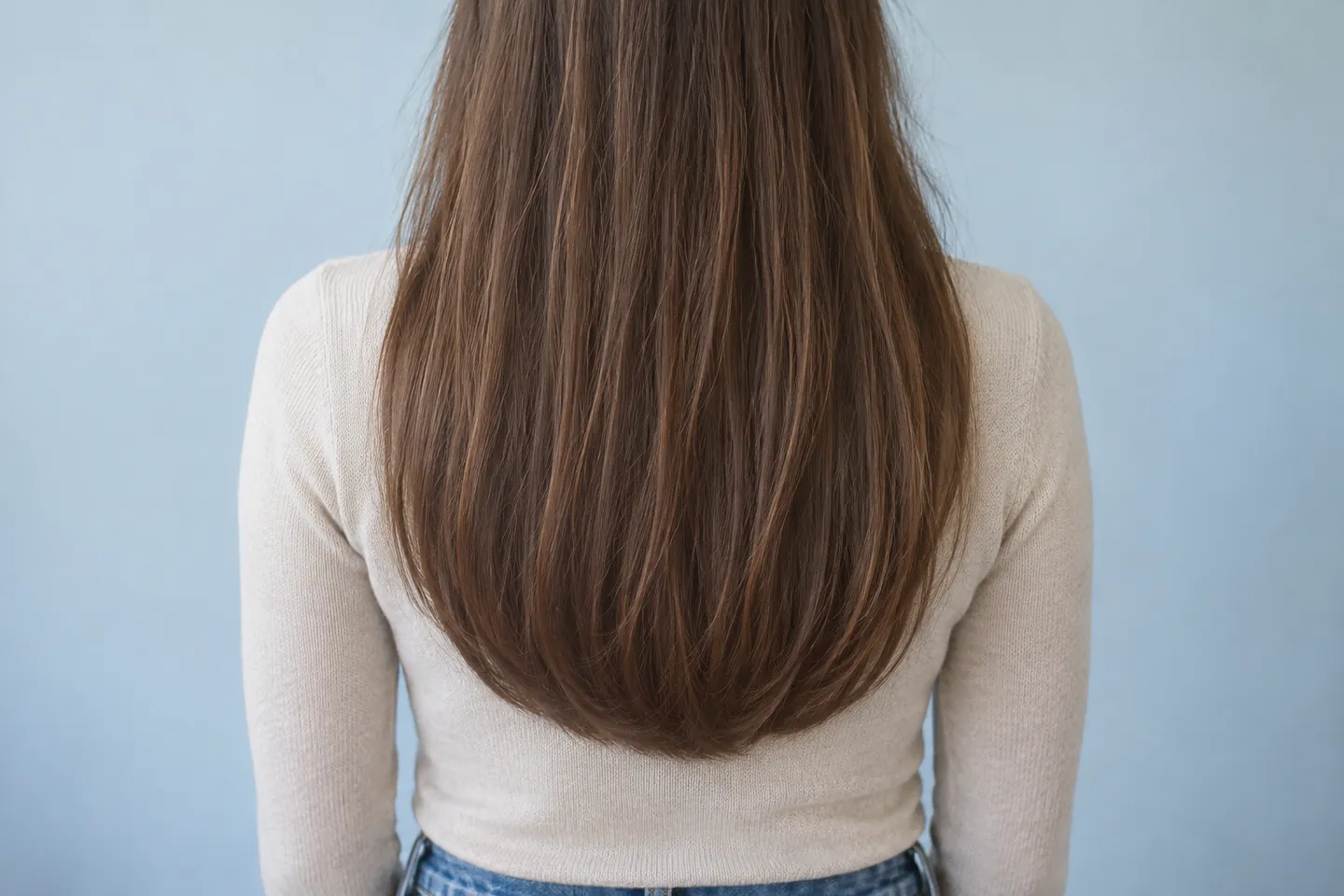
Protect the side length as well as the longest point
Choose the shortest side endpoint you would comfortably accept before discussing a deeper curve. Use your actual dry hair and a familiar body reference rather than a number estimated from a photograph. Perhaps you want the side lengths to stay below your shoulders, or you need enough to reach a low gathering without pulling. Show the current pieces that perform that job. Ask the stylist whether the proposed outline can preserve them from your starting cut. Keeping one long central section does not answer the question for the rest of the perimeter.
Decide which priority wins if your preferred picture conflicts with that boundary. You can choose a shallower curve, preserve the present outline longer, or accept a different function at the sides. There is no obligation to make the U more pronounced just so it reads clearly in a photograph. If the longest central ends are already uneven, ask what a balanced starting outline would require before promising yourself a particular endpoint. The consultation should identify the compromise in advance, not reveal it after the hair has been cut.
Check the everyday jobs that a polished back view hides
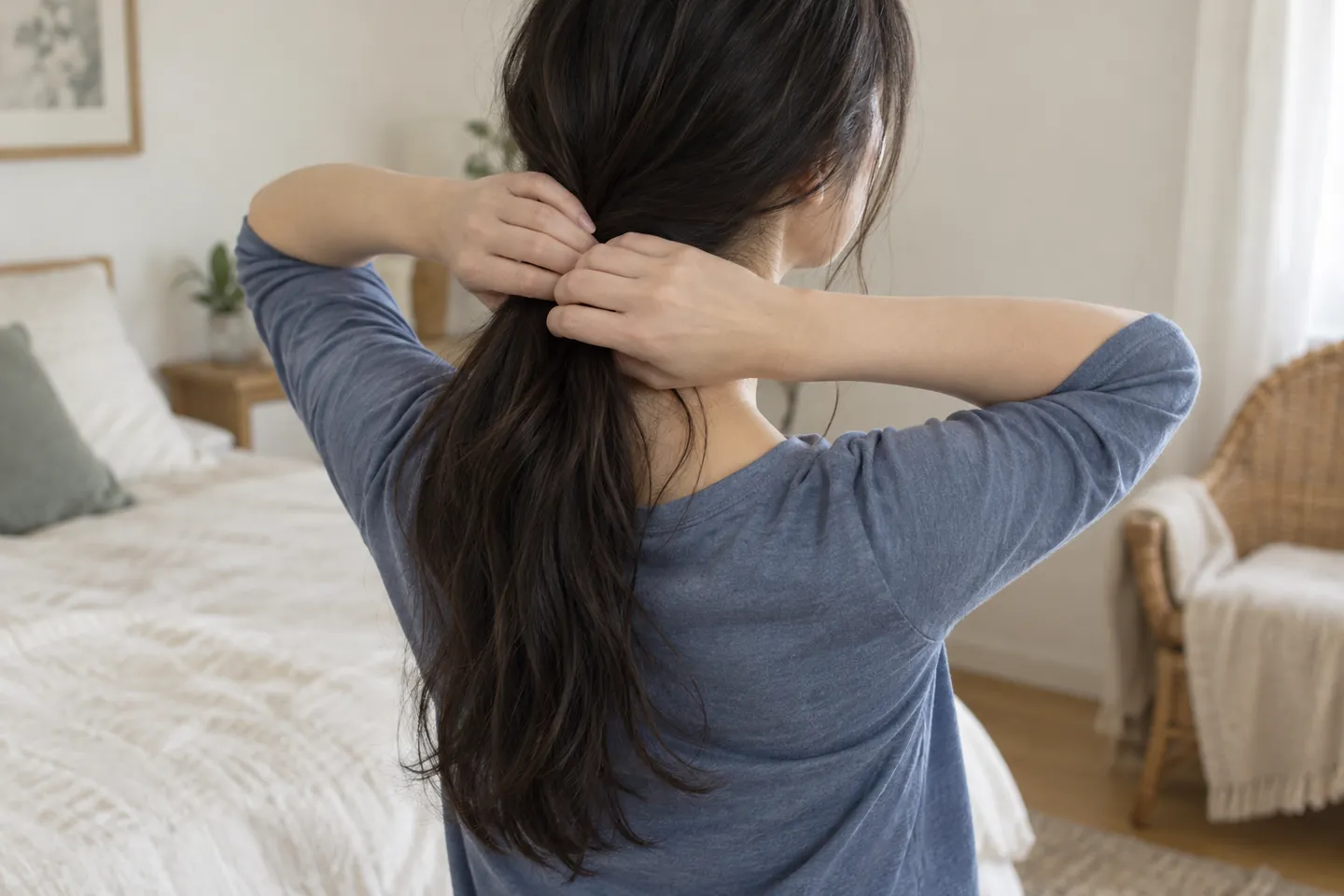
Try your current everyday movements without pretending to cut the hair yourself. Gather it loosely at the height you usually use, bring a section over a shoulder and notice which pieces already escape. Do not pull harder to make a length qualify. A loose braid, a low ponytail and hair worn forward can depend on different parts of the perimeter. Tell the stylist which of those uses matters most. A photograph with every strand hanging behind the body may be attractive while saying little about the way you actually wear your hair.
Keep this functional question separate from choosing a fastening method. Our low-ponytail guide covers comfortable gathering and release; here the issue is whether the proposed shorter side pieces can still reach the place you need them. A preview cannot test that reach. You also do not need to abandon a rounded base if one function is uncertain: ask whether a smaller change would keep more options open. Take an ordinary, unposed picture of the current loose gathering if that will explain the concern better than several sentences.
Let dry texture complicate the drawing when it needs to
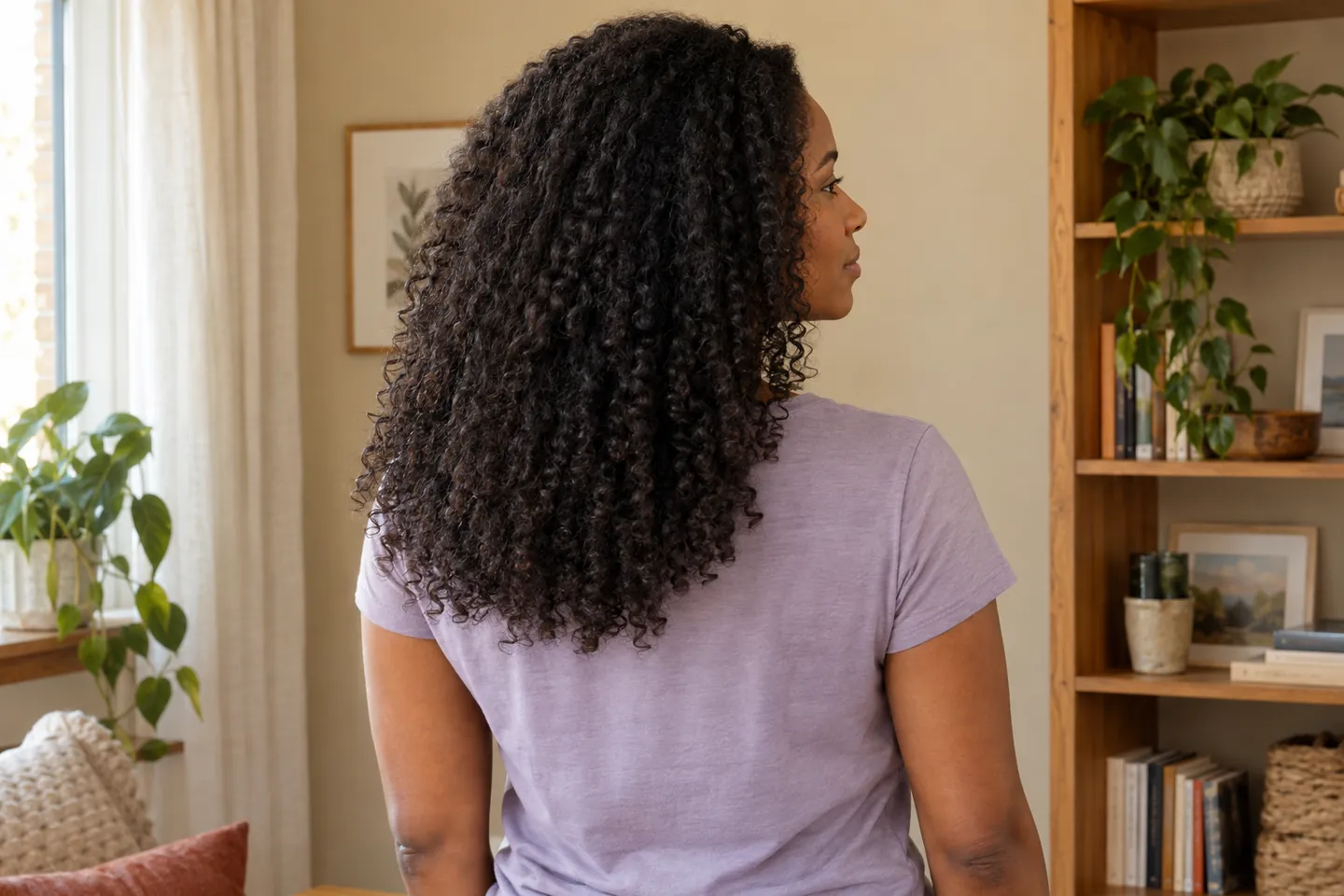
An outline sketched as a perfect U is only a description. Waves and curls may produce a less continuous edge in the finish you normally wear. Photograph the hair dry without stretching the ends or brushing it into a different texture solely for the appointment. If one side sits higher that day, record it rather than hiding it with a tilted head. Ask how the desired rounded impression would be assessed on your actual texture. The goal is a wearable silhouette, not making every curl terminate on an imaginary printed line.
For straighter hair, look at how the corners fall when the shoulders are relaxed and the head is level. For curls, include the lower outline and the shape above it, because a close crop can conceal the relationship. Neither view can establish density or condition through a screen. A rounded base is not a guaranteed way to create thicker hair, eliminate bulk or remove styling work. Discuss those as separate wishes. If your main question is fullness throughout the haircut rather than the bottom edge, the consultation may need a broader layering discussion.
Make a portrait and a rear record for different purposes
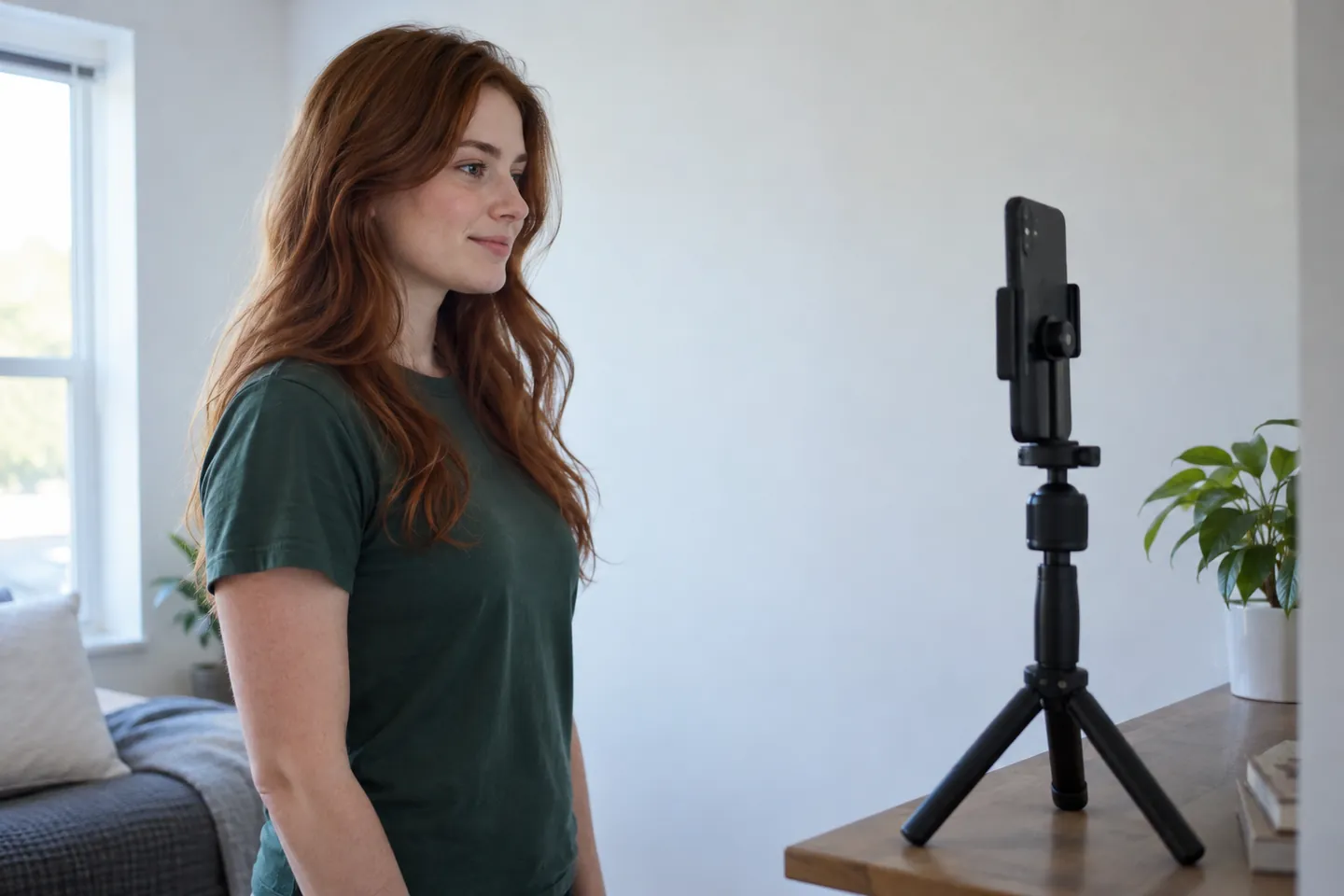
For the original portrait, choose even light, a plain background and a level head, with the face and visible hair edges unobstructed. Keep enough space below the ends to see the whole length you intend to compare. Secure the phone rather than leaning awkwardly to fit into the frame. Apple's camera guidance explains available composition tools such as the grid and level. Those tools help you set up a consistent view; they do not measure the hair or turn a photograph into a professional assessment of the cut.
Keep a separate unedited rear photograph with all the ends in frame. Ask another person to help, or use a safely supported camera and timer. Avoid twisting around to look at the screen while the picture is taken: the resulting posture can change how the hair rests. Add a side view only if it answers a particular question about the corner length. Name each image by purpose in your own notes. The rear record shows your present hair; it is not a generated view of an imagined finished haircut.
Use Hair Muse to narrow the visible choice, not invent the back
Start from the same clear portrait in Hair Muse and explore available hairstyle directions with a similar overall length. Keep colour and fringe close to the original so that a different finish does not dominate the comparison. Save a small shortlist only when the result helps you answer a visible question, such as whether you prefer keeping the long front impression. Compare it with the original immediately. Reject images that change the face, hide the ends or introduce an entirely different texture that you are not planning to wear.
Do not search the result for proof of a U that the picture does not actually show. This guide does not promise a dedicated U-cut setting, adjustable curve depth or automatic reconstruction of the rear. Pair a useful portrait preview with a genuine back-of-hair inspiration image and mark the curve as a salon question. Hair Muse is free to download; some previews or usage levels may require an in-app purchase. Check current access before planning repeated attempts. A small useful selection is the aim, not generating until an uncertain detail looks convincing.
Turn the references into a brief with clear boundaries
Bring one original rear photograph, one clear outline reference and at most a small portrait shortlist. Explain what each contributes. State the longest point you hope to keep, the shortest acceptable side length, whether you want internal layers changed and the everyday function you want to preserve. Then ask the stylist to describe the proposed outline before cutting. If their interpretation includes shorter face-framing pieces you did not request, resolve that difference first. The word U is a convenient starting label, not informed agreement to every additional change in the reference.
For example, your brief might request a shallow rounded base, familiar front lengths and enough side length for the usual loose gathering, with no separate fringe change. That is a preference to assess, not a guaranteed prescription. Ask what is realistic from the current cut and where the compromise would appear. Discuss the finish you will actually use at home, rather than agreeing to a silhouette that only makes sense after unfamiliar styling. Keep unresolved questions visible instead of treating a pleasing preview as evidence that the assessment is complete.
Plan the next trim around what you want to keep
A rounded outline does not require a universal appointment interval. Ask which change would make another visit useful: corners that no longer feel balanced, ends that interfere with your routine, or a wish to return toward a straighter base. Explain whether you would rather retain the centre or gradually equalise the sides if your preference changes. Neither option instantly restores hair already removed. Our trimming guide helps separate condition and shape from a fixed calendar, so the next appointment has a purpose beyond maintaining a fashionable name.
Choose a shallow U, retain the present perimeter while shorter pieces grow, or wait for an assessment of the dry outline. Keep original records and agreed priorities rather than apparently precise digital backs. Success means understanding which lengths matter and which trade-off you accept, even if the choice is less dramatic than your first inspiration.