

Hair and swimming
A swim cap for long hair needs room, not pulling
Make room for the lengths, check movement and ease the cap off without turning swimming preparation into a tug on your roots.
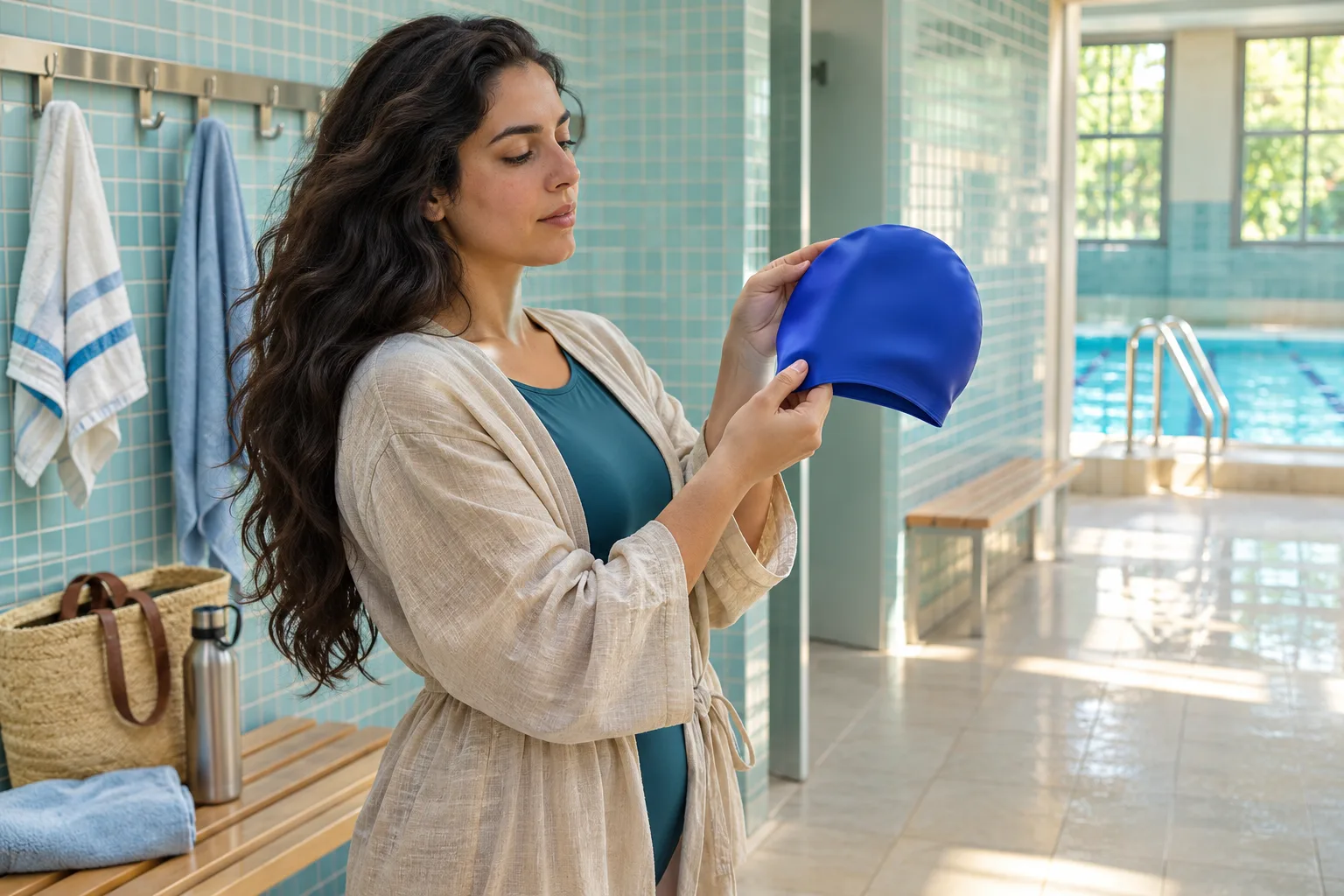
A swim cap for long hair should let you gather your lengths without turning the first minutes of a swim into a struggle. If the cap slides upward, catches at the temples or presses on a bulky knot, the answer is not automatically to stretch it harder. The arrangement underneath and the space inside matter as much as the edge around your head.
Start with a practical goal: keep hair contained, see comfortably and remove the cap without dragging through the lengths. This guide works through a calm fitting routine, a movement check and care afterwards. It does not promise dry hair or complete protection from pool water. You can solve the fitting problem with your actual hair and equipment; no hairstyle app or extra styling product is necessary.
Choose a swim cap for long hair by usable space
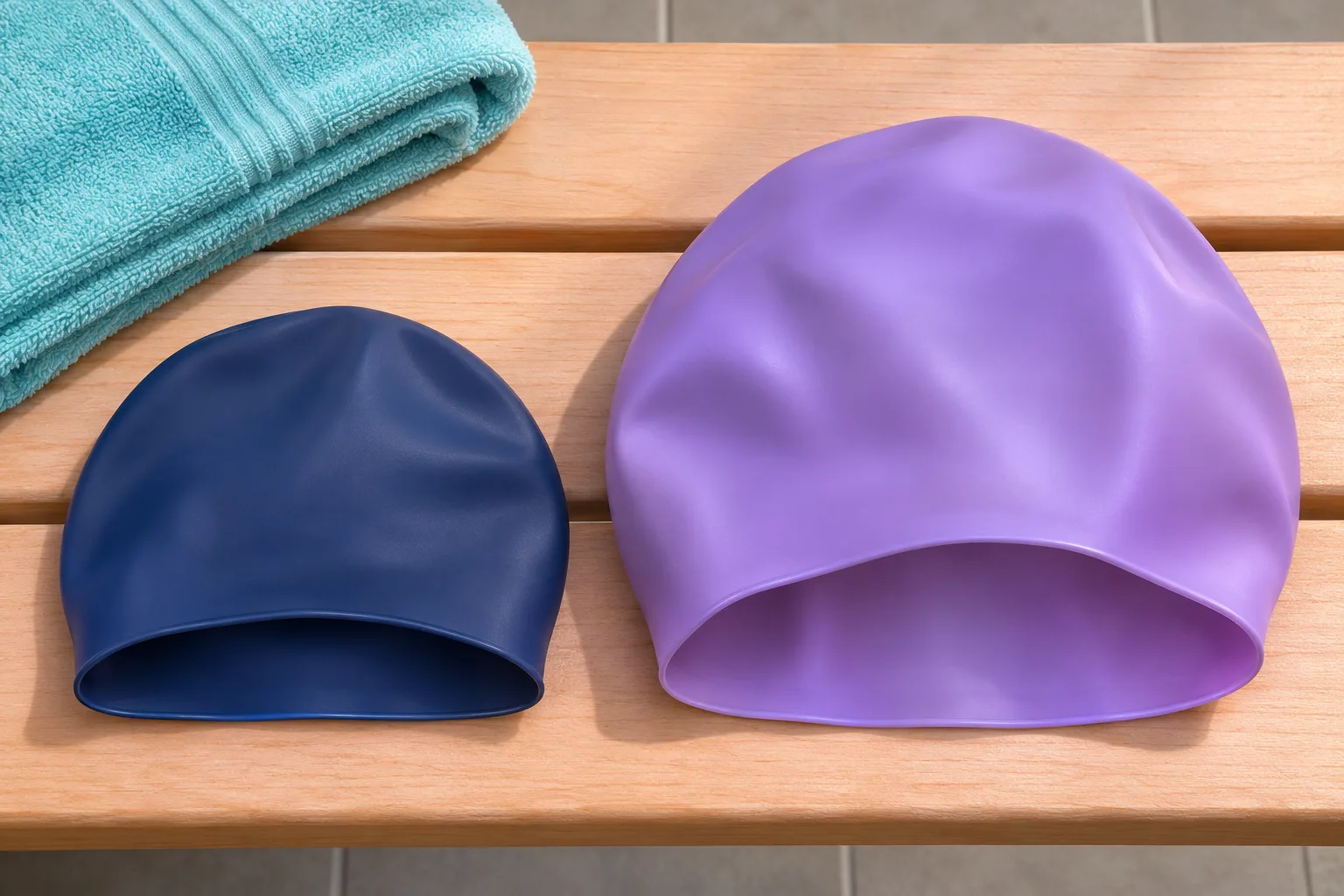
Look at where your hair needs to sit once gathered. Long fine hair may fold into a small shape, while dense curls, braids or a large volume of lengths may need considerably more room. Length alone is not a reliable size chart. Compare the cap's intended use and fitting instructions with the amount of hair you actually need to contain, rather than assuming that every adult cap has the same capacity.
A model described for long or voluminous hair can offer extra space, but the description is not a guarantee of your individual fit. The edge should sit comfortably while the body accommodates the hair. If containing the lengths forces the edge to climb repeatedly, reconsider the capacity or arrangement. A very tight circumference does not compensate for insufficient room behind it. Where a shop permits fitting, follow its hygiene and return rules instead of stretching a sample beyond its intended shape.
Prepare the hair before opening the cap
Find a stable place in the changing area and take a moment before your hands become slippery. Remove sharp clips, decorative pins and jewellery that could catch the material. Check the cap for a split edge or another visible problem. Follow its instructions about preparation and handling; different constructions do not necessarily go on in the same way.
Arrange your hair without forcing a brush through a knot. Separate an easy tangle gently, working from the ends and supporting the section, or use your normal texture-appropriate detangling routine before the trip. There is no requirement to brush curls into a smooth sheet simply to put a cap on. The useful preparation is a manageable arrangement, not a new texture. Keep any small hair accessory you remove somewhere you can find it after swimming.
Gather the lengths into a low, comfortable shape
Try gathering the lengths towards the back rather than building a tall, firm knot directly on the crown. A loose, soft arrangement is often easier to accommodate than a dense lump that pushes upward. Your cap's shape and your hair volume determine the final position, so treat this as a starting point rather than a universal placement rule.
If you use a tie, choose one that feels comfortable and does not add unnecessary bulk. Do not tighten it until the roots feel pulled in order to create a smaller package. Our low-ponytail guide offers a separate comfort check for gathering hair. For very long lengths, fold them gently into the available space instead of winding them into a hard knot. Braids and protective styles also need enough room for their existing shape; a swimming session is not a reason to squeeze them into an unsuitable cap.

Open and position the cap with finger pads
Read the model's fitting directions first, especially for a design with an inner section or another dedicated hair pocket. A method shown for a simple silicone cap may not match a two-part construction. Use the pads of your fingers, keep nails away from the edge and avoid gripping the material with sharp jewellery. Make a controlled opening rather than repeatedly snapping or twisting the edge.
Position the cap according to those directions and guide it over the arranged hair. Work slowly enough to notice a strand caught at the front or side. If you feel pulling, lift the affected edge gently and release the strand before continuing. Do not drag the cap farther down over trapped hair. Needing several forceful attempts is useful feedback about the arrangement or fit. Take it off carefully and start again with a smaller adjustment, rather than treating discomfort as an unavoidable part of swimming.
Check movement before entering the water
Once the hair is contained, look up, turn your head and move your jaw comfortably while standing safely in the changing area. The cap should not cover your eyes or feel as though it is dragging your hairline. Check the area behind your ears and at the nape for folded material, caught strands or a tie pressing against your head. Ear coverage depends on the model and your comfort; do not force a generic position to imitate a photograph.
Add your goggles in the arrangement recommended for your equipment and check whether the strap shifts the cap. A fit that only works while you hold still may become distracting during a swim. If the edge keeps moving upward, adjust the hair distribution or try an appropriately roomier model. Avoid using additional tight bands or improvised clips to hold a poor fit in place. Finish the check on stable footing, not while balancing on a wet pool edge or already swimming.
Expect contained hair, not a waterproof seal
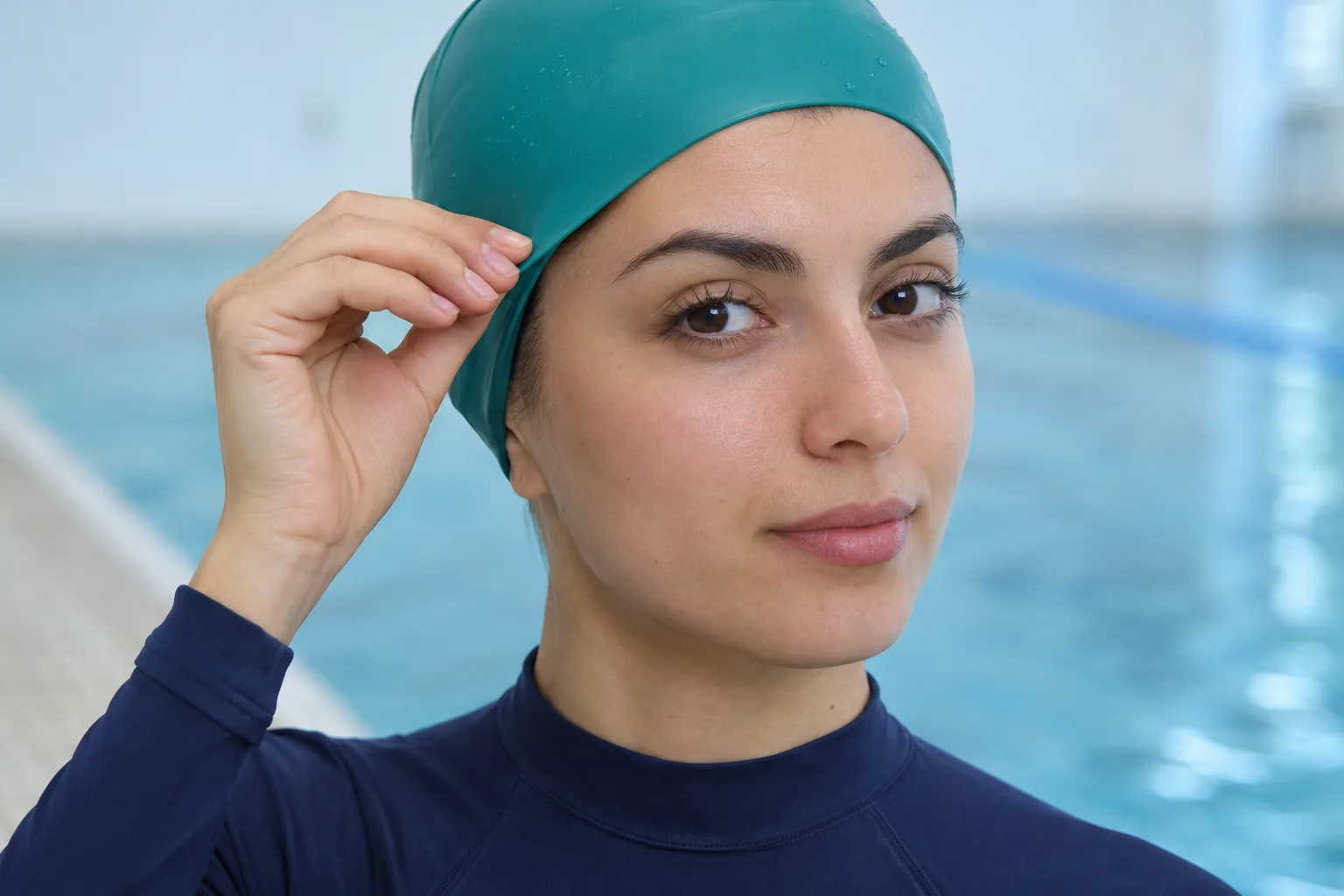
A swimming cap can keep lengths together without keeping every strand dry. Water can enter around the edge, and movement changes how the cap sits. A damp nape afterwards does not by itself prove that you fitted it incorrectly. Judge this routine by containment, comfort and manageable removal, rather than by an absolute dryness test.
Do not keep tightening the cap in an attempt to create a watertight barrier. That can make the fitting experience unpleasant without delivering the result you expected. Follow the pool's shower and equipment rules, and plan time afterwards for your normal rinse and hair-care routine. This article does not prescribe products to put under a cap or promise protection for freshly coloured or chemically treated hair. If a recent salon service comes with specific swimming restrictions, follow the advice for that service instead of assuming a cap cancels them.
Remove the cap without dragging through the hair
After swimming, pause somewhere stable before removing your equipment. Release the goggles carefully so their strap does not catch loose strands. Lift one accessible cap edge away from your hair with finger pads, then ease the cap back gradually. The aim is to separate the material from the hair before moving it across the lengths, rather than pulling the whole cap away in one quick motion.
If a section catches, stop and support the hair while releasing it. Do not use the elastic edge as a comb. Once the cap is off, undo the tie gently and let the lengths settle before deciding whether detangling is needed. Blot water with a towel rather than rubbing a tangled bundle vigorously. Keep the cap and hair tie separate from loose strands while you finish, so you are not repeatedly catching them again. There is no need to rush this part because somebody else's cap came off in a single movement.
Rinse, dry and check the equipment afterwards
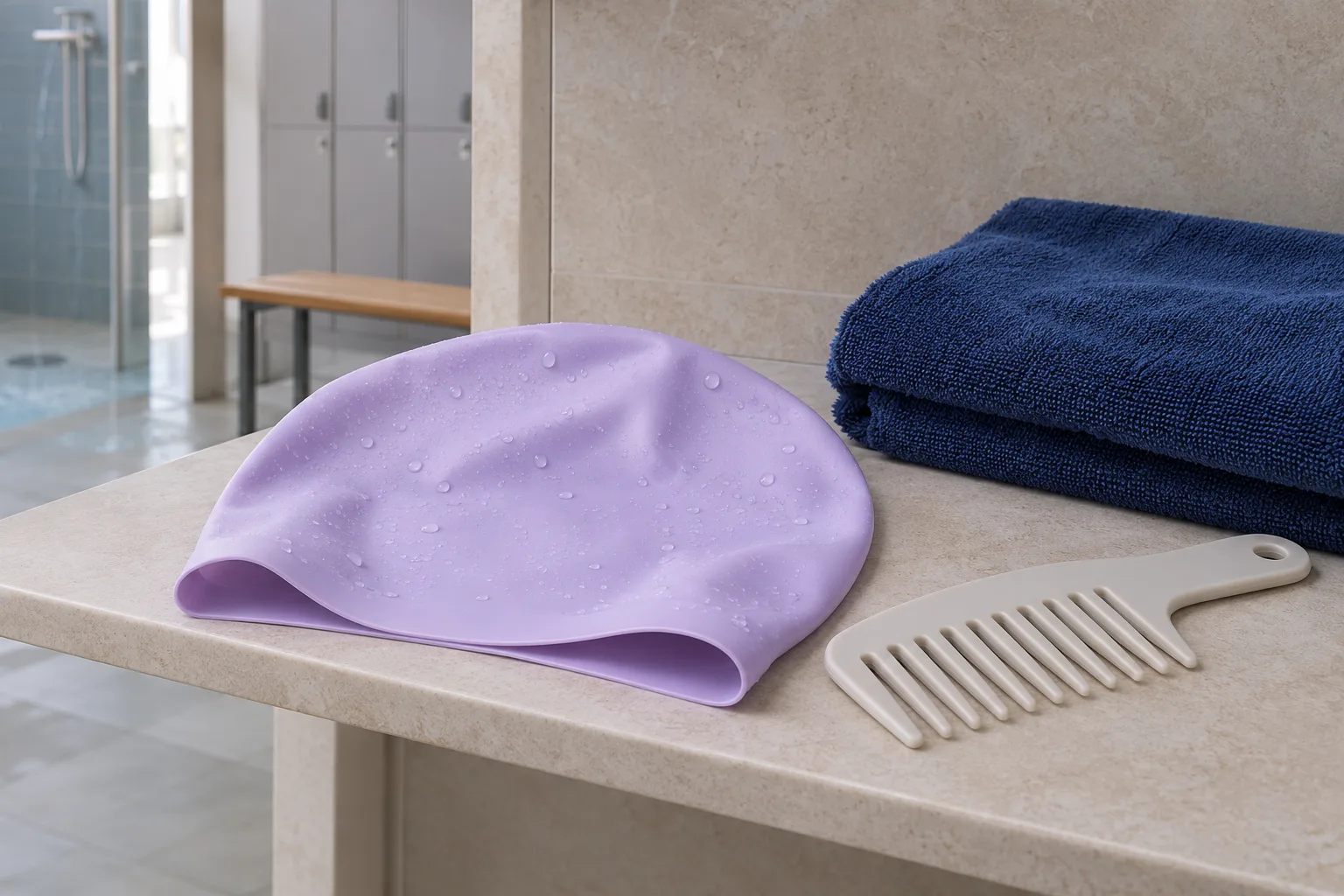
Follow the cap's care label for rinsing, drying and storage. Where the instructions call for clean water after use, rinse both the inside and outside rather than only the visible surface. Let the cap dry as directed before packing it away for a long period. Avoid assuming that a hot radiator, hair dryer or strong cleaning product will be safe for the material.
Check your tie as well. A fabric scrunchie used to gather hair can stay damp in its folds, and our scrunchie-cleaning guide explains how to wash and dry it according to its own care instructions. Keep equipment care separate from washing your hair: they are different materials with different requirements. Before the next trip, look for a damaged edge or sticky, deteriorating areas and follow the manufacturer's replacement guidance. A spare suitable cap can be more practical than trying to rescue a failing one at the pool.
Change one part of the routine next time
Remember what caused difficulty: catching at one temple, a knot pressing at the back, an edge climbing during movement or removal that disturbed the lengths. That observation tells you more than a general verdict that all swimming caps are uncomfortable. Adjust one relevant factor next time so you can tell whether the change helped.
For example, redistribute a bulky gathering before trying a different model, or choose more capacity if the cap cannot accommodate the hair without pressure. Leave enough time to fit it calmly. If a cap or hairstyle continues to hurt, stop using that arrangement; persistent discomfort is not a target to work through. The best outcome is an ordinary, repeatable preparation that lets you concentrate on the swim and leaves you able to take care of your hair afterwards without unnecessary pulling.