

Hair accessories
How to clean scrunchies without stretching them
Give fabric hair ties a careful wash, check the hidden elastic and let every fold dry before the next ponytail.
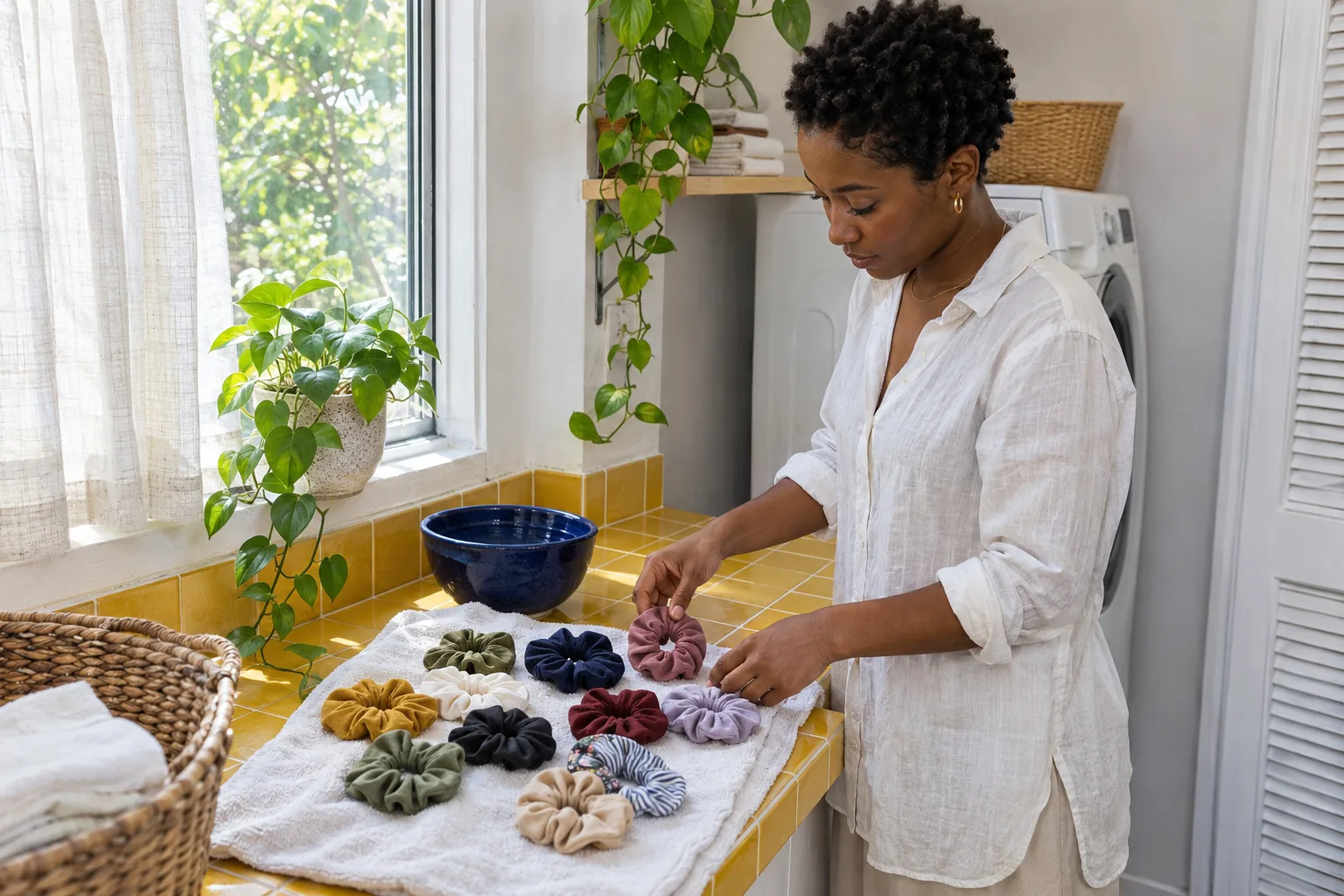
A scrunchie can look clean from the outside while the folds beside its elastic feel coated with styling product. Throwing it into the next hot wash is tempting, but a small ring can contain several materials with different care needs. If you want to know how to clean scrunchies, start with the instructions for the whole accessory, then decide whether it needs a permitted spot clean, a hand wash or a machine cycle.
This guide is for reusable fabric-covered hair ties. It does not cover plastic spiral ties, glued decorations or accessories that require professional cleaning. You will work through sorting, gentle washing when allowed, rinsing, drying and a final check of the seam and elastic. Keep a clean spare available so the one you wash can dry fully. A careful wash removes ordinary residue; it cannot repair a failing elastic or guarantee that every stain will disappear.
How to clean scrunchies: check every component
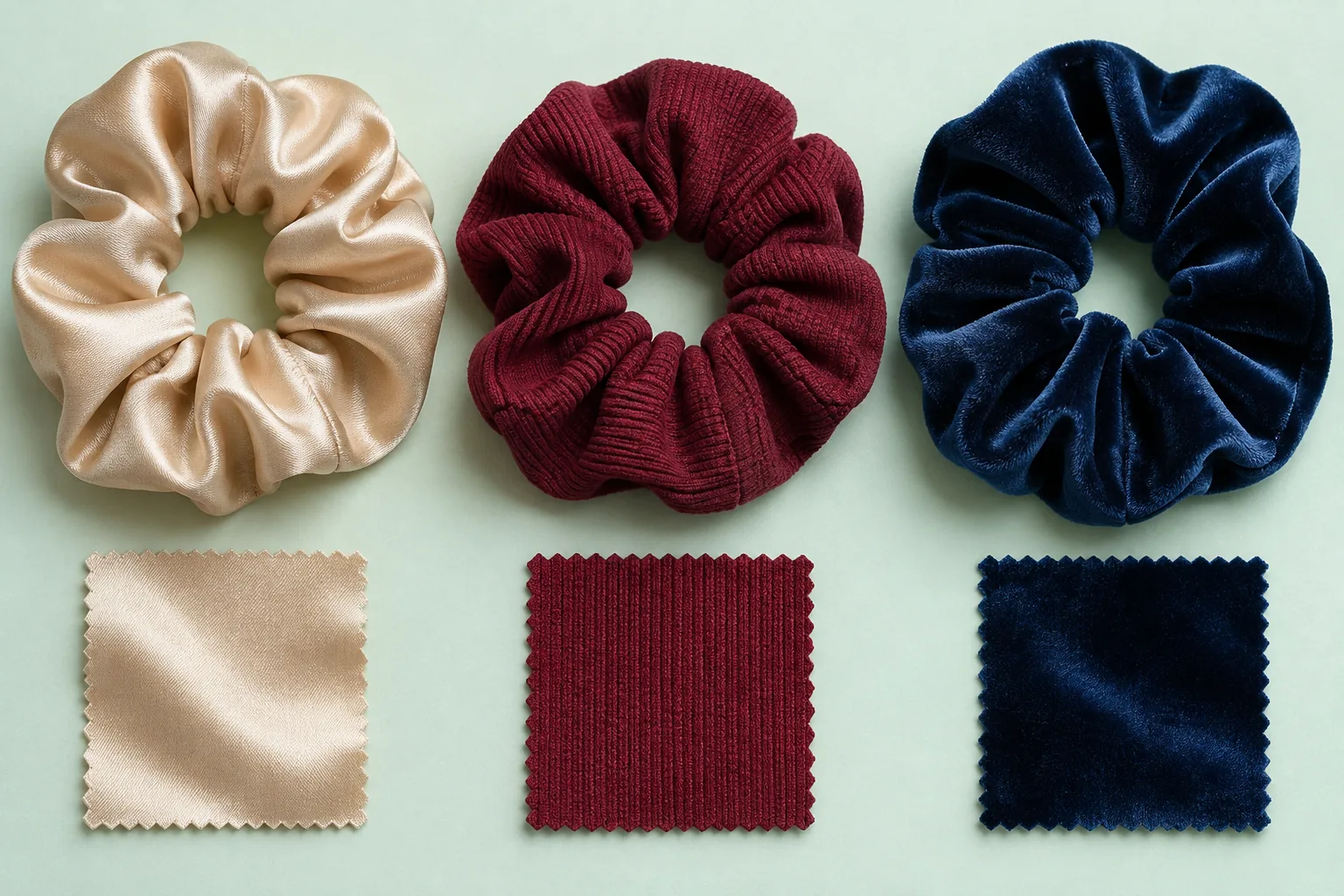
Find the care information on the packaging, the maker’s product page or a sewn-in label. Check the fibre, water temperature, washing method and drying restrictions. A glossy finish does not tell you whether a scrunchie is silk or polyester satin. A velvet surface may also have a different backing. If the fibre is unknown, describe the item to its maker before choosing a wet-cleaning method. Guessing from a photograph is not a useful substitute.
Read the instructions as directions for the finished item. The outer fabric may tolerate a treatment that the hidden elastic, stitching, beads or glued bow cannot. Remove an attachment only when it was designed to come off. Do not open the seam to inspect the elastic, and do not assume an accessory is machine washable because a garment made from similar cloth is. Put dry-clean-only or spot-clean-only items in a separate group.
Manufacturer examples show why the item matters. MALKIELE specifies particular hand-washing and drying precautions for its own silk accessories. That is evidence about those products, rather than permission to wash every shiny scrunchie the same way. For yours, use its own approved method and a cleanser compatible with the stated fibre.
Sort the colours and remove loose hairs first
Work over a dry towel in good light. Ease loose hairs out of the gathers with your fingers while supporting the ring. If a hair is caught in a seam, stop pulling against it. Avoid scraping the fabric with a pin or a sharp comb. Check for an opening, loose threads and exposed elastic before adding water. Put aside damaged items so washing does not become an improvised repair job.
Separate light and dark colours, and keep different care methods apart. Wash a new dark accessory on its own if its instructions do not establish how it behaves with other colours. A colour-transfer test should follow the maker’s directions; a clean-looking patch does not prove the entire ring is colourfast. Gapi’s care page, for example, separates colours and describes options for its own scrunchies. Those options should not be carried over to an unknown silk item.
Prepare a clean bowl, the permitted cleanser, clean water and an absorbent towel before you begin. Rinse leftover bathroom cleaner out of the bowl and wash your hands. Keep the scrunchie away from the sink plug so it cannot disappear down the drain. For a spot-clean-only item, follow that route instead of immersing the ring.
Use a gentle hand wash only when it is allowed
Fill the bowl with water at the temperature specified for the accessory. Measure and dilute the compatible cleanser according to its own directions before putting the fabric in. More detergent does not make a small ring easier to clean; it creates more to rinse from the folds. Avoid substituting shampoo, washing-up liquid or a homemade mixture unless the accessory’s maker specifically permits it.
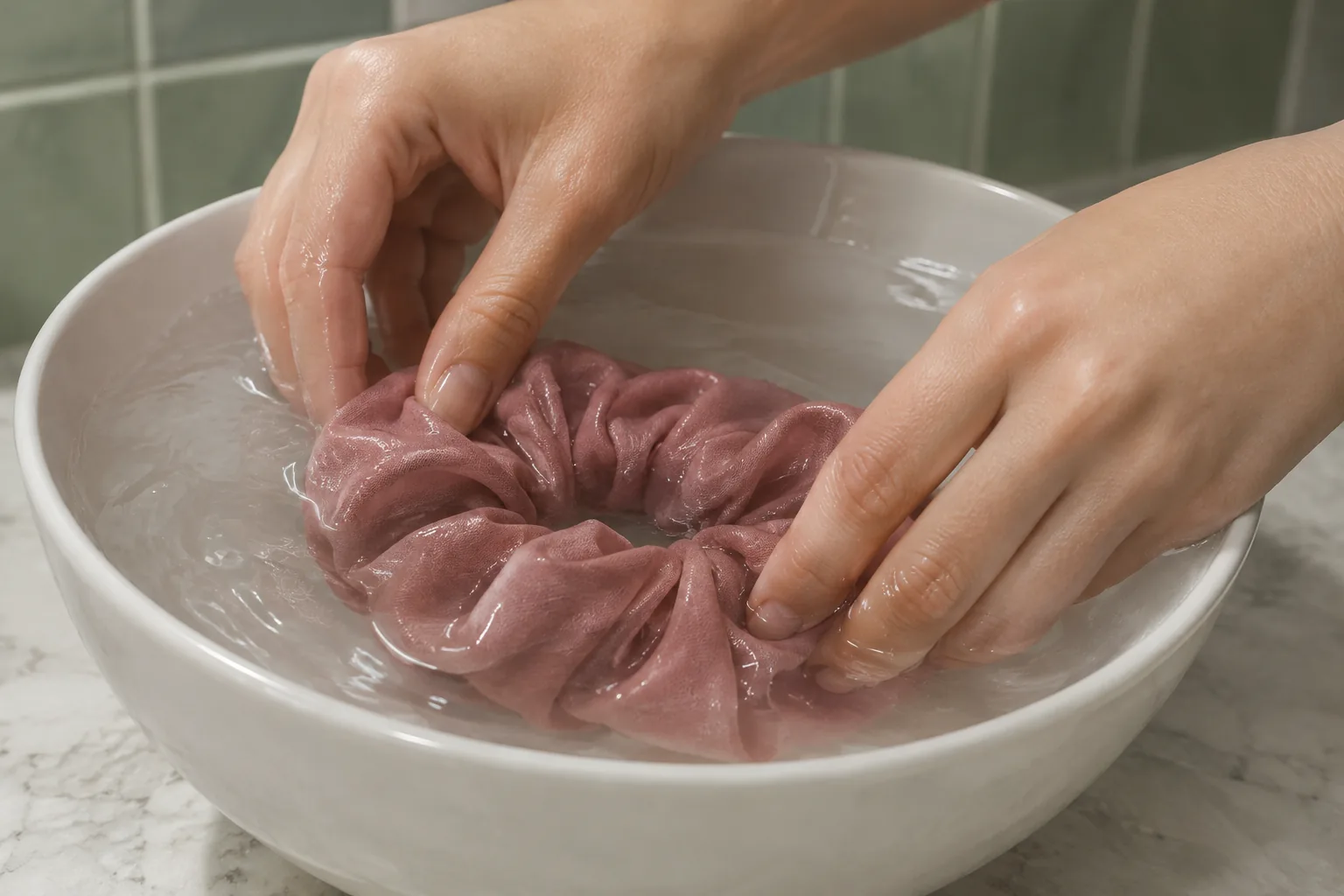
Lower the scrunchie into the water while keeping the elastic relaxed. Move the fabric gently through the solution, working around the gathers so water reaches the covered areas. Use light finger pressure rather than scrubbing the ring between your palms. Do not pull the ends apart and rub it like a stretched washing cloth. Follow any stated soaking time; leaving an item overnight is not an automatic improvement over a short approved wash.
Watch the water and the accessory as you work. If you see substantial dye release, a changing surface or a seam coming apart, stop the cleaning step and seek the maker’s advice. Do not add another chemical to try to set the colour. For a local product mark, repeat only a treatment the instructions allow. Some marks remain after a careful wash, and chasing a spotless result can do more harm than leaving a faint stain.
Rinse the folds, then press out excess water
Replace the wash solution with clean water at a compatible temperature. Move the fabric gently so the rinse reaches around the elastic and inside the gathers. Change the water as needed until the permitted wash product has rinsed away. Judge by the condition of the fabric as well as bubbles: some cleansers produce little foam. Avoid leaving the ring under a powerful tap, where the stream can pull it out of shape.
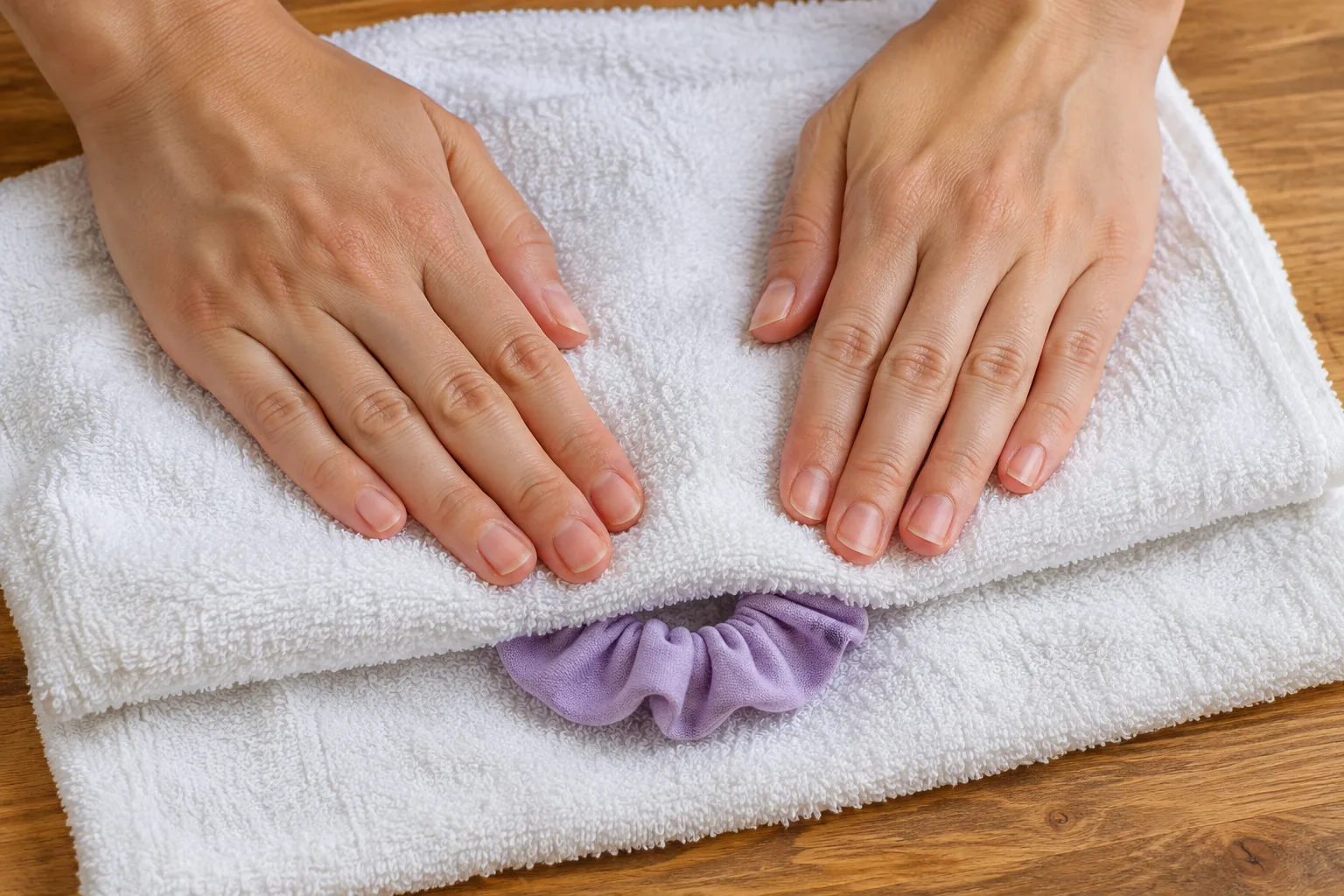
Lift the accessory with its fabric supported. Let excess water drain without dangling it by one edge. Lay it on a clean towel, fold the towel over and press gently with flat hands. Move to a dry area of towel if the first patch becomes soaked. Do not wring the ring or twist the two sides against each other. The aim is to absorb water while leaving the elastic and seams in their ordinary relaxed position.
Use a towel whose surface will not catch the fabric or leave obvious lint. Do not assume that an accessory which shares the word satin with a bonnet shares all its instructions: the hidden construction differs. If you are cleaning both, separate their care decisions before combining any steps. The bonnet guide can help you inspect its lining and band, while the scrunchie needs particular attention around its enclosed elastic.
Let the inner seam dry before you put it away
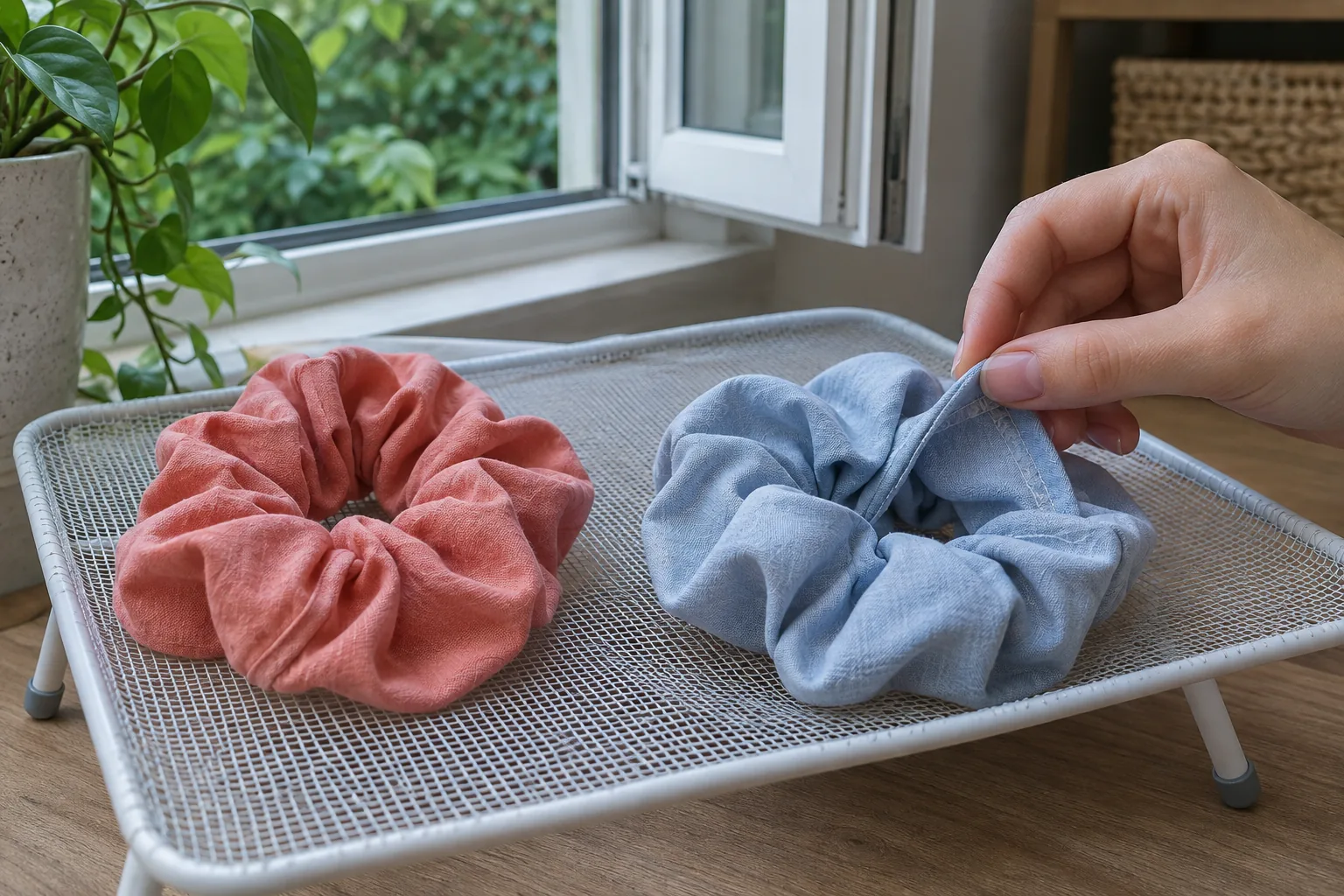
Follow the drying instructions for the accessory. When air drying is permitted, arrange it in loose folds with space around it, away from direct heat. A clean, suitable drying surface should support the ring without stretching it. Turn it if one side remains against a damp towel. Hanging a wet scrunchie from a single point can place unnecessary tension on the elastic; choose the maker’s method rather than inventing a faster one.
The outer surface may feel dry before the gathered seam does. Gently separate a few folds and check the thicker areas around the elastic, then leave the accessory longer if they still feel damp. Drying time depends on the fabric, thickness, room and airflow, so a fixed number of hours is not a reliable readiness test. Keep it out of a closed pouch until the full ring is dry, including the section that rested underneath.
Do not aim a hot hairdryer at the elastic or put the accessory on a radiator to meet a deadline. Advice about shrinking a particular plastic spiral tie is not a drying instruction for a fabric scrunchie. If you need to leave before this one is ready, use the spare. Once dry, inspect it without repeatedly stretching it to its maximum length.
Keep machine washing and stain treatments conditional
A washing machine is an option only when the complete accessory’s directions allow it. Follow the specified cycle, temperature and load guidance. If a protective mesh bag is recommended, use one with a closure that will not catch the fabric. Keep the accessory out of loads with rough fasteners or treatments its instructions prohibit.
If a ring feels stiff or coated after drying, review the cleanser dose and rinsing before buying another product. Where another rinse is permitted, that may be a more useful next step than adding fragrance or softener. If the care information forbids further wet treatment, contact the maker. A persistent smell or a changed texture is a reason to investigate, rather than proof that a particular disinfectant, boiling water or bleach is needed.
When the elastic no longer returns to a useful shape, washing cannot promise to restore it. If the fabric is sound and the maker offers an appropriate repair, you can ask about that option. Otherwise, retire an accessory with exposed elastic, a failing seam or a rough attachment that catches hair. Avoid sewing through the band at random or tightening a worn ring with extra knots. It should hold a ponytail without requiring a makeshift fix.
Build a small rotation around actual use
Keep clean, dry accessories apart from those waiting to be washed. After a sweaty workout or contact with styling product, inspect the fabric instead of returning it straight to the clean drawer. Clean it when its condition and instructions call for it. There is no single weekly schedule that fits every fabric, product routine and level of use. Having two suitable ties makes it easier to clean one without rushing its drying.
Store each ring loosely in a dry place rather than stretched around a bottle or brush handle. Before wearing it, remove any loose hairs and feel for a rough seam. If a freshly cleaned scrunchie still requires several very tight wraps to hold, reconsider its size or condition. Cleaning and choosing a comfortable fastening are separate jobs. A clean accessory can still be the wrong match for the amount of hair you are trying to hold.
For a low ponytail, gather the hair first, then choose a tie that supports it without repeated tightening. Check the hairline and the nape after you move your head. The useful end point of this care routine is a dry, intact accessory that works in your ordinary hairstyle.