
Nape length and haircut contrast
Mullet haircut or just a longer nape?
Choose the length you keep behind the ears, the contrast you actually want and a sensible way back. A photo shortlist can clarify the front, not certify the whole cut.

A mullet haircut can appeal because it keeps movement at the back while opening the sides. But a front photograph rarely answers the important question: how much of that longer nape would you enjoy wearing on an ordinary day? You might want a small extension behind the ears, a clear tail over the collar, or simply less bulk at the temples. Those are different requests, even when a reference labels every one of them a modern mullet. Start with the shape, not the fashionable name.
This guide helps you decide what stays long, where the contrast begins and what you would do if you later wanted a more even outline. Hair Muse can support that planning with hairstyle previews on a clear portrait and a saved shortlist. It does not provide a measured nape-length control, a verified rear view or an exact cutting plan. The useful outcome is a short, honest salon brief that combines visual preference with evidence from your actual hair.
Define the mullet haircut by its front-to-back contrast
For this decision, a mullet means a deliberate difference between shorter front or side areas and a longer back. That difference can be modest or pronounced; shaved sides are not compulsory. Look at the reference in profile. Where does the shorter area finish around the ear, and where does the longer outline begin? A swept-back style can expose an ear without removing much hair, so do not assume that every open-looking side has been cut close. Ask for a reference that makes the connection visible.
Separate the appeal into one main wish. Perhaps you like the longer tail moving behind a short top, or the open ear beside a soft fringe. If your real wish is simply to retain the nape while tidying the sides, say that rather than requesting every feature of a dramatic example. A fringe, strong crown layers, a fade and new color are separate choices. You can keep familiar parts of your current haircut while exploring the back-length contrast.
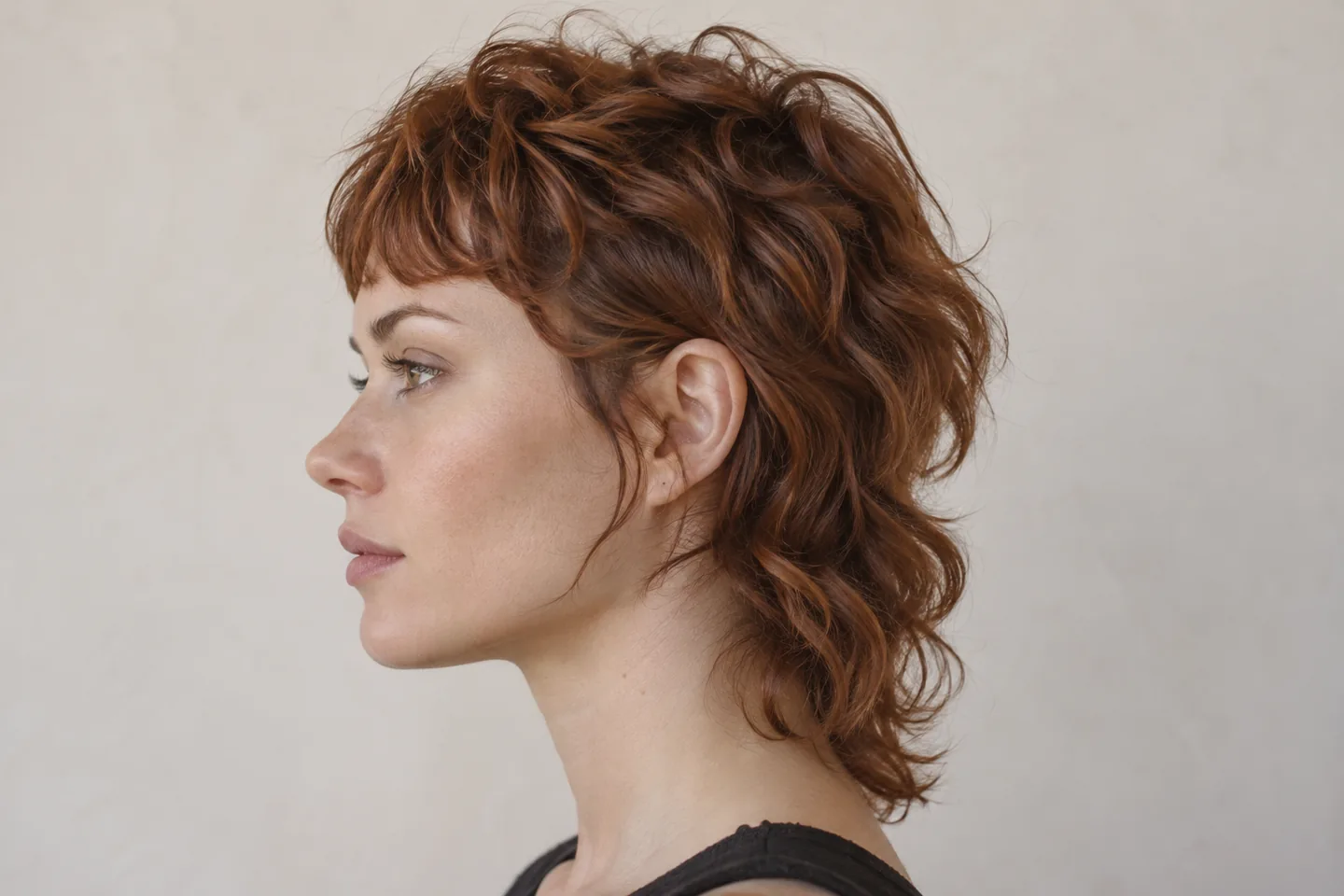
Choose an endpoint, then decide how much separation you like
Observe your current hair dry and resting naturally. Identify a meaningful landmark: clear of the collar, touching its upper edge, or lying lower against the neck. Describe the desired endpoint in that same everyday state. A number copied from someone else's photograph does not account for their head position, texture or starting length. If you do not yet have the length you want at the back, ask what can be retained now and what must grow. A preview cannot turn that waiting period into available hair.
Then consider the gap between the back and the sides. A gentle connection may be closer to what you want than a sharply separated tail. If the attractive feature is layered movement all around the head rather than a distinct longer back, your question may belong to the shag or wolf-cut family instead. Our separate comparison explains that decision. Keep this brief focused on retained rear length and the side connection; collecting more haircut names will not resolve a contrast you have not actually chosen.
Record the original front, profiles and back separately
Take one clear front portrait with the head level, the face visible and both hair edges inside the frame. Use even light and the ordinary finish you expect to wear, without lifting the crown or stretching the neck. Keep separate unedited photographs of both profiles and the back. A friend can help with the rear view, or you can position the camera securely. These images document your starting point; they are not different angles generated from a preview and should not be presented as the proposed cut.
Apple describes the camera grid and level as composition aids. Use them, if helpful, to notice a tilted frame, not to measure a haircut. Check the saved photograph rather than trusting the setup alone. A dark tail against a dark shirt can be hard to read; a plain contrasting top can make the real endpoint clearer. If your baseline hides the nape or changes the apparent head angle, it will make the later comparison more flattering but less useful.

Keep the side connection and dry texture in the conversation
Choose whether the side should remain softly covered, reveal part of the ear or become noticeably close. Those are descriptions to discuss, not clipper settings to prescribe from a screen. The connection behind the ear is especially important: ask where the shorter side becomes the longer nape and how that junction looks when you turn. Do not assume that a polished profile proves the opposite side is identical. If you already tuck one side or change your part, show that habit before the stylist settles the outline.
For waves, curls and coils, examine where the back ends without pulling the strands down. A long-looking stretched reference may not express the dry shape you intend to wear. Discuss both the visible endpoint and the amount of fullness you want behind the head. On straighter hair, notice whether the tail lies together or separates into small pieces. Neither texture is a problem to correct automatically. The specialist needs your actual hair to assess the connection; an image cannot inspect density, growth patterns or the way shorter sections will settle.

Use Hair Muse for one readable comparison, not a rear-view promise
Start with the same clear portrait in Hair Muse and explore available hairstyle directions that differ mainly in the front-to-back contrast. Keep color, fringe and overall texture as similar as the references allow. Retain a softer direction and one stronger alternative rather than an entire folder of unrelated transformations. Inspect each result beside the original: are the face, head position and visible hair edges still credible? If the image invents extra fullness or hides the area you are judging, exclude it from the decision instead of treating it as an improvement.
A front-facing result may help you decide whether the shorter upper outline feels appealing. It may show little of the nape, which is a valid limit rather than a reason to imagine the unseen back. Use a separate real style reference to explain the tail and mark that part as a salon question. Hair Muse is free to download; some previews or usage levels may require an in-app purchase. Check current access before planning many attempts. No dedicated mullet option, exact length adjustment or automatic multi-angle reconstruction is promised here.
Judge the routine by what you will actually do
Describe your ordinary morning before deciding the cut is easy to maintain. Would you let the back dry naturally, tidy a fringe, or reshape the crown? A reference finished with several tools is not evidence that the same outline will appear after a quick wash. Ask the stylist to distinguish the cut itself from the finish in the photograph. If the only version you enjoy depends on a routine you will not use, adjust the outline or keep more side length.
The American Academy of Dermatology advises limiting excessive heat and using gentle handling appropriate to the hair. Those are general care principles, not a mullet-specific product formula. They support a useful question: can the proposed shape be worn comfortably with your normal texture and modest styling? Do not copy a stranger's wash schedule, buy a list of products before the consultation or assume a long tail needs daily straightening. Explain any repeated snagging or difficult detangling you already experience so the routine can be discussed honestly.
Bring three priorities and one unresolved question
At the appointment, begin with the rear length you want to protect, the amount of side exposure you accept and the front shape you wish to keep. Show the original photographs, the small preview shortlist and a genuine profile or rear inspiration image. Label each one's purpose. The original shows what exists, the preview shows an aesthetic direction, and the reference describes a connection or tail. Ask the stylist to explain any mismatch before cutting. A visually coherent collection is more useful than one image that seems to settle everything.
Test your current rear length with the shirt or jacket you wear often. Turn the head, look down and return upright; notice contact rather than trying to simulate the future haircut by pulling or pinning tightly. Tell the stylist if you need the nape clear for a particular activity, or if you want enough length for a small loose gathering. There is no guarantee every proposed tail will provide that function. Agree on the smallest change that answers your main wish, and leave an uncertain shaved section or fringe change for another decision.

Discuss the return route before shortening the sides
If you later prefer a more even outline, there are two broad directions: retain the back while shorter areas gain length, or shorten some of the tail sooner. Neither is an instant reversal of hair already cut. Ask which in-between shape is realistic from your current length and which parts can be tidied without erasing the goal. Do not book a universal maintenance interval copied from a trend article. Define the change that would prompt a visit, such as unwanted side bulk or a rear endpoint that no longer feels comfortable.
Our trimming guide helps you think about the hair's condition and useful shape rather than a compulsory calendar. Use that approach to agree on what each later appointment should preserve. Finish with a plain sentence: you want a specific dry rear endpoint, a chosen side connection and a routine you can sustain. If the photographs still leave the back unclear, keep that uncertainty visible in the brief. You can choose a gentler first step or defer the cut; enjoying a mullet picture does not oblige you to commit to its entire outline.