
Hair styling routine
Heatless curls overnight: a comfortable method
Build waves or curls while you sleep without relying on a hot tool. Choose a shape, set comfortable tension, and release only when the hair is ready.

Heatless curls overnight are appealing because the shaping happens during time you would already spend asleep. But the phrase covers several different results: a braid can leave a broken, beachy wave; a broad fabric wrap can create a larger curve; several small sections make a more defined pattern. None is a guaranteed substitute for a curling iron. Your starting texture, length, dampness, section size, movement in sleep and morning handling all matter.
The useful goal is a repeatable, comfortable routine, not a perfect spiral in a single attempt. Start with the least complicated method your hair can hold without pulling at the roots or disturbing your sleep. Let most of the moisture leave before setting, use soft ties, and check the result on an ordinary morning. This guide gives you a way to adapt the technique by texture and schedule, including when it is better to leave the hair loose.
Heatless curls overnight begin with the shape you want
Decide whether you want a soft bend, a loose S-wave or a more obvious curl before choosing a tool. A single loose braid often creates a wave that starts below the point where you begin weaving. Two braids can make the pattern more even on both sides. A broad fabric ribbon generally encourages larger, smoother curves, while narrower sections make more turns. These are directions, not promises: hair that resists a set or has a short layered perimeter may fall differently.
Look at the front pieces and ends separately. If you want openness around the face, place the first turn away from it and keep the hairline relaxed. If you want movement only below the jaw, start the braid or wrap there rather than winding from the scalp. Leave the ends with a deliberate curve instead of compressing them into a tiny elastic. The shape of the set is a practical map of where the morning wave can appear.
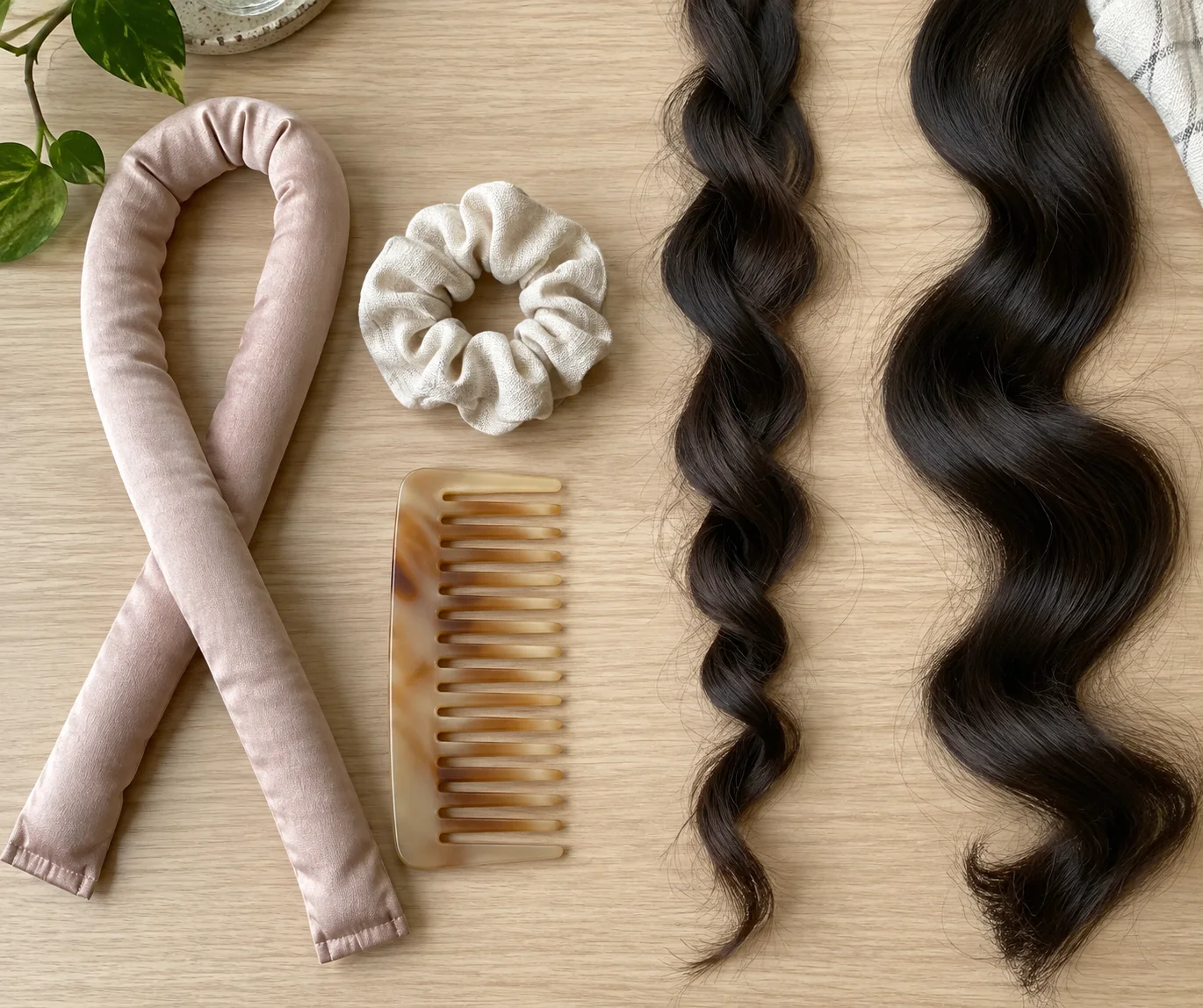
Choose the method your length can actually support
Long hair often gives a braid or ribbon enough length to form a visible sequence of bends. Mid-length hair may need two smaller sections so the wrap has enough turns; a short bob may bend at the ends but not form a full overnight curl. Layers can escape a single braid. Rather than pinning every short piece tightly, accept a softer face frame or test a separate, comfortable front section while awake first.
Texture also changes the decision. Naturally curly or coily hair already has a pattern; an overnight braid may stretch or reorganize it instead of adding a new curl. Fine, very straight hair may lose a loose wave quickly, while thick hair may still feel damp inside a tight wrap by morning. Work with those observations, not a claim that one popular ribbon works equally on all heads. A daytime trial tells you more than a product label.
Start nearly dry and learn your own set window
Wet hair can be more vulnerable to rough handling and may not dry inside a dense braid or padded ribbon before morning. Completely dry hair may take little new shape for some people. A sensible first trial begins when the hair is mostly dry, with only light remaining moisture through the lengths. Check the roots and the thickest section instead of judging the surface alone. If either feels wet at bedtime, let it dry longer or choose another day.
Do not chase a universal percentage of dampness. Drying depends on density, porosity, products, room conditions and how tightly sections overlap. Note when you washed, how the mid-lengths felt at setup, and whether the inner hair was dry at release. Change that one variable next time. If you have a scalp condition, irritation or persistent discomfort from sleeping with damp hair, follow your clinician's advice rather than a styling trend.
Detangle gently and divide the hair with purpose
Before wrapping, separate the hair in the direction it will sit in the morning. Use fingers or an appropriate wide-tooth comb for your texture, beginning near the ends and working upward without yanking. Detangling does not mean brushing natural curls until every strand becomes fluffy. If your usual curl routine depends on intact clumps, preserve them and use broader sections. The important step is removing snags that would tighten when the hair is wound.
Set a natural part before dividing left and right. Keep section sizes similar when you want balance, or deliberately make a face-framing section smaller if that is the only area needing definition. Avoid crossing a large back section over the crown just to make the device reach. A section that changes direction sharply at the scalp can pull through the night. The photographed two-section layout below shows a starting map, not a mandatory parting.
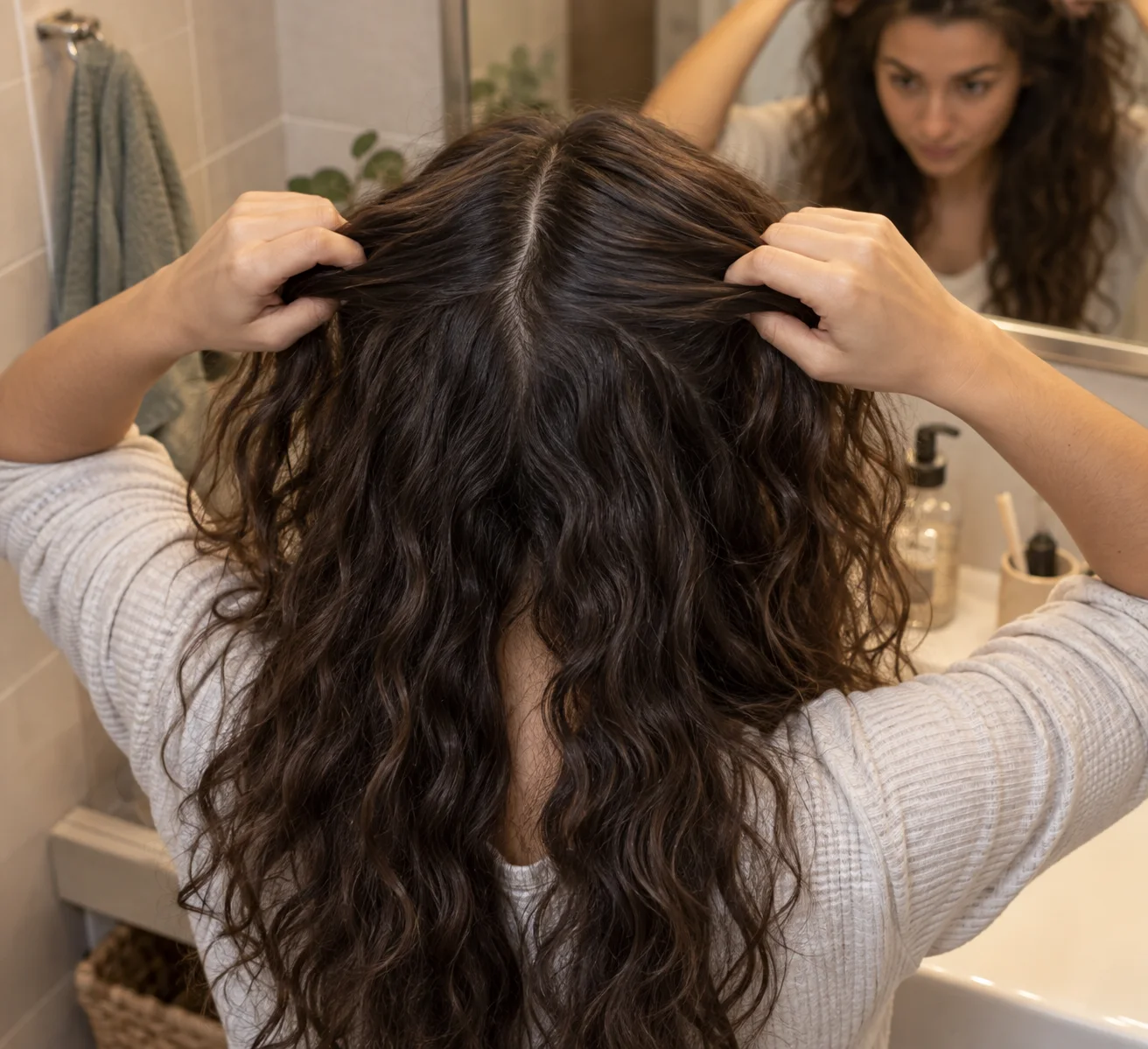
Secure the set without making sleep a stress test
A heatless set should remain in place through ordinary movement without feeling tight. A soft fabric tie can hold the end of a braid, and a broad wrap can sit away from the most sensitive part of your hairline. Check the temples, nape and crown after fastening. Move your head, lie in your usual position, and remove or loosen anything that stings, pulls, presses or interrupts comfortable sleep. More tension is not a reliable route to longer-lasting curls.
The American Academy of Dermatology warns that hairstyles that repeatedly pull on the hair can contribute to breakage and traction hair loss; it specifically advises loosening braids and paying attention to pain at the scalp. That applies to an overnight style as well. Do not use hard pins where your head rests or repeatedly sleep with a painful roller simply because the morning picture looks good. Comfort is part of whether the method is usable.
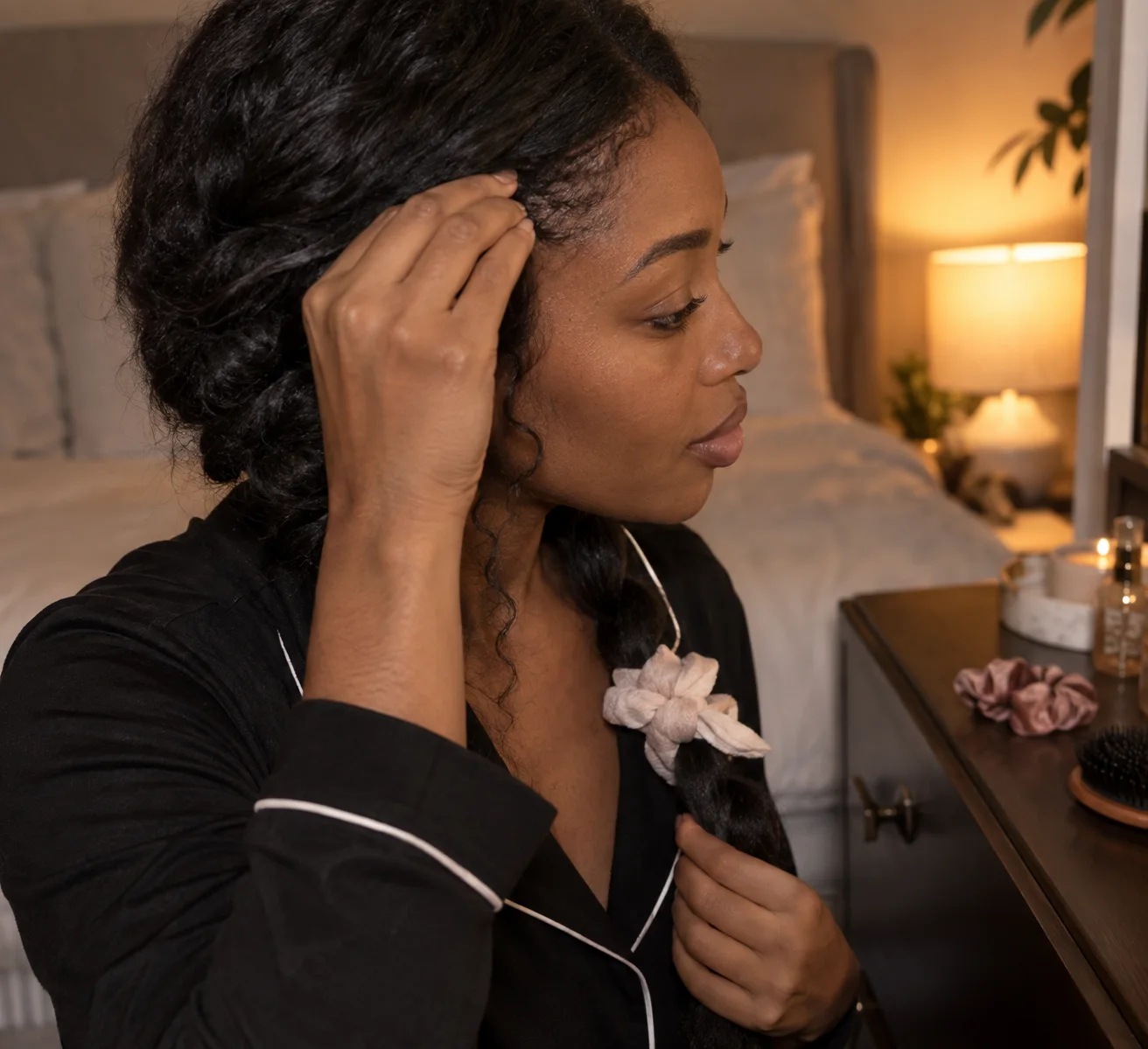
Make the overnight routine realistic
Plan backward from your morning. If you must leave early, give the set time to dry and give yourself a few minutes to remove it carefully. A soft wrap that takes fifteen minutes to install, slips whenever you turn, and needs a full restyle is not a low-effort routine for you. Try it on an unhurried night before using it for a workday or event. Keep the first trial simple enough that you can identify what to change.
Pillow contact can flatten an exposed side or create flyaways. You can place the braid where it does not sit directly under your head, or use a comfortable smooth pillowcase if you already own one. Neither removes the need for a loose set. Do not add so many clips or coverings that you cannot sleep naturally. A result that survives only when you remain still is not a practical overnight method.
Release only when the inner sections feel dry
In the morning, test an inner section near the nape or the center of the wrap. If it is still damp, the pattern may relax quickly when released and the scalp may feel uncomfortable. Give it more open-air time if your schedule allows. Otherwise undo the style gently, let the hair finish drying loose and treat the result as a soft wave rather than forcing a damp curl to hold with more pulling or heat.
Remove ties first, then unwind in the reverse direction from the way the hair was set. Support the end with one hand so the length is not dragged through the fabric. Separate only after the section is free. For a larger wave, use fingers to open a few pieces; for more definition, leave clusters intact. Aggressive brushing can turn a careful set into volume or frizz, which may be welcome if that is your goal but should be a conscious choice.

Troubleshoot the result by changing one thing
If the wave disappears quickly, first ask whether the hair was fully dry when you removed the set. Next consider whether the sections were too large for your texture, whether the hair naturally resists a temporary shape, and whether a heavy product weighed it down. Change only one of those factors on the next attempt. Smaller sections can add turns but also take longer to dry. A stronger set is not worth tension at the roots.
If the result looks uneven, compare the two sides' section size, starting height and winding direction. A curl that kinks at one point may have crossed a tie or been pressed under the pillow. Frizz can come from rough detangling, friction or pulling apart a section before it was dry. A front piece that refuses to cooperate may need a different starting point, not an entirely new routine. Photograph one ordinary result to guide the next trial.
Keep a simple record of what actually worked
After two or three trials, write down your method, starting dryness, section size, tie position, sleep comfort, release time and how the result looked by midday. This record is more useful than comparing your hair with an edited demonstration on a different texture. If one method gives a wave you like and allows comfortable sleep, there is no need to add more tools or steps.
For a future haircut, the record can reveal whether your current length and layers support the overnight style you want. Bring a photo of the real morning result, not only the first styled frame. A stylist can discuss how the shape, layers and ends might affect braiding or wrapping, but cannot guarantee that a cut will make the same set hold every night. The routine remains yours to test in everyday conditions.