
Haircut planning
How to choose a haircut when you usually air-dry your hair
Plan the shape around your real texture, drying routine, and acceptable styling effort before the salon visit.
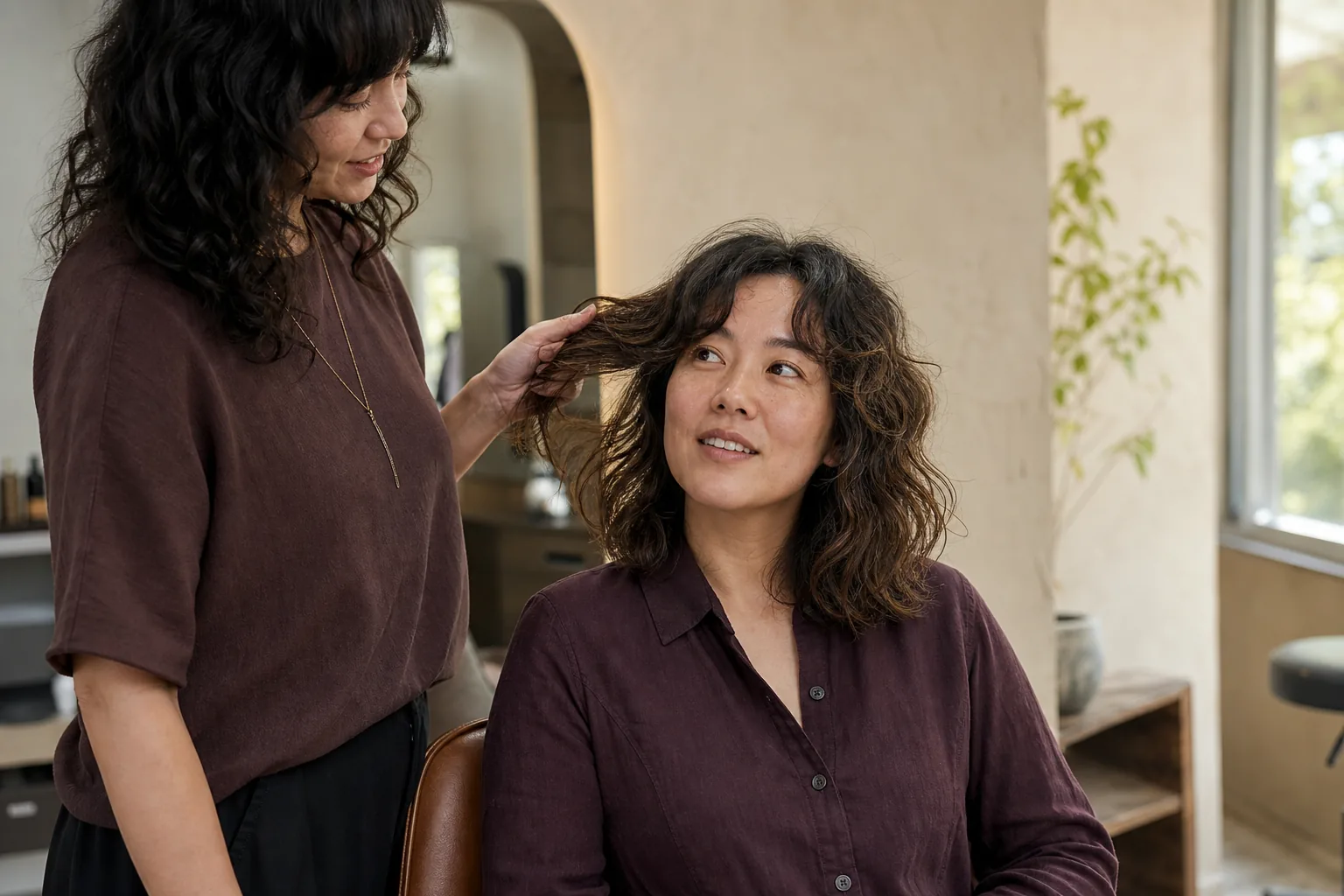
A haircut photographed after a polished blow-dry may be beautiful and still be a poor guide to an ordinary air-dried morning. Water, natural texture, density, previous damage, weather, products, and small differences in technique all affect how hair settles. If you usually leave the dryer in the drawer, that routine should shape the haircut decision from the beginning rather than becoming a problem to solve after the cut.
Hair Muse can help you compare broad ideas such as length, fringe, layers, and overall silhouette on your portrait. It cannot predict exactly how each section of your hair will shrink, wave, curl, separate, or dry. The useful goal is therefore a visual direction paired with honest evidence from your own routine. That combination gives a stylist something much more practical to assess than a single perfected reference image.
Define what air-drying means in your routine
Air-drying is not one technique. You may wash at night and sleep before the hair is fully settled, wash in the morning and leave home with it damp, apply one product and avoid touching it, or reshape a few pieces after most of the moisture is gone. Write down what you actually do on a normal weekday. Include how much time you have, whether you detangle or brush, where you place your part, and whether you clip, wrap, scrunch, or tuck the hair while it dries.
Then set a realistic effort limit. Perhaps you are comfortable applying product and adjusting the front for two minutes, but not sectioning the whole head. Maybe a diffuser is acceptable for special occasions but cannot be required for the everyday result. A haircut does not need to look identical without styling; it needs to land within a range you genuinely like. Your stylist can only plan around that range if you describe it clearly.
- Usual wash time and how long the hair remains damp
- Products, brushes, clips, or wrapping you already use
- Maximum hands-on styling you will repeat most days
- Backup option for rushed mornings or difficult weather
Document how your hair behaves, not just how it looks
Create a small photo record before the appointment. Start with clean hair at the point when you normally stop manipulating it, then photograph the fully dry result from the front, both sides, and back. Add one view from above or along the part if the crown matters to your decision. Use the same neutral daylight and avoid portrait blur, filters, or a temporary styling step that is not part of your routine.
Repeat the photographs on a second ordinary wash if you can. Natural texture does not always settle in the same pattern, so the differences are useful information rather than failed consistency. Mark where hair expands, lies flat, changes direction, forms a stronger bend, or loses definition. Also show how the shape changes on the day after washing. A stylist needs to understand the range, especially if you expect the cut to work for several days between washes.
Bring representative hair, not your best hair day. Variation shows the stylist what the cut must accommodate.
Separate the silhouette decision from the finish
When you review haircut references, first ignore shine, smoothness, and perfect strand placement. Look at the outline: where the shortest visible point sits, how much width appears near the cheeks or shoulders, whether the perimeter feels solid or broken, and where volume seems concentrated. Those broad relationships can help you describe what you like even when the photographed finish was created with tools you will not use.
Next identify which details depend on styling. A turned-under end, a lifted crown, a separated curtain fringe, or uniformly defined waves may not occur automatically on your hair. Label these as finish references instead of haircut promises. Ask the stylist which parts could be supported by the cut, which would need technique or product, and which are unlikely to repeat with your routine. That question is more useful than asking whether a style is simply low-maintenance.
Compare one structural change at a time
Use a clear, front-facing source photo in which your hairline, full head, and current texture are visible. In Hair Muse, compare a small set rather than collecting dozens of unrelated looks. Keep the general length stable while you examine fringe, or keep the front stable while you compare a fuller perimeter with more visible layering. Changing every feature at once makes it harder to understand which part of the image is driving your reaction.
Treat each result as a conversation prompt, not evidence of how your real hair will dry. Generated previews can regularize waves, change density, invent strands, or alter the relationship between texture and length. Discard a result when the face, hairline, part, or texture has changed enough to distort the decision. For the useful images, annotate only the visible idea: more openness around the face, less width at one level, a softer fringe boundary, or a length you want to discuss.
A preview can help answer “Do I prefer this overall shape?” It cannot answer “Will my hair dry into these exact waves?”
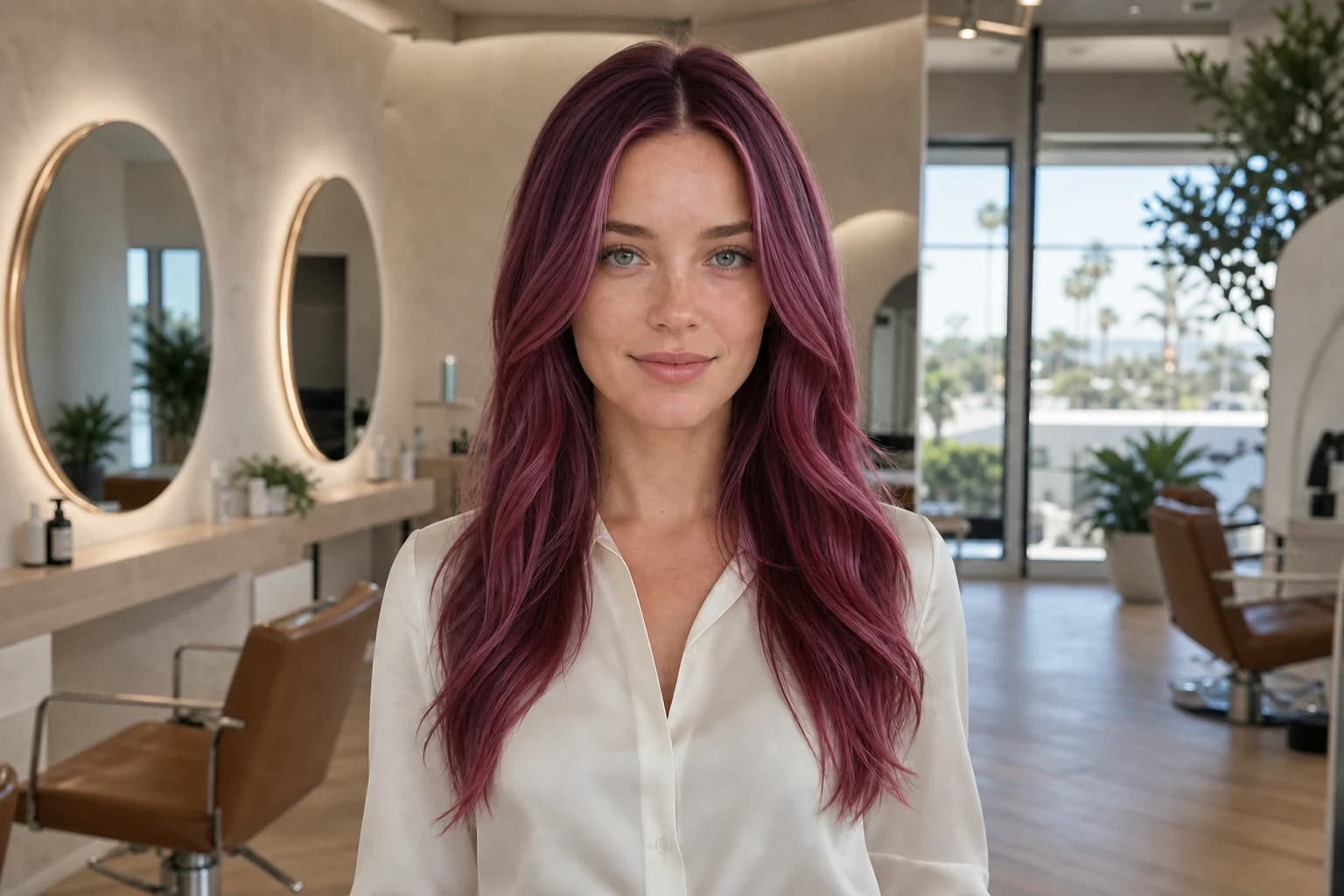
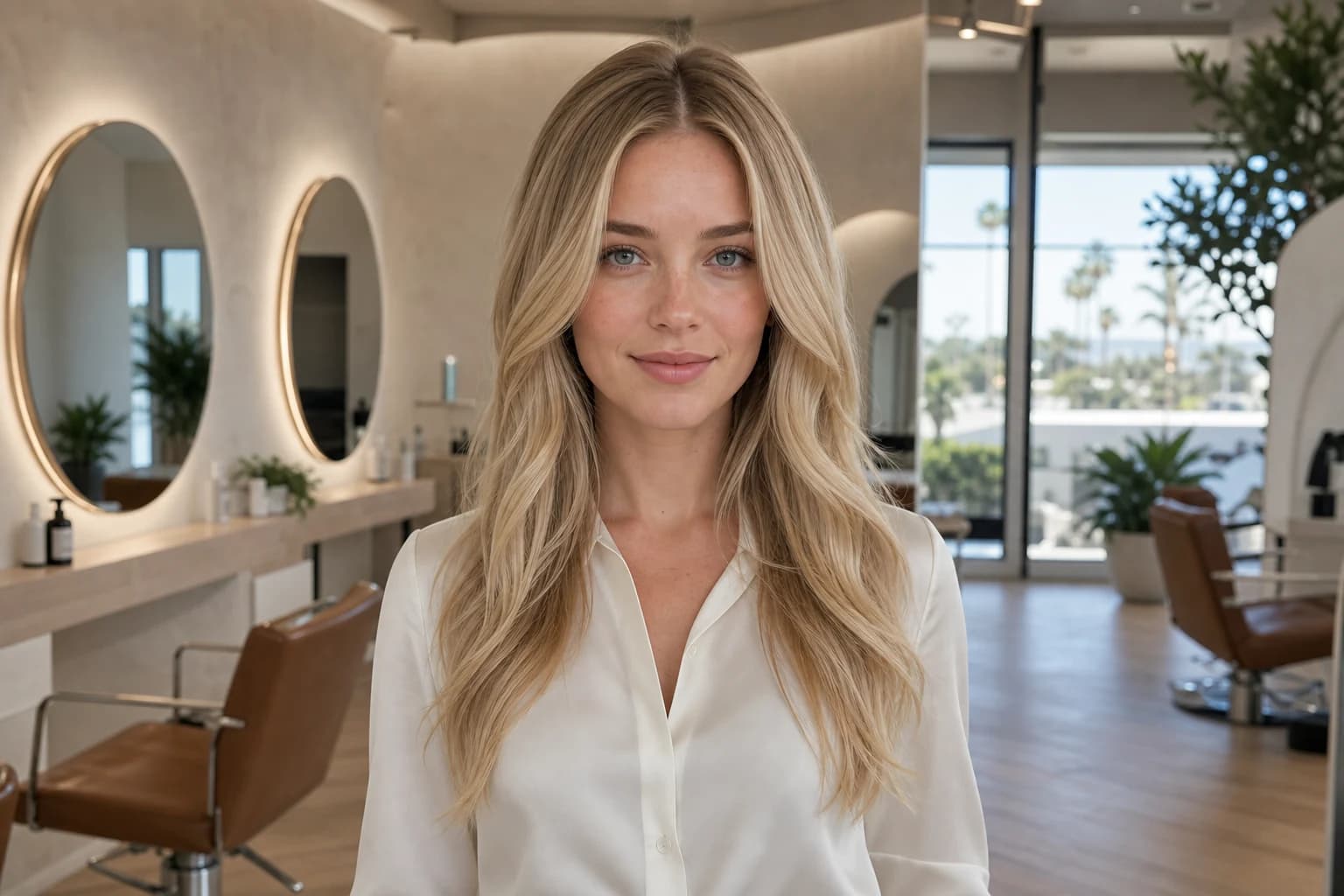
Ask how length changes the texture you already have
The same hair can appear more compact, elongated, wide, or uneven when its length and weight change, but the outcome is individual. Do not assume that adding layers automatically creates curl or that a blunt line automatically removes volume. Ask the stylist to examine how your strongest and weakest texture areas currently behave, then explain what they expect the proposed length and internal shape to change. The answer should be specific to the hair they can see and handle.
Pay special attention to sections with a different pattern: the nape, crown, temples, face frame, or a side that bends more strongly. A single reference photograph often hides these differences. Discuss where you can tolerate movement and where you need predictability. If you are considering a large reduction in length, ask whether a more conservative first cut would give you useful information before going shorter. That is a planning option, not a requirement; the stylist can advise what makes sense.
Give the fringe and face frame their own test
Short pieces around the face can have a larger effect on an air-dry routine than the rest of the haircut. Photograph your front sections fully dry, after sleeping, and after any usual tuck behind the ears. Notice whether they fall forward, split, lift, shrink, or merge into the sides. If you wear glasses, headphones, a helmet, or a face covering regularly, include that interaction in the consultation.
Define the smallest intervention you accept on the front. You might allow wetting and arranging a fringe but not using heat, or prefer pieces long enough to tuck away on unpredictable days. Ask where the proposed shortest point will sit when the hair is assessed in its natural state and what styling the reference image requires. A preview may clarify the visual preference, but real section length and movement need to be checked in person.
Plan for ordinary variation and fallback styles
An air-dried haircut should not be judged only on the first fully dry hour. Consider humidity, sleep, exercise, hats, and the later days of your wash cycle. You do not need one shape that looks unchanged through every condition. You need to know which changes you enjoy, which you can quickly redirect, and which would make the haircut impractical. Bring photos of the less cooperative version so the conversation includes it.
Choose one or two fallback styles you already use, such as a low tie, half-up clip, loose braid, or a simple tuck. Confirm that the proposed shortest sections can still participate where needed. This is especially important if you cannot re-wet or restyle at work. The answer may involve keeping a particular area longer, accepting a loose piece, or using an accessory. Let the stylist explain the tradeoff rather than assuming every goal can be preserved at once.
- Best case: the shape you want on a cooperative wash day
- Typical case: the result your normal routine produces
- Variable case: what happens when texture or weather shifts
- Fallback: the quick style that must remain available
Turn your evidence into a salon-ready brief
Bring three kinds of material: unedited photos of your air-dried hair across at least one full day, two or three focused previews or references, and a short routine note. For every reference, state the feature you want to discuss and the styling you are not willing to repeat. Avoid requesting an exact copy. The model's texture may be different, the image may have been heavily styled, and a generated result may contain physically inconsistent details.
End the consultation by agreeing on a preferred direction, an acceptable adjustment, and a home test. Ask the stylist how they recommend washing, applying product, setting the part, and leaving the hair while it dries after this specific cut. Also ask what should prompt a follow-up: a front section that will not settle, a perimeter that loses balance, or simply the normal timing for reshaping. The strongest plan respects your real routine while leaving room for professional judgment once the hair is assessed in person.