
Wedding hairstyle planning
Wedding hair trial: choose a look you can actually wear
Narrow the hairstyle before the appointment, bring the right evidence and use the real trial to test shape, comfort and movement rather than chasing one perfect photo.

A wedding hair trial can become confusing before you even sit in the chair. You may like a loose style in one photograph, a sculpted low bun in another and a half-up shape that works with a veil. Yet those images rarely show your own density, curl pattern, neckline or the number of hours you need to feel comfortable. The useful goal is not to arrive with a folder of beautiful strangers. It is to arrive with one decision, a small set of references and honest facts about your hair.
This guide begins with that real planning problem. Hair Muse can help you look at broad directions on a clear photo and save a short visual selection before your appointment. It cannot test grip, pin tension, weather, the fit of a veil or what a stylist can build with your actual hair. The physical wedding hair trial remains the place to test those things. Treat the app as a way to ask a better question, not as a substitute for the hands-on session or an exact forecast of the wedding day.
Define what your wedding hair trial must decide
Write the central choice in one sentence. Perhaps you need to know whether your hair should stay off your shoulders, whether an updo can hold without painful pulling, or whether a veil hides the back detail you love. A broad instruction such as 'make it romantic' gives the stylist less to work with than 'I want my face open, but I need soft hair near my temples.' Include one practical constraint: you will dance, remove a veil, wear glasses, travel in humidity or need to change clothes without disturbing the shape.
Choose at most two directions for the first conversation. A low gathered style and a half-up option answer a meaningful up-versus-partly-down question; five almost identical buns do not. Agree with your stylist in advance on how many looks the appointment can realistically cover. A trial is not an unlimited styling session, and repeatedly rebuilding the hair may make the final version harder to judge. The Knot's current preparation guide likewise advises bringing clear references and the accessories you intend to wear.
Start with your normal hair, not a fantasy texture
Photograph your hair in the state you most often wear it: front, each side and back in soft daylight. Record where it naturally parts, how much it shrinks after drying, which sections slip out of pins and whether a low ponytail feels comfortable. If you plan extensions, a large color change or a cut, tell the stylist before the trial and ask when those changes should happen. A preview made from smooth, straightened hair should not be used as evidence for the behaviour of untreated curls on the event day.
Bring examples of your own hair on a good ordinary day as well as polished inspiration. Explain if your scalp becomes sore under tight styles, if humidity expands the outer layer or if fine hair loses volume quickly. These details are not flaws to conceal; they determine whether the chosen silhouette can be worn for hours. If you have persistent scalp pain or unusual shedding, seek appropriate professional advice instead of treating the trial as a medical test. A wedding style should work with the hair and comfort you actually have.
Compare the shape against the outfit and neckline
A hairstyle does not exist apart from the clothing. Show the stylist photographs of the front and back neckline, the shoulders and any collar or veil placement. Hair worn down may cover a back detail you want visible; a high structure can compete with a prominent neckline. Conversely, bare shoulders may feel more balanced to you with some hair left loose. These are preferences, not universal rules about what a bride should look like. Try the proportion while wearing a garment with a similar neckline if the actual outfit cannot travel.
Check the shape from more than one angle. From the front, note whether the face feels open and whether the height looks like you. From the side, inspect the connection between crown, ear and nape. From behind, check whether the veil, comb or fastening hides the part that attracted you to the style. A single front-facing generated portrait cannot settle this three-dimensional question. The trial gives you the opportunity to see real proportions while the stylist can alter placement and tension.
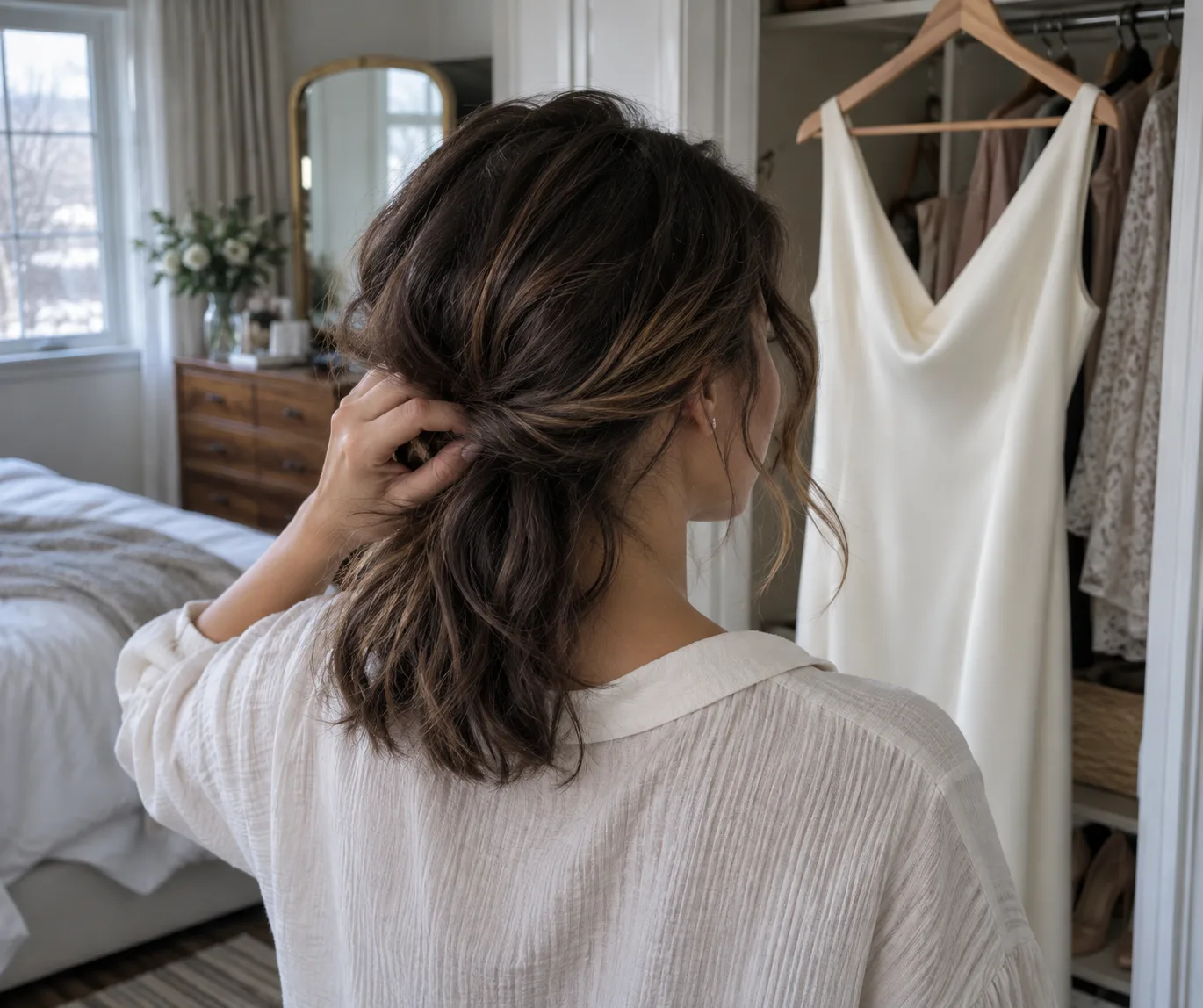
Use Hair Muse to narrow a visual shortlist
Begin with one clear photograph that includes your whole head, hairline, jaw and shoulders. In Hair Muse, explore only the silhouette you are deciding: gathered versus loose, face-opening versus softer framing, or the approximate height of a style. Keep your starting photograph constant and change one visible idea at a time. Save two or three useful directions, including one that feels safer than the most dramatic option. A preview is most useful when it makes your preference explainable in a sentence.
Reject an image if it subtly changes your face, smooths away your normal texture or adds impossible-looking volume. Hair Muse helps you plan visually; it does not know how many pins will be needed, how a particular accessory attaches or whether the style survives a full day. Bring the unedited source image as well as the small shortlist to the appointment. Point to the features you like—lower volume, an open cheek, a softer temple—not to every pixel as a demand. This keeps the professional conversation grounded in observable goals.
Bring the real objects that change the answer
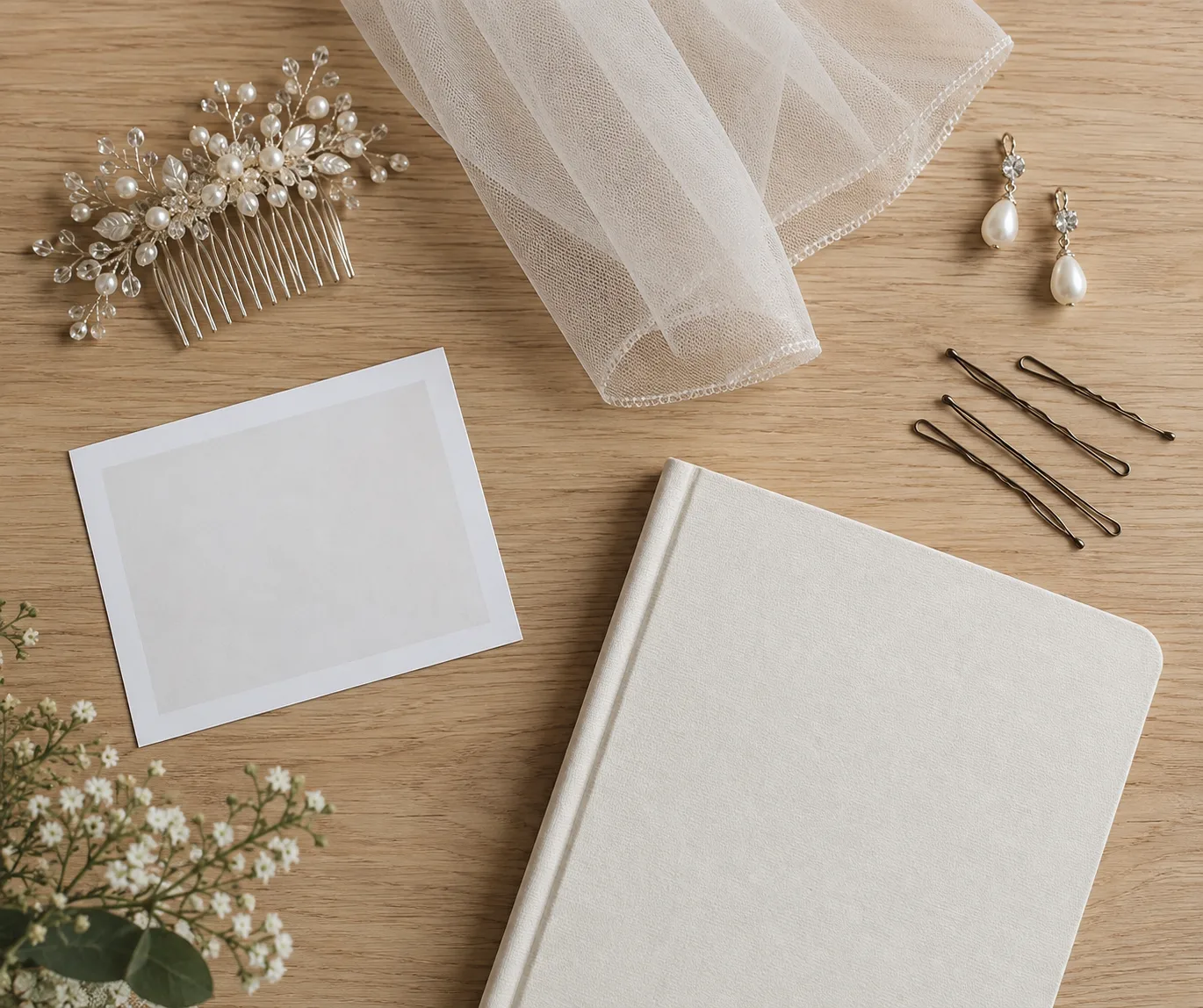
A veil, decorative comb, pins, earrings or glasses can change where the hair needs support and what remains visible. Bring the actual objects when possible, or clear photographs with approximate size and fastening details. If the veil will be removed later, ask how the style should look both with and without it and who can remove it safely. Do not assume that the stylist can reproduce an accessory visible in an inspiration photograph without seeing its weight, teeth, clasp or attachment point.
Ask how to prepare the hair for the appointment rather than following a general 'day-old hair' rule. Some stylists want clean, dry hair; others give product or timing instructions based on the intended style and texture. Confirm whether extensions, tools or accessories are included in the booked session and whether trying a second look needs more time. The best checklist is one you send before the appointment, leaving room for the stylist to correct assumptions. It prevents the trial from being spent finding missing pieces.
Test the trial from front, side, back and in motion
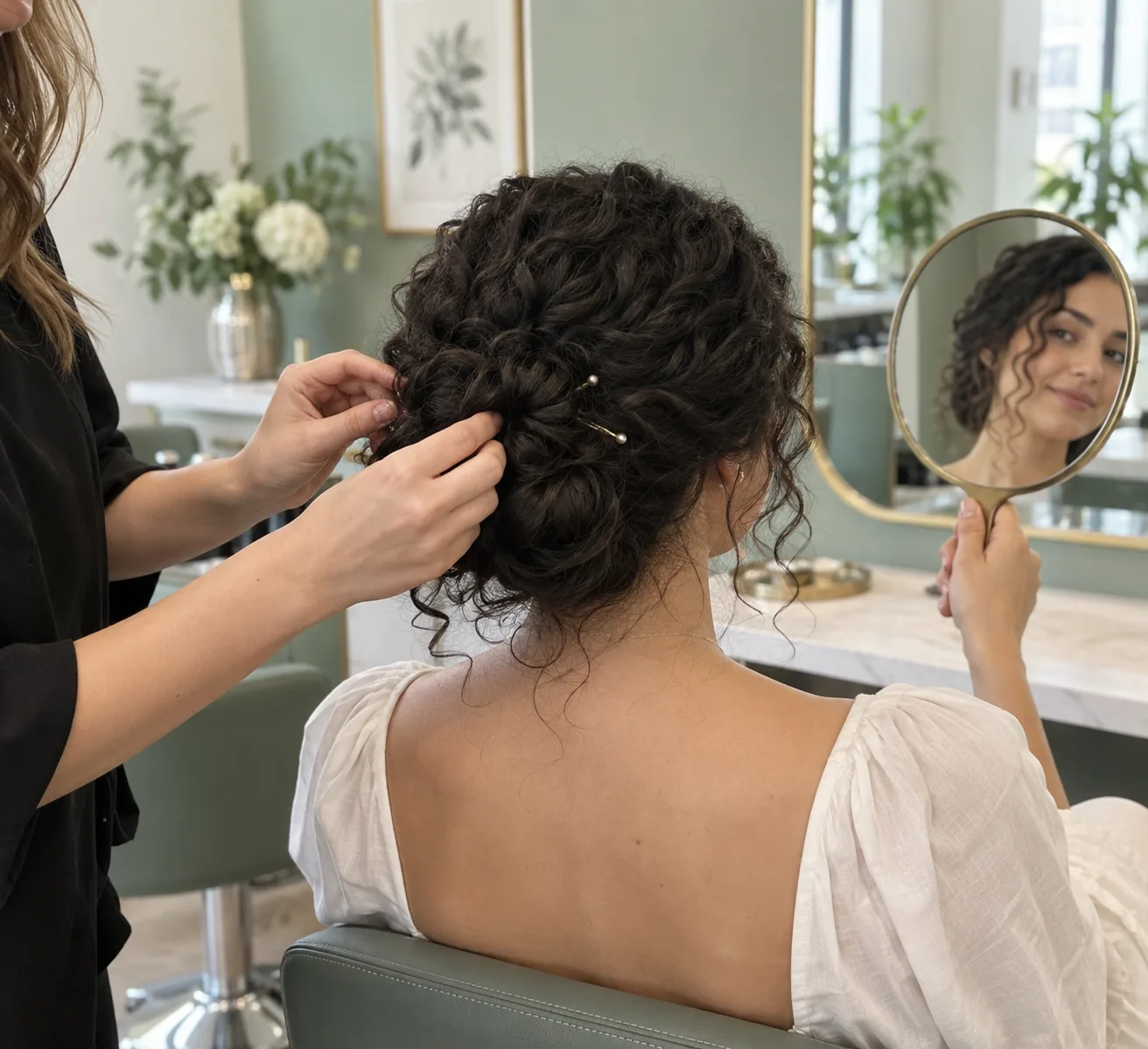
Once the stylist has shaped the first option, take unfiltered photographs from the front, both profiles and behind in even light. Include a frame with the accessory in place. Ask to see the style in a mirror before it is heavily set so you can request a change in height, looseness or framing while the structure is still adjustable. If an area is uncomfortable, say so immediately. A tight result that looks impressive for five minutes is not necessarily a good result for a long celebration.
Turn your head, sit, stand and move as you expect to move. Check whether pins catch, pieces fall into your eyes, the nape presses against a collar or the veil pulls at one point. Photograph the adjustment as well as the original so the final record identifies what was changed. Your stylist can explain which looseness is intentional and which is a hold problem. The physical trial tests construction and comfort; the saved preview only helped you arrive with a coherent visual starting point.
Do a sensible wear check after leaving the chair
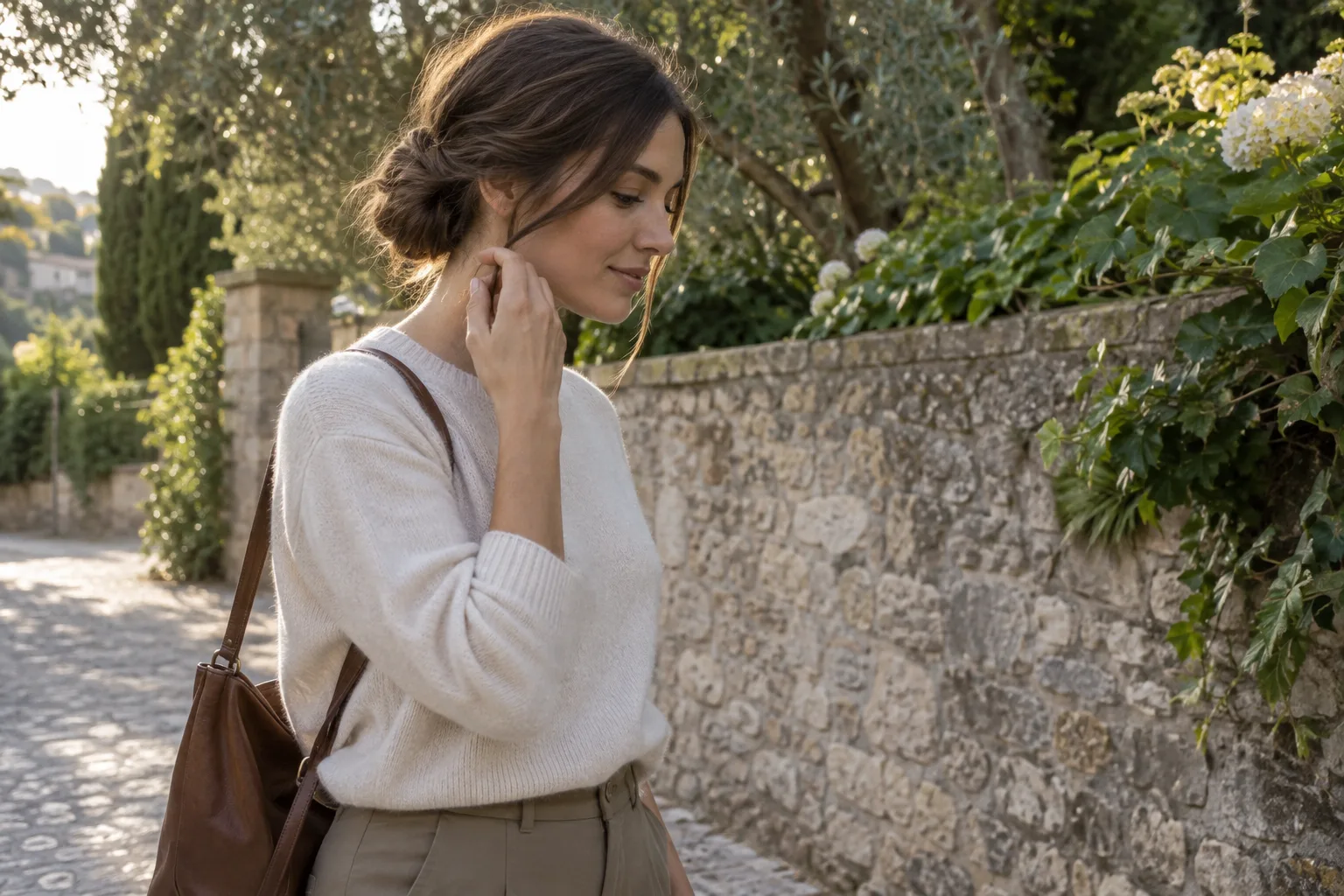
If the stylist agrees, keep the result in for several ordinary hours. Walk outside, sit in the kind of posture you expect at dinner and notice whether the hairline feels pulled or the style loosens. A short walk cannot reproduce every event condition, but it can reveal immediate discomfort, slipping accessories or strands that repeatedly need rescue. Write down the time and circumstances of a change rather than saying only that the hair 'did not last.' Weather, clothing contact and your own habit of touching the style matter.
Distinguish small, acceptable movement from a problem you would want corrected. A loose face-framing piece may soften naturally; a veil comb that shifts is different. Do not keep a painful style in place for the sake of a test. If the first direction fails, discuss a lower-tension version, a different anchor or a simpler outline instead of demanding stronger pulling. The point of a trial is useful feedback, not proof that a reference photo must be forced onto your hair at any cost.
Leave with a repeatable brief for the wedding day
Before you leave, identify the version that was actually approved. Save front, side and back photographs of that final version and note the part, height, face-framing pieces, accessory position and anything adjusted for comfort. Confirm how the hair should arrive on the day: washed when, dried how, with or without product, and with which accessories. Clarify who will handle the veil or a later change of style. Do not infer the plan from a lovely image; ask the stylist to state the practical instructions.
If a proposed cut or color change is still unresolved, do not treat the trial as permission to make it at the last minute. Ask the relevant professional to assess your hair and schedule a separate decision with enough room to see the real result. Our general salon-preview guide helps turn visual references into precise questions, but the trial's final record should belong to this event and this stylist. The successful outcome is a hairstyle you recognize, can wear comfortably and can explain, not an untestable promise of perfection.