Winter styling
Hairstyles for turtlenecks that clear the collar
Try a bun, twist or loose bob with the collar you actually wear. Compare silhouettes before you test the fit.
A hairstyle can look exactly right in the bathroom mirror and feel wrong the moment you pull on a sweater. A low bun catches on the fold, a ponytail settles inside the collar, or the last inch of a bob flips out every time you turn. The useful question when choosing hairstyles for turtlenecks is where your hair will sit against the particular top you’re wearing. Two sweaters with the same label can leave very different amounts of space behind your head.
Start with the collar you actually plan to wear, plus the coat or scarf that goes over it. Test one style that clears the fabric and another that keeps some hair visible beside your face. Hair Muse can help you compare those two outlines in a photo if you're still deciding what you want to see. Use the actual outfit to check whether the style stays put and feels comfortable.
Hairstyles for turtlenecks start at the collar edge
Put the top on before choosing the height of a tie, clip or bun. Stand normally and find the upper edge of the collar at the back. Turn both ways, then look down as if you were reading your phone. The edge may ride higher in one of those positions than when you stand for a picture. The useful clearance is whatever remains while you move. If you fold the collar twice for part of the day, try both configurations.
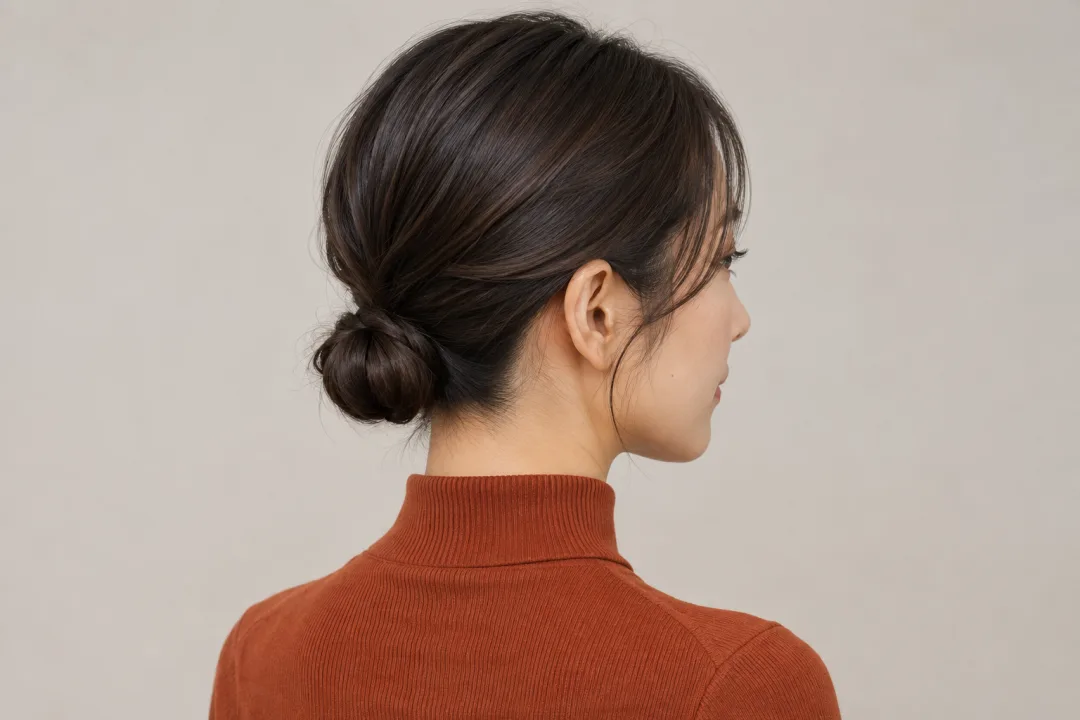
A thin mock neck often leaves room for a compact bun low on the head. Gather the hair loosely and hold the coil where you expect it to sit. Check the bottom of the coil, not just the elastic. The bottom is the part the fold will touch first. If you feel the sweater nudging the coil up, try moving the base a finger higher. If that position pulls at the hairline, let it go and try a different arrangement.
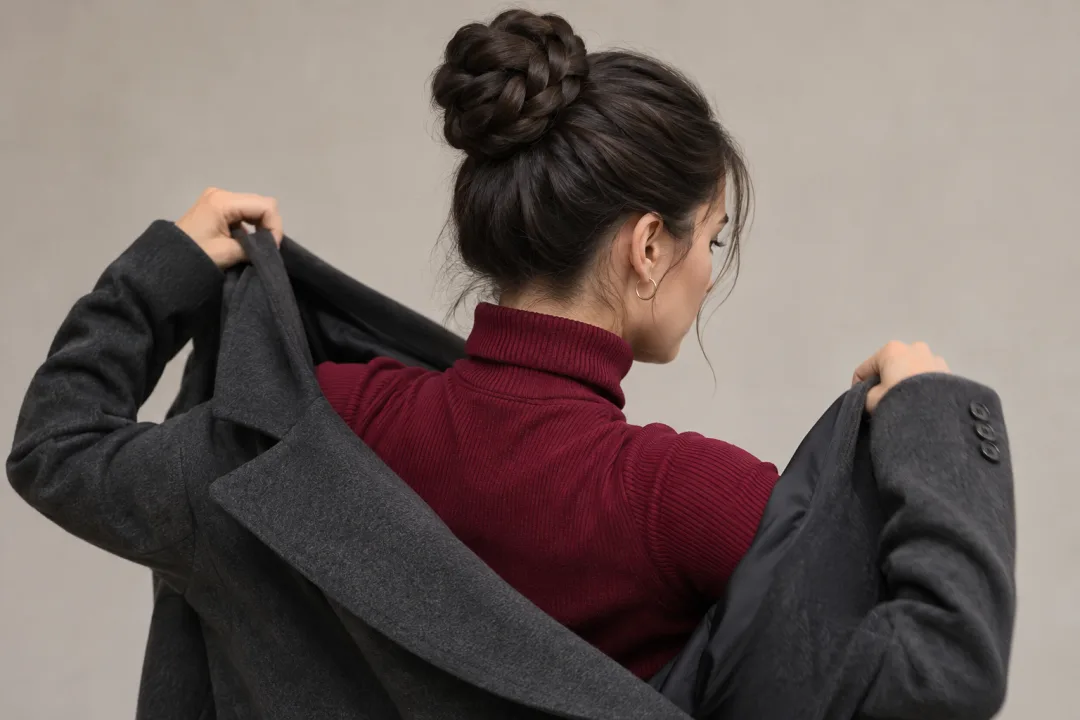
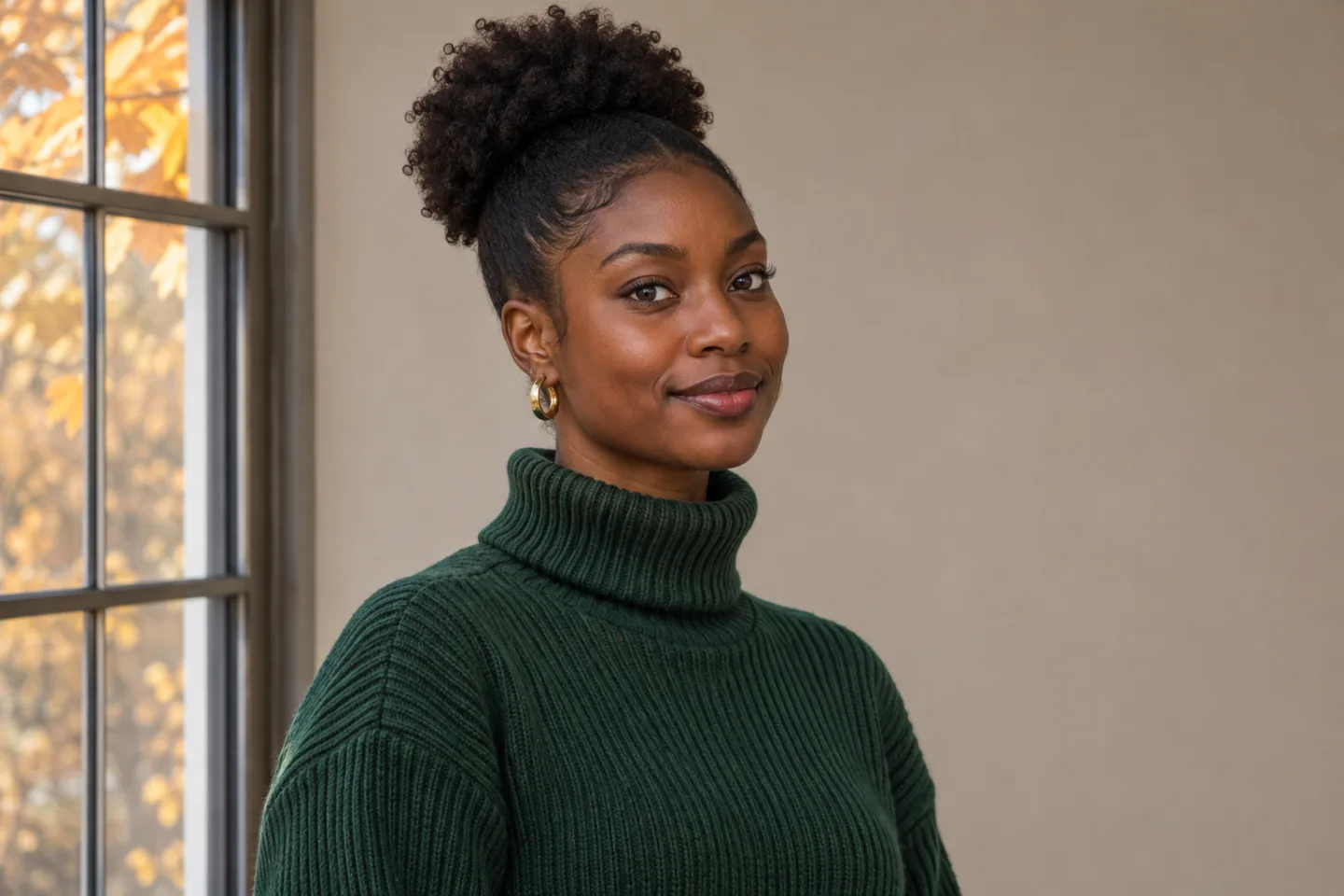
A bulky fold usually makes more sense with the weight higher, such as a compact puff or bun around the crown. A high ponytail gives you the same lift at the base but sends the length back down. If the ends keep finding their way under the collar, fold or braid the tail and pin it above the edge. Keep the shape loose enough that you can turn your head without feeling a tug.
Decide whether to show the ends
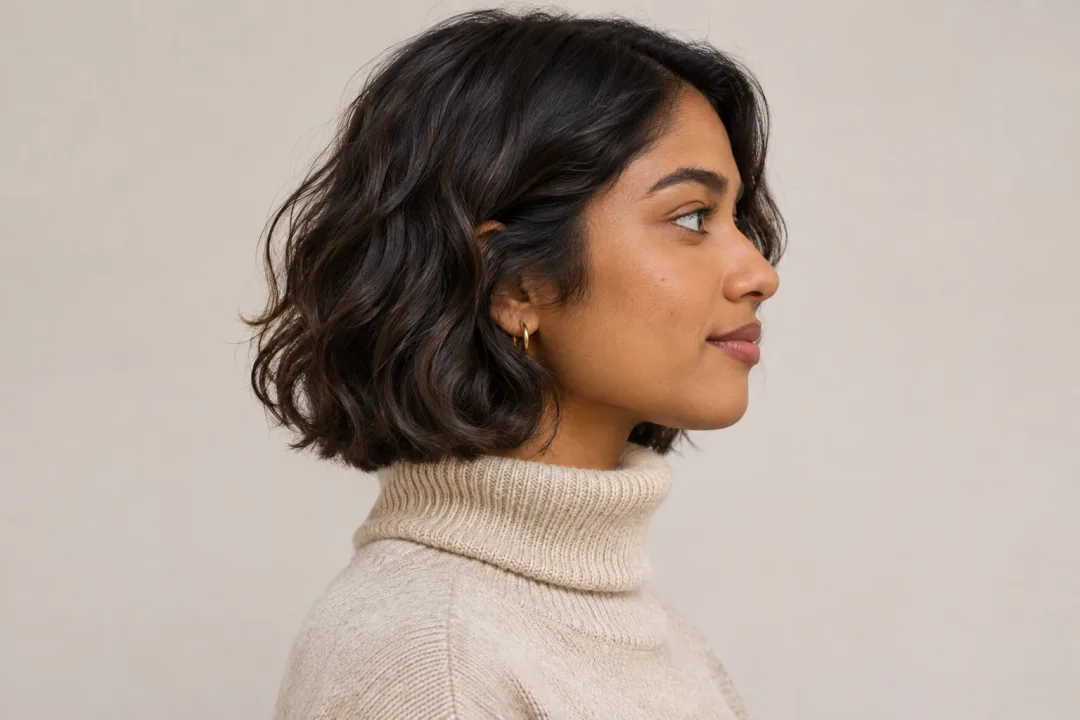
When the shortest hair you need to gather reaches only the cheek or jaw, a full updo may turn into a collection of pins. You can leave a short bob out and set the ends forward of the fold instead. Turn your head slowly to see whether the outer layers stay in front. Try one side tucked at the ear if you want a clearer outline around the face. Glasses arms and earrings take up space there, so test them together before settling on a clip.
With shoulder-length hair, a half-up twist can take hair out of your face while leaving enough movement to soften the outline of the top. It won’t lift the lower section off the fabric. If the lower section is the part that tangles or gets pushed forward, gather it too, or bring it over one shoulder so you can see when it slips. Move your arm as you would when reaching for a bag. If the strap keeps catching the ends, that is a reason to try a different route for the length.
Long braids and twists offer two different silhouettes in the same top. You can move the length to the front for a visible diagonal across the sweater, or fold it up when you need the neckline clear. Start by supporting the gathered length with your hand so you can feel its weight before choosing an anchor. If the size of the bundle pushes against your coat or leans on a pin, try splitting it into two smaller coils. Your own hair and the time you need to wear the style decide which arrangement is practical.
Choose the accessory after choosing the shape
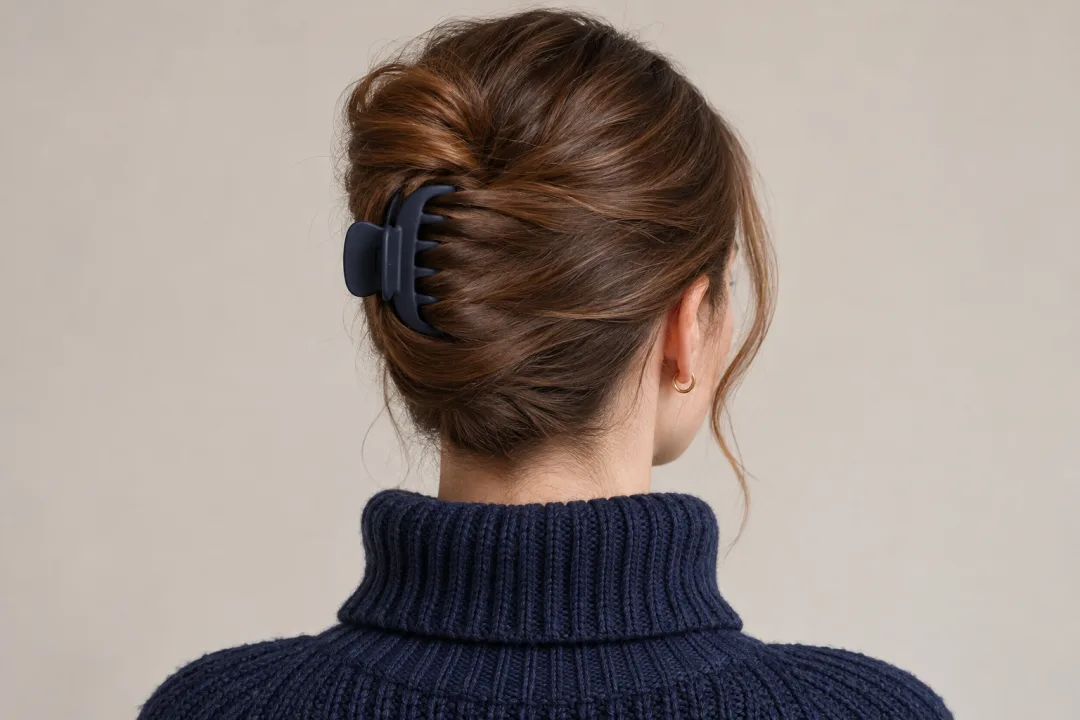
Hold the hairstyle with your hand and find where the ends want to unfold. A flat pin works for a small section that needs to stay close to the head. A claw clip can hold a larger folded section if the teeth reach around it without pinching the scalp. Set the clip above the collar and turn sideways in the mirror. Some clips project far enough to meet a hood or a headrest even when the hair itself clears the fold.
A vertical twist can put more of the length above a thick collar without moving all the weight to the crown. Fold the ends inward and hold the twist at a height that leaves room for your clothing. If the short layers pop out below the clip, shift the hold or leave those layers loose where they fall comfortably. Adding more fasteners can give you a firmer shape, but each pin should have a purpose you can explain, such as keeping an end out of the zipper.
If you’ll be wearing the style for several hours, build it with the lightest hold that gets you through a few ordinary movements. Take it down and retry if you feel pulling at the temples, or if the band leaves you thinking about the hairstyle before you’ve even gone outside. Test a soft tie, a different base height or a side placement while you still have time to change your mind.
Compare two outlines in Hair Muse
Take a front or slight three-quarter photo in even light with your face visible. Wear the sweater if the collar fits in the frame. Decide what you want to compare before opening Hair Muse. For instance, compare a higher silhouette that leaves space above the collar with one that keeps some hair near your cheeks. Use the same starting photo so the comparison is less influenced by head angle or lighting. If you change the sweater and hairstyle together, you lose track of which change made the difference.
Read the preview for broad choices. Is the top of the hairstyle too prominent for what you had in mind? Does a visible side section make you like the outline more? Save only the image that helps you answer a specific question. If a generated result redraws the collar, hides your glasses, or shows a section you can’t actually gather, leave that result out of the comparison. Some styles may be easier to approximate than to represent precisely with the available options.
A front-facing picture cannot tell you the distance between the back of the bun and the sweater. It also can’t tell you whether a clip will hold, how much tension you’ll feel, or what the shape will look like when you turn. Recreate the idea loosely and take a real side photo, or ask someone to watch the collar while you move. If you’re going to a stylist, bring the outfit and the real photo along with any preview you find helpful.
Rehearse the way you'll actually get dressed
Put a narrow-neck sweater on before making a high style if the opening tends to catch the accessory. On a normal morning, the best test is often getting dressed in your regular order. Add the scarf, close the coat if you would normally close it and put the hood up once. Then sit back against a chair. A clip that clears the collar when you’re standing can still become uncomfortable when the back of your head rests against something.
Check your ability to reset the style with cold hands or without a mirror. One low-effort backup is to take out a bulky clip and gather the length in a soft tie until you’re indoors. If a low coil flattens under the hood but still feels fine, leave it in for the trip and reshape it at the destination. Choose your backup before you leave if the outfit is for a long event or you’ll be changing layers repeatedly.
When packing a photo for a salon or styling appointment, show what the collar does rather than just naming the sweater. Try saying, “The fold touches this spot when I look down. I’d like the bun to finish above that, and I want this small section near my cheek to stay out.” If you’re keeping a shorter cut loose, show exactly where the ends catch and whether that happens on one side or both. That helps separate a request about the placement of an updo from a request to change the haircut.