
Short haircut planning
Should I get a buzz cut? Decide before the clippers
A buzz cut changes what your hairline, crown and scalp reveal. Compare realistic lengths, preview the silhouette and make a careful first-cut plan.

Should I get a buzz cut is a bigger question than whether the style looks clean in one photograph. Clippers remove the familiar outline that may currently soften your hairline, frame your face or hide a crown that grows in several directions. The result can feel liberating, but there is little room to put length back immediately. The sensible decision is about the first length you can live with, not the shortest length that looks striking on somebody else.
This guide turns that decision into a set of observable checks: your reasons for changing, the difference between an even cut and a tapered one, how your own hair behaves at the hairline and crown, what a close crop asks of your scalp routine, and what happens while it grows. Hair Muse can help you compare a short silhouette on a clear photo, but a digital preview cannot measure clipper guards, show exact scalp visibility or guarantee how a barber's cut will sit. Use it to narrow the idea, then confirm the physical details before cutting.
Should I get a buzz cut, or do I want less daily styling?
Name the problem before choosing the haircut. If your morning styling takes too long, a shorter textured top or a tidy taper may solve it while keeping some movement. If you want an almost uniform outline, enjoy a visible hairline and do not mind regular maintenance, a buzz cut is a more direct answer. If the impulse comes from one frustrating hair day, postpone the irreversible cut until you have seen your hair in its normal state after washing and drying. A dramatic cut should solve a recurring problem, not merely a temporary one.
Choose a first length rather than a dramatic label
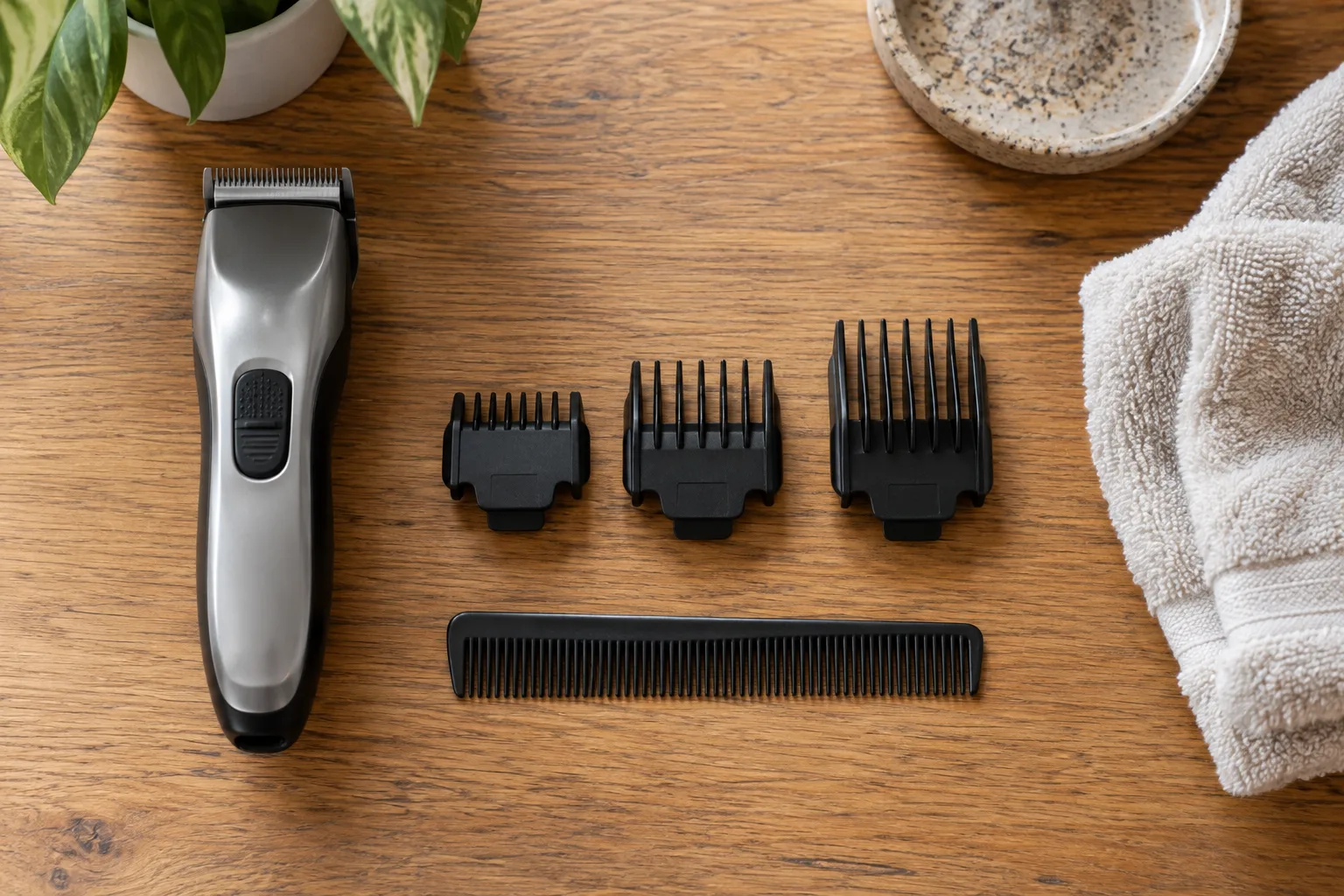
The phrase buzz cut covers a range of clipper lengths and shapes. At one end the scalp may be conspicuous; at the other, the top still reads as textured hair. Guard numbers are not a universal visual promise because machines, attachments, hair density and growth direction vary. Ask the barber to show the actual guard and the approximate millimetres it leaves on their equipment. Begin longer if you are uncertain. Hair can be cut shorter during the appointment, but a too-short first pass cannot be reversed.
Decide whether you want the same length everywhere or a subtle difference between top and sides. An even cut can make the outline feel honest and simple; a gentle taper can keep the side profile softer around the temples and ears. A skin fade is a separate, sharper decision and may demand more frequent upkeep than a longer buzz. Bring two reference photos that show front and side views at approximately the same length, and say what you dislike as well as what you like. That limits misunderstandings about words such as short, neat or low maintenance.
Look at the hairline, temples and side profile together
Longer hair can make a hairline seem lower or more even because loose strands fall across the forehead. A buzz cut exposes its actual shape. Check your hairline in ordinary daylight, not only a bathroom light that casts deep shadows. Look at the central front, both temples and the line near the ears. If one side is naturally higher, that asymmetry may become more visible, but it need not make the cut unsuitable. The important question is whether you would be comfortable seeing it daily.
A front-facing picture alone is not enough. The side view tells you whether a very short top changes the apparent balance between forehead, ears, jaw and neck. Ask someone to photograph you at eye level from the side, or use a mirror without stretching your neck into an unnatural pose. If the concern is an actively changing or suddenly patchy hairline, do not treat a haircut as a diagnosis. A clinician can assess hair loss or scalp symptoms; a stylist can discuss shape. A visual preview helps with proportions, not medical interpretation.
Read the crown and texture before removing the cover
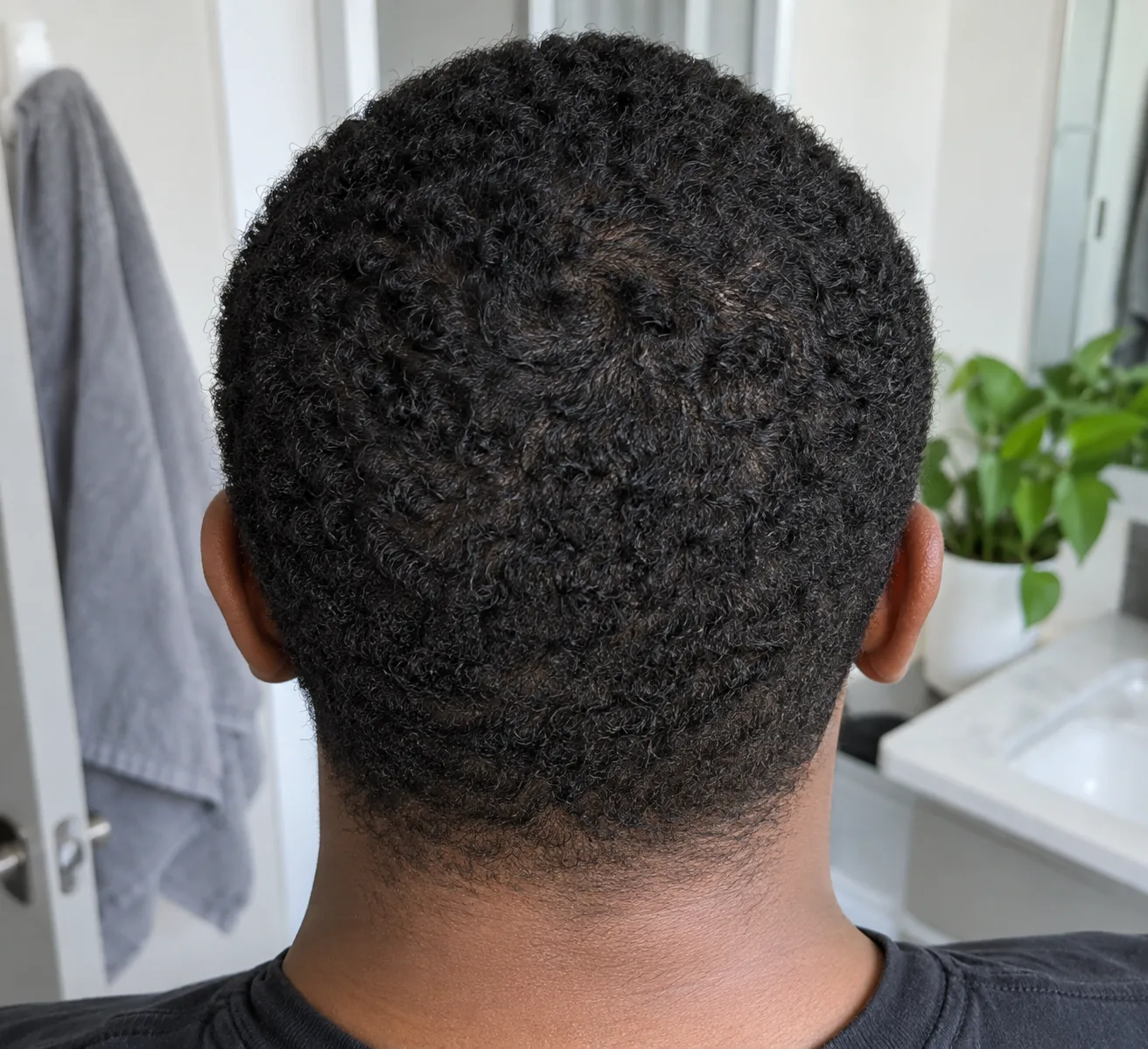
The crown is easy to forget because you rarely see it in the mirror. Hair may radiate from a whorl, change direction abruptly or lie flatter in one area. At buzz length, those directions can create a patch that looks lighter even when the hair is healthy. Dense curls or coils may stand up differently from straight hair at the same measured length, and a cowlick can remain visible. None of this is a defect; it is information for choosing a length and deciding whether to keep a little more hair on top.
Take a clear photo of the crown in daylight, or ask a trusted person to look without pulling the hair tight. Separate what you see from what a reference model has. If your density varies, ask how a guard length will reveal the scalp rather than assuming a longer-looking photo predicts your result. Scalp irritation, scaling, painful bumps or a new bare patch deserve attention before clippers run closely over the area. A dermatologist can help with symptoms; the photo is only a planning record.
Use a preview to compare shape, not to certify a guard size
Begin with a clear, unfiltered photo in soft daylight. Keep the whole hairline visible and hold the phone near eye height. If you need a simple setup, use our guide to a clear try-on photo rather than relying on a strongly filtered selfie. Then use Hair Muse to explore a short silhouette and compare it with your current look. Change one meaningful variable at a time: overall crop versus longer top, or even sides versus a little taper. Save a small shortlist so the differences remain easy to explain.
Treat a preview as a conversation aid. It can show whether you like the broad outline around your face, but it cannot show exact millimetres, hair density, a precise crown whorl, scalp conditions or the way new growth will stand up. It also cannot promise that your barber can reproduce every contour. Look at the screen, then return to your real photo and the physical guard choices. If you only like the most heavily stylized image, consider a longer first cut and reassess after seeing yourself outside the app.

Plan the scalp routine that shorter hair exposes
Less hair does not mean no care. A close crop changes how easily sunlight reaches the scalp, especially if your hair is fine or thinning. The American Academy of Dermatology advises sunscreen on exposed skin and says people with thinning hair should protect their scalp with sunscreen or a wide-brimmed hat. A hat may be the easier daily choice for long outdoor periods; whichever route you use, think about the ears and back of the neck too. Do not assume short stubble is a dependable sunscreen.
Washing becomes quick, but the scalp may also be more noticeable when dry, flaky or irritated. Use a routine suited to your skin rather than scrubbing harder because the hair is short. If clippers leave redness, persistent bumps or soreness, allow the area to settle and seek professional advice where needed. A buzz cut can simplify some styling, yet it may add a sun-protection habit and closer attention to scalp comfort. Put those practical changes in the decision before admiring the finished portrait.
Make the first barber appointment reversible where possible
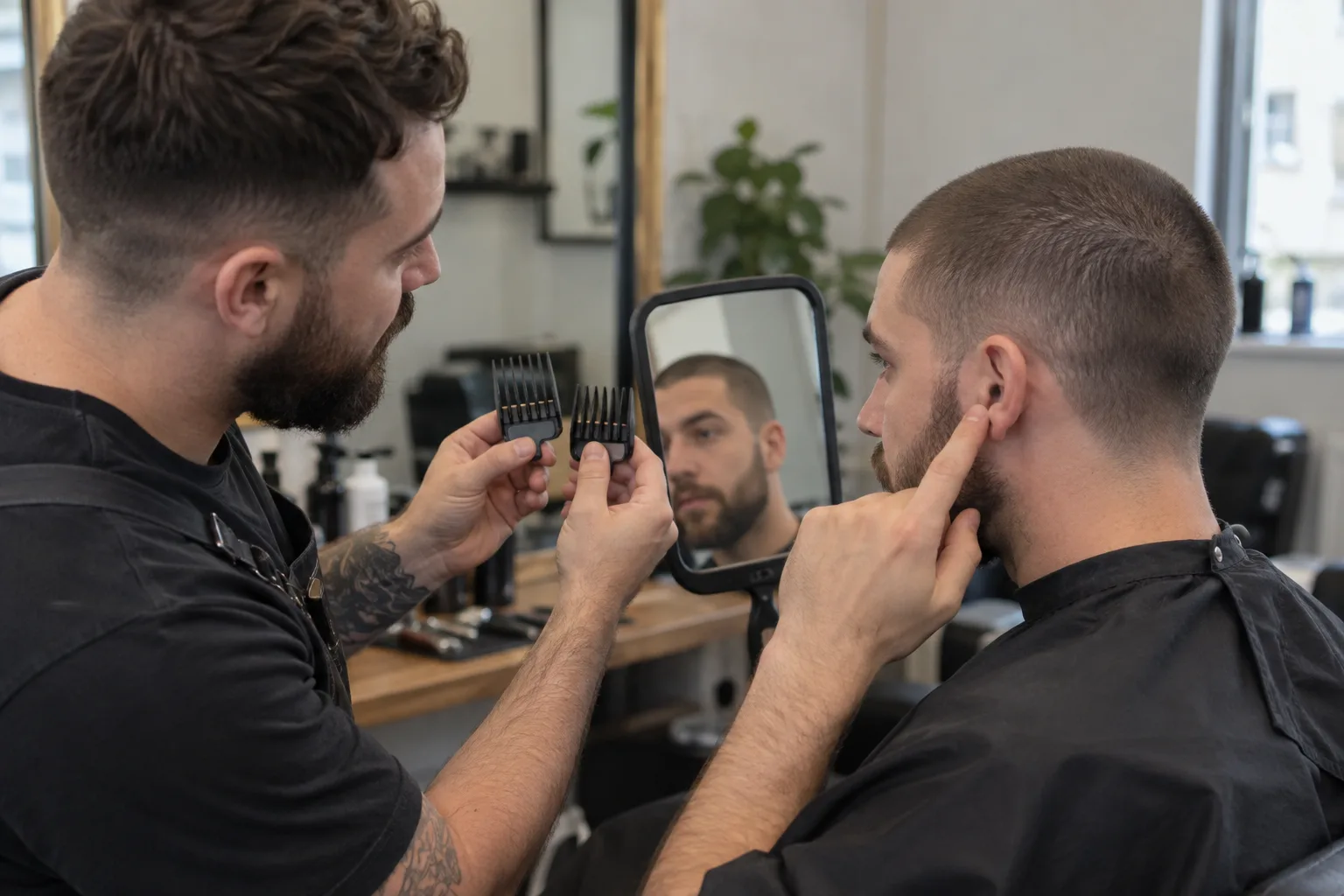
Tell the barber your current length, your chosen longer starting guard, whether the top and sides should match, and which details you want left natural. Point to the temples, sideburns, ears and nape rather than saying 'clean it up' and hoping for the same interpretation. Ask to see the first pass in the mirror before going shorter. A good conversation includes what you do not want, such as a shaved fade, a squared hairline or an aggressively outlined forehead, if those would change the decision for you.
Show one or two useful references, ideally on hair with a texture or density reasonably close to yours. Then show your own front, side and crown photographs. A preview from Hair Muse can explain the silhouette you are aiming for, while the barber can assess actual growth patterns and tools. Ask about upkeep in your own schedule: how quickly will the outline stop looking intentional to you, and are you willing to return or maintain it safely? The answer varies with desired sharpness and growth, so avoid promising yourself a fixed universal interval.
Consider the weeks after the cut, not only the first day
If you later want longer hair again, there is an in-between stage rather than an instant return to your old style. Think of a simple transition: keep the sides tidy while the top gains length, or let everything grow evenly if that feels more like you. A haircut that you can tolerate during its grow-out is usually a better first experiment. If this stage feels unacceptable right now—for a job event, important photos, or personal reasons—postpone the cut or choose a longer version with an easier path back.
A practical yes, no or not-yet decision
A yes is reasonable when you like the short outline from more than one angle, have inspected your hairline and crown, understand the scalp routine, can describe the starting length and accept the grow-out. A not-yet is sensible when you only like one edited reference, cannot name a guard range, have an untreated scalp concern or need the current length for an imminent event. A no is valid if your real goal is simply quicker mornings and a less dramatic short cut would deliver that benefit.
Ask whether you would still choose the cut if it looked good, not perfect, after the first wash and a week of growth. If yes, book with a longer first pass and room to refine. If not, compare real photos and less drastic shapes. Hair Muse can organize the visual comparison, but your comfort with the real haircut, scalp and maintenance is the decision that counts. You do not need to prove bravery by picking the shortest guard.