
Outdoor scalp care
Scalp sun protection for the parts your hair leaves open
Check the skin your hairstyle leaves visible, choose coverage you can actually keep on and make sunscreen reapplication part of the outing, not an afterthought.
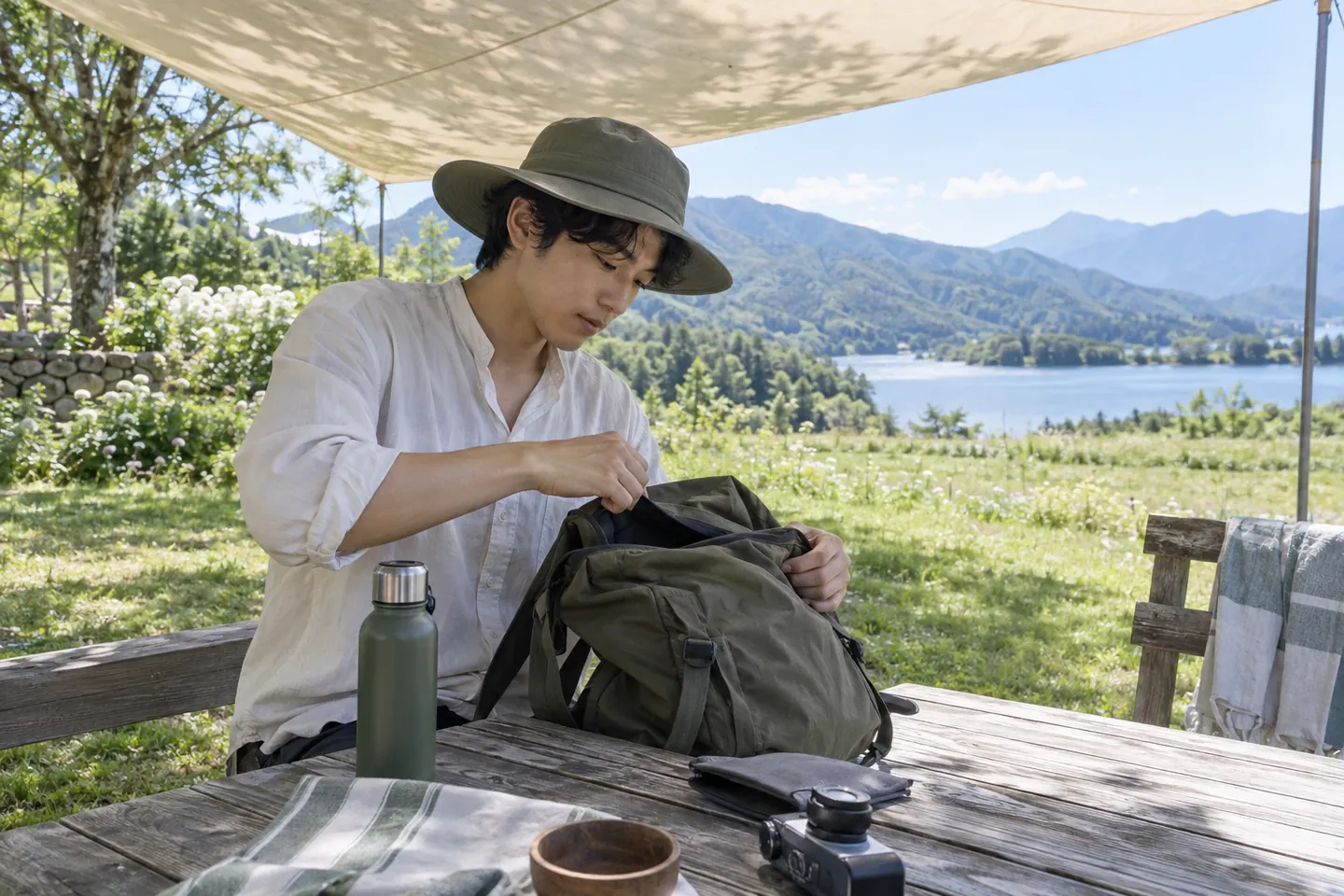
Scalp sun protection is easy to overlook when you have already thought about your face and arms. A clear part, a newly shorter haircut or a hairstyle that opens the hairline can leave skin visible even when the rest of the head looks well covered. Start with what is exposed today, rather than treating hair length as a promise of complete protection. You do not need a new haircut or a special styling app to make a useful plan.
This guide focuses on the practical combination of coverage, suitable sunscreen and a routine you can maintain outdoors. It is general care information, not a diagnosis, an assessment of an individual skin condition or a substitute for your clinician's advice. If you already have specific instructions about your scalp, medication or sun sensitivity, follow those. For an ordinary outing, the useful question is simple: what covers your head, what remains uncovered and when can you check the plan again?
Scalp sun protection starts with visible skin
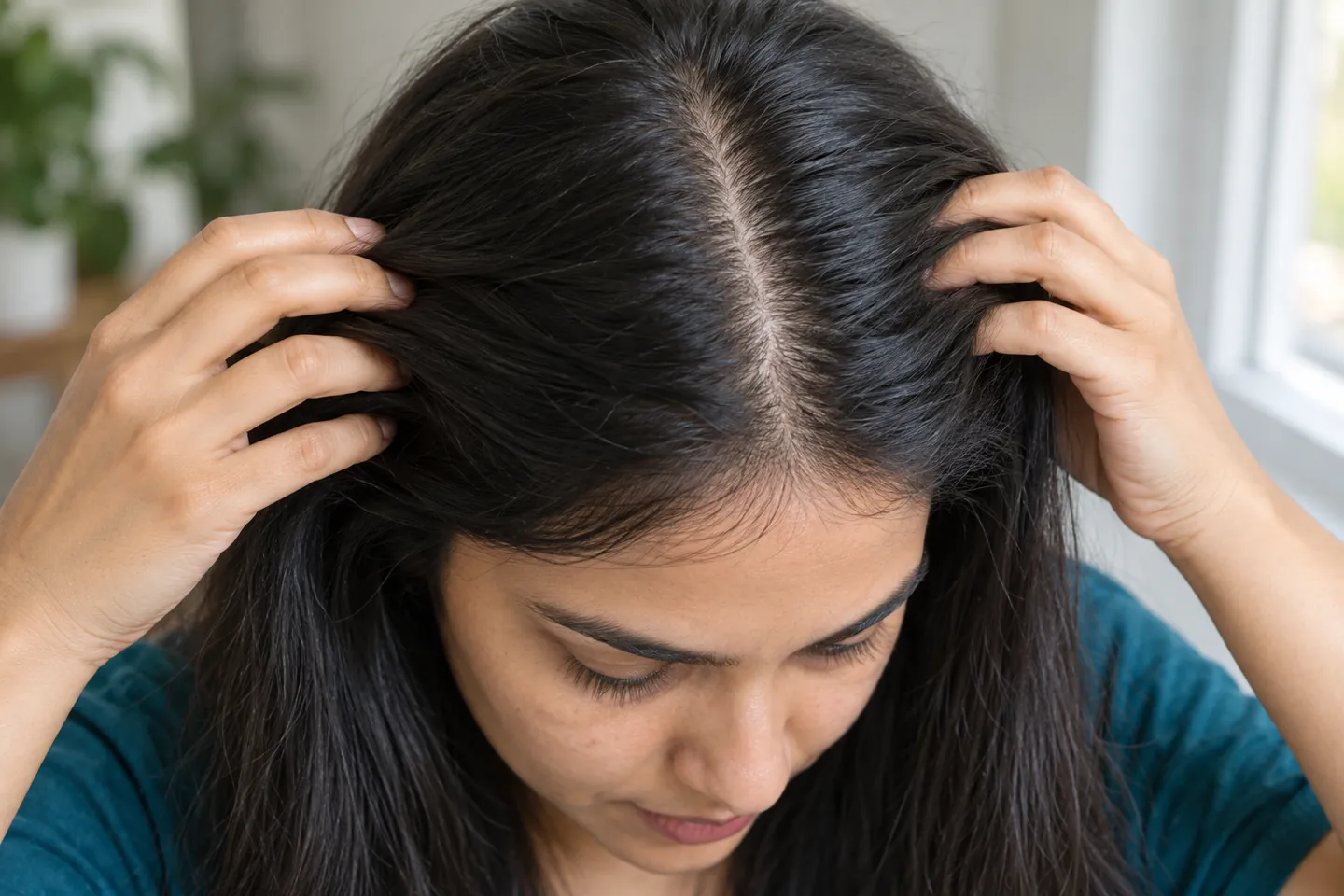
Look at your usual dry hairstyle in an ordinary mirror before leaving. Check the part, the front hairline and any area that becomes visible when you gather the hair. With a short cut, look around the crown as well as the front. This is a coverage check, not an attempt to diagnose thinning or compare yourself with a reference photo. You are identifying where protection needs attention today. A hand mirror can help you see the back without repeatedly pulling at the roots.
Repeat the check with the hairstyle you will actually wear outdoors. Hair left loose at home may be tied up for a walk, while a hat removed at lunch reveals a different area. Do not spend the morning making a part narrower solely to avoid planning protection. A change of arrangement can move the visible strip rather than solve the whole task. If you are considering a shorter cut anyway, our buzz-cut decision guide covers that separate commitment; sun protection still deserves its own routine.
Choose a hat by coverage, then check the fit
The American Academy of Dermatology recommends a wide-brimmed hat and notes that open-weave hats and baseball caps provide less complete coverage. Look for sun-protective fabric information, including a UPF label where available. A decorative appearance alone does not establish UV protection. Check the closed crown and the area around the brim, rather than judging only how much shade the hat casts across your eyes.
Try it with your normal hair arrangement before the outing. Turn your head, bend to pick up the bag and check whether you keep readjusting the band. There is no advantage in a hat that you remove immediately because it presses on a hairstyle. Choose a comfortable fit without forcing the hair into a very tight fastening. Read the manufacturer's care instructions so the item stays usable. If sports equipment is involved, follow its fit and safety requirements rather than improvising layers under it. Our headwear guide discusses haircut recovery, a different issue from protective coverage.

Read the sunscreen label before choosing a format
For uncovered skin, the AAD recommends broad-spectrum, water-resistant sunscreen with SPF 30 or higher. Broad spectrum concerns both UVA and UVB. Read the actual product's directions, intended use, expiry information and warnings. A hair product that promises softness or color care is not automatically a sunscreen suitable for the skin beneath it. Confirm what the label covers instead of assuming that every hair mist offers the same protection.
Choose a format you can use according to those directions on the exposed area. A lotion may be easier to place on a short cut, while dense hair can make skin access more awkward. Do not choose solely by whether the finish disappears in a photograph. If the product is difficult to apply properly, reconsider the format or the physical coverage. Ask a pharmacist or dermatologist when suitability is unclear, especially if your scalp is already uncomfortable. There is no need to rank brands or collect several products that you cannot use consistently.
Reach the exposed skin without fighting the hair
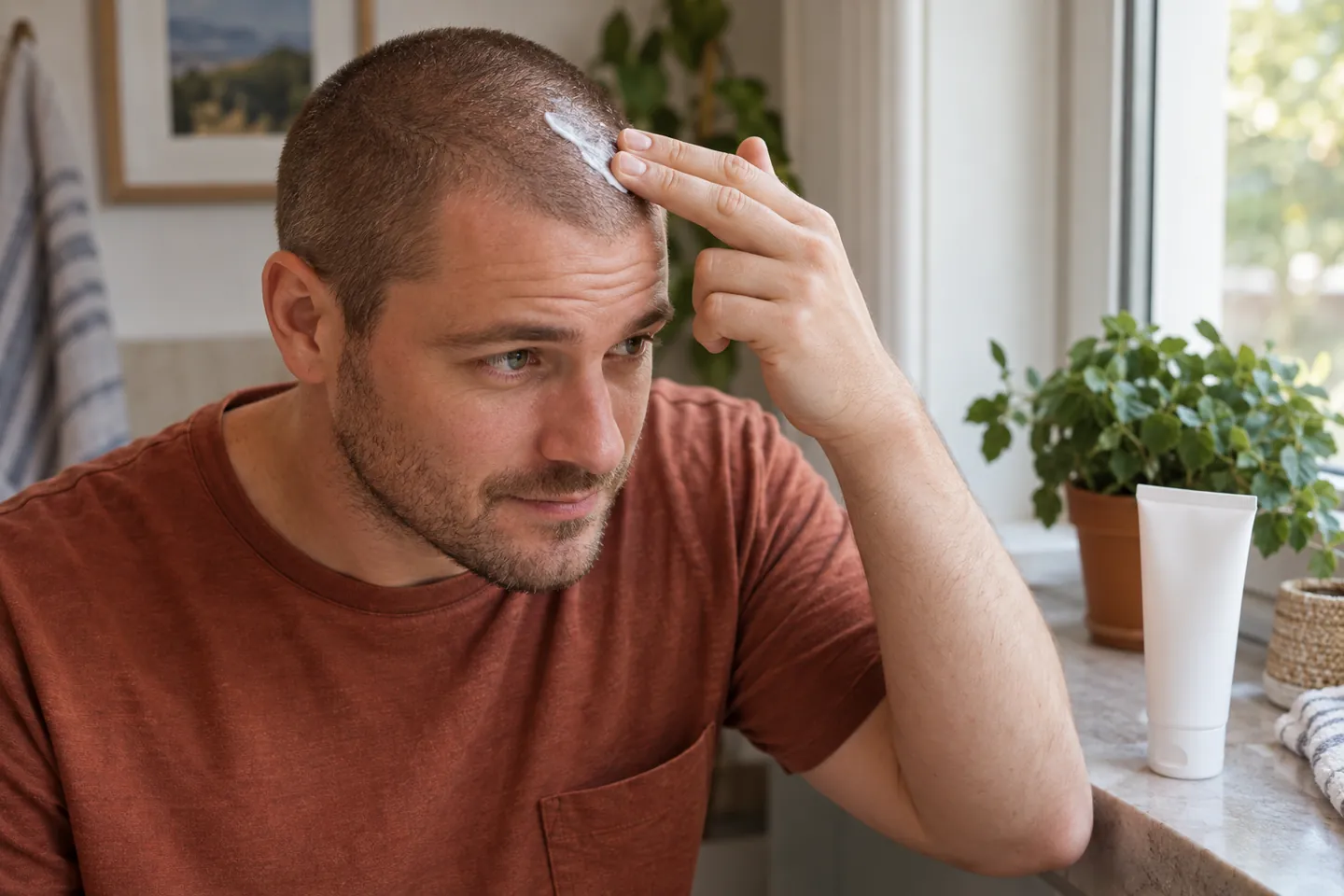
Prepare at home, where you can see what you are doing and read the directions without rushing. Gently move the surrounding lengths aside if necessary, then apply the suitable product to the exposed skin as instructed. Keep it out of the eyes and follow all format-specific warnings. Do not invent a universal scalp dose, spray distance or waiting time from an editorial picture. Those details must come from the product you are actually using, not from a demonstration with an unmarked container.
Avoid substituting a few random dabs into the hair for the application described on the label. If you cannot reach a visible strip comfortably, get advice about a usable format or choose more reliable physical coverage. Do not scrape with a comb, massage aggressively or tighten a ponytail to create access. Before putting your bag away, check that the container is closed and that the directions remain available. A calm setup is easier to repeat than a complicated routine assembled for one perfect photograph.
Make the supplies accessible during the outing
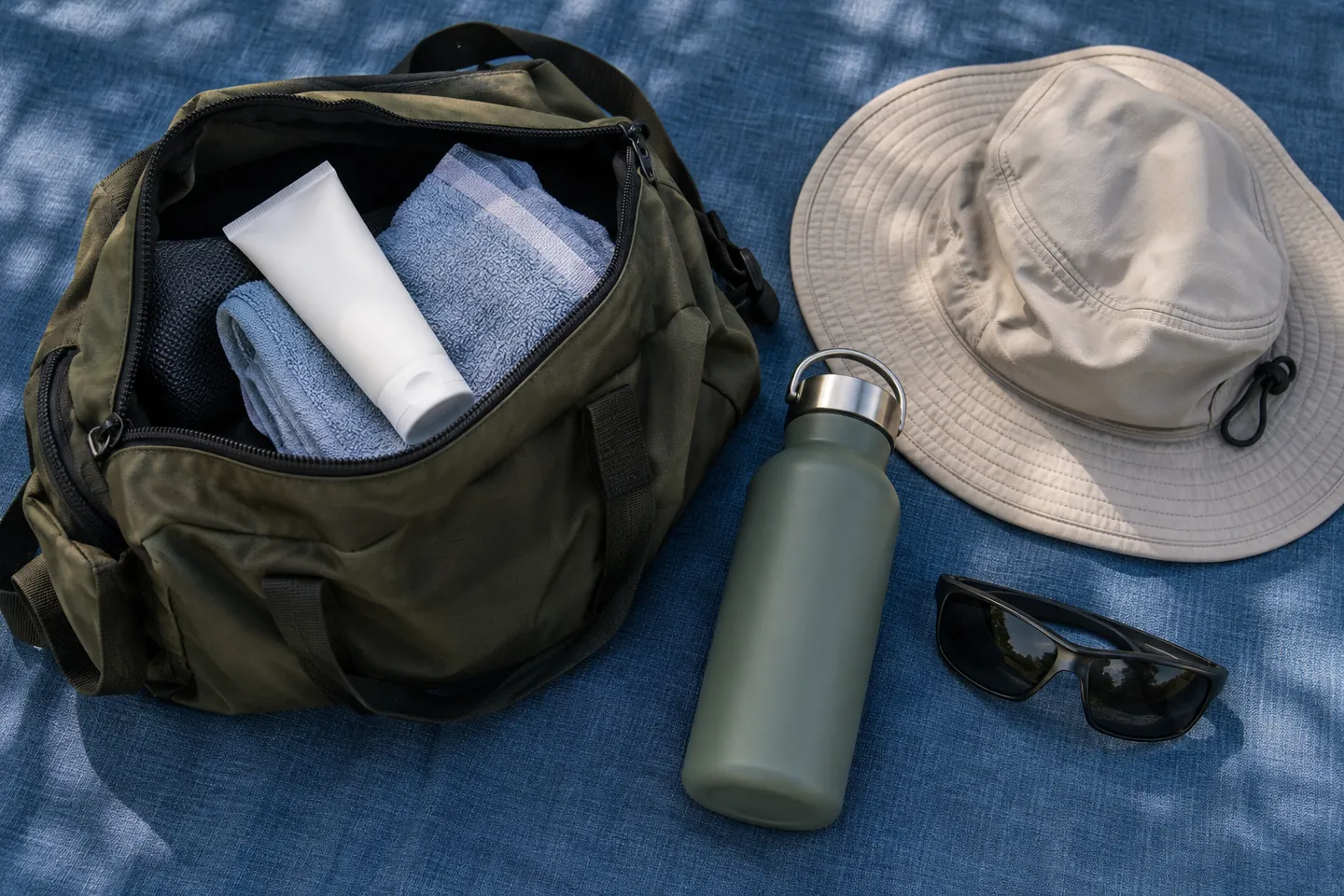
Put the sunscreen where you can reach it without emptying the bag. Carry its original packaging rather than an unidentified travel pot with no instructions. Keep the cap secure and observe the storage guidance, especially when a bag will sit outdoors. Place any item needed for reapplication beside it. A product left at home cannot help with the next check, and one buried underneath the day's equipment is easier to forget when the group is ready to move.
Think through the ordinary transitions: leaving the train, starting a walk, sitting outside for lunch and returning after a swim. Decide where you can pause in shade and reach the exposed skin without balancing everything on a crowded bench. These are planning suggestions, not a medical timing schedule. You can use a simple reminder if it helps, but keep the label and your actual activity in view. The aim is an accessible routine with few steps, not a large collection of outdoor-care accessories.
Recheck after water, sweat or a change of coverage
The AAD's label guidance calls for reapplication at least every two hours outdoors and according to the water-resistance directions after sweating or swimming; toweling also matters. Do not translate a high SPF number into permission to remain outside longer. Read your own label for the activity-specific instructions. A quiet lunch break is a useful opportunity to carry out the required application, not a reason to postpone it until the scalp feels hot.
Also notice changes that affect your original plan. You may remove the hat for a group photograph, change the part after wind or gather the hair differently before sport. Check the newly uncovered area and restore suitable protection rather than assuming the morning arrangement still applies. If the routine repeatedly fails at the same moment, change the practical setup for next time: a better-fitting hat, easier container access or a planned shaded stop. Do not respond by reducing the stated amount simply to preserve the hairstyle.
Plan shade without treating it as a guarantee
Choose a meeting point, waiting place or outdoor table where shade is available, and be willing to move as the day changes. Consider what happens while walking between those places too. The useful plan includes the journey, not only the destination. Ask the group about a sheltered stop before everyone has settled in full sun. This makes the protection routine easier to maintain without turning each pause into an argument about where the bag, hat and sunscreen have gone.
Do not infer a personal safe exposure time from the temperature, hair color or appearance of a photograph. If you check local sun or UV advice, use a current authoritative forecast for the place you are visiting rather than an old screenshot from another trip. Shade, coverage and suitable sunscreen belong together; none is a reason to ignore the others. Keep the routine relevant beyond a beach holiday, including outdoor work, a long queue or an ordinary afternoon spent at a sports ground.
Keep care separate from diagnosing a scalp problem
At the end of the outing, put the supplies back where the next trip will start and note the step that was awkward. Perhaps the brim kept moving, the container was inaccessible or a change of hairstyle revealed skin you had not checked. Solve that specific problem instead of deciding that every part of the routine needs replacing. Follow the product's cleanup directions and your normal gentle washing routine; vigorous scrubbing is not a useful way to compensate for a missed protection step.
Pain, a persistent change or a worrying mark is not something this article can identify. Seek advice from a qualified health professional rather than treating it as a styling fault or trying to judge it with a hairstyle preview. A picture cannot establish sunscreen coverage, UV protection or a diagnosis. Finish with a short plan you can repeat: identify exposed skin, choose comfortable protective coverage, use suitable sunscreen as directed and make the next check practical. That solves the ordinary preparation problem without promising a risk-free day.