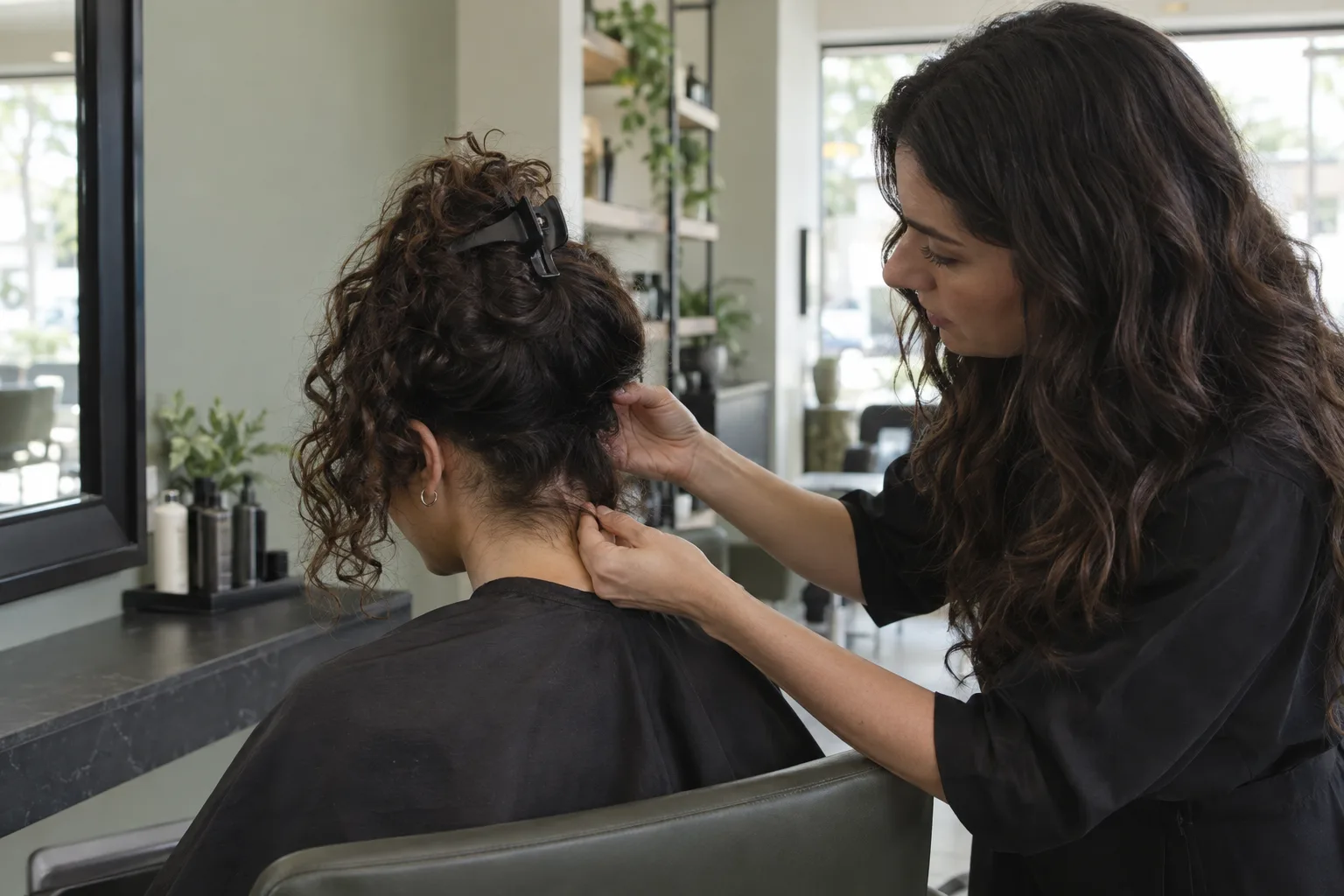
Hair color planning
Peekaboo hair color: place the hidden panel
A hidden color works only if it appears when you want it to. Plan the panel, reveal, contrast and upkeep before choosing a shade.
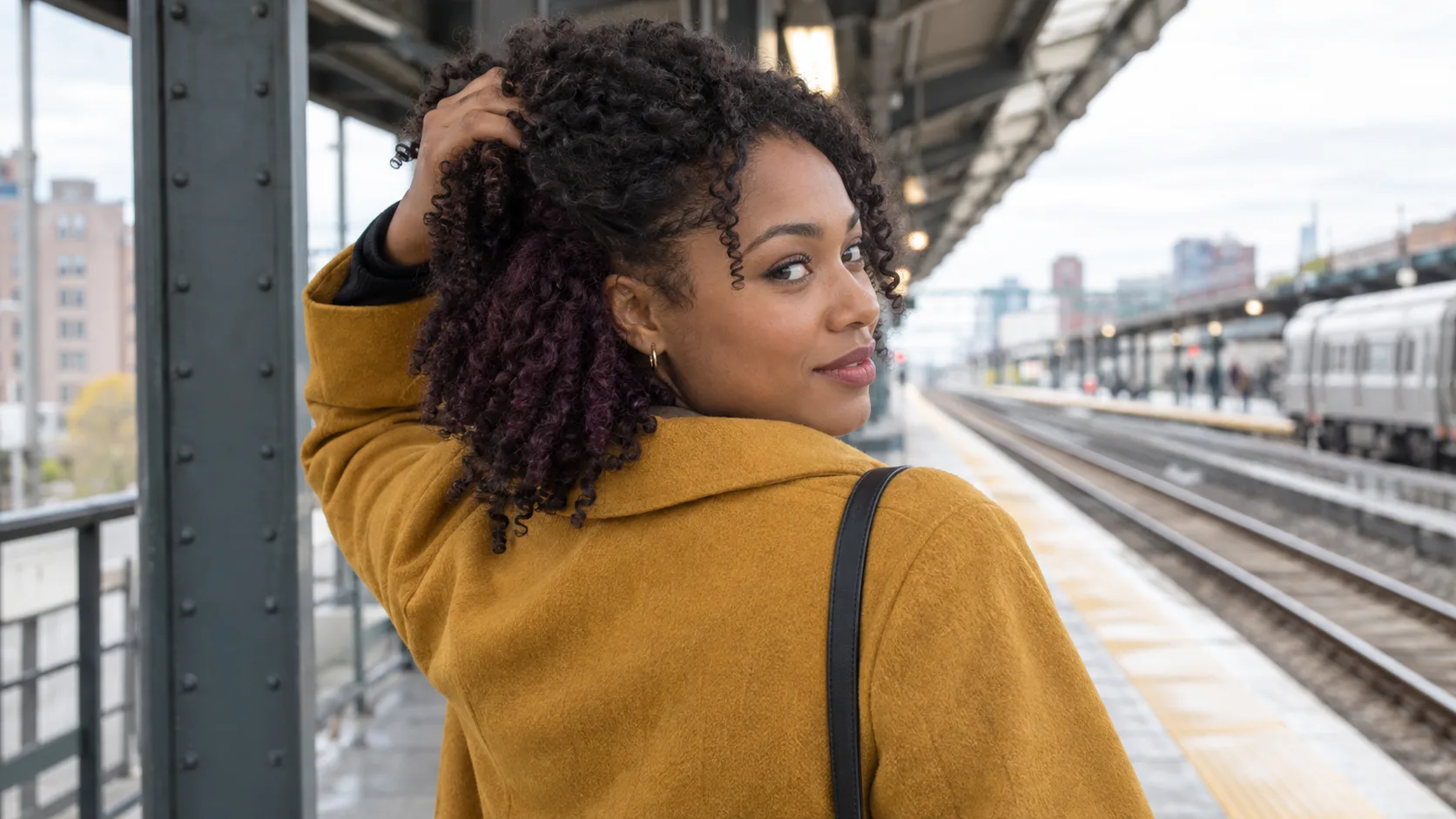
Peekaboo hair color is attractive because one style can show two different impressions: an ordinary outer layer when hair rests and a surprise of color when it moves. But the picture you save may show a dramatic panel only because someone lifted the top hair for the camera. In your own haircut, the same color could disappear completely, become visible all day, or emerge only when you tie your hair. The decision begins with placement, not a shade name.
This guide helps you decide exactly what should be hidden, what should show, and in which routine. You will inspect your dry haircut, compare a narrow nape panel with a wider side or underlayer direction, use Hair Muse for a controlled visual preference check, and bring useful notes to a colorist. A generated preview cannot show sectioning precision, lift, dye behavior or exact movement. The final design must respond to the hair a professional actually sees.
Peekaboo hair color starts with the reveal you want
The usual idea is color beneath the visible top layer, often at the nape or lower sides, so it appears when the hair shifts or is lifted. That is different from ordinary surface highlights, which are intended to be visible with the hair down. Decide whether you want a quiet flash on a commute, a clear band in a ponytail, or a color that remains visible around the ears. These are three different placement briefs even if every reference says ‘peekaboo.’
Describe the maximum amount of color you are happy to show on an ordinary day. A narrow hidden panel may be too subtle if your hair is very dense, cut into long heavy layers or almost always worn loose. A broader or higher panel may appear constantly when the cut is short or heavily layered. Neither outcome is a failure if you chose it deliberately. The useful question is how the color behaves in your real part, texture and styling habits, not how many hearts a dramatic inspiration photo earned.
Name three states before choosing a shade: hair down, hair moving and hair tied or clipped up.
Map the nape, sides and cover layer
Lift the outer layer in a mirror and look at where an underlayer begins. A low nape panel is easiest to hide when enough hair falls over it, but it may be invisible from the front. A panel tucked behind one ear can give a side flash while leaving the crown quiet. A wide ear-to-ear section reads more graphic when hair is gathered or blown about. These are visual directions, not instructions to section and dye your own hair; a colorist should map exact boundaries on your head.
Check the cover layer at your normal dry length, not only when wet and stretched. If the ends of the upper layer stop above the proposed panel, it may remain exposed. If a heavy perimeter falls well below it, a narrow color may not emerge at all. Ask the colorist to clip the planned area temporarily and let the outer hair down before mixing any product. Move your head and change your part. That simple physical check can prevent a beautiful but functionally misplaced color.
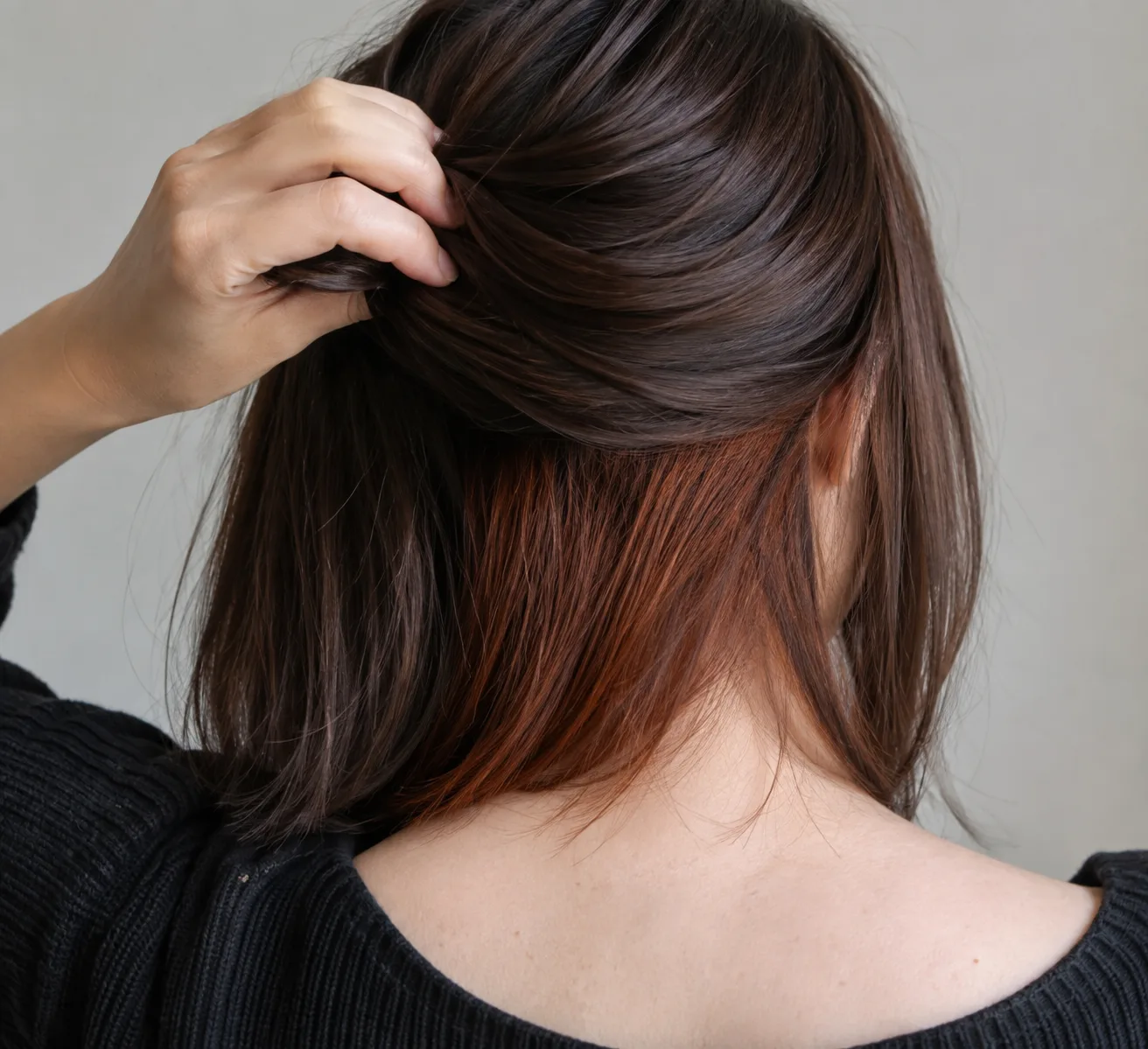
Test how your usual hairstyles expose color
Wear your hair in the styles you actually use during a week: loose, behind the ears, a low ponytail, a high tie, a bun or a clip. Look in a rear mirror or ask someone to take simple back and side photographs. A panel invisible with loose hair may become the dominant color when the nape is lifted into a high ponytail. If you need the color to remain hidden at work or school, test those exact styles instead of assuming the word ‘hidden’ guarantees discretion.
Curls and coils can reveal an underlayer through natural separation even without an updo, while a smooth blunt shape may conceal it more strongly. Wind, humidity and a changed part also alter what shows. The aim is not to control every strand; it is to find an acceptable range of visibility. Record which views you like and which feel too loud. The colorist can adjust panel width, height and side placement after assessing your density and cut.
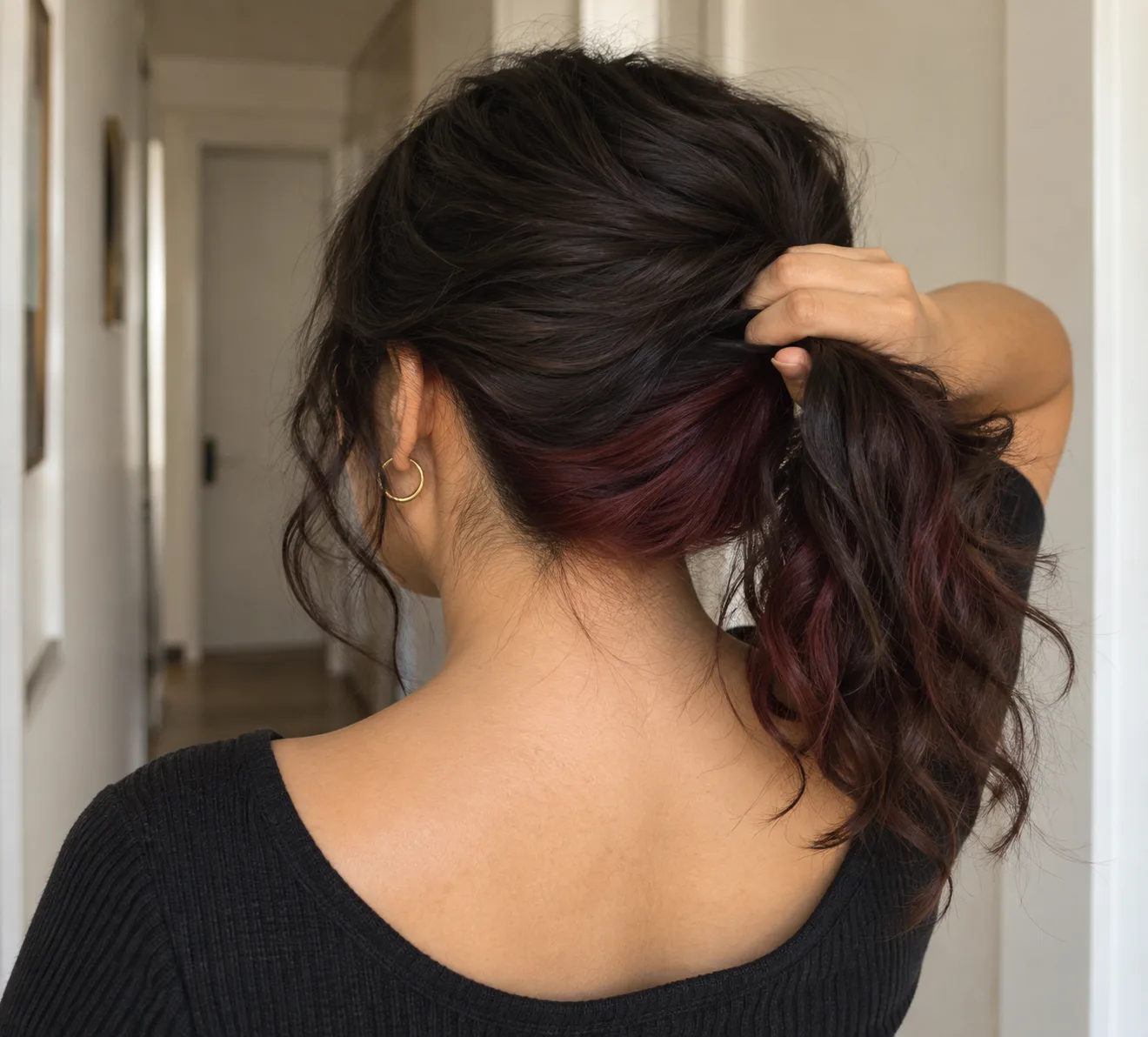
Choose contrast before the exact color
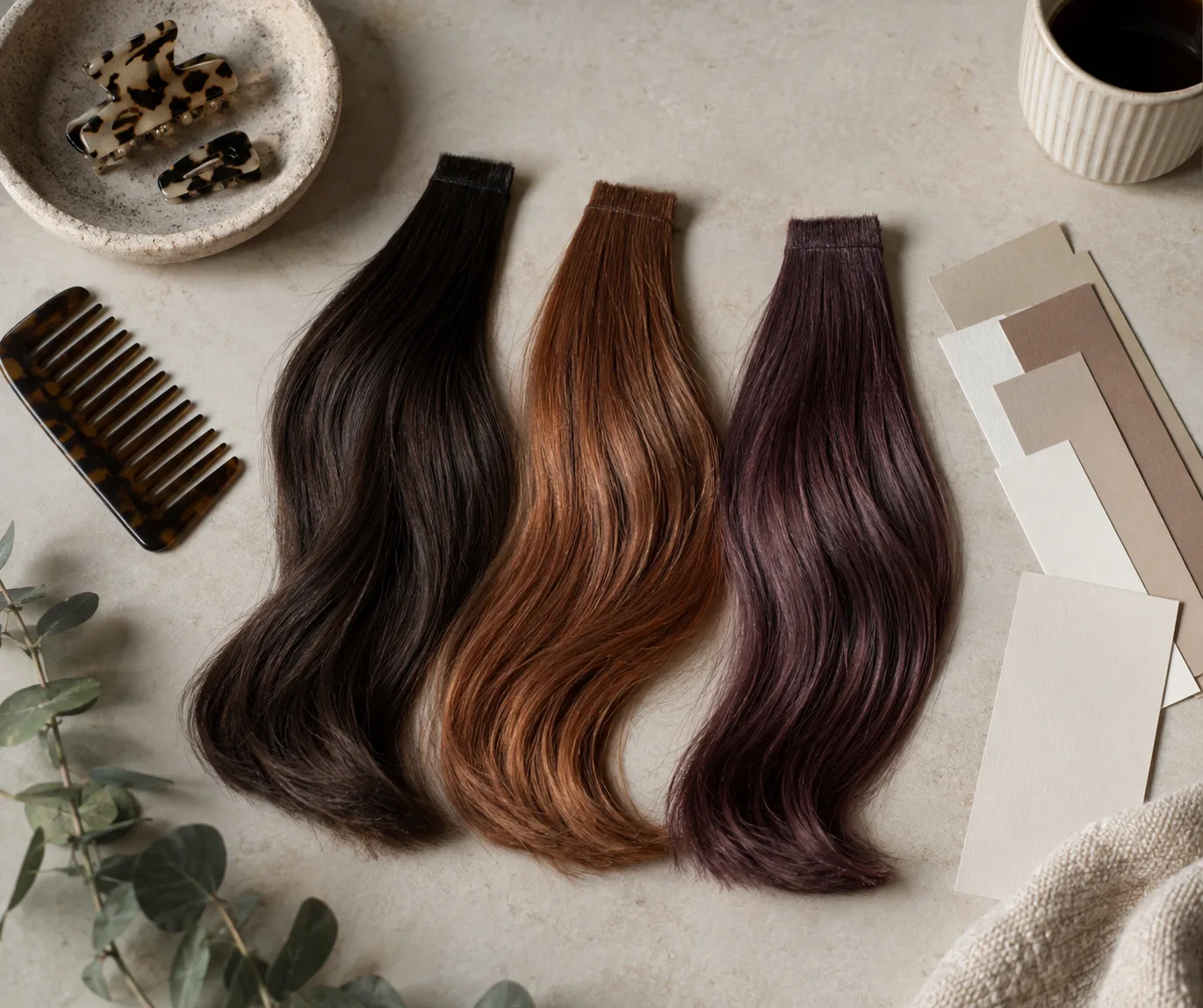
Contrast controls how quickly a peekaboo panel is noticed. A muted plum under dark brown hair creates a quieter change than pale blonde or a highly saturated pink under the same outer layer. Copper beneath medium brown can appear more natural in warm daylight yet distinct when tied up. Rather than deciding from a cropped swatch, place color references beside a photograph of your whole head in neutral daylight and ask how bold the boundary should look.
The starting color underneath matters. Bright or pastel targets on dark hair may require lightening; previous dye and hair condition can change what is achievable or advisable. A preview can help you decide whether a family of shades feels right, but it cannot measure pigment, porosity or the level of lift needed. Keep a preferred direction and one less demanding fallback. Your colorist can explain what each would require on your actual hair and what a safer staged route might look like.
Use one photo to compare placement ideas
Hair Muse can help with the visual part of this decision. Start from a clear, unfiltered front photograph in even light; take a back and side photograph for the salon, because a front-facing preview cannot describe the actual hidden panel. Keep the haircut, face, pose and outer hair color as stable as possible while exploring two broad directions: a small nape or side reveal and a more visible underlayer. Save only results that preserve enough of your face and hair to be useful.
After choosing a visibility level, compare one color family at a time. Do not change panel width, haircut length, texture and color simultaneously or you will not know which difference made the image appealing. Label each saved result with the question it answers: ‘subtle when loose,’ ‘visible near left ear,’ or ‘too much color when tied.’ Hair Muse is free to download; some previews or usage levels may require an in-app purchase. An AI image is a preference aid, not evidence that its exact strand pattern can be dyed.
Account for haircut, layers and grow-out
An underlayer does not exist separately from the haircut around it. Short, high layers can uncover a panel that a one-length cut would cover. Face-framing pieces may expose color close to the cheeks even if the nape remains hidden. A short bob can reveal an underside with every movement, while long heavy hair may hide the same width until it is tied. If you plan a haircut soon, coordinate the shape and color placement in one consultation rather than designing each independently.
Ask how the panel will look after the outer layer grows or the shape is trimmed. A lower section can develop a visible root line when lifted, even if the top layer hides it while loose. Vivid colors may fade, while a lightened underlayer remains a separate base when the deposited tone changes. The idea is not automatically low maintenance just because it is hidden. Discuss whether you would refresh the same panel, change the shade, blend it back, or allow it to grow out.
Keep lightening and dye safety separate from the preview
The American Academy of Dermatology notes that lightening hair several shades can increase damage, so a bright hidden color is still a chemical commitment even when only part of the head is involved. That does not make every underlayer unsafe; it means the route depends on your starting color, chemical history, current condition and target. Tell the colorist about previous permanent color, lightener, henna, straightening and breakage rather than relying on how healthy a picture looks.
The US Food and Drug Administration advises following dye directions and allergy-test instructions, and avoiding dye on irritated or damaged scalp skin. A history of reaction should be raised before a service. Do not use an app image as permission to bleach or dye at home; it cannot assess the skin or hair and does not know the chemistry of the product chosen. Ask the professional what can be done now, what would need stages, and what is better left out.
Bring a placement brief, not just an inspiration photo
Show the colorist your loose-hair, tied-hair and lifted-section photos. Add two useful previews and one real reference that shows an underlayer from behind. Point to the area you want colored, then describe how much should be visible in each everyday state. Say which parting you use, whether you tuck hair behind an ear, and whether you expect the color to remain discreet in a specific setting. These are design constraints a professional can assess.
Ask the colorist to explain panel size, whether lightening is needed, how the upper layer will cover the result, likely upkeep and a fallback if the first choice is not feasible. Before color is applied, have the proposed section clipped and viewed with the rest of your hair down and up. A preview can start this conversation; the final yes or no belongs to the real hair, the chemical history and the visibility you are comfortable living with.