Hidden haircut planning
Nape undercut: keep the length, choose the commitment
A small underneath section changes more than the view with your hair up. Plan coverage, retained density and the route back before choosing the boundary.

A nape undercut can leave your visible length intact while removing a separate area underneath it. That is its appeal, and its central trade-off. The long hair may cover the short section when it falls naturally, yet a ponytail, a different part or a gust of wind can reveal it. Before asking for a hidden cut, decide whether you want a deliberate reveal, less hair at the nape, or both. Those goals do not always require the same boundary.
This guide helps you make that decision with your actual hair, a small visual shortlist and a consultation. Hair Muse can help compare the visible hairstyle on your own photo; it cannot inspect the hair concealed at the back or prescribe a clipper line. We publish this guide as Hair Muse, and separate that planning role from the stylist’s hands-on assessment. The editorial images illustrate decisions, not measured results or instructions for shaving your own nape.
Nape undercut: define the section before the look
Here, nape undercut means a short, disconnected area underneath longer hair at the back of the head. It is not automatically a shaved side, a fade around the whole head or a very short overall cut. A reference labelled undercut might show any of those. Point to the precise area you mean, then describe the hair that must stay long. Keep the shape of the boundary and the length within it as two separate decisions.
Choose your reason in plain language. Perhaps you like the contrast when you lift your hair, want a neater feeling at the neckline, or are considering reducing an underneath section. Do not promise yourself that it will solve sweating, headaches, frizz or a scalp problem. Removing hair changes the arrangement; it is not a treatment. If the aim is only easier styling, ask whether a smaller adjustment could answer it without creating a disconnected grow-out.
Bring pictures of the reveal and the covered hairstyle, not just a decorative design.
Check coverage and the hair you would keep
Look at your hair dry in the state you normally wear. Notice how much falls over the nape and where it separates as you turn your head. A long top section does not necessarily make an underneath cut invisible: sparse areas, existing layers, natural partings and curl movement can change the coverage. Do not measure a proposed boundary from someone else’s ear or assume the same height will hide equally well on you.
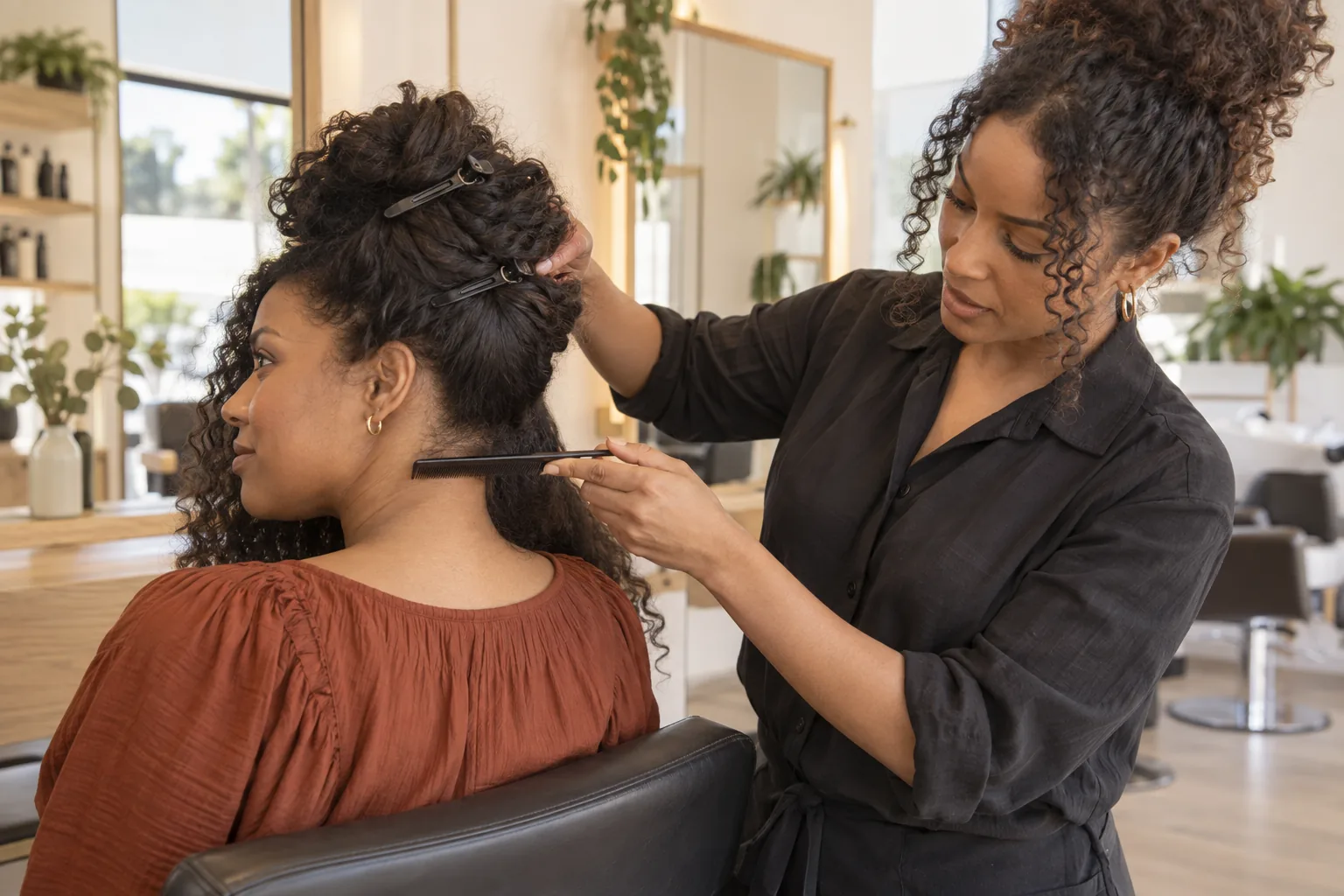
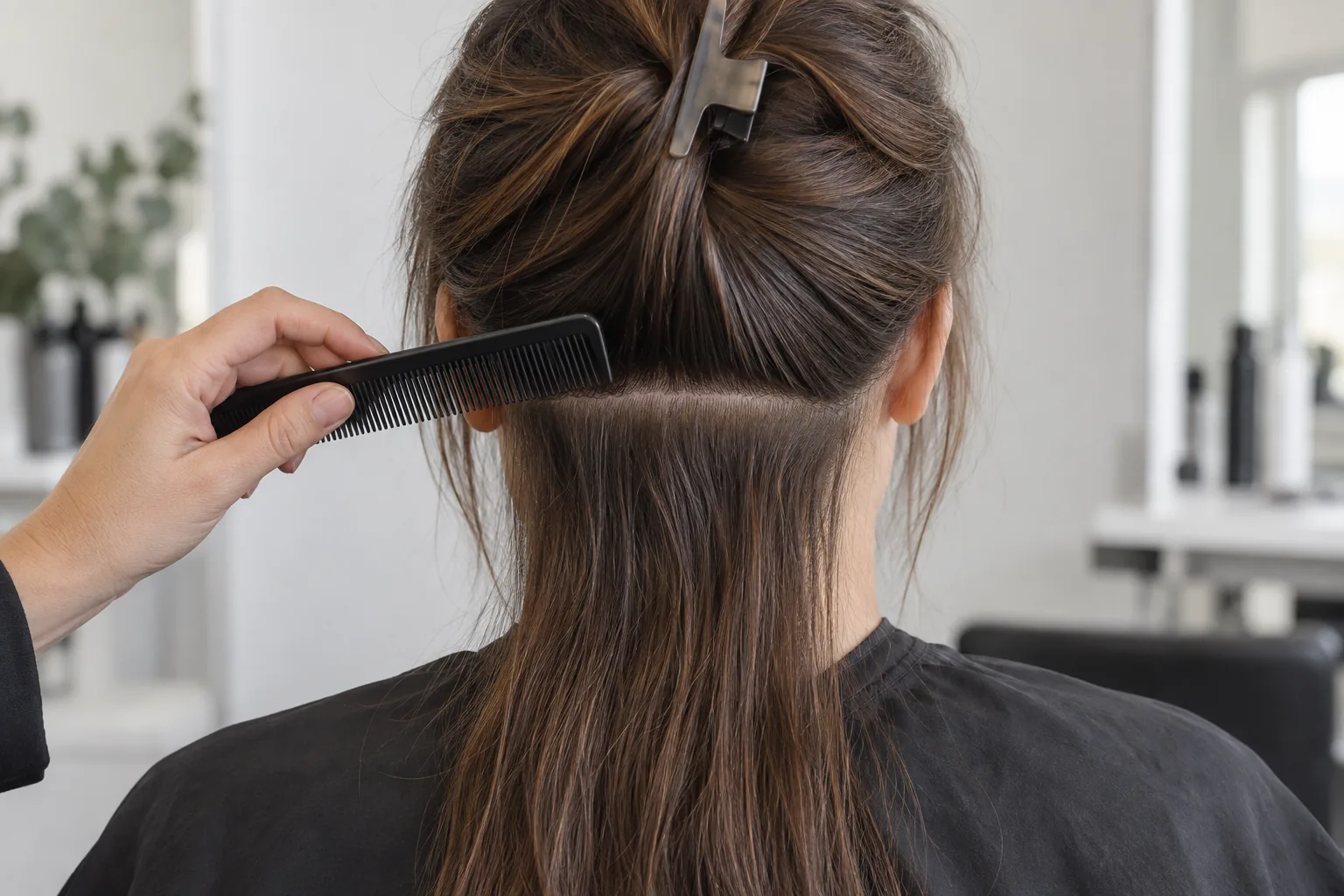
Ask the stylist to section the proposed area without cutting and let the retained hair fall. Inspect the perimeter from behind, then gather a loose ponytail. This is a practical consultation check, not a perfect simulation of removed hair. The clips and held section can themselves alter the fall, so release and repeat rather than treating one arrangement as proof. The important question is whether the remaining hair still supports the outline you want.
Mention ends that already look less full than you prefer. Reducing an underneath area and adding extensive layers above it are changes that can compound.
Test the ordinary moments that uncover the nape
List the ways you wear your hair during an ordinary week: down, loosely tied, clipped up, behind a scarf, or lifted to cool your neck. Check those arrangements from the side and back with a mirror or a helper’s photograph. Move gently rather than pulling the hair tight to make the proposed section look tidy. Coverage that works only when you hold everything perfectly still may not match your routine.
A low ponytail and a high bun reveal different areas. So can a half-up style, a changed part and hair moved forward over both shoulders. If remaining discreet matters at work, explain the actual requirement rather than relying on the word hidden. No stylist or photo app can guarantee concealment in every movement, lighting condition or hairstyle. You might prefer a smaller section, a longer clipped finish, or no undercut after this check.
Keep ties comfortable. The American Academy of Dermatology warns that repeated pulling from tight hairstyles can cause hair loss. Loosen a painful style; persistent irritation or hair loss needs professional advice, not a tighter tie to hide the boundary. Our hair-up guide offers a broader way to assess the lengths you need for everyday arrangements.
Use a preview for visible shape, not an invisible line
Choose a clear, front-facing photograph in even light, with the whole hair outline visible. In Hair Muse, compare the longer hairstyle you intend to retain: the same approximate length with a fuller or softer outline, for example. Keep the color and fringe direction stable so you can identify what you like about the shape. Save one or two useful candidates rather than collecting many unrelated transformations.
A front photo has a crucial blind spot here. It does not show the hidden nape, its density or the proposed parting. An AI-generated back view would not become a measured view of your actual head. Do not use a preview to choose the height, millimetres, symmetry or skin exposure of the undercut, and do not infer a dedicated nape-planning feature from an attractive output. Those decisions belong in the real consultation.
Keep a normal, unedited back photograph alongside the preview and label the two roles in your notes: visible hairstyle direction and current nape evidence. The app is available for iPhone and iPad and is free to download, while some usage may require an in-app purchase. A useful shortlist narrows a conversation; it does not approve the haircut.

Set an upkeep plan without inventing a universal interval
Ask what maintaining your chosen finish would involve: cleaning up an edge, shortening the whole panel or leaving some natural regrowth. These are not interchangeable appointments. A sharp design and a softly clipped section have different visual thresholds for looking changed. Discuss what you can realistically book, how long the visit takes and its current cost with the salon rather than borrowing a schedule from a social-media caption.
Start with a finish whose regrowth you are willing to see. Very short hair exposes more of the skin and makes a small length change noticeable, but that does not mean every undercut needs the same refresh frequency. Avoid chasing a perfectly fresh line by expanding the boundary a little each time. Ask the stylist to record the agreed area so maintenance does not quietly become a larger haircut.
Hair Muse’s hairstyle feature can help compare the visible long section. Real photographs, not saved previews, record your underneath boundary and its regrowth.
Plan the exit while the choice is still reversible
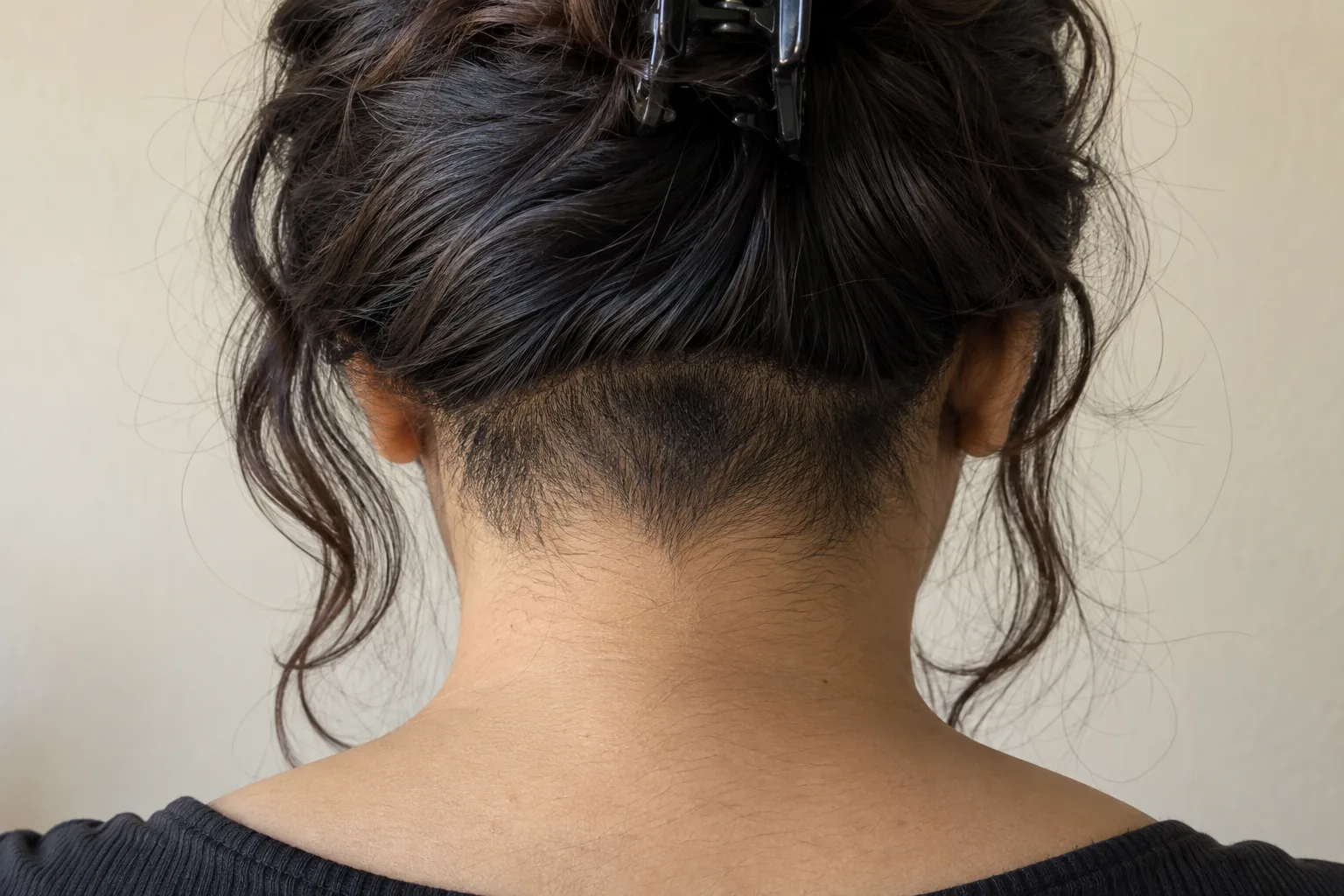
Growing out an undercut means allowing the short section to gain length; repeatedly clipping that same section maintains it instead. Decide which outcome you want before booking the next tidy-up. You may keep the top long for coverage while the nape develops, or eventually choose a shorter connected shape. Neither route has a universal completion date, because the target length and starting boundary matter as well as individual growth.
Short regrowth may stand differently from the longer hair above and not yet fit into your usual tie. Avoid tight pulling or heavy heat to make it disappear. Ask for a transition review if needed, specifying that you want to preserve progress rather than reset the panel to its original short length.
Write the trade-off down now: keep long coverage and wait, shorten the top later, or continue maintaining the contrast. You do not need to select a future haircut today, but you should know what would make you change course. Do not cut the long section simply to make every part equal unless that new length is a choice you genuinely want.
Account for skin exposure and everyday comfort
When hair is lifted, the newly exposed area becomes part of your ordinary skin-care and sun-protection routine. Do not assume a few short hairs provide reliable sun cover. The AAD advises broad-spectrum, water-resistant SPF 30 or higher on exposed skin and regular reapplication outdoors. Clothing or a suitable hat can add coverage; check what actually covers the nape rather than relying on the brim alone.
Tell the stylist about existing irritation, cuts or sensitivity before a close finish is considered. Do not shave over an irritated area to make the outline clearer or try to diagnose it from an image. Seek appropriate medical advice for persistent symptoms. Hair Muse cannot assess skin, recommend a safe cutting depth or identify why the nape feels uncomfortable.
Check contact with collars and scarf edges. You do not have to choose skin shaving or decorative lines for the style to count as an undercut.
Leave the consultation with a boundary, not just a name
Bring the small preview shortlist, your actual back and side photographs, and the two reference views. Explain what remains long, when the short area may show, how close you want the finish and what maintenance you can accept. Ask the stylist to demonstrate the proposed boundary and release the surrounding hair before you agree. A photograph is a starting point; the shared verbal description makes the request more specific.
Pause if the plan depends on guaranteed invisibility or a preview that supplies hair you do not have. A consultation need not end with a cut. Confirm which area is being shortened and whether the long perimeter is also changing. Our salon-preview guide explains how to hand over a direction without presenting a technical instruction.
The final decision should sound ordinary: I like this reveal, I understand the hair being removed, and I can live with the upkeep and grow-out. If one of those statements is missing, keep the idea as a reference for now. Keeping your current haircut is a complete decision, not an unsuccessful preview session.