

Layered haircuts
Plan a hush cut around the ends you want
Choose the softness of the layers, the front length and the outline you want to keep before taking a visual reference to the salon.

A hush cut can look appealing because the hair seems to move without losing its overall length. The difficult part is deciding how much of that airy finish you actually want. A soft outline in a photograph might come from shorter layers, carefully styled ends or both. If you want movement but dislike a see-through bottom edge, make that distinction before choosing a haircut reference.
Start with the hair you wear on an ordinary day. Identify the lower outline you want to keep, the front sections you are willing to shorten and the styling you would repeat. Hair Muse can help you explore a visual direction on your own photo, then narrow the conversation with a stylist. It cannot measure how much hair will remain in the ends or predict how the layers will settle after washing.
A hush cut needs a clear idea of softness
The name usually points toward connected, airy layers and a soft frame around the face. It does not specify one compulsory fringe length, a fixed number of layers or an identical shape for everyone. The Hive Salon, for example, describes a long layered version with feathered sections and face-framing movement. Use that description to identify the features you like, rather than treating a name as a complete cutting instruction.
Separate three things in each reference: the shortest visible front section, the lengths over the shoulders and the density of the bottom edge. A picture can have a light fringe while keeping a relatively substantial perimeter. Another can have similar front movement but much more separated ends. Those are different requests even when both pictures carry the same style label.
Style names overlap with shags, wolf cuts and butterfly layers. Instead of arguing over which label is correct, point out the actual contrast you want to avoid: a strong shelf, a very short crown or widely separated lower strands. This keeps your request specific without requiring you to diagnose the cutting technique.
Decide what should remain at the bottom
Look at your current ends against a plain top in ordinary daylight. Notice where the outline is still easy to see and where it already separates into fine wisps. You are recording a starting point, not testing whether your hair passes a density rule. Do not stretch the hair or sweep it all forward to make the edge look different from its usual fall.
Tell the stylist whether you prefer a softly defined bottom line or a deliberately feathered finish. Schwarzkopf's guidance on fine hair notes that excessive layering can make ends appear thinner. Treat that as a reason to discuss the amount removed, rather than a universal ban on layers or a rule that everyone must choose the same length. Your existing cut and texture still matter.
Preserving overall length does not mean leaving every strand long. Creating a layer shortens some sections, even if the longest point stays in place. If you want almost no change through the lengths, say so before agreeing to an airy reference. The separate guide to blunt ends and soft layers can help you name the outline you want to retain while discussing this particular style.
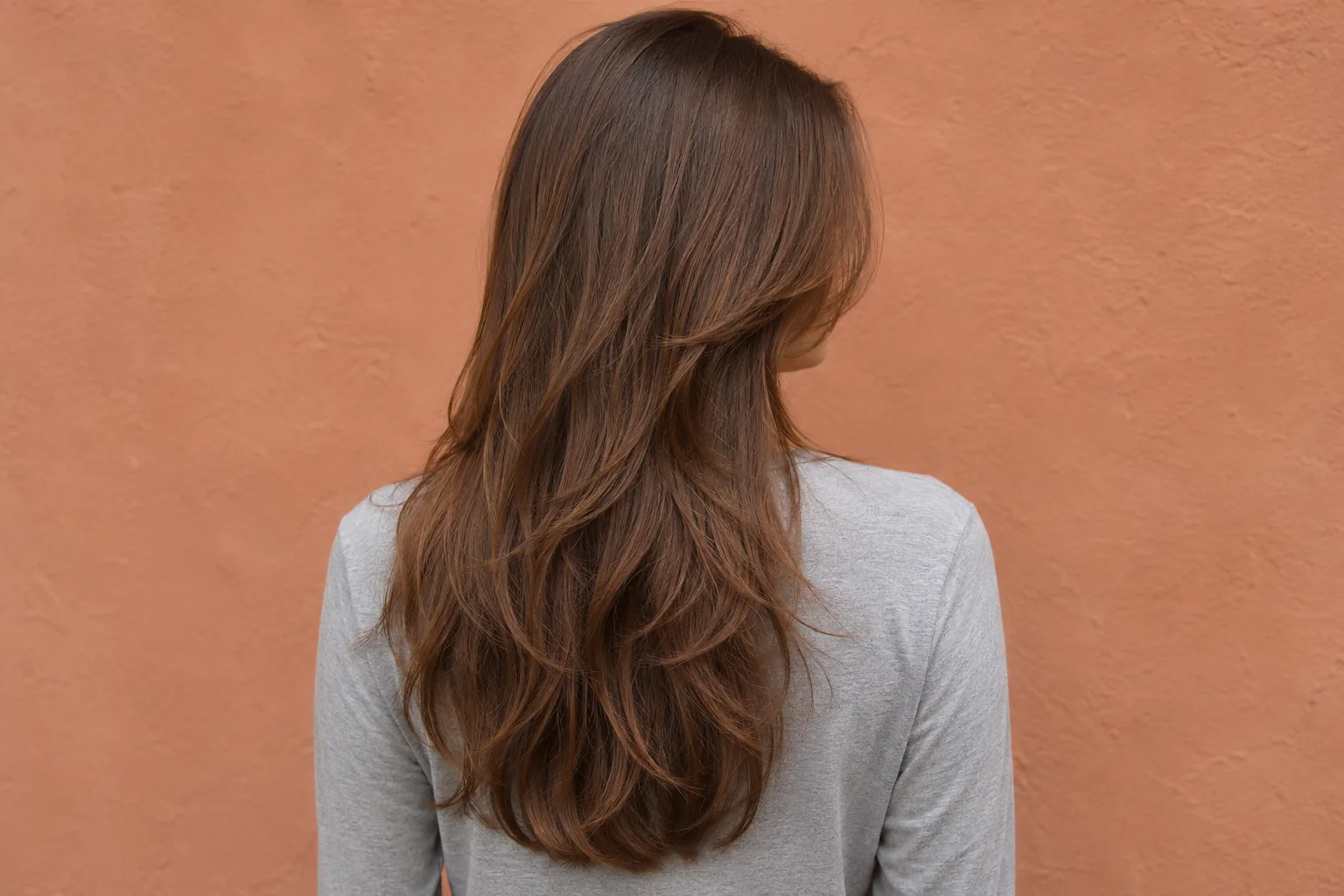
Separate the fringe from the face frame
A floating fringe above the eyes and longer pieces beside the cheeks do different jobs. Decide whether you want hair across the forehead at all, then discuss where the front sections would end when dry. Point to an understandable landmark on yourself, such as the cheek or jaw, and ask the stylist to show the proposed position before cutting.
Check everyday movements. Read, put on your glasses and tuck one side behind an ear as you normally would. Would a shorter section fall back across your face? Would you miss the length that currently stays behind the frame? These observations are more useful than choosing a fringe solely because it matches the bookshop portrait or another attractive reference.
Keep the transition into the longer side part of the same conversation. You might want a light opening around the face without shortening a broad area through the sides. Our guide to face-framing starting points explores that first landmark separately. For a hush-inspired result, also ask how that short section will connect to the longer hair you intend to keep.
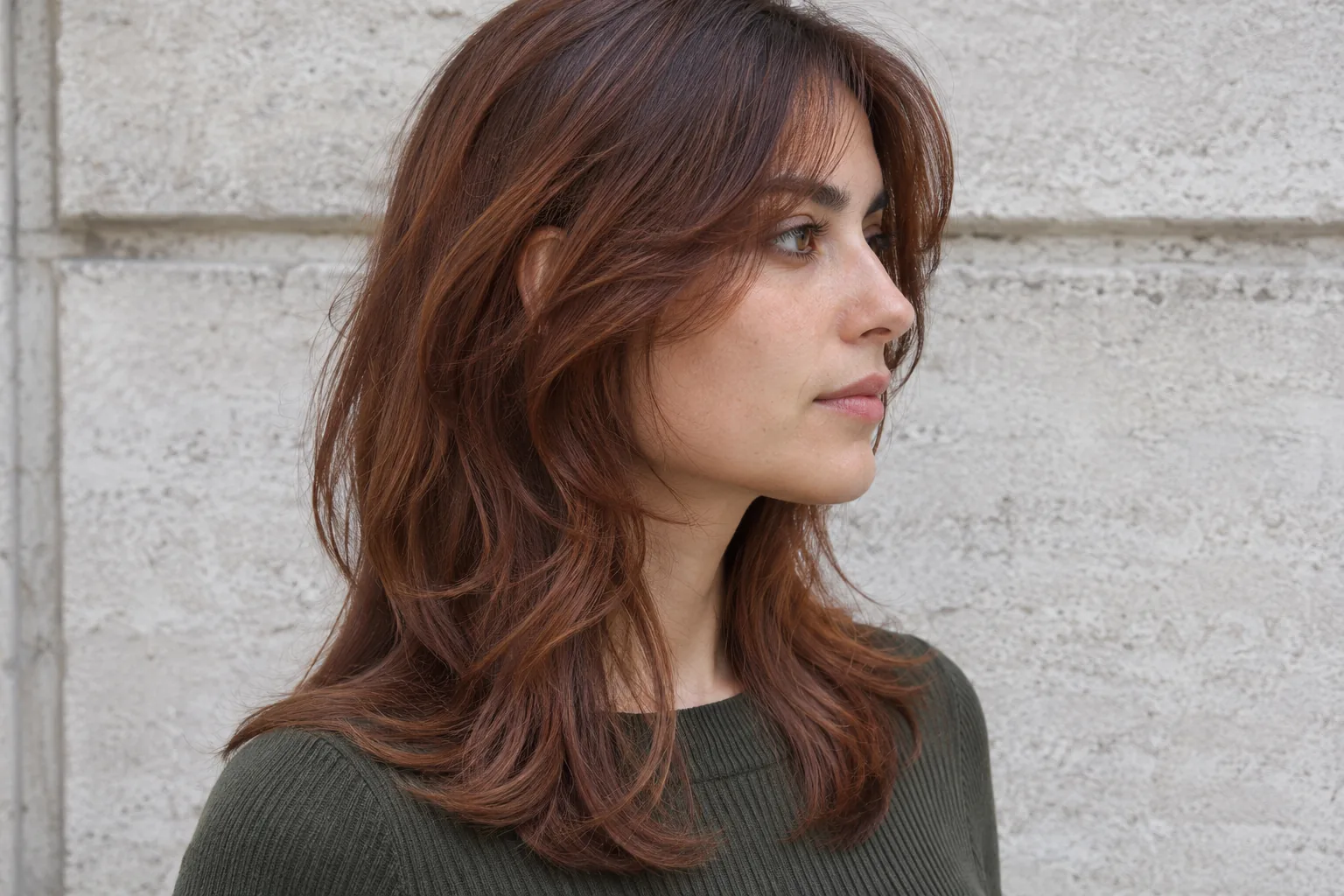
Read the texture in your own dry hair
Observe your normal dry fall before arranging a special photograph. Notice where a bend begins, which side turns outward and whether the front separates by itself. A smooth reference with curled tips may conceal the amount of styling behind its finish. A deliberately tousled image can conceal the outline just as easily. Ask to see what features are actually produced by the cut.
For wavy or curly hair, judge the end positions with the texture released. Do not use a stretched section as the sole measure of a shorter layer. Ask how the proposed shape accounts for the way your own sections spring up and group together. A photograph of someone else's curl pattern gives you an aesthetic reference, not a transferable set of cutting lengths.
Describe the result you want in visible terms: a softer front, less bulk at a particular side or an edge that still reads as full. Avoid translating every wish into a technique you found online. The stylist can assess the construction in person. This is especially useful when your existing haircut already contains short sections that a front photograph does not reveal.
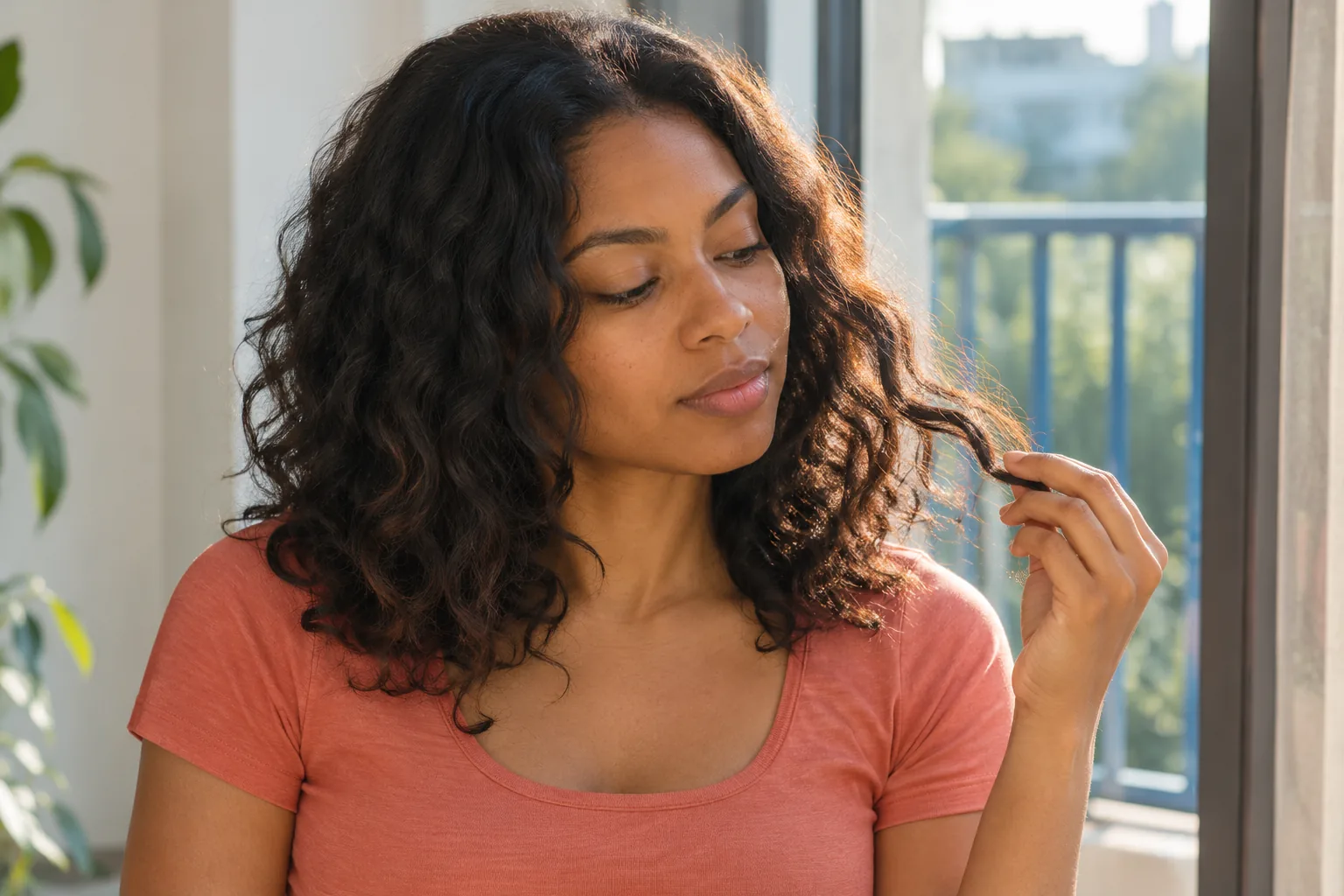
Check the routine behind the finished picture
List what you realistically do after washing. Perhaps you let the lengths dry naturally and spend a little time shaping the front. Perhaps you already use a brush and dryer. Neither routine is automatically better. The useful question is whether the reference depends on a finish you would enjoy repeating, including the ends that turn inward or flick outward.
Ask which part of the proposed cut would need the most attention on a normal morning. If the answer is the fringe, decide whether a fringe is essential to your idea of the style. If the answer is the entire perimeter, consider whether you prefer a less feathered direction.
Include the days between washes in the discussion. Think about what happens after sleeping, wearing a hood or tying the hair back. You cannot reproduce a future haircut by moving your current hair around, but you can identify habits that matter. Tell the stylist when a shorter front or extra loose pieces would interfere with what you already do.
Give a Hair Muse preview one question to answer
Use a clear current photo with your full head and ends visible, an ordinary expression and even light. Follow the photo guide if the face or hair is hidden. Keep the original nearby as your baseline. Choose an available layered direction that helps you explore the outline; do not assume the app has an exact hush-cut preset or a control for every individual strand.
Start with one question, such as whether you prefer a fuller lower edge beneath a lighter face frame. Keep colour and other choices as consistent as the available options allow. If a generated image also changes the part, texture or face substantially, avoid reading it as a clean comparison. Keep at most two useful results, with a short note about the particular feature you liked.
The image can help you communicate a preference. It cannot inspect your density, show hidden sections, calculate the amount a stylist should remove or test next-morning styling. Hair Muse is free to download, while some previews or usage may require an in-app purchase. Use the visual only if it clarifies a real decision; an ordinary reference and a careful consultation remain useful on their own.
Agree what stays before the scissors come out
Bring a current photo, one or two references and your brief notes. Show the lower outline first if preserving that edge is your priority. Ask the stylist to indicate the shortest proposed section and the areas that would become lighter. Check both side and back views rather than assuming that a flattering front view describes the whole cut.
Explain how the choices fit together. For example, you might want the longest ends to remain below the shoulders, a soft front beginning around the jaw and enough length at the sides to tuck back. That is a hypothetical brief, not a recipe for every reader. Your stylist may suggest a different starting point after seeing the actual hair and its existing layers.
Ask what the agreed shape should look like without a fully styled finish and which features might need adjusting at a later visit. Request a clear explanation of any change from the reference before it is made. If you cannot agree on how much fullness should remain, pause that decision instead of treating the digital picture as permission to remove more hair.

Choose a first step you can review
You do not need to settle every detail from a trend name. You might keep the back more substantial and begin with a modest front change, or decide the full feathered outline is what you want. Discuss the trade-off openly. Starting conservatively can preserve options, but it cannot guarantee that any later correction will be simple or that short sections will grow back quickly.
After the appointment, compare the result with the brief on an ordinary wash day. Note which sections fall comfortably and which ask for more attention than expected. Use those observations for the next conversation rather than repeatedly changing your goal to match new inspiration pictures. A useful choice is one you can describe, maintain and review in your actual routine.
- Name the lower outline you want to keep.
- Agree the shortest front section separately from the fringe.
- Explain your usual dry texture and styling habits.
- Treat generated images as preferences to discuss, not cutting measurements.