
Swimming hair care
How to protect hair from chlorine before and after swimming
A practical pool routine: wet your hair first, limit exposure, rinse promptly and care for the hair you actually have.
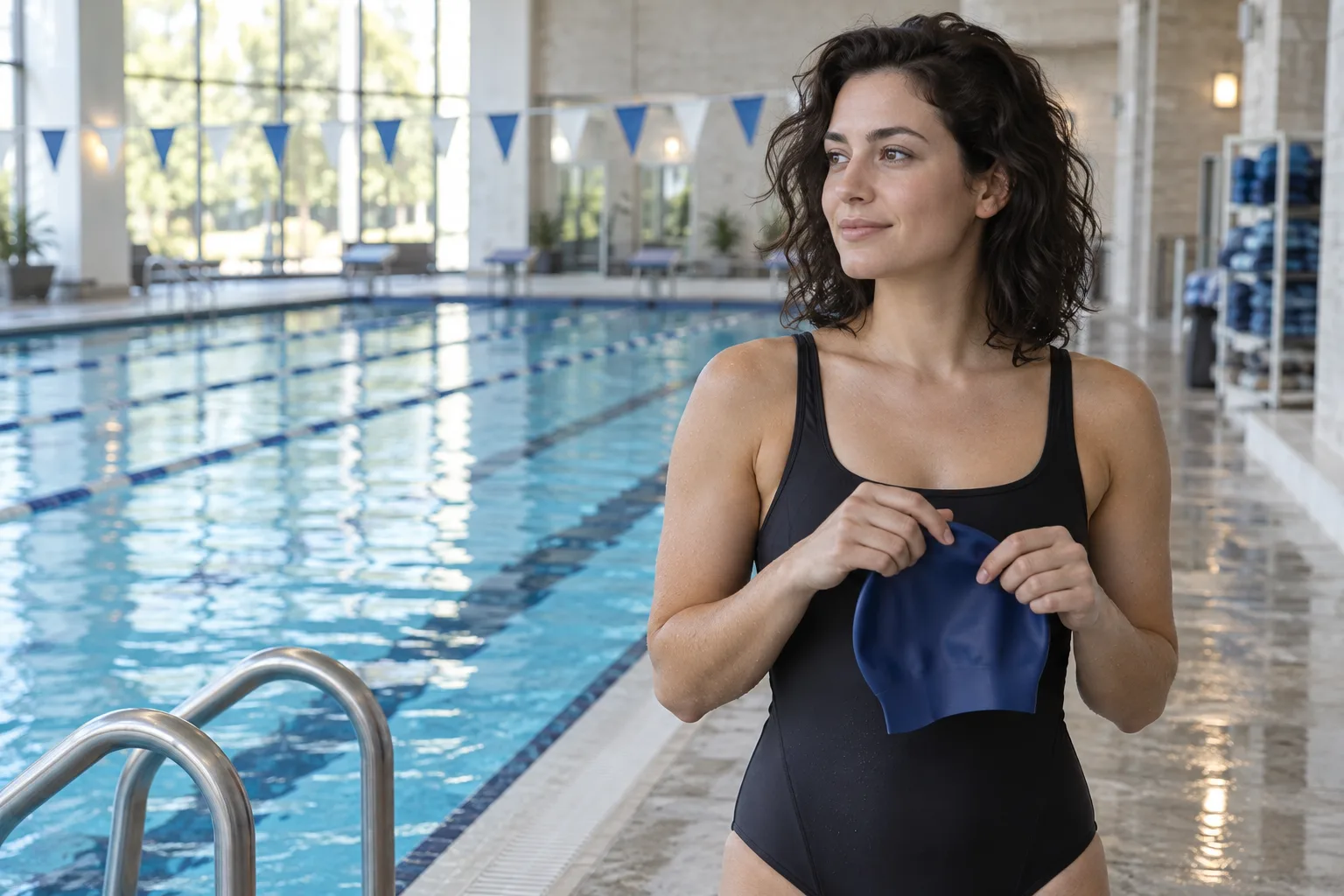
The hardest part of a swimming hair routine is that the damage is easy to notice only after several visits: hair feels rough, tangles faster, or color looks different under the bathroom light. If you are wondering how to protect hair from chlorine, you do not need an elaborate shelf of special products. You need a sequence you can repeat at the pool: fresh water before you enter, a sensible way to reduce exposure, and a prompt rinse afterward.
This guide is about reducing repeated exposure and managing dryness, not promising waterproof hair. A swim cap can leak, a product cannot turn hair into a sealed surface, and a single rough day does not diagnose the cause of breakage. Pool maintenance, hair texture, color treatment and how often you swim all matter. Start with the simplest steps, watch how your own hair responds, and ask a qualified professional if symptoms persist rather than treating a cosmetic routine as medical care.
How to protect hair from chlorine: start before the pool
Rinse your hair thoroughly with clean water before swimming. Hair that has already taken up fresh water may absorb less pool water than completely dry hair, although that does not make it impermeable. Pay attention to the lengths and ends, not only the scalp, and avoid stepping straight from the locker room into the pool with dry hair. This one-minute step is easier to repeat than a complicated treatment you will forget on a busy day. The American Academy of Dermatology also advises a swim cap and rinsing immediately after swimming.
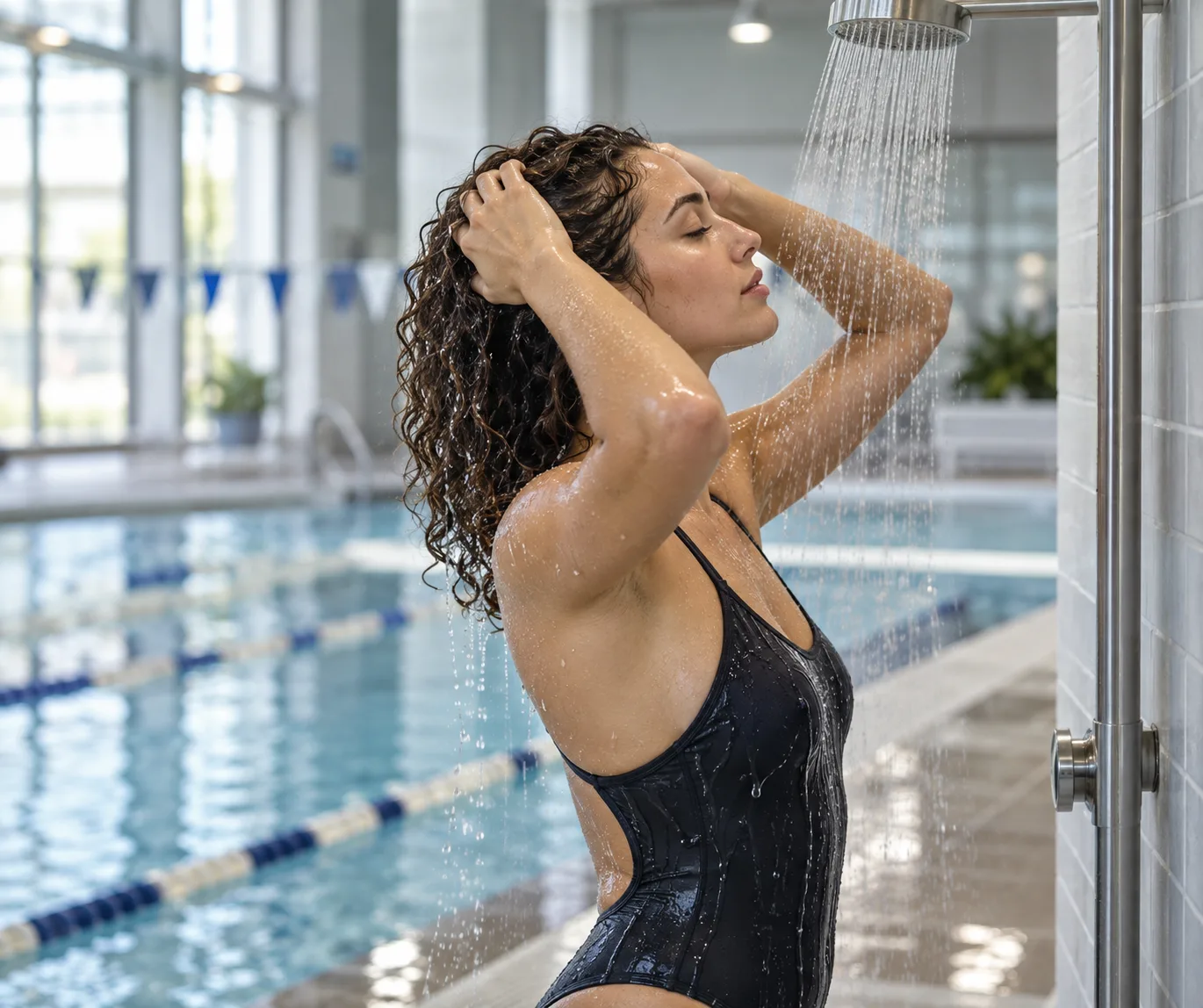
If you have long hair, gather it loosely before putting on a cap. A low braid or soft twist keeps strands from drifting into your face and reduces mechanical tangling. Do not pull the hairline tight or trap a hard clip beneath the cap. Detangle gently before you wet your hair so you are not trying to undo a knot with wet, fragile strands later. If the cap irritates your scalp or catches the ends, adjust the fit rather than forcing it into place. Preparation should make swimming easier, not painful.
Choose a cap for fit, not for a false promise
A well-fitting swim cap can reduce direct contact and keep hair together, especially during repeated laps, but it does not guarantee dry hair. Water can enter around the hairline and neck. Try the cap before a long session and check that it stays in place when you turn your head. Tuck loose lengths inside without folding them into a tight knot. If you are between sizes, comfort and a secure edge matter more than a claim on packaging. A cap that pulls at the temples or slips constantly is unlikely to become part of your routine.
If you cannot wear a cap, the rest of the routine still helps: pre-wet, avoid leaving hair submerged unnecessarily, then rinse. Do not let a missing cap become a reason to skip swimming or to believe you have failed at hair care. People who swim every day may need a more attentive wash-and-condition pattern than occasional swimmers, but the foundation remains the same. Notice whether your hair is rough immediately after a session or only after several weeks; that difference can help you and your stylist decide what to change.
Rinse promptly when you leave the water
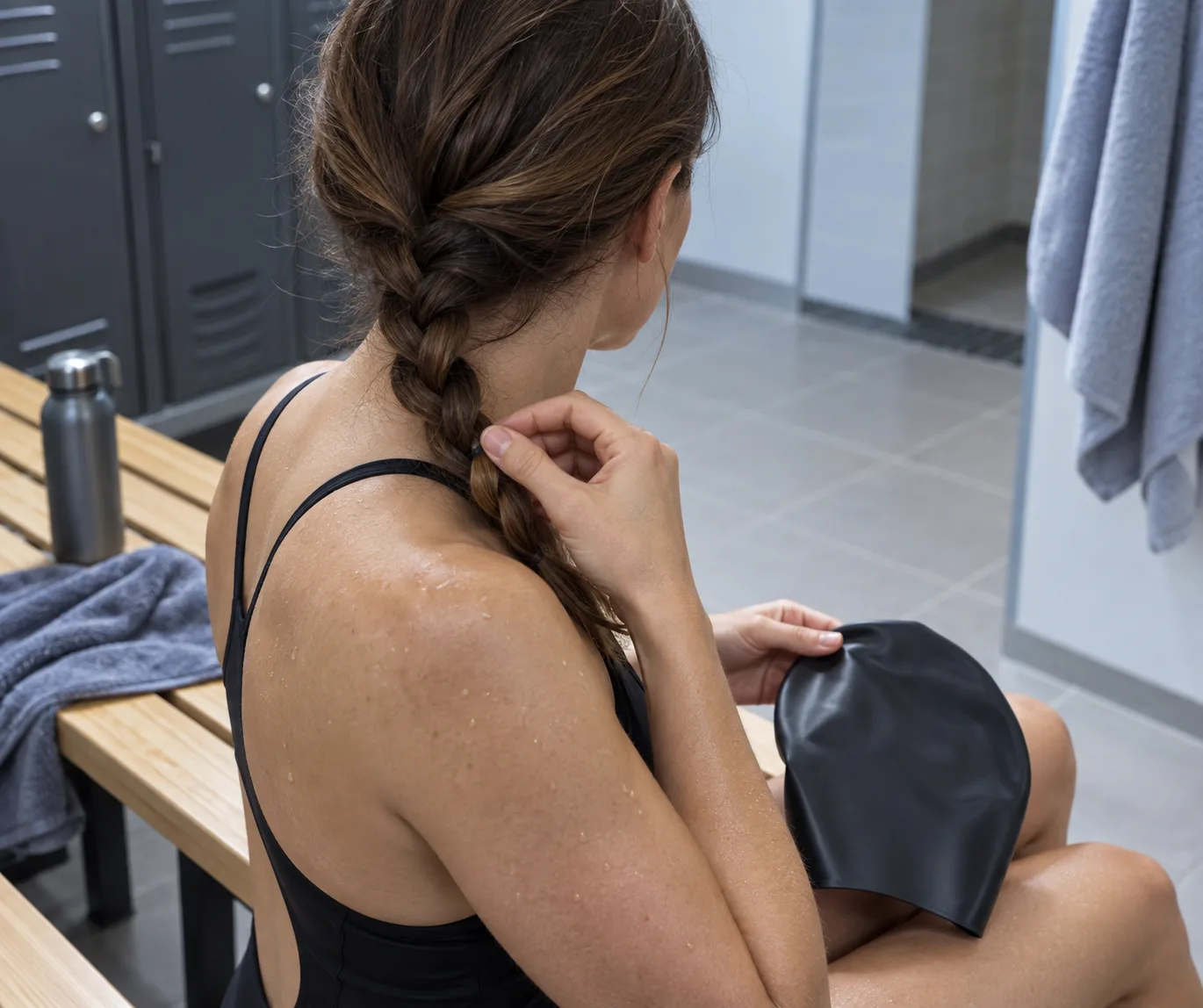
Use the pool shower before your hair dries with pool water on it. Let clean water run through the scalp, under the outer layer and along the ends. A quick splash over the top may leave the inner hair wet with pool water, especially if it was braided or covered. Undo the braid carefully, loosen the cap and give the lengths time under the stream. You do not need to scrub hard; the purpose is to remove what you can before it stays on the hair during the trip home.
Pack a small towel and leave enough time to rinse even when your swim ends near closing. If there is no suitable shower, rinse thoroughly as soon as you get home rather than leaving a damp cap on for hours. Cleveland Clinic's dermatologist guidance similarly emphasizes fresh water before swimming and a rinse soon afterward, followed by gentle cleansing and conditioning as needed. The advice does not promise a complete chemical shield. It is a practical exposure-reduction routine that can be adapted to your schedule.
Cleanse gently without overcorrecting
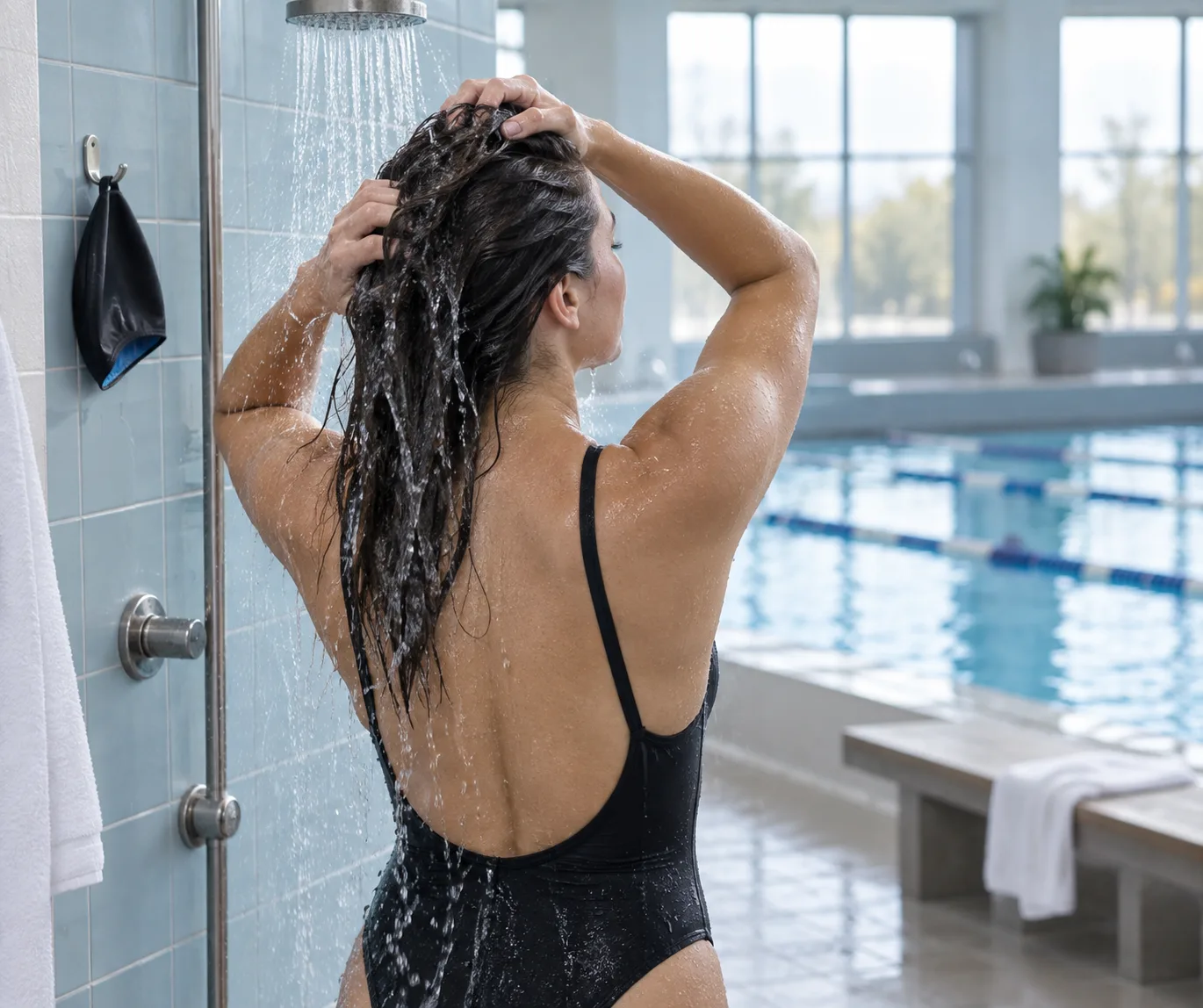
After a swim, choose a shampoo and conditioner that leave your scalp comfortable and your lengths manageable. Work shampoo into the scalp with fingertips rather than rubbing the ends together, then let the rinse carry it through. Apply conditioner mainly where the hair tangles or feels dry and follow the product's directions. You do not have to use a strong clarifying shampoo after every dip. Frequent aggressive cleansing can add to the dry feeling you were trying to solve, particularly on already porous or color-treated lengths.
An occasional clarifying wash may be useful if products or pool minerals leave noticeable buildup, but use it according to the product label and your hair's response. If your scalp becomes itchy, tight or flaky, stop layering new products in the hope of guessing the right one. A dermatologist can help distinguish irritation from other conditions. For ordinary tangles, first try a consistent rinse and gentle conditioner for several swims before buying more treatments. Change one part of the routine at a time so you can tell what actually helps.
Detangle and dry with less friction
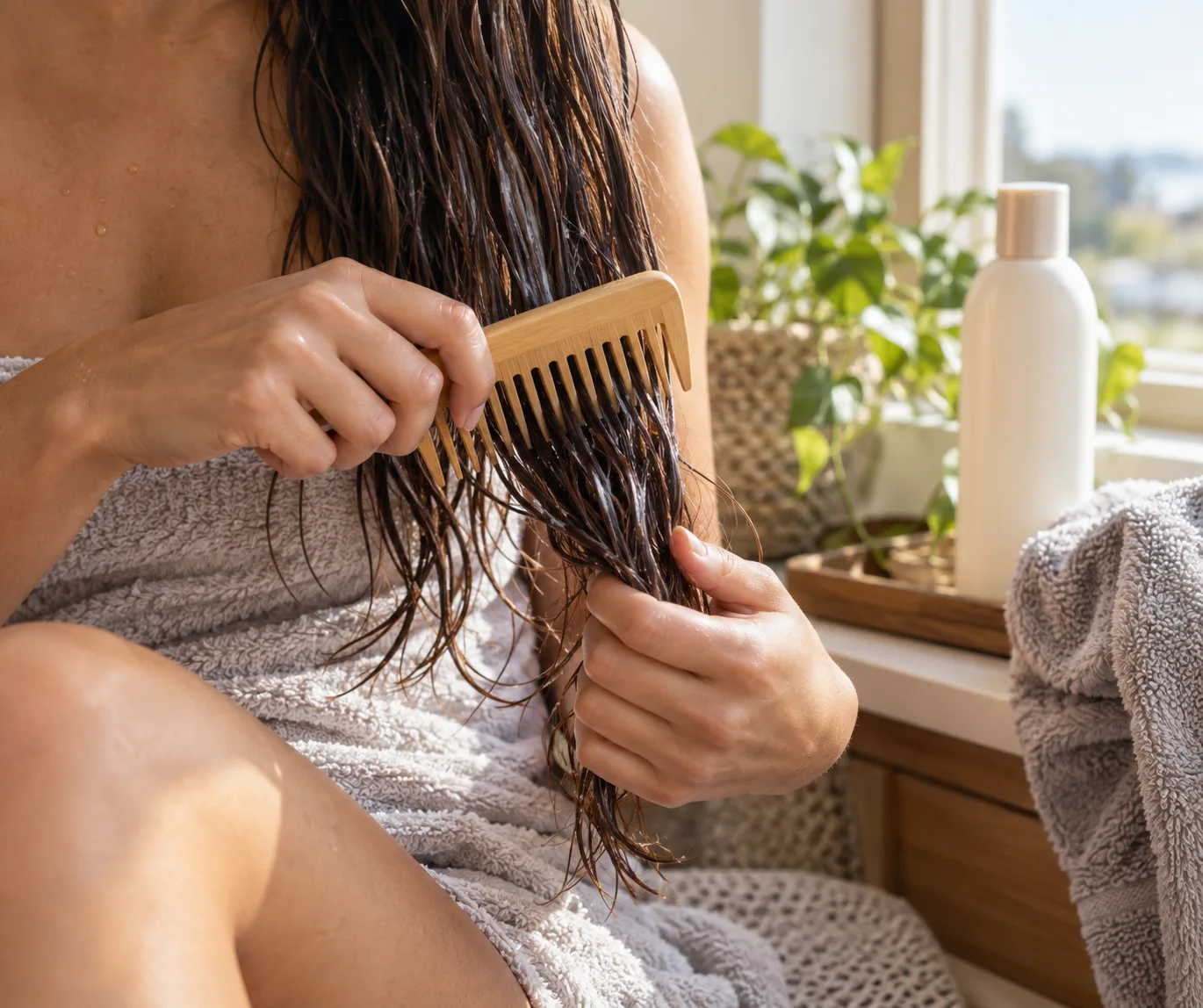
Wet hair can be easier to stretch or snag, especially at the ends. Squeeze water out with a towel instead of twisting or rubbing the whole length. Apply the conditioner or leave-in product that already works for you, and use fingers or a wide-tooth comb from the ends upward. Hold the section above a knot so the pull is not concentrated at the roots. You do not need to make every strand perfectly smooth while it is still dripping. A patient five-minute detangle is usually more useful than forceful brushing.
Let the hair dry in a way that suits its texture and the weather. If you use heat, keep the tool moving, choose a moderate setting and avoid repeatedly drying the same section. Do not wrap wet hair tightly under a cap for the rest of the day. For curls, preserve the shape with gentle handling; for fine hair, avoid piling heavy product onto the scalp merely because the ends feel dry. The goal is to reduce friction and restore manageability, not to erase all natural texture after every pool visit.
Take extra care with colored or lightened hair
Color-treated hair may be more vulnerable to dryness and visible tone changes, particularly if it has been lightened. Pre-wetting, a comfortable cap and a prompt rinse are worth making habitual before a planned color appointment as well as afterward. Ask your colorist whether your particular treatment needs a waiting period before swimming; do not rely on a universal number of days from social media. If you are planning a new shade, discuss how often you swim before choosing the service and maintenance schedule. A photograph or digital preview cannot predict how pool water will affect your actual color.
A green cast on light hair is often linked to copper or other minerals in pool water rather than chlorine alone. Do not attempt to correct a dramatic tone change with harsh kitchen remedies or repeated strong washes. Show your colorist a clear daylight photograph and explain when the change appeared. They can assess whether buildup, fading or another cause is likely and recommend an appropriate correction. Our color-planning guide helps frame the conversation before a major change, but real hair chemistry and pool conditions require a professional judgment.
Adapt the routine to how often you swim
An occasional swimmer can often focus on the three anchor steps: wet, cap if comfortable, rinse. Someone swimming several times a week should also watch the scalp, ends and breakage over time. Keep the products simple enough to carry and repeat. Make a note after two weeks: how much tangling occurs, whether your scalp feels comfortable, and whether the lengths look different in the same natural light. Those observations are more useful than judging the hair under changing locker-room lights or switching five products at once.
If your hair has a protective style, extensions or a dense curl pattern, plan extra time for water to reach and leave the inner sections. Do not assume the outside feels rinsed means the whole style is rinsed. Ask the professional who installed the style which cleansing and drying method is safe for it, particularly if it takes a long time to dry. For very short hair, scalp comfort may matter more than detangling. The routine should respond to your hair and swimming frequency rather than making every swimmer follow an identical checklist.
Know when routine care is not enough
Persistent burning, scaling, unusual shedding or significant breakage is not a problem to solve with another bottle of conditioner. Stop any product that seems to aggravate the scalp and ask a dermatologist or other qualified clinician for advice. A stylist can assess cosmetic damage and a suitable cut or color plan, but cannot diagnose a skin condition. If the pool itself seems unusually irritating, speak with the facility about water maintenance rather than making assumptions about the exact chemical level from the way your hair feels.
The realistic outcome is not hair that never gets wet or never changes texture. It is a repeatable routine that makes swimming compatible with hair you can manage comfortably: fresh water first, less tangling and exposure where practical, a thorough rinse, then gentle cleansing and conditioning. If a step makes you dread the pool, simplify it. A consistent modest routine is more useful than an impressive product stack you cannot carry, and it leaves room to enjoy the reason you went swimming in the first place.