Men’s haircuts
Curtains haircut: choose the front and sides
Plan the front drop, temple connection and dry fall before choosing a reference for your next salon visit.
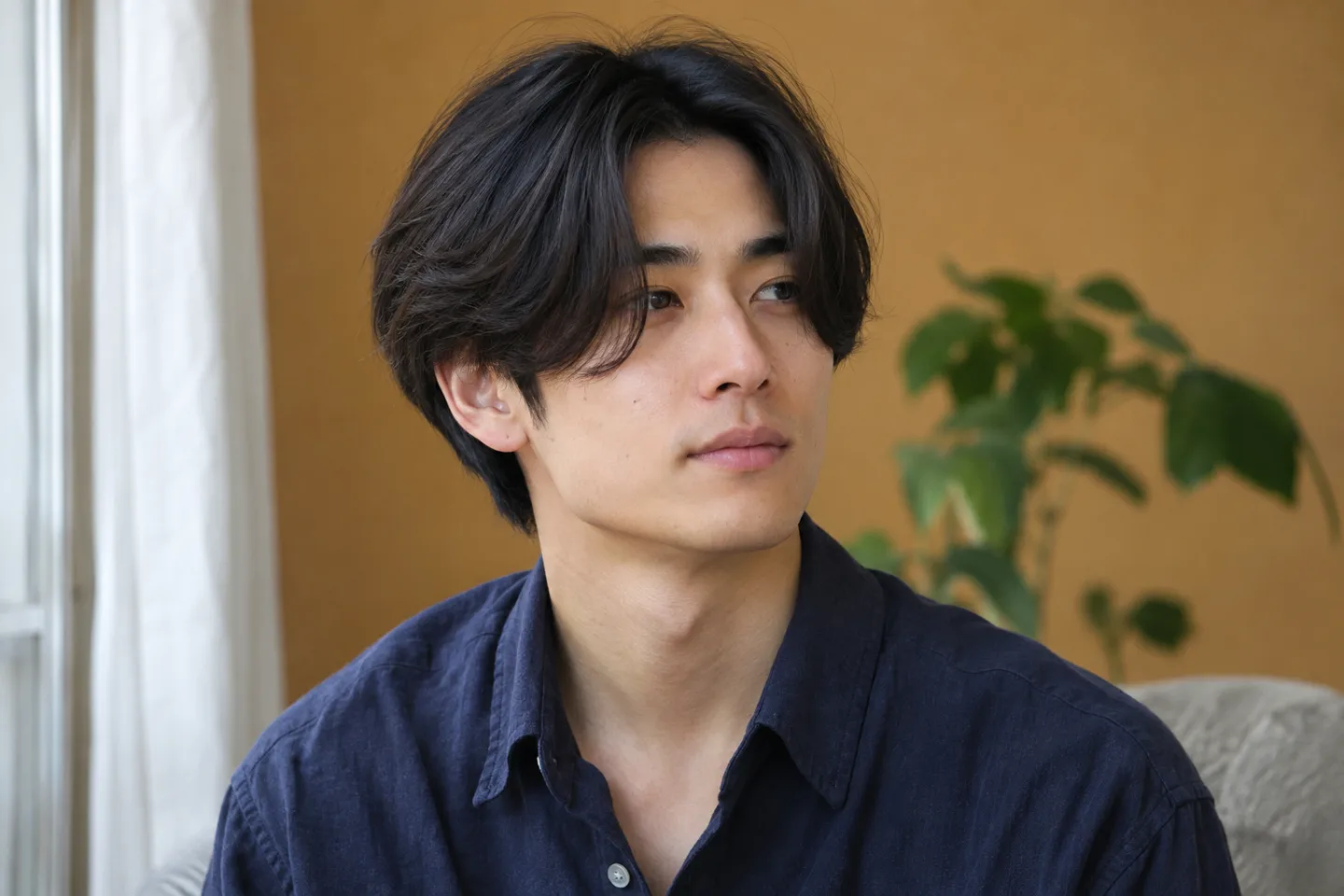
A curtains haircut can look easy in a photograph yet need a surprisingly specific conversation in the chair. Two long front sections and an opening over the forehead describe the idea, but they leave out the decisions that determine your everyday experience. Where do the ends land when dry? How much hair remains over the ears? Does the front connect to the sides or hang above a much shorter section?
Start with those questions before choosing a reference. You can use Hair Muse to explore a different outline on your own photograph and decide which direction deserves a salon discussion. A generated preview cannot demonstrate how your roots separate, how a wave springs up or how much styling you will need. This guide turns that visual starting point into a practical brief built around your existing hair and the time you want to spend on it.
A curtains haircut needs more than a center part
The recognizable feature is a divided fringe that falls on either side of the forehead. The opening can be narrow or broad, the ends can sit relatively high or extend toward the cheeks, and the sides can be close or full. Calling all of those versions simply a middle part leaves too much room for interpretation. Describe the visible outline as well as the line through the roots.
GATSBY's curtain-hair guide illustrates straight, wavy and curly versions with different fringe lengths. That is useful evidence that the name covers a family of looks, rather than one fixed cutting recipe. Use examples to identify the front and side proportions you like. There is no need to copy a model's exact styling finish or assume their texture matches yours.
Distinguish a curtains cut from merely moving your current part. If you already have enough length, separating the front may help you understand the direction without committing to scissors. If the front is very short, a preview is an imagined destination, not proof that the same result is available at today's appointment. Ask which parts need growing before you ask which parts should be removed.
Choose one aim for the visit: a clearer opening, a shorter front or a lighter side outline. Listing three simultaneous changes makes it harder to explain which feature matters most. A useful reference lets you point to that priority immediately.
Choose the front drop with your eyes open
Talk about where the front finishes on your face when it is fully dry and released. Eyebrow, outer eye and cheekbone are understandable landmarks, but they are discussion points rather than universal recommendations. Ask the stylist to show you the proposed end position. Do not judge it only while a section is stretched down or held away from its usual fall.
Think about what happens when you read, lean forward or turn your head. A length that looks attractive while you stay still may repeatedly cross your eyes. You may be happy to move it aside, or you may want a shape that leaves more of the eye area clear. Neither preference is more correct. The useful choice is the one you can describe before the front is shortened.
Look at the two sides separately. A small difference in the natural opening does not automatically need correcting with an uneven cut. Ask whether the apparent mismatch comes from growth direction, the way the hair dried or the length itself. Photograph your usual dry hair from the front without pulling either side into place, so the discussion starts with what you actually have.
If you are undecided, tell the stylist which area you want to preserve while you discuss a more conservative first step. Do not attempt a corrective trim at home from an app image. The preview cannot show the construction beneath its surface.
Set the temple connection before choosing short sides
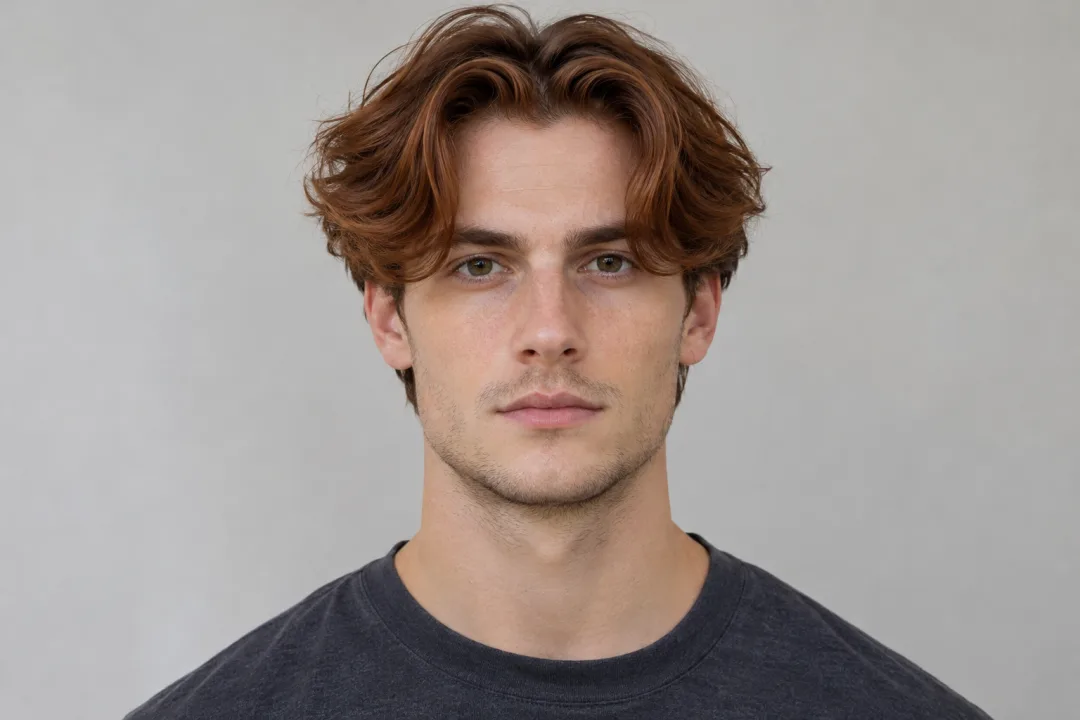
The side view often separates two curtains references that seem almost identical head-on. One may retain soft fullness above the ear; another may have a very close undersection with a longer front hanging over it. A label such as taper or undercut is helpful vocabulary, but the visible junction at the temple still needs explaining.
Decide whether you want a continuous outline from the front into the side or a deliberate change in length. Ask the stylist to point out the area that would become shorter. A tightly framed inspiration picture can conceal that area behind the front section. Bring a side view when possible, and say when you do not know what happens underneath rather than guessing.
Check the ear area in your normal position. If you wear glasses, put them on for the consultation. Notice whether the front rests on the frame, whether the side catches above the arm and whether you usually tuck hair back. These are observations to share, not instructions to remove everything that touches the glasses. Sometimes preserving length gives you an option you would lose with a closer side.
Include the nape in the same conversation. A neat back and a soft temple can coexist, but do not assume a request for a cleaner neckline means that the whole side should be shortened. Agree the boundary of each change while you can still see the original outline.
Check the dry fall before trusting a polished reference
Arrive with an honest account of how your hair normally behaves. Does the front separate after air drying, sweep to one side or lift at a particular root? Schwarzkopf's middle-part advice discusses trying the part before cutting and taking growth patterns into account. Treat that as a reason to observe your hair, not as a promise that every part can be made effortless.
Take one picture after your usual drying routine and another later in the day if the shape changes noticeably. Keep the angle simple and avoid holding the fringe in position. You are collecting information for a conversation, not producing a perfect portrait. Mention straightening, blow-drying or a strong styling product if those are part of the look in the photo.
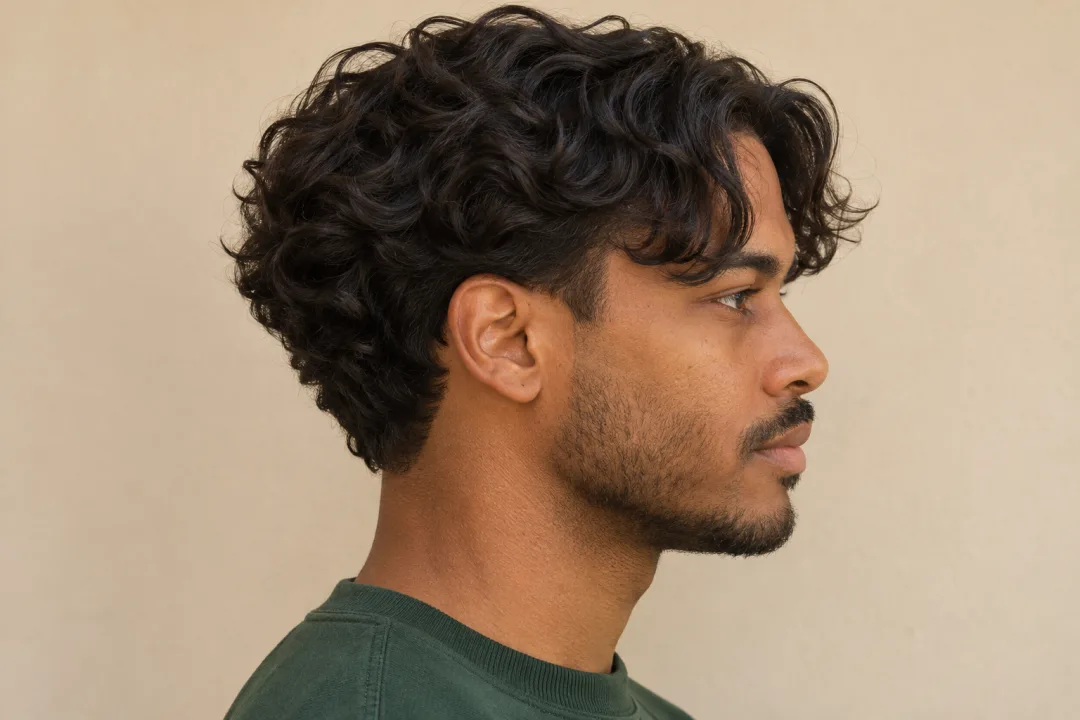
For waves and curls, discuss the front in its settled dry state. Ask how the intended length will be assessed without stretching away the movement you want to keep. Avoid converting a reference into a centimeter instruction yourself: the same measured length can sit differently with a different pattern or root direction. Your stylist needs to see the actual material.
Try describing a minimal morning: the time available, whether you use a dryer and whether you are willing to restyle a fallen section. If a reference requires more work than you want, choose another version rather than treating the extra effort as a personal failure. A useful cut plan has room for an ordinary day.

Use Hair Muse to narrow the outline, then label the uncertainty
Begin with one clear photograph in even light, with the whole head visible. Explore a curtains direction in Hair Muse and compare the overall impression: a more open forehead, a longer face-framing front or a fuller side. Keep your question small enough that you can explain what changed. Comparing many unrelated styles at once can leave you with attractive images and no decision.
Choose two useful directions rather than a large gallery of near duplicates. For example, you might prefer the openness of one and the softer sides of another. Write those preferences separately. A generated result can change several details at once, so do not call it a controlled measurement or assume the app has preserved every strand and facial detail.
Mark each image as a visual reference. It cannot establish your available density, reveal a hidden undercut, predict a cowlick, confirm the cut's feasibility or demonstrate how it moves. It also cannot give the stylist a reliable sectioning pattern. Ask what would need adapting to achieve the parts you like with your current hair.
Leave the comparison once it has answered a useful question. Your next step might be keeping more length at the front, asking about a softer temple or deciding to wait for growth. That is enough. You do not need an exact digital match before booking, and a convincing image is not a reason to ignore an in-person assessment.
Bring a short brief and agree the maintenance plan
A workable salon brief names the front landmark, the temple connection and your everyday styling limit. For instance: “I want an open curtain shape, the front clear enough that I can read comfortably, and soft sides around my glasses. Please show me the dry front position before we agree how much to take off.” Adjust the wording to your own priorities rather than adopting those preferences automatically.
Bring a front reference, a side reference and a current dry-hair photo. Identify the one feature you like in each. If an image shows a finish you do not want, say so directly. This keeps the consultation centered on the cut instead of asking the stylist to reproduce a photograph with different lighting, hair and styling.
Before the appointment ends, ask to see a simple way of opening the front using the routine you are prepared to repeat. Notice the amount of handling as well as the final result. If you normally air dry, tell the stylist before the demonstration so you can discuss a realistic alternative to a carefully finished salon blow-dry.
Agree what should trigger the next visit: the front repeatedly blocking your sight, the temple becoming bulky or the nape losing the outline you chose. Your own growth and preferences determine that point, so a fixed return interval from someone else's guide is less useful. Leave knowing what to preserve as well as what you would ask to tidy.