
Haircut decisions
Hairstyles for a high forehead: frame it your way
A high forehead does not require a fringe. Compare parts, front pieces, texture and upkeep before changing your cut.

Hairstyles for a high forehead work best when they suit the way your hair actually falls, not when they follow a rule about hiding skin. A side part, soft front pieces, a full fringe or an open forehead can all look intentional. The useful choice is the amount of framing you enjoy, the movement your hair allows and the upkeep you will accept on an ordinary morning.
Start without cutting anything. Notice where your natural part opens, whether the front grows forward or back, and how much time you usually spend styling. Then try one temporary change at a time. This guide compares options for straight, wavy, curly and coily hair, explains what a fringe commits you to, and gives you a brief to take to a stylist. A high forehead is a normal variation in proportion, not a problem that needs correction.
Hairstyles for a high forehead start with your preference
Ask what you want the front of your hairstyle to do. Some people want the forehead fully visible and a strong, clean outline. Others want a few strands to interrupt the open space, or a fringe that becomes the main feature of the cut. None of these is the objectively right answer. A photograph taken straight on can exaggerate one proportion, especially when the phone is close or above eye level. Check the idea in a mirror, a normal-distance photograph and motion before deciding.
Separate three choices that online lists often mix together: the part, the shortest front piece and the amount of density brought forward. You can change the part without cutting; you can cut face-framing pieces while leaving the forehead mostly open; and you can have a full fringe without changing the rest of the haircut. Testing them separately makes the decision easier and prevents a large cut when a smaller adjustment would give you the effect you wanted.
First decide whether you want an open forehead, partial framing or full coverage. Then choose a cut that works with your natural front growth.
Try the part before deciding on a fringe
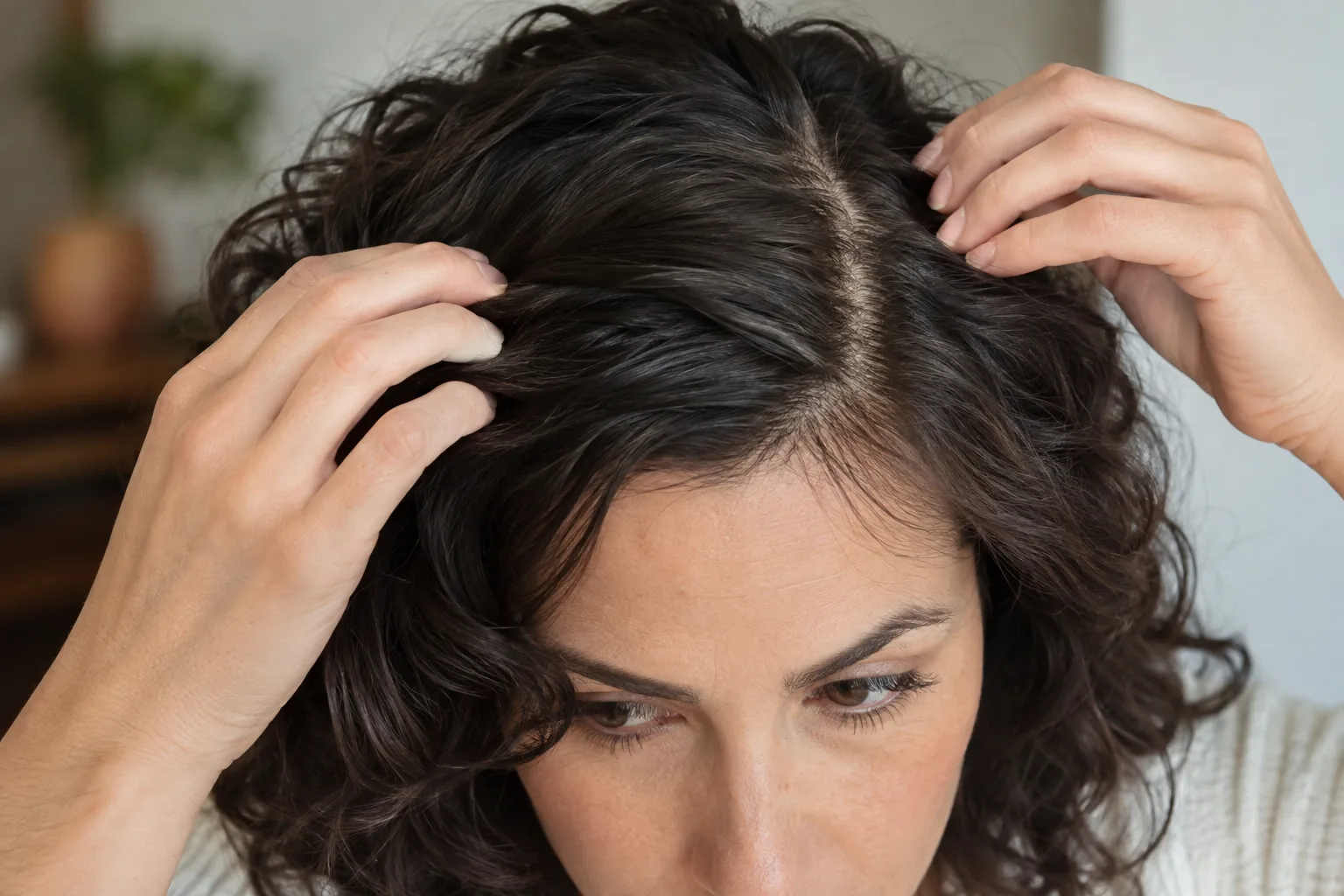
A middle part creates a symmetrical opening. A slightly off-centre part can move one front section across the forehead without a new cut. A deep side part creates more sweep but may fall back during the day if it fights your growth pattern. Do not judge a part only immediately after brushing it into place. Wear it through a normal hour, move your head, and see whether it settles naturally or needs constant correction.
Try each part with dry hair in ordinary light. Take front and three-quarter photos from the same distance, with no filter and the same expression. Look at the whole silhouette, not just the height of the forehead. The useful observation is where your eye goes first and whether the side volume balances the front. If a small part shift gives enough framing, you may prefer keeping all your length and avoiding fringe maintenance.
Choose the amount of fringe, not a label alone
A full fringe covers more of the forehead and changes the face most decisively. A wispy fringe lets skin show between strands. Curtain bangs part near the centre and open around the eyes; a side-swept fringe crosses from one side. Names are useful starting points, but two cuts with the same name can differ in width, density and shortest point. Bring a reference that shows the exact opening you like, rather than asking for a trend name by itself.
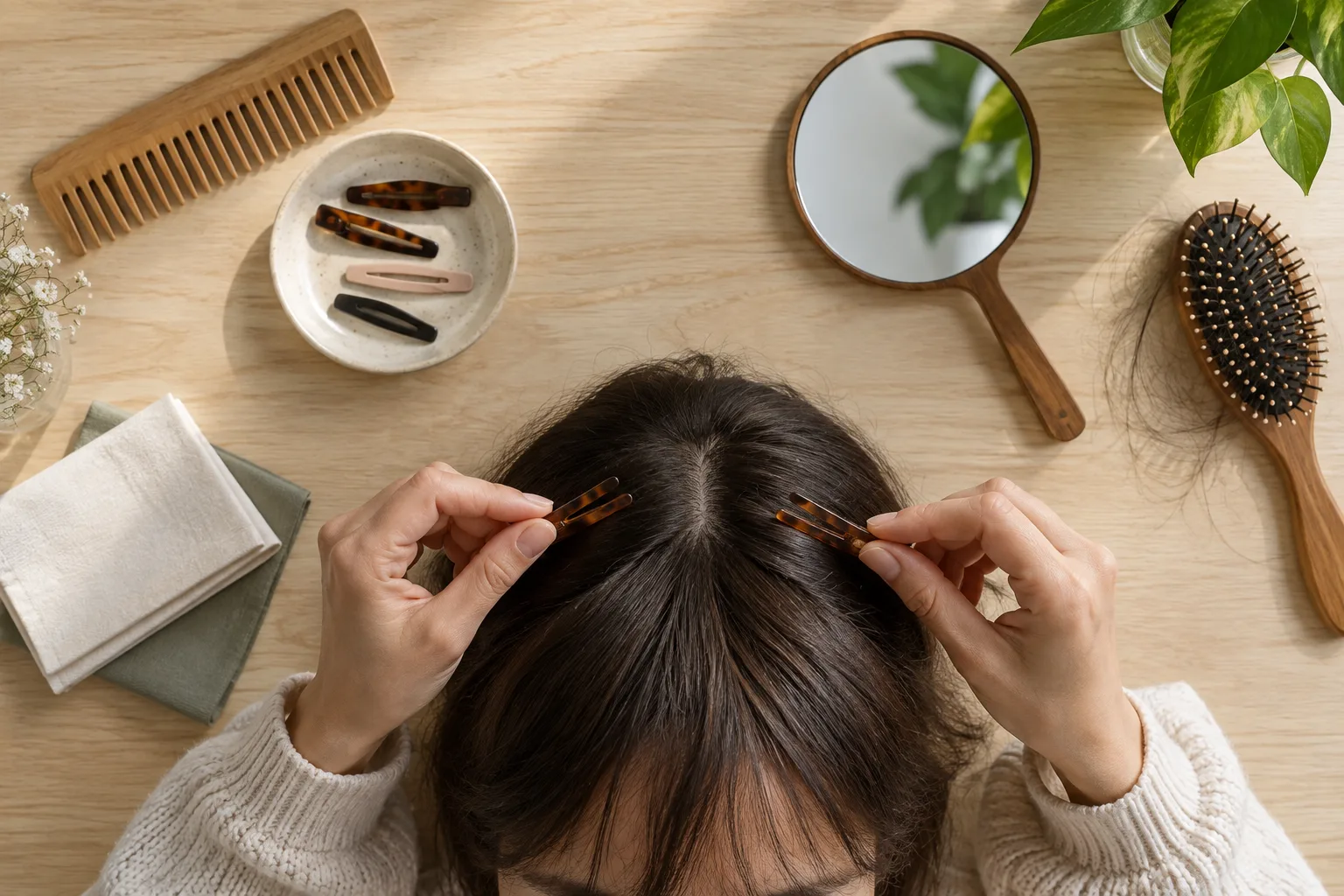
Before cutting, pin longer front pieces loosely where a fringe might sit. The clip test will not imitate a finished cut, but it can tell you whether you enjoy hair near your brows and whether the frame distracts you in daily life. Try a narrow, airy section before imagining a dense, wide one. Ask the stylist where the shortest pieces would sit dry, how they would separate, and whether they could be moved aside as they grow. Avoid trimming a new fringe at home based only on a wet reference length.

Keep an open forehead if that feels like you
You do not have to add bangs because a search result says a high forehead should be concealed. An open hairline can be the feature that gives a cut its clarity. A low, loose part, a soft bend near the cheekbones, movement around the ears or a change in perimeter can alter the overall balance while leaving the forehead visible. Even a pulled-back style can work beautifully if you like the clean shape and it is comfortable on your scalp.
If you want framing without a fringe, look at where the first shorter piece begins. Brow-level pieces behave differently from cheekbone or jaw-length pieces. The longer the front remains, the easier it usually is to tuck away, tie back or let it merge into the sides. Choose the shortest point by what you need to do daily: wear glasses, exercise, work with your hands or put hair under a hat. A flattering still photograph is only one part of the decision.
Let texture and growth pattern set realistic limits
Straight hair can form a clear fringe line but may separate where a cowlick lifts the roots. Waves can make a front piece flick outward or bend higher than expected. Curls and coils may spring up considerably when dry, so a wet cutting line is not the same as the length you will wear. Density matters too: pulling a large triangle of fine hair forward can leave the sides looking sparse, while a heavy fringe on dense hair may require more drying and control than you want.
Show the stylist your dry, normally styled hair before it is wetted or smoothed. Point out the part that returns on its own and any piece that changes direction. For curls or coils, discuss the shortest point in the fully dry state and ask how the fringe will sit on a second or third day. A shape that works with natural movement is more dependable than one that needs every strand forced into place. A visual preview can help communicate an idea, but it cannot predict exact shrinkage or growth behaviour.
Judge the style after wind, glasses and a normal day
A fringe that looks balanced for a photograph may move into the eyes, split at the centre or flatten under a hat. Test your proposed part and clipped front section while walking outdoors, putting on glasses, tying the rest of the hair back and doing the tasks that fill your day. Notice whether you enjoy moving hair away from your face. The best decision is often the one you still like after the deliberate styling has relaxed.
Think about your maintenance budget in minutes, not just salon appointments. A shorter fringe may need regular trims and a brief reset after washing or sleep. Longer curtain pieces are easier to grow into the rest of the cut, but may still need styling to open symmetrically. The American Academy of Dermatology advises limiting excessive heat and using lower settings when heat tools are needed. If the look requires daily hot-tool work you dislike, ask for a softer version that follows your natural texture.

Build a salon brief from three observations
Bring one photograph of your hair in its normal dry state, one reference for the front shape you like and one example of what you do not want. Say whether you prefer an open hairline, a soft interruption or consistent coverage. Mark the desired shortest point on your own face rather than assuming a picture will translate exactly. Then tell the stylist how you part, dry and tie your hair on a workday, not only how you style it for an event.
Ask three practical questions: where will the front pieces land when dry, what will happen when they grow for several weeks, and how can you restyle them without a hot tool? Invite the stylist to adapt the reference for your density, texture and growth direction. If you are uncertain, ask for the less committed version first. It is possible to remove more length later; restoring a too-short front section takes time. A good consultation translates the visual idea into a cut you can actually live with.
Know when a hairline question is not just styling
A naturally high forehead and a recently changing hairline are different questions. If you have noticed sudden shedding, new patches, scalp pain or a marked change in the hairline, a haircut guide cannot explain the cause. Seek advice from a qualified clinician or dermatologist rather than trying to diagnose it from a photograph. You can still choose a hairstyle you enjoy while you get appropriate care; the two decisions do not have to compete.
Avoid harsh tension simply to make a front section stay down. Very tight hairstyles can strain the hairline, especially when worn repeatedly. Style for comfort as well as appearance: use loose clips, gentle handling and a part that does not require painful pulling. The aim is to make the everyday shape feel intentional, not to persuade the hair to behave exactly like someone else's reference image. Your own hairline and texture are the starting information for a better cut.