
Thick hair planning
Haircuts for thick hair: a free weight-and-drying check
Map density, weight, movement, drying time, and tie-back needs before asking for less bulk or choosing a new outline.
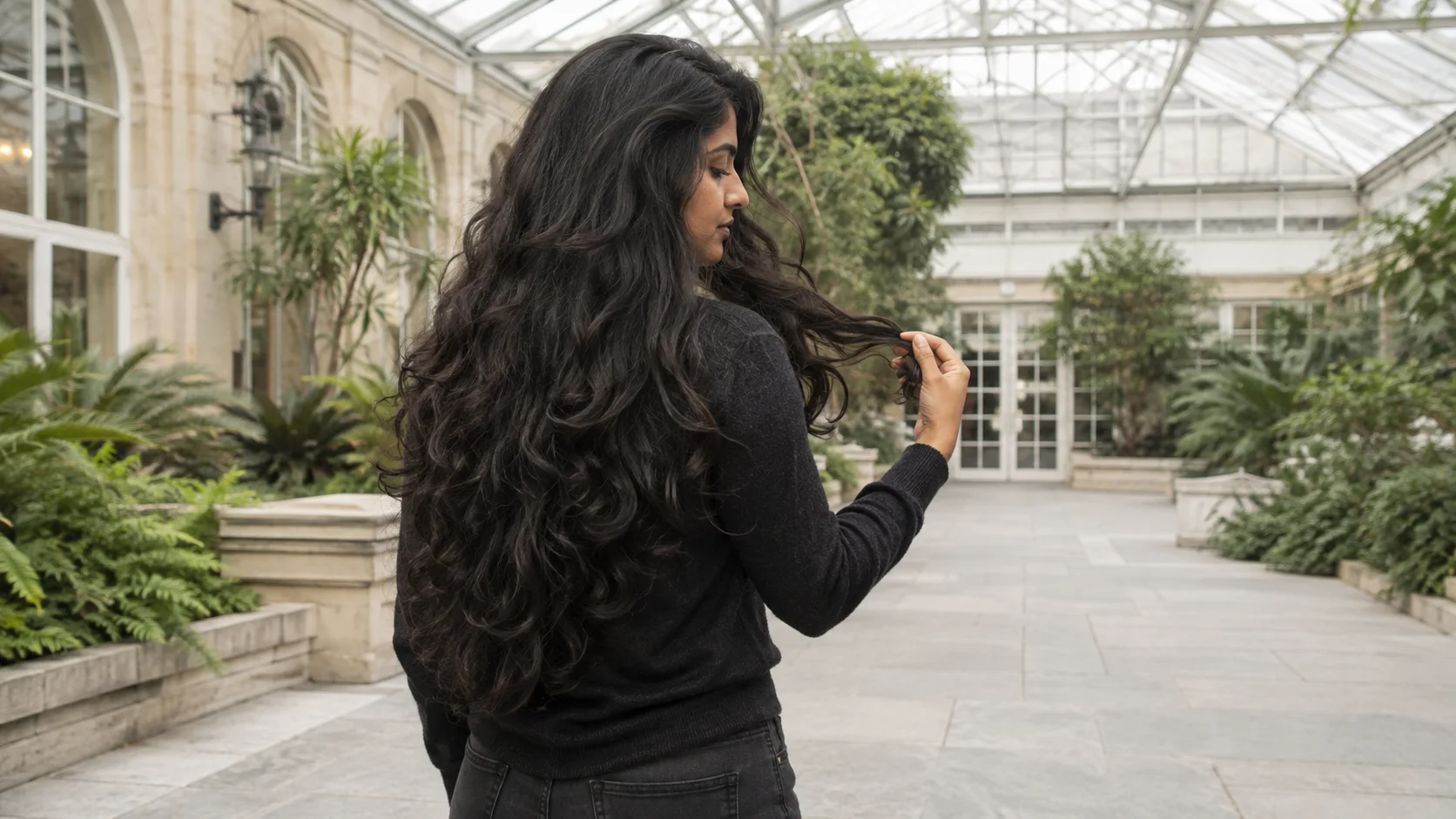
Haircuts for thick hair work best when “thick” is translated into specific observations. You may have many strands, a large strand diameter, a compact curl pattern, or a combination that creates weight and width. Those qualities are not defects to erase. They simply affect where a haircut expands, how long inner sections stay damp, whether the perimeter feels solid, and how much hair must fit into a clip or tie. The useful goal is not automatically less volume. It is a distribution of weight that suits your texture, routine, and preferred outline.
This free check starts with your current hair and ordinary tools. Record its dry silhouette, locate the slowest drying zones, test movement and securing, then describe what you want to preserve. Hair Muse is free to download if a visual preview helps you compare broad outlines; some previews or usage levels may require an in-app purchase. A preview cannot measure density, select a cutting technique, predict drying time, or guarantee how real strands will respond. A stylist must examine the hair before removing internal weight or setting the shortest layer.
Haircuts for thick hair begin with a density map
Photograph your hair fully dry from the front, both sides, and the back on an ordinary day. Keep the crown, nape, shoulders, and entire perimeter in frame. Then divide the shape into crown, sides, interior, and lower edge. Note where you can see the scalp easily, where sections feel compact, and where the hair naturally separates. Density can vary around one head, so a technique that feels reasonable at the back may expose too much space near the temples or hairline.
Use neutral language. Write “the lower back stays compact,” “the sides widen above my shoulders,” or “the crown lies flatter than the middle” instead of rating the hair as good or bad. Also separate density from strand thickness: many fine strands and fewer coarse strands can both look full but respond differently. Your notes do not diagnose hair type. They give the stylist a map to inspect and stop a vague request to “thin it all out” from becoming the only brief.
- Crown lift and visible parting
- Width at temples, cheeks, jaw, and shoulders
- Compact or airy areas through the interior
- Full, broken, rounded, or narrow perimeter
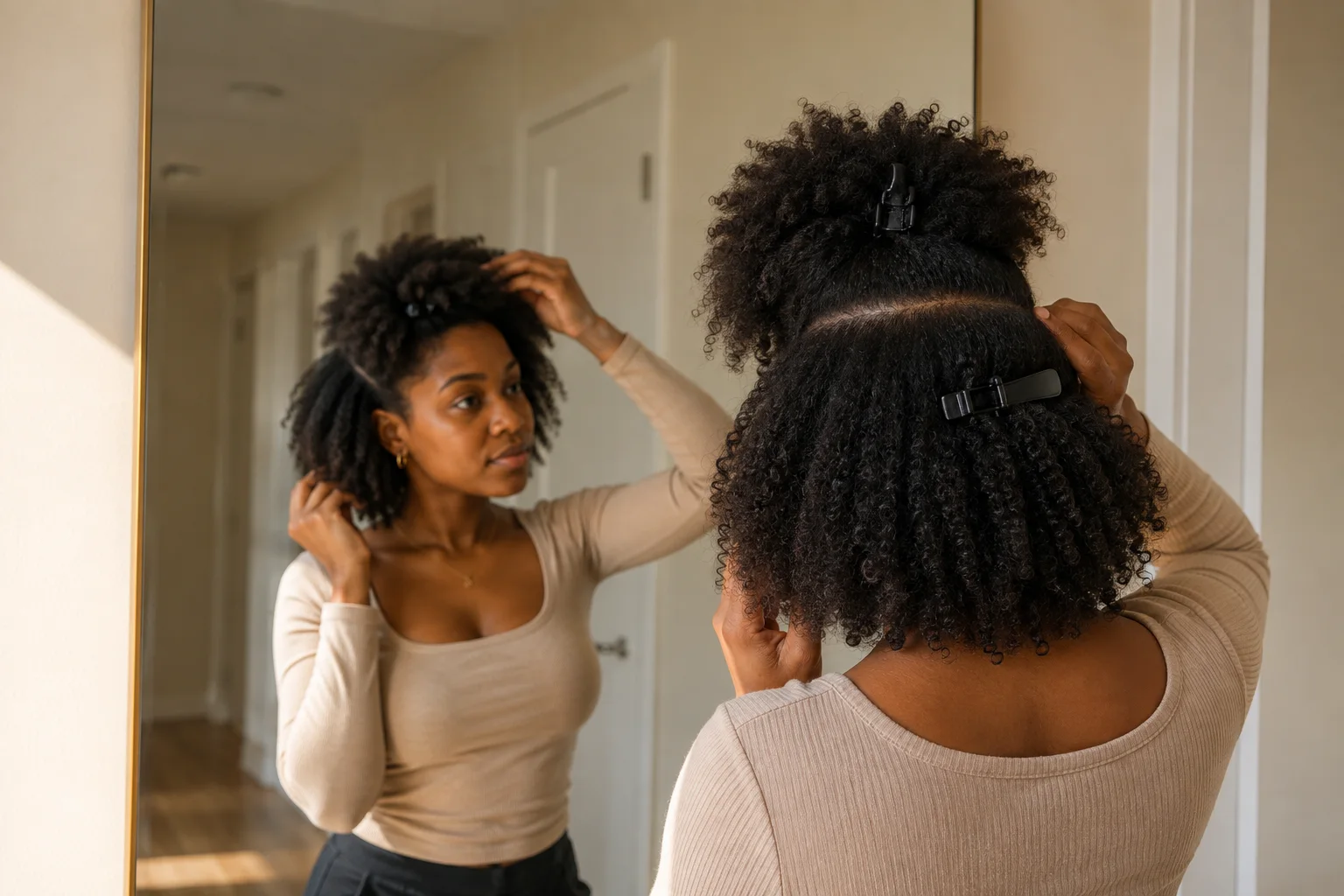
Define what heavy, bulky, and full mean to you
Heavy may describe physical pull, a solid visual outline, heat around the neck, slow drying, or a style that collapses at the crown. Bulky may mean unwanted width at one level, difficulty fitting a helmet, or too much hair inside a clip. Full may be the quality you most want to protect. Circle the exact problem and the place where it happens. Removing weight everywhere can solve the wrong issue and trade a strong perimeter for short pieces that require more daily control.
Ask when the feeling appears. Hair can seem manageable immediately after washing but expand in humidity, or look broad when air-dried and compact after tension drying. It may feel physically heavy only when wet or tied high. Record at least two normal states rather than building the plan around one polished finish. If pain, sudden shedding, scalp changes, or unusual breakage are involved, separate those concerns from style planning and seek appropriate professional advice.
Do not ask to remove the maximum amount of hair. Ask which zone needs a different relationship to the zones around it.
Measure the routine before changing the cut
For two or three wash days, note when washing ends, when the outer surface feels dry, and when the densest inner zone is actually dry. Use your normal towel, products, airflow, and heat settings. Avoid inventing a salon-perfect routine for the test. The purpose is to find the delay that affects leaving home, going to sleep, tying the hair, or refreshing it the next morning. Weather and products will vary, so treat the timings as a range rather than a promise.
Handle wet hair gently and record which actions take active time: sectioning, detangling, diffusing, directing roots, smoothing the perimeter, or waiting before using heat. The American Academy of Dermatology advises allowing hair to partially air-dry before styling and limiting excessive heat. That is general care guidance, not a haircut prescription. Your stylist still needs to decide whether a proposed shape changes access, surface area, or the amount of hair you need to direct.

Choose a weight destination, not a layer count
Layers are not one universal solution. Their effect depends on where they start, how they connect, the amount retained at the perimeter, and how your texture contracts or expands. Short upper pieces may release movement or create more visible width. Long internal changes may reduce a compact area while leaving the outline nearly unchanged. A strong exterior layer pattern can look very different from subtle internal weight removal even when both are described casually as “more layers.”
Describe the desired destination: a lighter lower back with a full edge, more movement through the middle while protecting tie-back length, or less side width without shortening the crown. Bring examples that show the same area from more than one angle. The guide to blunt ends and soft layers can help you distinguish perimeter density from internal movement. Do not prescribe thinning shears, razors, point cutting, or another technique from an image; the stylist must select a safe method after examining condition and texture.
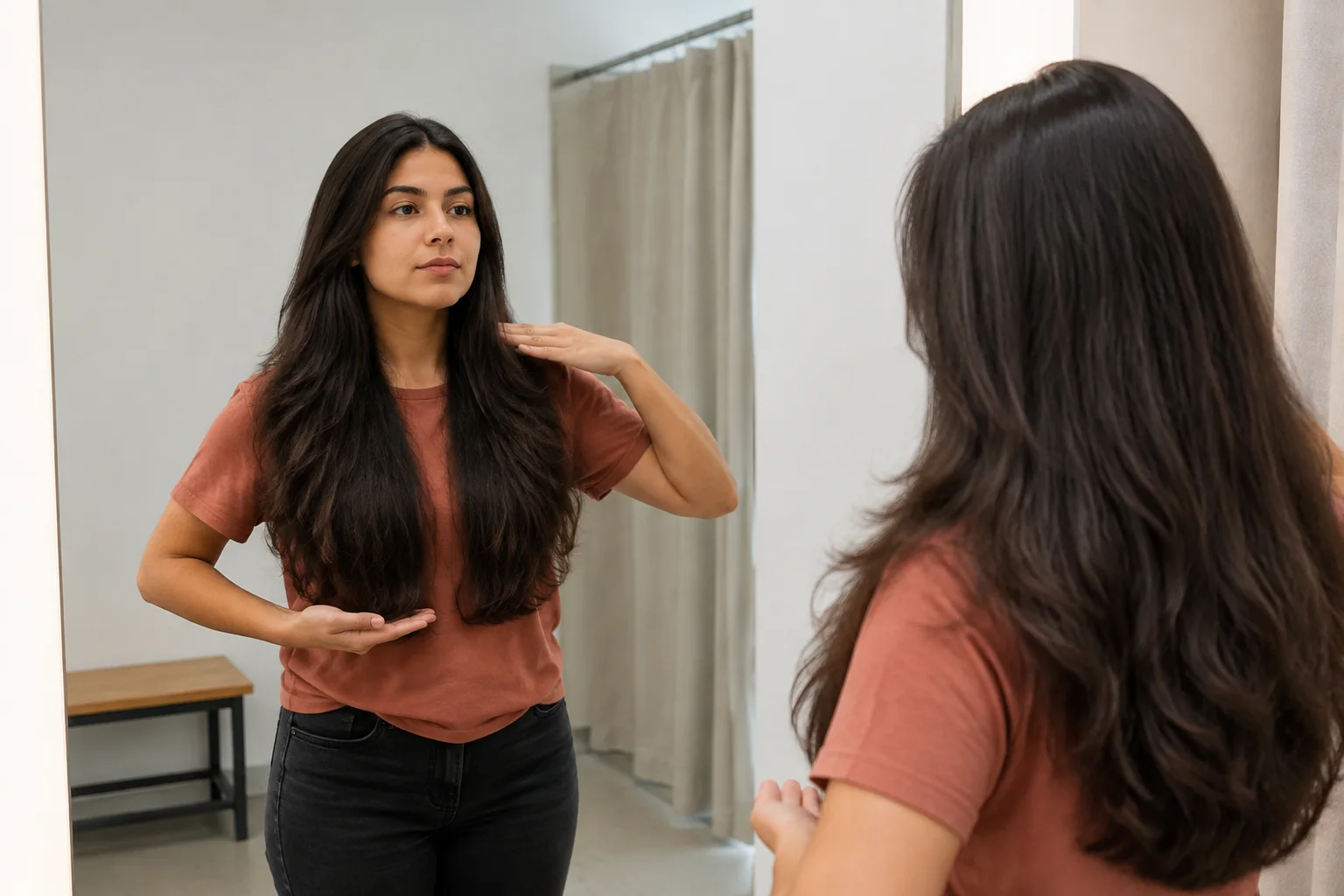
Protect the perimeter you want to keep
When the interior feels crowded, it is easy to focus only on removal. Cover the face in a reference and inspect the bottom edge by itself. Do you want it to read as a continuous line, separated pieces, a rounded arc, or a taper? Then check how much visible density remains near the front and behind the shoulders. A lighter interior can coexist with a substantial perimeter, but only if the cutting plan protects enough length and connection for your hair.
Existing damage, previous layers, chemical services, and natural variation can limit how much weight can be removed without making the edge appear sparse. Tell the stylist which sections already feel thin or break easily. Ask what the proposed cut may look like without heat styling and after several weeks of growth. A conservative first appointment can provide better evidence than one dramatic removal, particularly when you do not yet know how shorter internal pieces behave.
Test movement, weather, and shoulder contact
Observe the hair after a walk, commute, light exercise, and time outdoors. Note whether wind separates the surface, humidity expands one zone, or a collar pushes the perimeter outward. Movement can reveal a balanced shape that a mirror pose hides, but it can also show short pieces lifting away from the rest. Record what happens without treating one difficult weather day as the permanent result. You are looking for recurring zones and functions.
Try your common jacket, scarf, headphones, and bag strap. Turn your head, look down, and move the hair from front to back. A shoulder-length endpoint can flip or collect differently from one just above or below it. If this contact is a major concern, compare the separate wash-schedule and routine guide rather than assuming weight removal alone will solve it. Length, perimeter, texture, drying method, and clothing all interact.

Keep tie-back and clip capacity in the brief
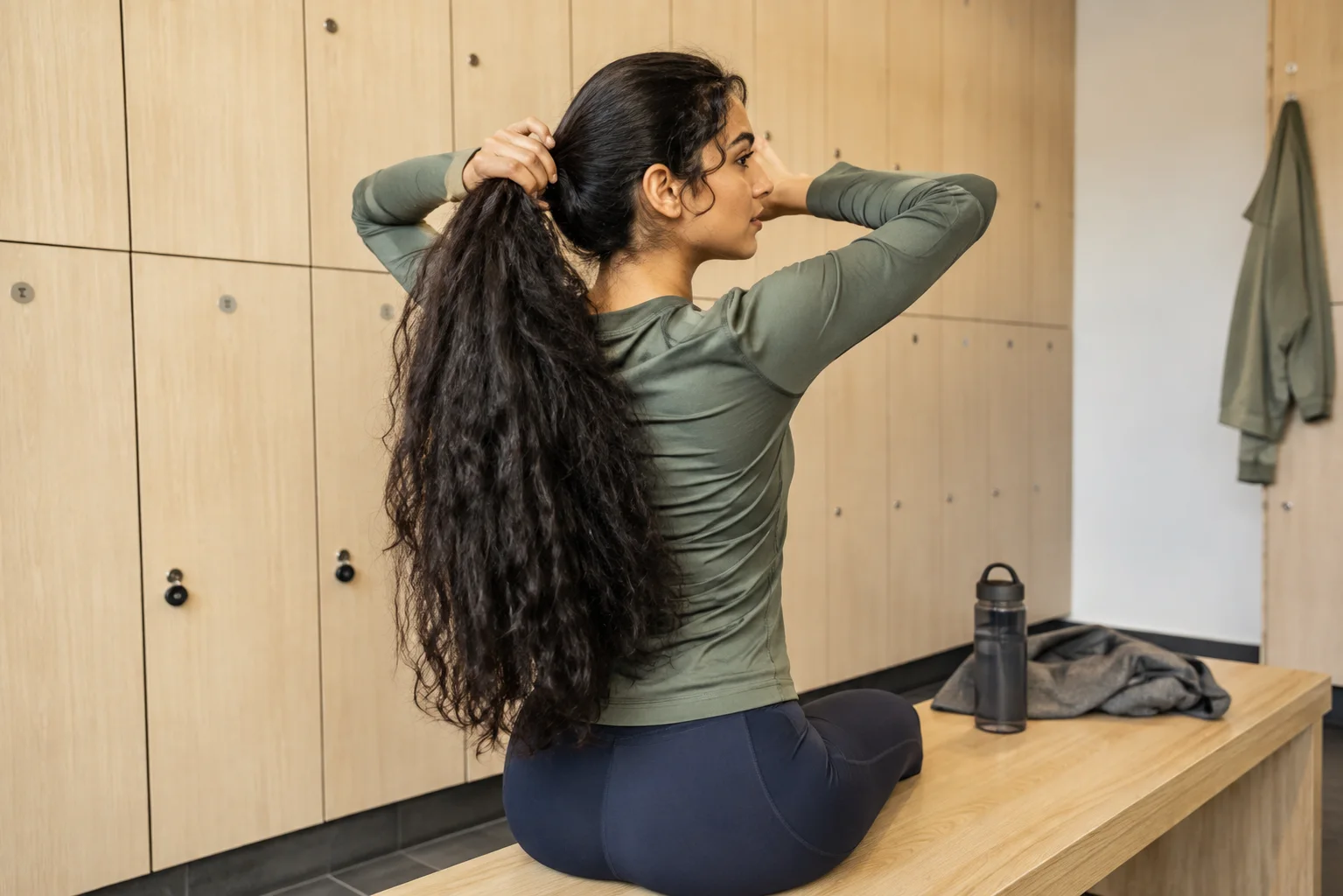
Gather your hair with the ties and clips you actually own. Check a low tie, your usual higher position, and any protective or work-required arrangement. Record which front, side, and nape pieces must reach the anchor. Removing internal weight may make a bundle smaller, but shorter layers can also escape sooner. If securing is essential for sport, work, cooking, caregiving, or comfort, define it as a functional requirement rather than an optional styling preference.
Also notice tension. A very large bundle placed high can feel different from a lower tie or distributed clips. The haircut cannot solve every comfort issue, and this guide is not medical advice. Ask the stylist whether the proposed shortest layers still reach your preferred anchor and whether a different perimeter or gradual change would preserve flexibility. Test the arrangement again when the hair is fully dry, because wet weight gives a misleading sense of how it will sit.
Use a free preview only for visible questions
A preview is useful for comparing broad external shapes: more or less side width, a fuller or lighter perimeter, a shorter endpoint, or a different balance between crown and shoulders. Use one clear portrait and change one visible variable at a time. Keep color, part, expression, camera distance, and finish as stable as possible. Save no more than two or three results and label the visual feature each one helps you discuss.
Hair Muse can support that comparison, but generated strands are not a density scan. The app cannot reveal hidden sections, calculate the amount to remove, select tools, model moisture, or predict the exact dry result. Discard images that alter your face, hairline, body framing, or texture enough to influence the decision. Use a result to say “I prefer the width higher” or “keep the lower edge full,” never “cut exactly what the image generated.”
Build a salon brief around evidence and limits
Bring ordinary dry photos from four angles, your drying-time range, one movement note, your securing requirement, and two focused references. Begin with what you want to preserve: natural fullness, length, curl grouping, a strong edge, or the ability to tie. Then identify one problem zone and one acceptable compromise. This order prevents “less bulk” from overwhelming the qualities you value and gives the stylist room to propose a construction suited to the real hair.
Ask the stylist to explain where weight would stay, where movement would be released, how the perimeter would read, and what the shortest pieces may do without styling. Discuss growth, maintenance, and a safer fallback. If the response cannot be predicted confidently, stage the change. The best plan is not the largest visible transformation; it is a shape whose tradeoffs you understand and whose routine fits the time, tools, and finish you will actually use.
- One area that feels too compact or slow
- Two qualities that must remain
- Your repeatable drying and styling limit
- The shortest layer and perimeter you will consider
- A staged fallback if the response is uncertain