

Short haircut decisions
Your French crop starts at the fringe
Choose the front edge, the side contrast and the texture you will actually wear before turning a haircut reference into a barber request.
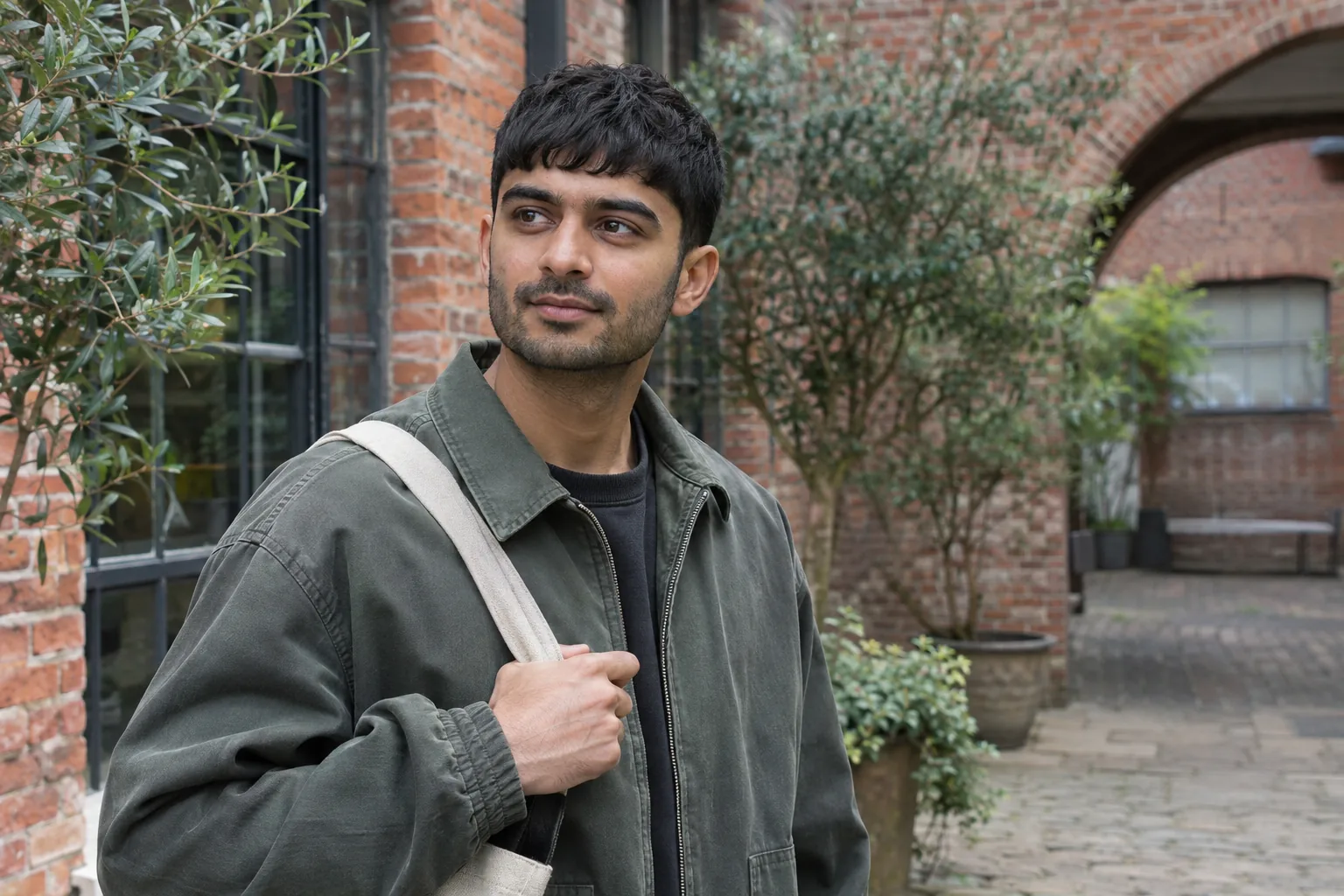
A French crop can look like an easy short haircut until you have to explain the front. You like the compact shape in a reference, but not necessarily its very short fringe, exposed sides or heavily separated top. Asking for the name alone leaves those decisions open. Start with the hair that will sit across your own forehead, then decide how the shorter sides should support it.
Hair Muse can help you explore that direction on your own photo before a barber appointment. Use the picture to identify a preference, not to specify a cutting technique or invent hair where you do not have it. A useful plan combines a small visual shortlist with your actual dry texture, growth pattern and morning routine. The photographs here illustrate those decisions; they are not app screenshots or evidence of client results.
A French crop is a starting description
The name generally points to a short shape with the top directed forward, a visible fringe and shorter sides. Within that description, the front can look softer or more defined, the top can show different amounts of separation and the sides can retain more or less coverage. Saved pictures with the same label may therefore represent quite different requests.
Do not turn the label into a compulsory skin fade, a particular clipper number or a fixed fringe measurement. Ask the barber to show which parts of your reference create the effect you like. A clear front edge and a very exposed side are separate features. You can like one without automatically choosing the other.
Start a reference note with three observations: where the fringe ends, how the upper hair lies and how much side coverage remains. Leave the cutting method for the professional who can inspect your current lengths. This makes it easier to discuss a recognisable shape without pretending that an online name is a technical specification.
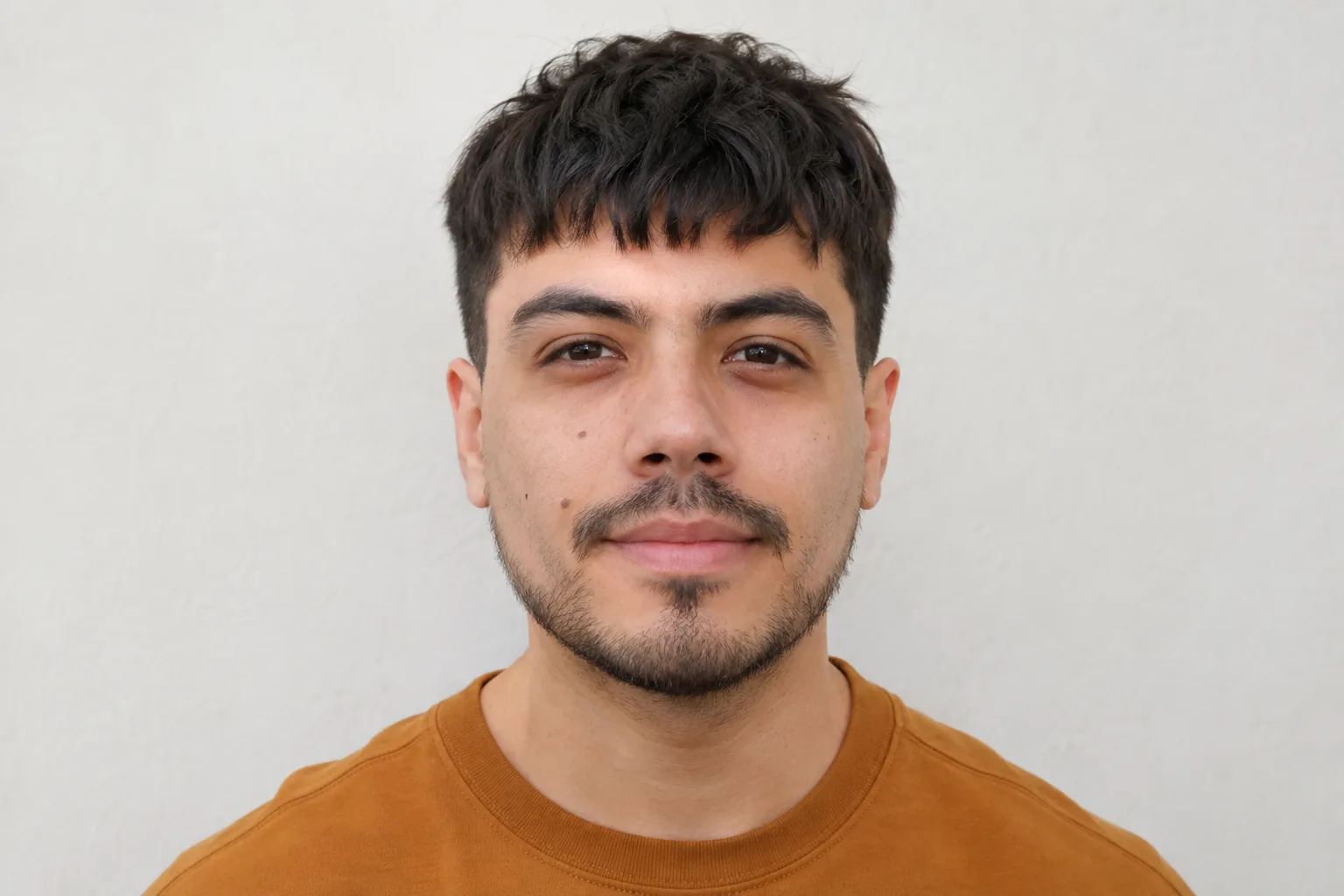
Choose the space above your eyebrows
Look at your current front in ordinary daylight with the hair dry. Notice where it naturally falls and where you already push it away. Then decide whether you want a clearly open brow area or a little more coverage. Point to the position on yourself instead of borrowing a measurement from someone with a different forehead and hairline.
Consider the edge as well as its height. A softly separated fringe and a strong horizontal line can occupy a similar area while looking quite different. Explain which feature matters most. If the precise straight line is not essential, say so; if you dislike visible gaps between the tips, bring a reference that makes that preference clear.
Try ordinary movements before deciding: look down to read, raise your eyebrows and put on the glasses you wear each day. This does not simulate a new cut. It helps you describe what you want the future front to leave comfortable and visible. Do not shorten your own fringe just to test a picture; ask the barber to discuss the dry position first.
Decide how much of the sides should remain
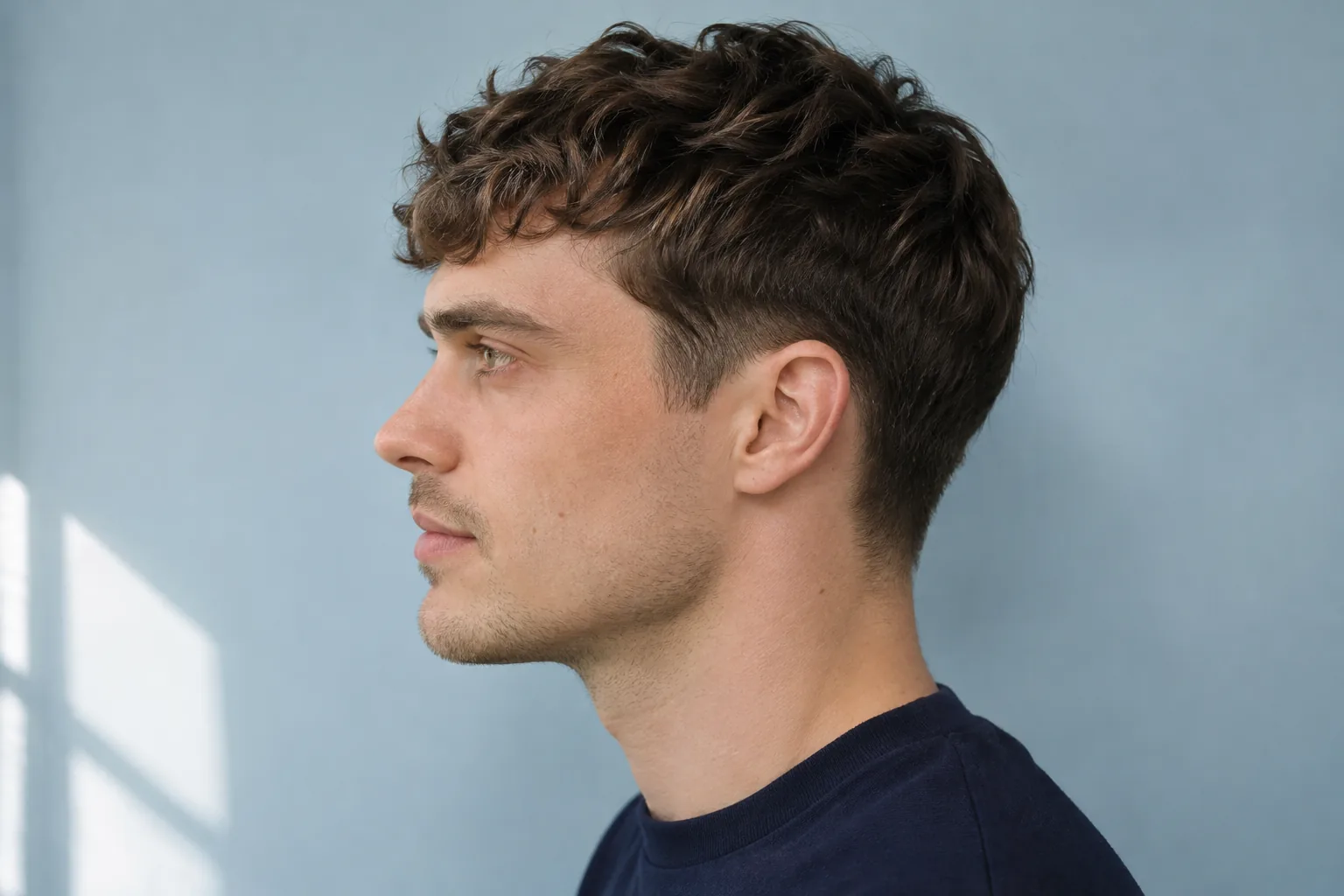
Separate the amount of side coverage from the height of the transition into the top. A very short area low around the ear does not tell you how high you want that shortness to travel. Nor does a front portrait show the full back outline. Look for a side reference that expresses the contrast you actually want to wear.
Tell the barber whether you prefer some visible hair through the sides or a more exposed finish. Point out the temple, the space above the ear and the connection to the upper section. These observations are more useful than guessing a guard number from a generated picture. Lighting and hair colour can change how dark a short area looks.
Include the rear in the appointment discussion even if your app exploration starts with a front-facing portrait. Ask how the chosen side treatment will continue around the head and meet the neckline. Do not assume a second generated angle is a measured reconstruction of the first. Your real profile and back photographs remain useful context.
Read the texture before promising an easy morning
Notice the direction your own front takes after your usual wash and drying routine. Does one area lift, split or fall to the side? Show that behaviour at the appointment. The question is how a shorter forward shape could work with it, not whether a picture can erase a growth pattern.
For wavy or curly hair, discuss the fringe in its dry state and the amount of texture you want to keep on top. A smooth reference can communicate a broad outline without being a promise of the same surface. There is no need to comb out your natural shape just to make it resemble the editorial portrait.
Keep the routine honest. If you are willing to use a dryer or a little styling product, describe what you would repeat on a normal workday. If you want a quick hands-only reset, say that instead. Short hair is not automatically maintenance-free, and a barber should be able to explain which parts of the proposed finish depend on styling.
Make a clear photo the baseline
Use a recent, sharp portrait in soft neutral light, with the whole head, hairline, ears and shoulders visible. Keep the camera near eye level and avoid a very close wide-angle selfie. Remove a hat and move your hand away from the front. The photo-preparation guide covers that setup separately if your starting picture keeps hiding the area you need to compare.
Choose a source that still looks like your ordinary hair. A beauty filter, freshly concealed hairline or extreme styling can make a shorter idea harder to judge. You are not trying to supply the most impressive photograph. You need a recognisable starting point against which you can notice changes at the fringe, temples and upper outline.
In Hair Muse, explore the closest available hairstyle direction that answers your question. Do not assume there is a dedicated French-crop preset or a control for each fringe detail. The result can help you decide that you prefer a more open front or quieter side contrast. It cannot determine the exact lengths your barber should remove.

Keep a small comparison you can explain
Begin with one decision, such as a softer front edge, while trying to keep the rest of your request consistent. The separate guide to comparing one hairstyle change at a time explains that discipline. You do not need a large gallery if you cannot say what each picture contributes to the choice.
Compare every result with the original photo, not only with the previous preview. Check whether the face, hairline, density or texture has also changed. If a fuller invented front is what makes a result appealing, do not treat it as evidence that the cut will produce that fullness. Discard a misleading picture rather than building a salon request around it.
Keep a couple of useful directions and attach short descriptions: “this amount of brow space” or “less contrast at the temple”, for example. These are visual preferences, not measurements. You can make the same notes with ordinary reference photographs if an app does not improve the decision. Hair Muse is free to download; some previews or usage levels may require an in-app purchase.
Plan for the hair you will wear between appointments
Ask how the front and sides are likely to need attention as your own hair grows. You may notice a small change near the eyebrows before you mind the extra length elsewhere. That is a reason to discuss your priorities, not to adopt a universal appointment interval. Your desired precision, routine and current cut all matter.
Think about the day after washing as well as the freshly styled finish. If your front tends to flatten under a hat or change direction overnight, mention that. A preview cannot predict the recovery of real strands. Ask the barber to show a simple way to reset the front using the products and tools you are actually prepared to use.
Make an agreement about what can soften as the cut grows. You might want to keep the brow area clear while allowing a less crisp side transition between visits. Another person may care more about the ear outline. Explaining that order of priorities gives the barber something practical to work with beyond the most polished reference image.
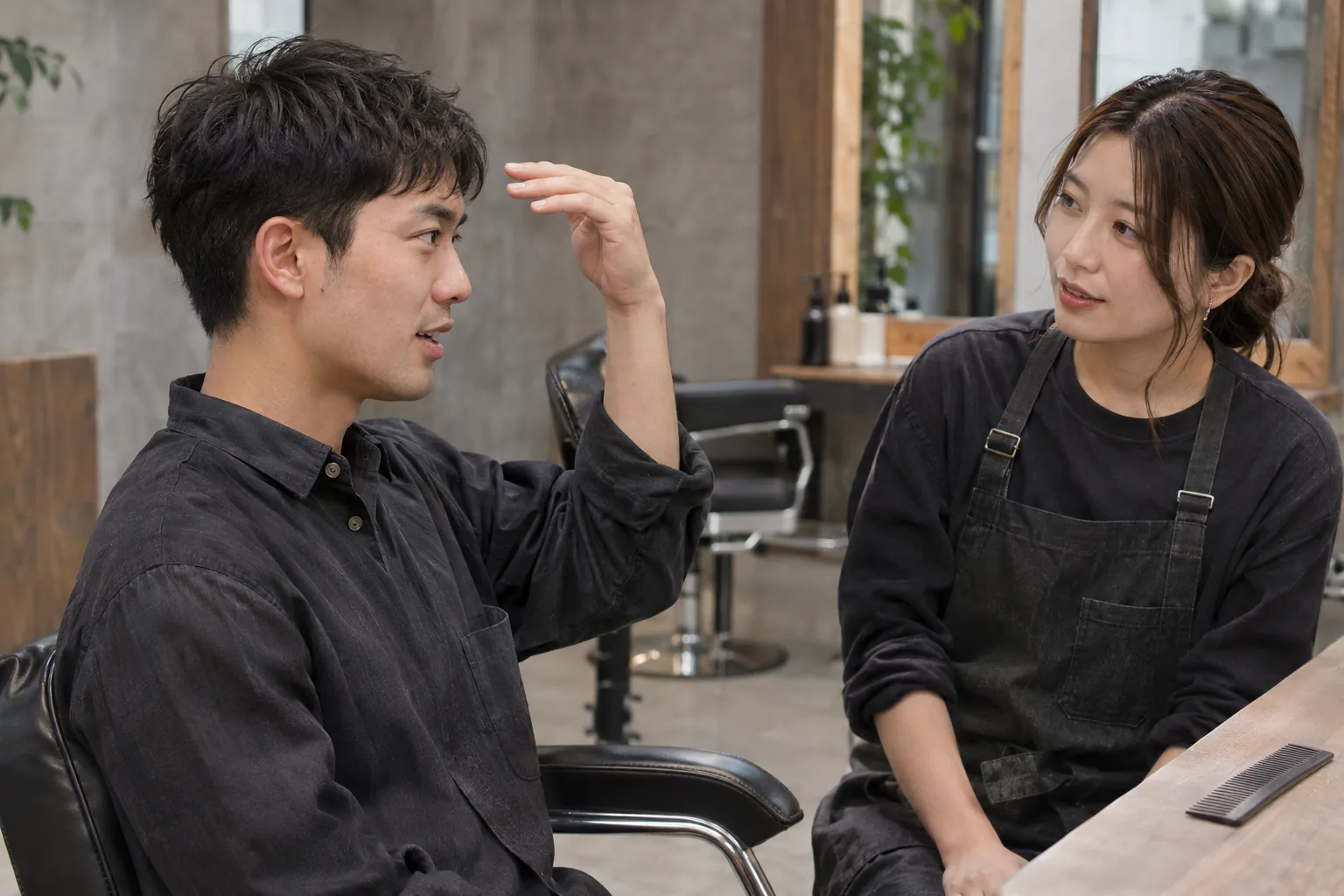
Bring a brief that leaves room for professional judgement
Take the original portrait, one or two selected visual ideas and your plain-language notes. Keep a picture you dislike only if it demonstrates a precise boundary, such as a front that is too short or sides that feel too exposed. Explain the feature rather than asking the barber to avoid an entire style name.
The salon-preview guide explains how to present an AI image as a conversation aid. Invite the barber to adapt or reject a detail after checking your actual hair. If the suggested fringe would need more styling than you want, resolve that before cutting. A successful discussion may lead to a softer variation or a different shape altogether.
Leave with a shared description you understand. The useful result of a preview is a clearer request and better questions, not a guarantee that a photograph can be copied strand for strand.
- Show where you want the dry fringe to sit above the brows.
- Describe a softer or more defined front edge in your own words.
- Agree side coverage and transition height separately.
- Explain your natural texture and the routine you will repeat.
- Ask how to reset the front and what to prioritise between visits.