
Short haircut planning
Before the big chop: a free short hair try on plan
Compare a pixie, bixie, and short bob on one controlled photo, then turn the strongest direction into a practical cut and maintenance brief.

A free short hair try on can make a major cut less abstract, but the useful question is not simply whether short hair looks good. A pixie changes the relationship between face, ears, nape, and crown. A bixie keeps more movement around those areas, while a short bob preserves a clearer perimeter and more length to tuck. Each option creates a different routine, trim rhythm, grow-out path, and response to natural texture.
This guide turns the preview into a controlled plan. You will define the change, create one neutral photo, compare three short-hair families, reject misleading results, and test the finalists against movement and maintenance. Hair Muse is free to download; some previews or usage levels may require an in-app purchase. Its previews are planning aids, not guarantees of texture, density, hair behavior, salon feasibility, or the finished cut. The goal is a concise shortlist and a better stylist conversation, not a synthetic cutting instruction.
Name the problem before you choose a short haircut
Start with the reason the current shape no longer works. Perhaps the length feels heavy, the ends disappear inside collars, the top lies flat, drying takes too long, or you want a more deliberate outline. Write one observable outcome, such as ‘I want the neck to feel open without exposing the whole ear.’ This prevents a fashionable label from replacing your need.
Add three boundaries: the shortest acceptable point, the daily styling you will repeat, and the trim interval you can maintain. Include glasses, headphones, helmets, ear tucking, workouts, air-drying, and whether you need to pin the front away. Short hair can reduce drying time while requiring more frequent reshaping. Your boundaries decide whether a pixie, bixie, or bob is useful.
- Desired change: less length, clearer shape, more lift, or easier drying
- Non-negotiable length: ear, nape, jaw, or enough hair to tuck
- Daily effort: air-dry, quick reset, or intentional heat styling
- Maintenance limit: realistic trim rhythm and grow-out tolerance
Build one neutral source photo for every option
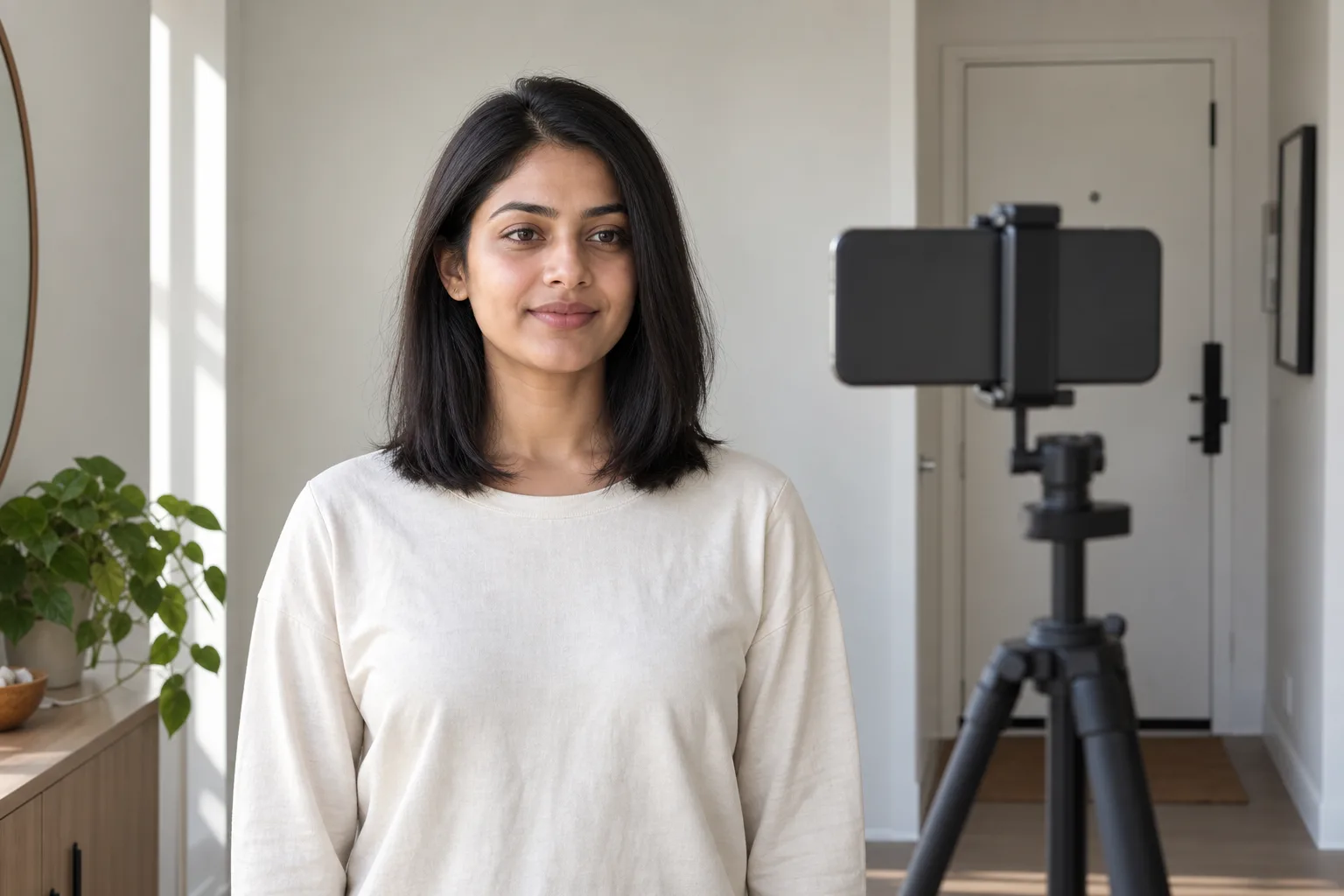
Use a sharp front-facing portrait at eye level in soft, neutral daylight. Keep the full head, hairline, ears, neck, and shoulders inside the frame. Stand far enough away to avoid wide-angle distortion, remove beauty filters, and choose a plain background that separates the hair edge. Wear a simple top with a visible neckline. Keep expression, makeup, crop, exposure, and camera distance unchanged.
Show the real starting texture rather than stretching, smoothing, or adding volume solely for the picture. If you regularly wear glasses, make one controlled comparison with them and one without, but do not switch them randomly between styles. Save the original beside every generated result. A beautiful preview that also changes the face, shoulders, light, skin, or hair density cannot isolate the haircut. Our detailed photo guide explains how to create a repeatable input before you spend time comparing shapes.
Use a free short hair try on to compare shape families
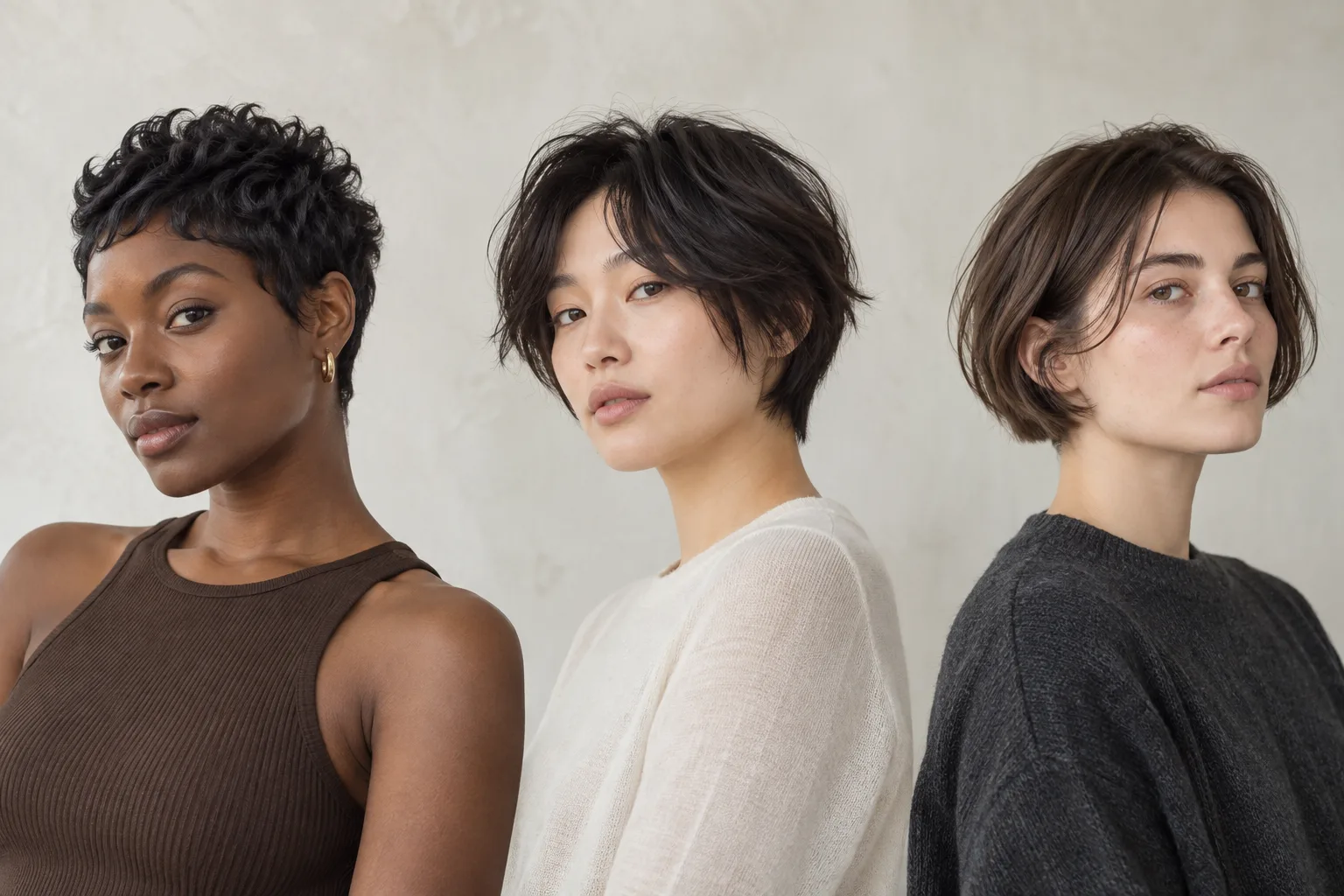
Make the first round deliberately broad. A pixie usually removes the most perimeter length and puts more attention on the crown, fringe, ears, and nape. A bixie occupies the space between pixie and bob, often keeping longer pieces around the face or nape with a lighter, layered outline. A short bob creates a stronger lower edge near the jaw or below it and preserves more weight. These names are not standardized salon blueprints, so compare the visible relationships rather than assuming every reference with the same label is identical.
Generate one restrained example from each family on the same source photo. Match the parting, fringe direction, color, and apparent texture as closely as possible. First judge the outline at normal viewing size: where does the width sit, how open are the ears and neck, and what happens beside the jaw? Then inspect the crown, sideburn area, and nape. Do not yet compare dramatic color, wet styling, accessories, or editorial volume. You are choosing a useful length-and-shape direction, not the most polished image.
Reject previews that win for the wrong reason
A generated image may favor one option by smoothing skin, changing facial proportions, moving the hairline, adding density, refining makeup, or adding flattering light. Reject it when those changes affect preference. Also reject a style that invents impossible volume or hides the nape and ear connections you need to judge.
Once one family feels promising, compare only one variable at a time. For a pixie, that could be longer versus shorter fringe while the sides stay stable. For a bixie, compare a softer versus more compact perimeter. For a bob, move the endpoint slightly without adding new layers and color. Save a maximum of three finalists and label what each proves. The one-change method makes differences easier to explain and prevents dozens of similar images from disguising uncertainty.
Keep a result only when it preserves your identity, source conditions, and the variables you are not testing. A preview is evidence about a direction, not proof of a final cut.
Test the shortlist against texture and movement
Shortening hair changes how weight controls waves, curls, coils, cowlicks, and straight sections. Removing length may allow a bend to spring higher, make a cowlick more visible, or cause a dense side panel to expand. Fine hair can look more compact at a strong perimeter but may not reproduce generated crown volume without styling. A preview cannot simulate exact shrinkage, strand diameter, growth direction, humidity response, or how the cut settles after sleep. Observe your real hair at the proposed zones instead of borrowing the render's physics.
Photograph the crown, both side profiles, and nape after your usual wash and dry routine. Notice where the hair separates, collapses, expands, or turns outward. If it is curly or coily, judge the dry state and discuss shrinkage before choosing the cutting length. The American Academy of Dermatology notes that curly and tightly coiled hair often needs different detangling and moisture habits; those needs do not disappear with a shorter silhouette. Bring evidence of your normal texture rather than only styled inspiration.

Price the haircut in minutes, tools, and trim visits
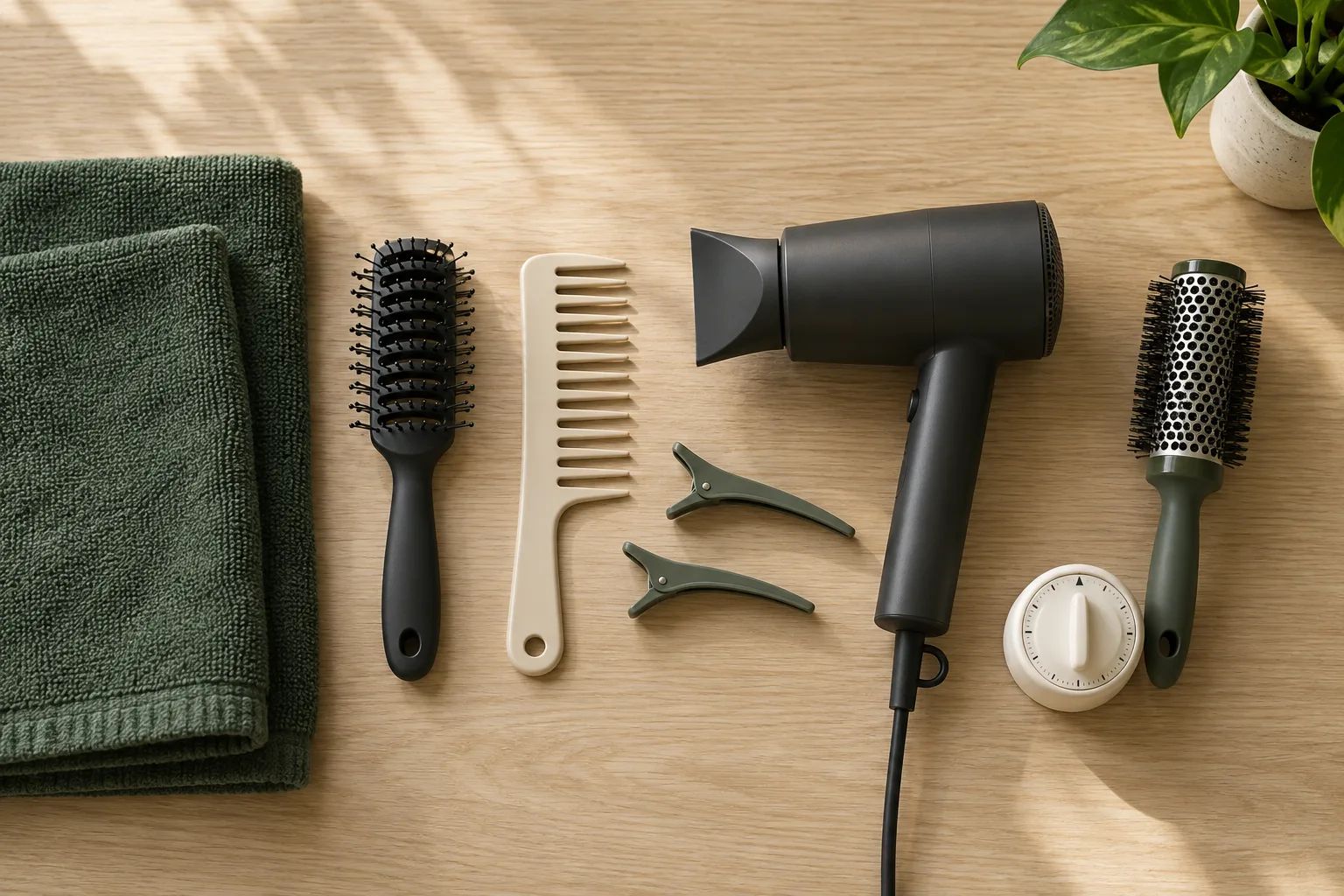
Run a maintenance rehearsal before booking. Put the tools and products you already use on the counter and estimate a normal weekday, not a special-event routine. Can the proposed fringe air-dry in the right direction? Will the crown need water, a brush, product, or heat every morning? Can you leave the house when the nape grows for several weeks, or will the outline bother you quickly? A style that takes ten focused minutes may be ideal; the important part is that those minutes fit your real schedule.
Do not assume more heat and hold are the only ways to keep short hair controlled. Ask whether the shape can work with your natural fall and how to reset it with minimal manipulation. The American Academy of Dermatology recommends limiting excessive heat and rough handling because repeated styling can contribute to damage and breakage. If a preview depends on rigid volume, perfectly ironed fringe, or a sculpted finish you will not maintain, compare a quieter version before rejecting the whole family.
Plan the grow-out before making the cut
Every short haircut changes as it grows. Ask what the pixie becomes when the ears soften, how the bixie behaves when the nape gains weight, and when a bob loses its line. Decide whether you will trim to preserve the shape, move toward a longer version, or accept an in-between stage. A good plan includes the exit route.
If uncertain, preserve flexibility: keep enough front length to tuck, choose a longer nape, start with a jaw bob, or request a softer perimeter. This matches the size of the irreversible change to your confidence. Record the fallback beside the favorite so the consultation has more than one successful outcome.
Turn three images into a salon-ready short haircut brief
Bring the untouched source, two or three controlled previews, and real photos of front, sides, crown, nape, and dry texture. Start with the relationship you want: open neck, partial ear coverage, softness at the jaw, movable fringe, or compact crown. State boundaries for length, styling, trims, and grow-out. Ask which reference fits your density, growth patterns, texture, hairline, previous services, and routine.
Ask practical questions: What will this area do when it dries naturally? Which part needs the most styling? How soon will the outline change? Can the front still tuck behind the ear? What should the first grow-out adjustment be? Use the preview as a shared visual vocabulary, never as a technical cutting diagram. Hair Muse cannot examine the hair in person, predict exact strand behavior, determine safe chemical services, or guarantee that a salon can reproduce synthetic texture and density.
Finish with one preferred family, one acceptable fallback, one non-negotiable boundary, and a realistic maintenance plan. The successful result of a free short hair try on is not certainty that a pixie, bixie, or bob will behave exactly like a render. It is a smaller, clearer decision: you understand the outline you want, the routine you accept, the evidence your stylist needs, and the compromises you are willing to discuss before the first section is cut.