
Between-wash hair care
A practical dry shampoo routine between washes
Refresh a specific oily area without turning a quick fix into your whole washing routine. Read the label, work in small sections and know when to stop.

Dry shampoo is useful when one part of your hair looks oily and a full wash is not possible right now. It is less useful when you expect a spray to remove everything a normal wash would remove, or keep adding it because the first application left a pale patch. A workable routine begins by identifying the immediate problem: a small root area, a visible finish, or hair that actually needs washing. Those are different situations, even if the morning is equally rushed.
This guide is about a modest between-wash refresh, not stretching the interval indefinitely or diagnosing scalp symptoms. You do not need an app, a new haircut or a cupboard full of products to follow it. Use a product intended for your hair, follow its own instructions and leave time for the next ordinary wash. The outcome is hair that feels manageable for the next part of your day, not proof that it has been cleaned.
Dry shampoo changes appearance, not the need to wash
The American Academy of Dermatology explains that dry shampoo absorbs oil but does not replace shampoo and water. That distinction is the starting point. A less shiny root does not tell you what remains on the scalp, and a pleasant fragrance is not evidence of cleanliness. Keep the quick cosmetic decision separate from your regular cleansing routine. If washing is what you need, choose a time to do it rather than asking another coat of product to solve the entire problem.
Look at the hair in normal light before reaching for the container. Is the concern a narrow strip beside the part, the front you touch frequently, or the whole head after a demanding day? Note which area you mean. You may decide that a small refresh is sufficient until you get home, or that a simple change of plans makes more sense. There is no need to make every strand look freshly styled just because a meeting or journey is approaching.
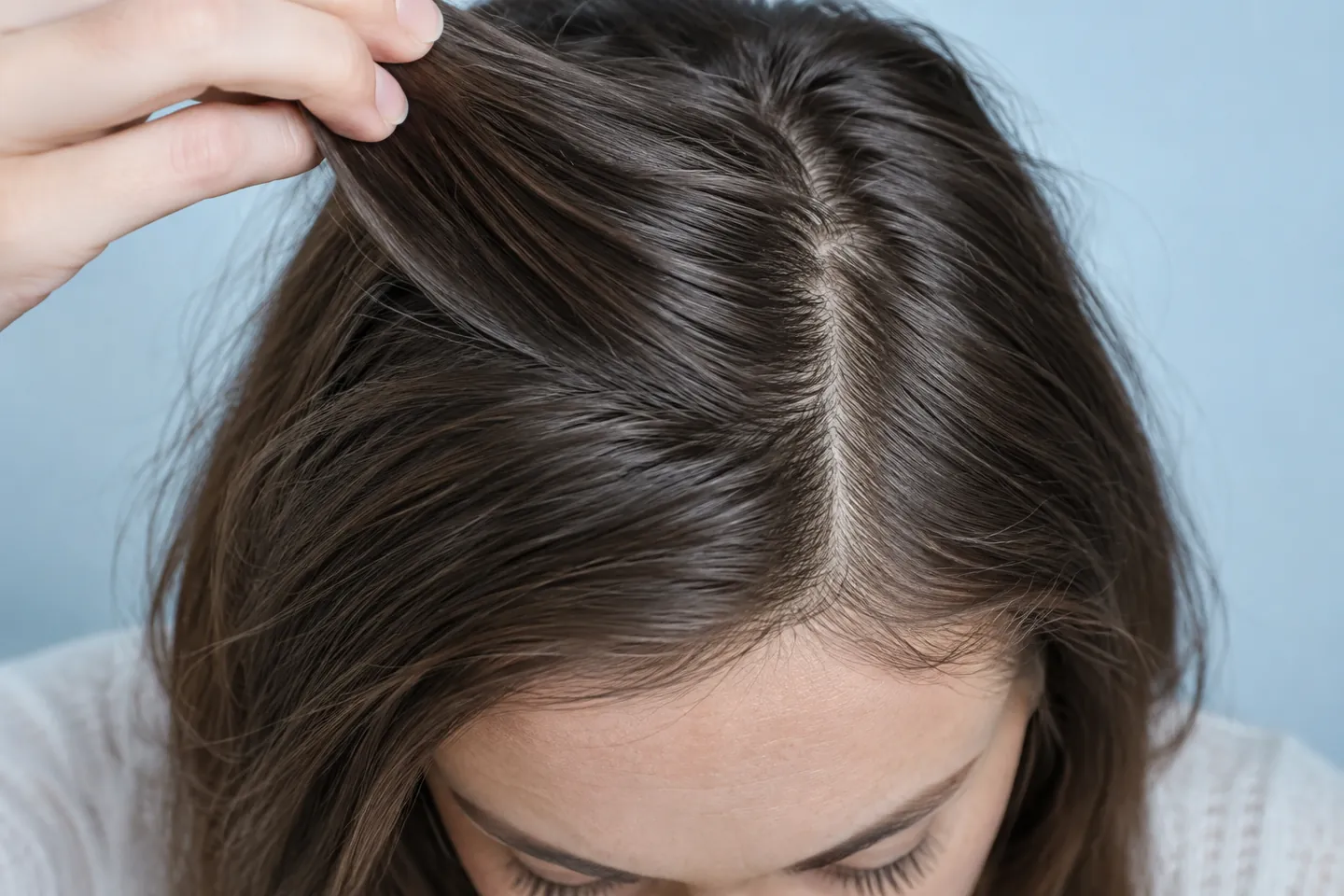
Read this container, not a universal spray rule
Find the directions for the exact formula you have. Check whether it is an aerosol, a loose powder or another format, whether it is meant for dry hair, and how preparation, application and removal are described. A distance or waiting time from a different brand is not automatically transferable. Manufacturer examples in English, Spanish and Brazilian Portuguese use different application wording and distances. Treat online demonstrations as illustrations; your own product's directions remain the practical reference for using it.
Read the warnings as well as the appealing description. The FDA's US cosmetics labeling guide includes specific cautions for pressurized cosmetic containers, including eyes, storage and misuse by inhalation. This is a reason to take aerosol instructions seriously, not a claim that US rules describe every local product. Follow the warnings on your container about the surroundings, heat and storage. Do not aim at your face, create a cloud to breathe through, or improvise a use the label does not describe.
Prepare a small area and protect your ordinary routine
Put the container where you can pick it up without balancing it beside the sink. Move your bag or clothing out of the working area, and use the surroundings specified by the product. Arrange a mirror and the comb or brush you normally use, if removal instructions call for one. Preparation takes little time, but it prevents the familiar sequence of spraying first, searching for a tool second and applying more while you are still unsure where the first amount went.
Release a tight style so you can see the relevant roots without pulling. Separate a manageable section with your fingers rather than creating an elaborate salon sectioning pattern. Keep the lengths out of the way and do not mistake a dull end for an oily root. If your hair is still damp, finish the appropriate drying or choose another plan; do not assume a dry-hair product is intended to deal with wetness. The preparation should make the task simpler, not add a second styling session.
Apply deliberately, then give the label time to work
Prepare the formula as directed, then target the chosen area instead of covering the whole hairstyle by default. Keep the specified distance and orientation. A controlled first application gives you a chance to inspect the result; repeated overlapping passes make it harder to know which part needed attention. Move the container aside after the initial amount rather than leaving your finger poised for another spray. For a powder format, follow its dispensing instructions rather than copying an aerosol gesture.
Allow the time stated on the package before the removal or distribution step. Do not invent a longer wait to compensate for too much product, and do not use a hot styling tool to hurry a process whose directions do not call for it. During the pause, finish a small unrelated preparation, such as packing your keys. Then return to the same section. You are checking one manageable task, not trying to reconstruct the look of a finished salon photograph.

Remove the excess without fighting your texture
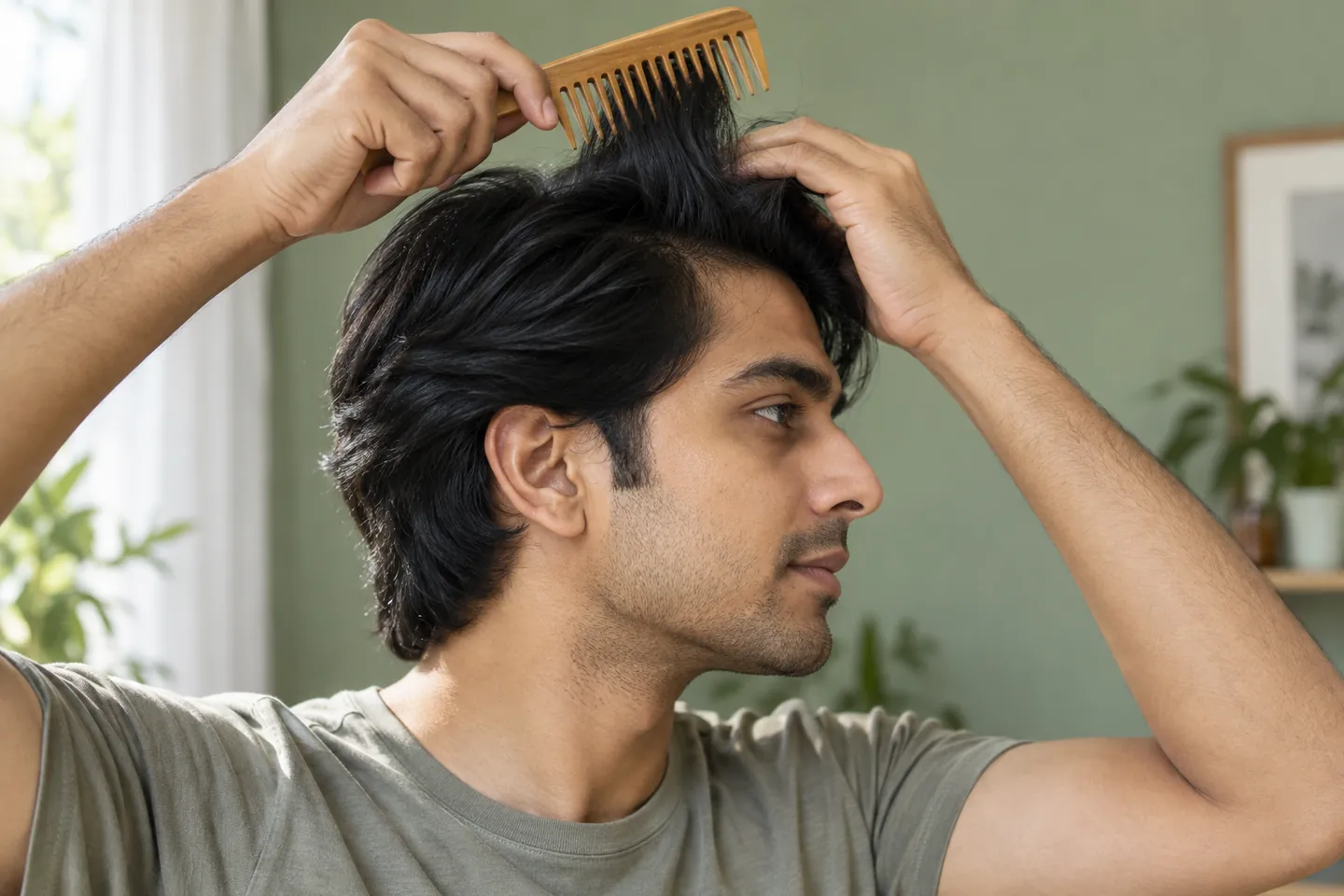
Use the removal or distribution method the product describes, with a tool and handling suited to your hair. Work gently and stop if the tool catches rather than dragging it through. Straight hair, loose waves and defined curls do not need an identical finishing movement. If vigorous brushing would undo the style you are trying to retain, consider that before choosing the product. A between-wash refresh is not successful if its finishing step creates a bigger styling problem than the original root area.
Look again under ordinary light, including the side of the part and the area near the ear. On dark hair, a pale cast can be easier to notice away from the bathroom spotlight. Do not immediately cover it with a tinted product, oil or another layer of spray. First finish the instructed removal step. If the result remains chalky, stiff or unpleasant, accept that this application has not worked as intended. Washing is a valid exit; scrubbing harder is not a necessary next step.
Troubleshoot the decision before buying another formula
Separate three outcomes in your notes: the roots still look oily, a visible residue remains, or you dislike the feel. They do not all point to the same solution. Review where you applied the product, whether the hair was dry, and whether you followed preparation and removal directions. Avoid declaring that your hair requires a much stronger formula after one rushed attempt. A calmer application of the intended amount can tell you more than a collection of overlapping products used under different conditions.
If the product is uncomfortable, stop using it rather than treating the sensation as proof that it is working. Persistent or worsening scalp discomfort deserves qualified advice. This guide cannot identify the cause, assess ingredients for you or recommend a medical treatment. Keep the container and instructions available if you need to discuss a reaction. Do not turn a cosmetic problem into a homemade mixture of kitchen powders, fragrance and oil, and do not assume that a natural-sounding ingredient guarantees suitability.
Keep the next ordinary wash visible in your plan
Before putting the container away, decide when your next normal wash can happen. Perhaps it is this evening after travel, or the next suitable point in your established routine. Make space for cleansing and drying rather than planning a second emergency refresh by default. The point is not to win an extra day without washing. It is to handle a short-term appearance concern without losing track of the routine that removes the product and whatever else has accumulated on your hair.
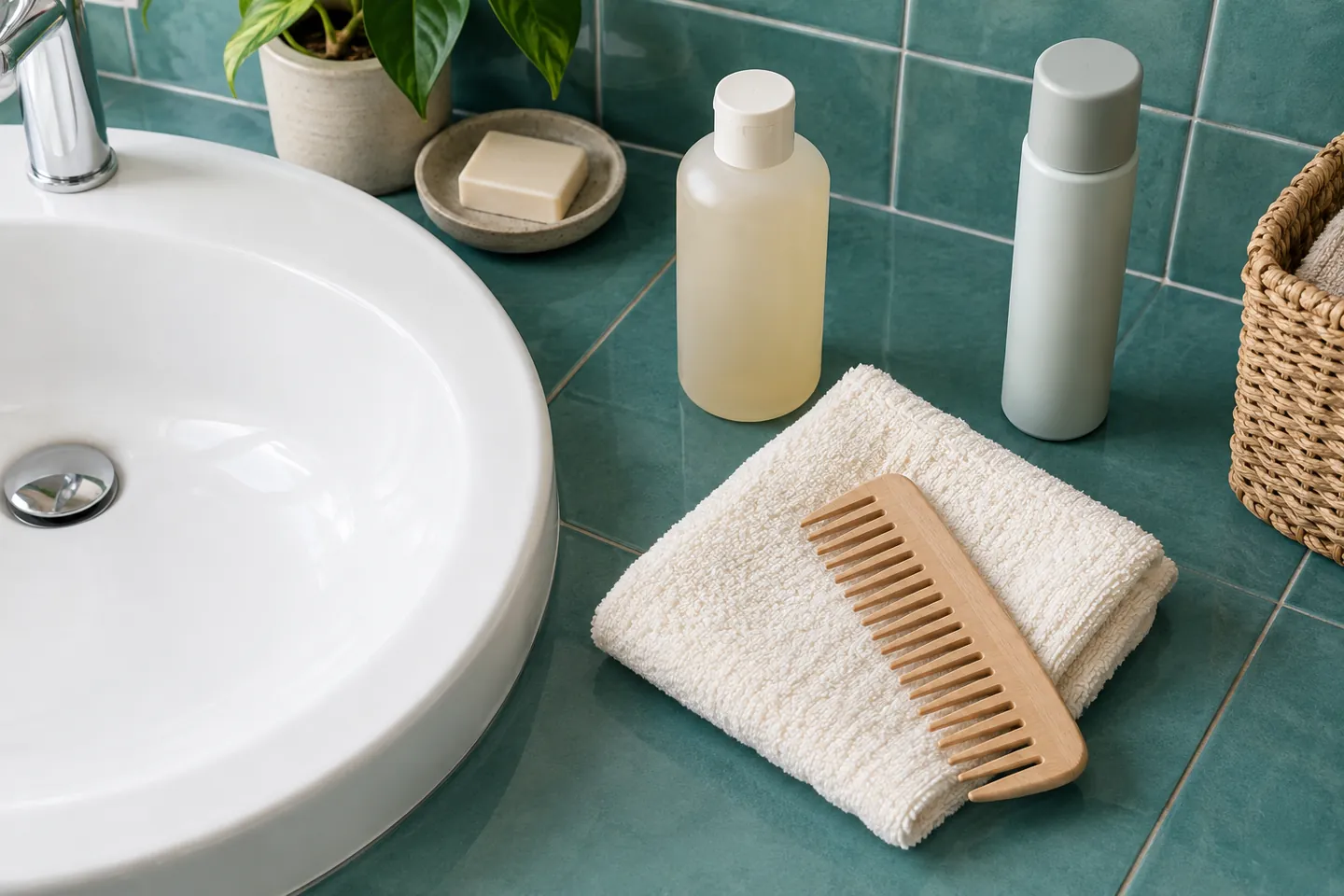
If drying time is the reason every wash feels difficult, address that scheduling problem separately. Could you wash earlier, simplify the finish, or discuss a shape that fits the time you actually have? Our wash-schedule guide explores that haircut decision without treating products as a substitute for cleaning. For today, choose an achievable wash window and prepare what you need. A towel, your usual shampoo and time to dry are often more useful than another promise of an indefinitely fresh hairstyle.
Adapt the finish to the next part of the day
After the refresh, choose a comfortable finish that does not require constant touching. You might leave the hair down, make a loose gathering or keep a troublesome front piece out of your way. Do not pull the roots tightly simply to hide a result you dislike. Check the hair in the clothing and headwear you will actually use. A routine designed for a quiet morning may need a different finish before a workout, a commute or several hours with headphones.
Keep the useful lesson small: the area that needed attention, the directions you followed and whether the finish was worth the effort. For recurring workout conflicts, use our active-routine guide to separate styling, washing and haircut choices. You can then decide whether dry shampoo has a limited place in your week or whether a different schedule serves you better. Either answer is reasonable. The successful routine has a stopping point, leaves your scalp comfortable and does not make you depend on repeated layers.