
Blonde color planning
Brown to blonde hair, without the guesswork
Separate the blonde you like from the lightening your hair can tolerate. Build a small preview shortlist and a realistic consultation brief.

You can love a blonde photograph and still be unsure whether you want that much change on your own head. Planning brown to blonde hair involves two separate decisions: the visible result you prefer and the process your current hair can reasonably support. A bright preview answers neither question completely, but it can help you describe the first before a professional assesses the second. That distinction prevents an attractive image from becoming an unrealistic promise for appointment day.
Start with a preferred brightness, an acceptable first-stage alternative and a boundary you will not cross to obtain the color. Hair Muse can help explore broad color directions on your photo and save a short selection. It cannot examine the fiber, identify old dye, predict lightening, choose products or guarantee a salon result. This is a planning guide, not a home-bleaching recipe: no strength, mixing ratio or processing time can be chosen safely from a photograph alone.
Brown to blonde hair: define the change you actually want
Describe what you want blonde to do. Perhaps you want less visual weight around the face, an overall lighter impression or a clearly pale statement. Those outcomes do not necessarily require the same amount of lightening across the entire head. Separate brightness from tone: a deeper golden blonde and a very pale beige blonde differ in lightness as well as warmth. Begin with that visible difference rather than a technical shade number borrowed from a different brand or a social-media caption.
Write down your priority and your limit. A useful pair might be ‘noticeably lighter near my face’ and ‘keep the current length rather than push for platinum.’ Another might be ‘a pale overall look’ and ‘I am willing to accept a darker first appointment.’ These are preferences for discussion, not assurances that the hair can reach them. If you are still choosing among color families, settle that broader question before asking the salon for a major lightening service.
Make a color-history map before making a booking
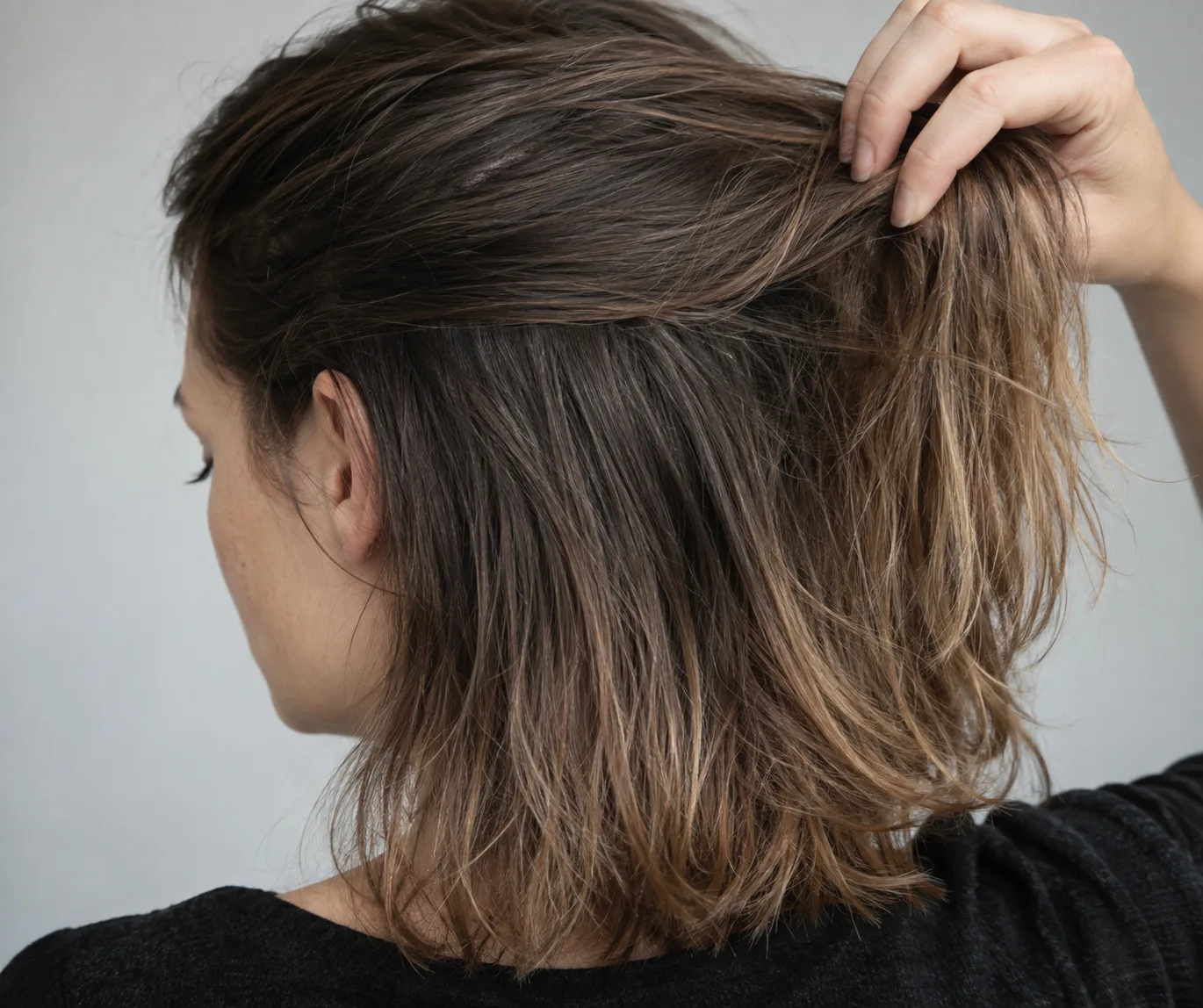
Look separately at new growth, the middle lengths and the ends. They may have different histories even if the hair looks uniformly brown today. Record previous permanent dye, salon color, home color, lightening, henna, smoothing, straightening or perming that could remain in the length. Include approximate dates and the area treated. If you do not know a product, say so; a remembered photograph or packaging name is more useful than inventing a precise history to sound prepared.
Note what you can observe without trying to diagnose it: ends that snag, short broken pieces, a recent change in texture, or scalp irritation. Do not perform forceful stretching tests or use a harsh wash to ‘prepare’ the hair. These observations help the colorist decide what needs inspection. Recently cut ends do not prove that every older treatment has disappeared, and naturally dark hair is not automatically equivalent to hair repeatedly dyed dark. Let the assessment distinguish them.
Choose three brightness references, not thirty blondes
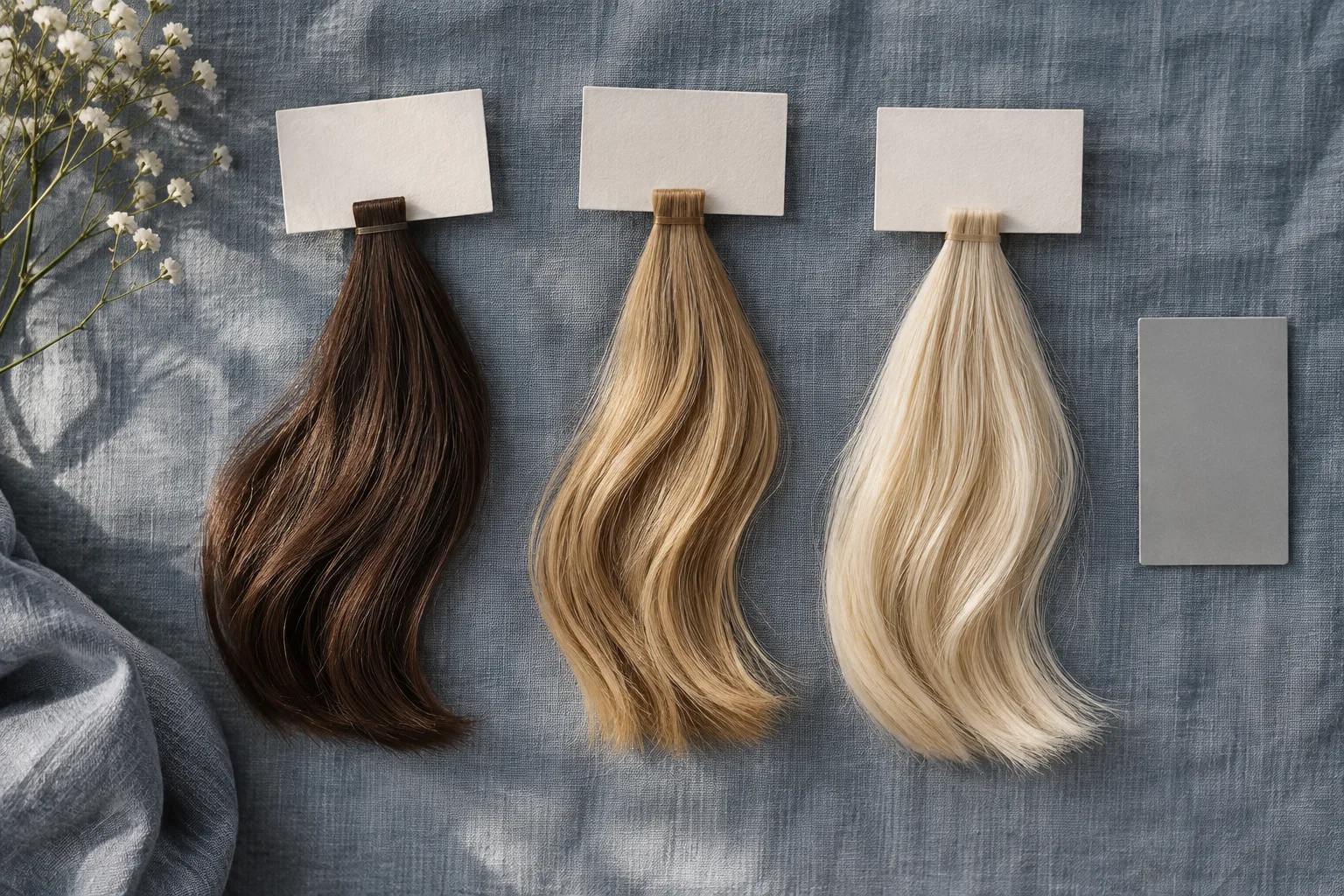
Keep one image for your preferred brightness, one for a deeper acceptable result and one showing a result you do not want. Choose photographs with an ordinary finish rather than intense filters, glare or dramatically different lighting. Mark the useful feature on each: the lightness, the retained root or the overall contrast. If you like the haircut in one picture but the color in another, explain that; otherwise the reference can communicate a combined transformation you never intended.
Compare references at normal viewing size beside a recent, unedited photograph of yourself. Keep your clothing and makeup in mind without treating skin tone as a rule that permits or forbids blonde. The practical question is whether you like the contrast in your usual setting. A consistent source photograph makes that easier. You can retain more darkness near the scalp or choose a deeper target while still making a visible change; ‘blonde’ is a range, not a pass-or-fail destination.
Use Hair Muse to test the visual preference
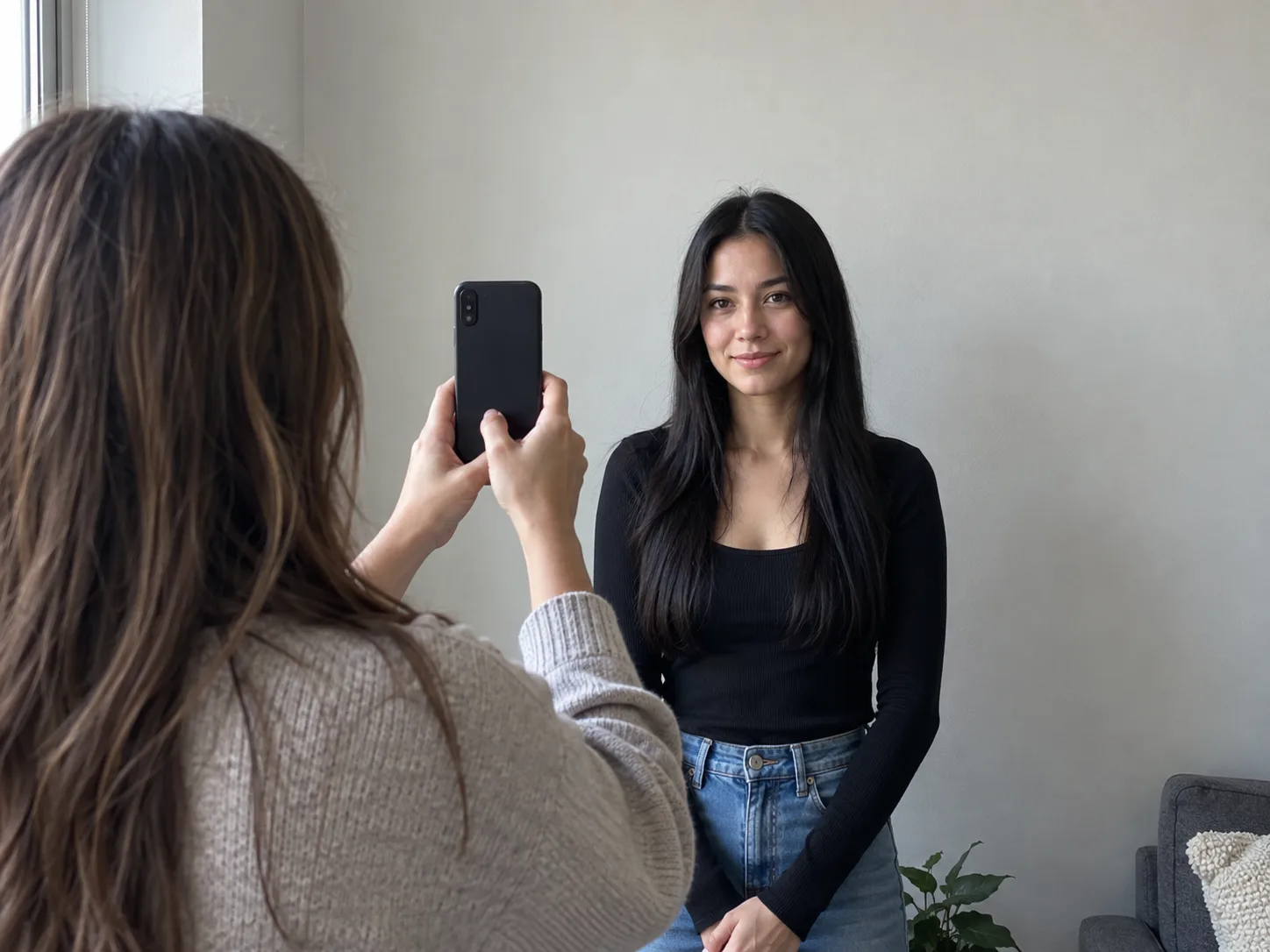
Start with a clear photo in soft, even daylight. Keep the whole head and the hair outline visible, and avoid a warm bathroom lamp or a beauty filter. Explore a small number of broad blonde directions while keeping the cut, part and texture as similar as possible. Look first at the amount of lightness beside the face. Only after that feels clear should you compare warmer and cooler impressions. If the available results change several variables, treat the comparison as rough and explain that uncertainty.
Discard a result that reshapes the face, moves the hairline, invents density or makes the hair look unusually glossy. Save only the images that clarify a preference, then add a short note in your own words about what you liked. Hair Muse is free to download; some previews or usage levels may require an in-app purchase. Neither a saved image nor a polished synthetic strand proves that your real hair can become that light. Take the shortlist as a conversation starter, not a prescription.
Do not confuse a pale preview with feasible lightening
A digital image changes pixels. A lightening service changes the hair, and the starting pigment, previous treatments and condition affect the options. A dark dyed length may behave differently from untouched growth. A reference cannot tell you the number of appointments required, how much length can be retained or whether a very pale target is appropriate. The American Academy of Dermatology warns that significant lightening can increase damage. Treat that as a reason for a careful assessment, not a universal timetable or a diagnosis of your hair.
Ask what the professional can reasonably propose after examining the actual strands. A strand test, if the colorist considers it appropriate, can inform the plan; it does not eliminate every risk or guarantee uniform processing across the head. Accept that the first-session target may differ from the eventual goal. Do not repeat home bleaching to chase a preview or use household mixtures to remove old dye. If the scalp is sore or the hair is breaking substantially, postpone the cosmetic change and seek suitable professional advice.
Set an upkeep limit that works beyond appointment day
Think about the result several weeks later, not only immediately after styling. How comfortable are you with dark new growth? Can you make space for refresh appointments and gentle care, or do you need the color to remain acceptable when a visit is delayed? Ask for a written estimate from the salon that separates the initial service, possible later sessions and ongoing maintenance. There is no honest universal cost or refresh interval for every brown-to-blonde change, so do not build the decision around an unsupported online number.
Choose a fallback that you would enjoy rather than merely tolerate. That might be a deeper blonde, more retained brown or a less extensive first step. If preserving length and manageability matters most, say that before agreeing to the palest target. Also consider the reverse journey: coloring lightened hair darker is a new service, not an undo button that restores the original fiber. Understanding your tolerance for both lightness and later darkness helps you make a less impulsive commitment.
Turn the shortlist into a salon conversation
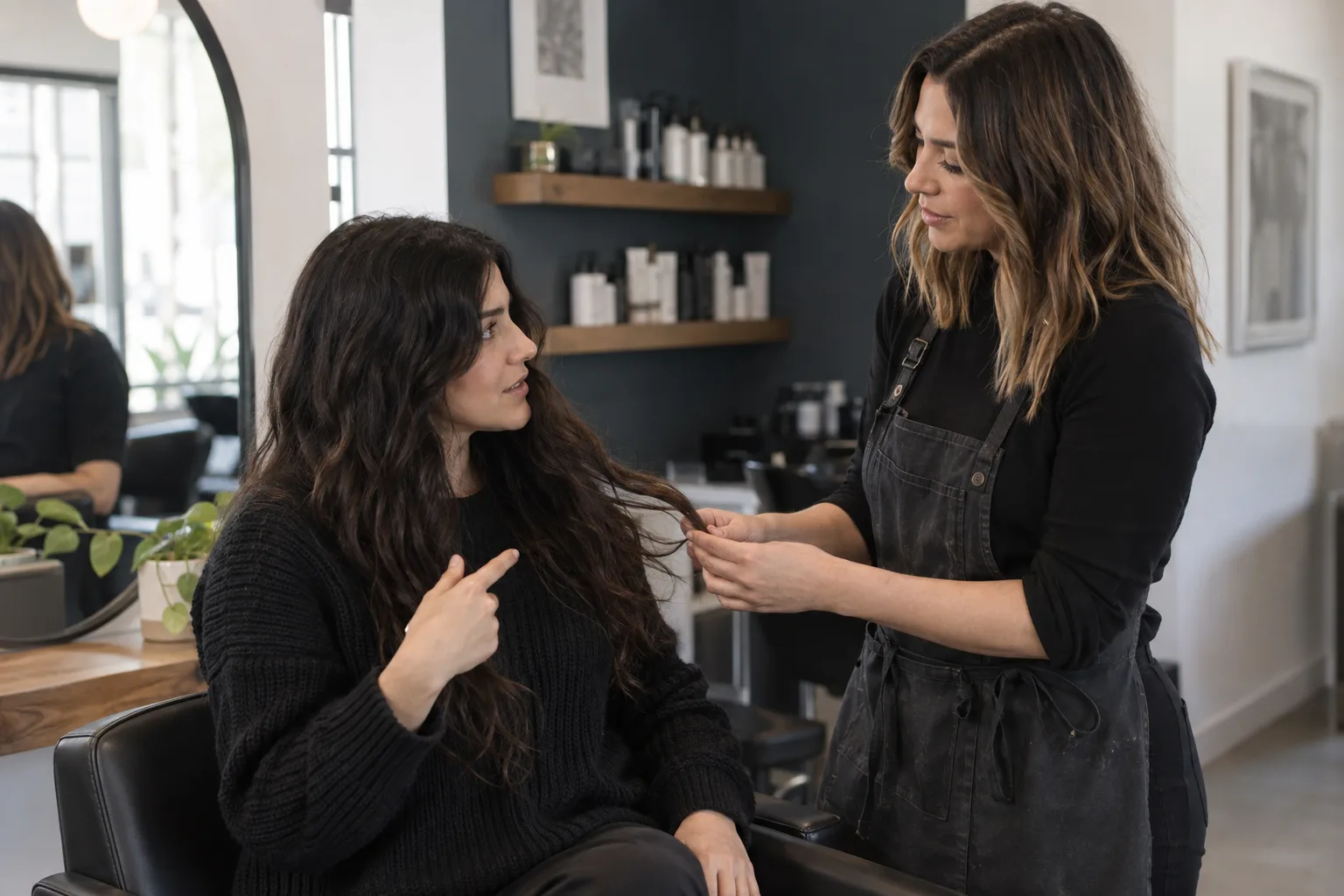
Bring your current photos, treatment history, preferred reference and acceptable alternative. Ask which part of the goal is realistic now, what should remain untouched, what uncertainty remains and what would make the professional stop or change the plan. Discuss your normal texture and styling routine. A blonde photographed with a smooth blowout may read differently on natural waves, and a color change may make existing dryness more noticeable. The salon should explain its proposed service rather than assume the app has already decided it.
Mention any previous reaction to dye or bleach, even if it occurred years ago. Follow the product-specific warnings and required safety procedures discussed with the professional. FDA guidance highlights the importance of dye instructions and allergy precautions; a test of a hair strand is not an allergy test. If a reaction occurs, stop the service and seek medical guidance; breathing difficulty or marked facial swelling requires urgent help. These precautions concern the real products, not whether the preview looked convincing.
Leave with a decision, even if the decision is to wait
A useful plan names the preferred appearance, the first achievable target, the maintenance commitment and the limits that take priority. Repeat it back before booking: ‘I want a lighter impression, I accept a deeper first result, and retaining this length matters more than becoming very pale.’ If the colorist cannot support the proposed target, ask what alternative they would recommend or arrange another qualified consultation. Do not interpret a cautious answer as a challenge to attempt the service yourself.
Waiting is a valid outcome when the history is unclear, the condition needs attention or the upkeep does not fit your life. Keep your notes and preview shortlist so you do not restart the entire search later. The goal is not to reproduce a screen at any cost. It is to choose a blonde direction you enjoy, understand what remains uncertain and agree on a process that respects the actual hair. A smaller, well-understood change can be more satisfying than a dramatic promise.