Everyday hair care
When static hair follows your sweater home
Before reaching for more styling, look at the last contact: a sweater, a hat or another brush pass. Build a gentler routine around that moment.

Static hair often arrives at an inconvenient moment: you have finished getting ready, pulled a sweater over your head and suddenly the outer strands will not settle. Another brush pass seems sensible, until you find yourself brushing again. Start by looking at what happened immediately before the change. The useful question is not which product promises perfectly smooth hair, but which part of the morning keeps introducing contact you could handle differently.
This independent guide gives you a practical sequence for handling flyaways, reviewing clothes and tools, and choosing a modest amount of suitable care. You do not need an app, a new wardrobe or a guaranteed anti-static accessory. The photographs illustrate separate choices rather than measured results. Hair texture, products and surroundings differ, so treat each adjustment as something to observe, not a diagnosis or a promise.
Static hair: notice the trigger before naming the problem
Watch the timing. Do strands lift after a hat comes off, after your scarf rubs against the lengths, or during repeated brushing? Static involves electrical charge; similarly charged strands can repel each other. NASA illustrates this with the familiar balloon-and-hair example. That explains a possible mechanism, not a way to identify every flyaway from a photograph. Do not rub a balloon on your hair to test whether your morning problem qualifies.
Frizz, natural texture, short growing hairs and static can look similar or appear together. A rough-feeling section is not proof that it is electrically charged, while a sudden change after clothing contact is a useful clue rather than a complete explanation. Note whether the problem affects the outer layer, the ends or the whole shape. You can make a gentler handling decision without confidently attaching a scientific label to every strand.
Observe one ordinary situation, such as removing your commuting hat. Keep the rest of the routine familiar: changing several things simultaneously makes the useful adjustment harder to recognise.
Pause the brush and make the smallest useful adjustment
Put down the tool when another pass is not helping. Move the sweater or scarf away from the loose lengths, then let the hair settle before touching it again. Repeatedly dragging a brush from roots to ends adds more contact without necessarily answering the problem. The aim is a comfortable, wearable arrangement, not a perfectly flat outer surface. A few short hairs do not require an emergency styling session.
For a modest temporary tidy-up, try one very light pass with clean, barely damp palms over the outer lengths. Keep hands free of household cleaners or strongly fragranced hand products. Do not soak the roots, rub the scalp or keep adding water if it disrupts your texture. Leave curls in their familiar shape rather than pressing them straight. This is an optional handling step, not a treatment or a result that should work for everyone.
Treat untangling separately, support small sections and stop if anything catches or hurts. Keep damp hands away from plugged-in appliances. Heat is not a necessary response to sweater flyaways.
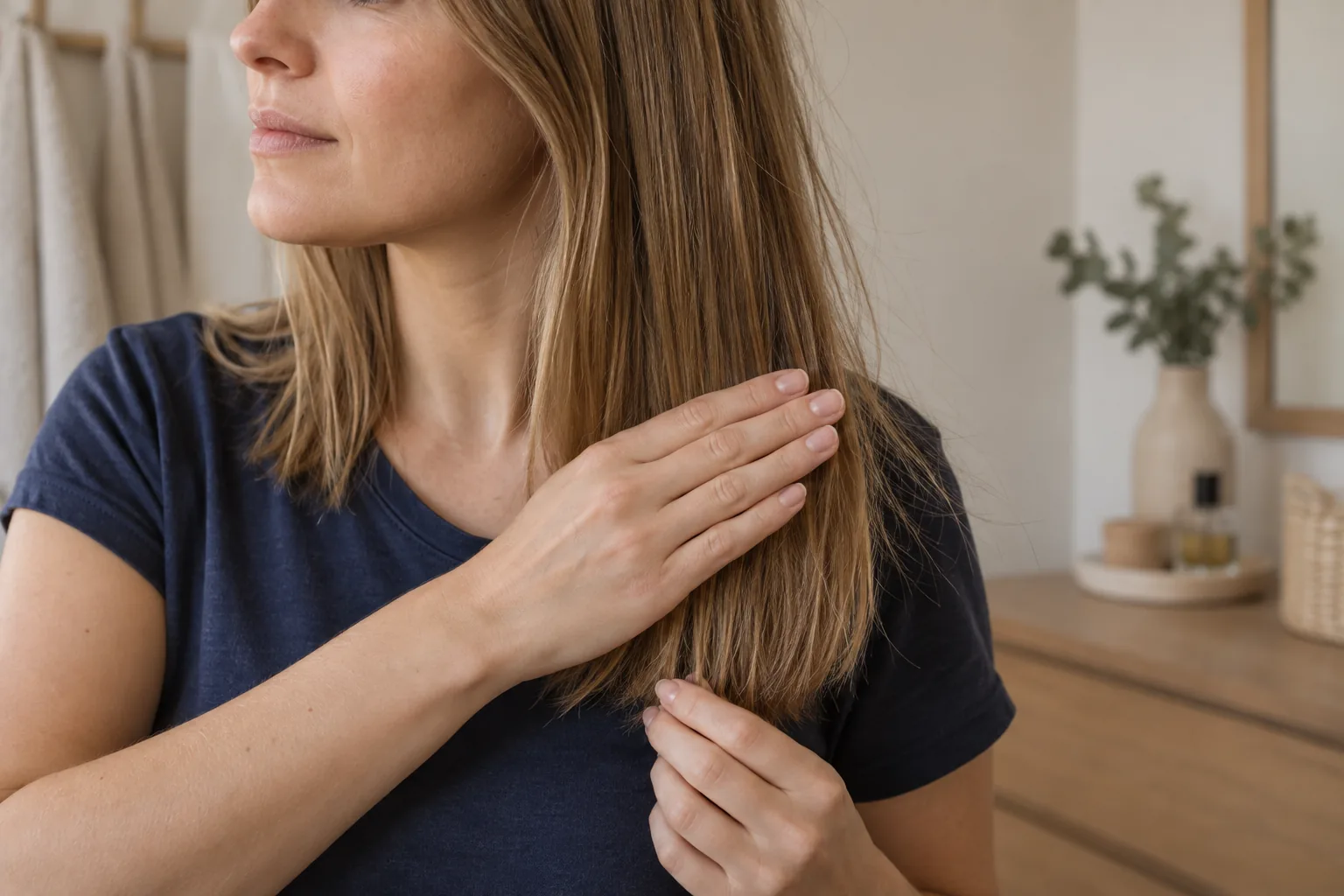
Use hair-specific care without turning the roots heavy
If you already use a leave-in conditioner, check its directions before adding more. The American Academy of Dermatology describes leave-in care as one option for reducing static and easing handling, with texture and product choice mattering. Start with the labelled amount, spread it evenly and keep placement appropriate to the product. Fine hair may call for a lightweight formula; needing care does not mean needing a thick coating over the crown.
Use the next normal application to observe whether the ends are easier to arrange and whether the roots still feel comfortable. Avoid stacking oil, serum, cream and spray to chase the last lifted strand. When several products accumulate, it becomes harder to know what suits you. If you do not own a suitable product, begin with the handling and clothing steps before buying anything. This article is not a product shortlist.
A rinse-out conditioner is not automatically a leave-in, and a cosmetic product is not automatically a heat protectant. Follow the specific label rather than diluting a household substitute. Keep care away from your eyes and discontinue a product that causes discomfort. Persistent scalp symptoms deserve qualified advice, not an increasingly elaborate anti-static mixture.
Move clothing changes ahead of the final hair arrangement
Put on the overhead layers of your outfit before the last gentle hair adjustment whenever that is practical. When removing a sweater, give the neck opening room rather than repeatedly scrubbing it across the same section of hair. With a hat, lift it off steadily and move it clear of the lengths. These are small sequence changes, not reasons to stop wearing warm clothing or abandon a necessary protective item.
Look inside the hat and along the scarf edge that actually touches your hair. Notice seams, rough areas and trapped strands; the outer appearance alone does not tell you what the contact surface is like. Try another comfortable item you already own on a comparable outing if you want to explore the difference. Do not assume every natural fibre prevents static or every synthetic fabric causes it. A lining is a choice to evaluate, not a guarantee.
Keep long lengths clear of a collar if comfortable. Any arrangement must remain loose and compatible with your helmet or safety equipment. Warmth and protection come before a tidy photograph.
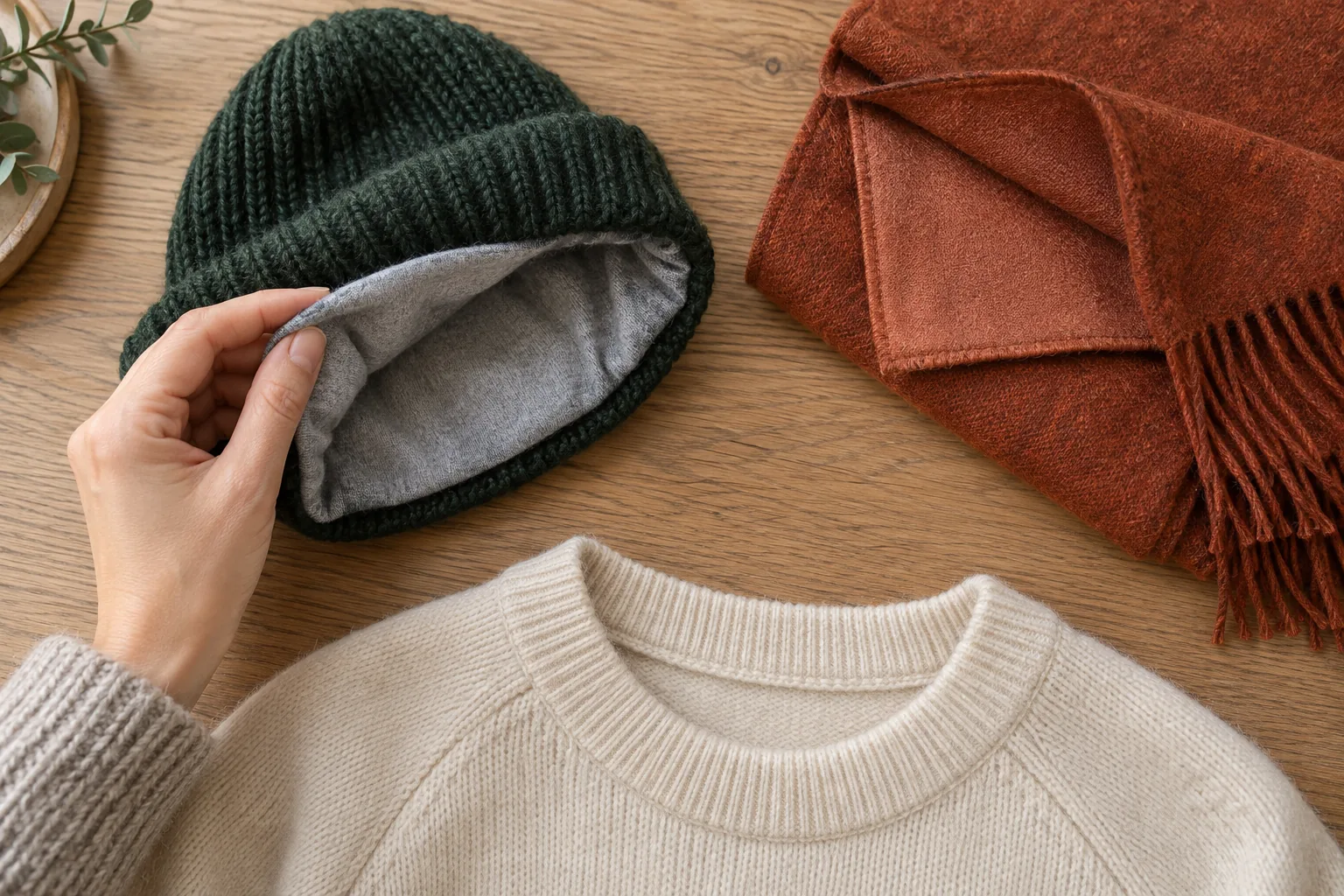
Separate tool choice from the way you use it
Check for rough teeth, damaged pins and product residue before deciding that the material of your brush is the whole problem. Choose a tool suitable for your texture, then use only the passes you need. Wood, metal and plastic are not universal promises of a static-free morning. A smooth, familiar tool used gently may be more practical than buying an unfamiliar accessory whose claims do not explain how it fits your hair.
For curls or coils, do not introduce vigorous dry brushing simply to copy a routine designed around straight hair. Work within the detangling and styling approach you already tolerate, and avoid pulling through a knot to make the surface lie flatter. If you are unsure what is appropriate, ask a hair professional about technique and tool suitability for your actual hair rather than treating the illustration as a prescription.
A haircut changes shape and clothing contact, not the guarantee of how charge behaves. Compare length, layers and fringe if you genuinely want a change. Our haircut-comparison guide separates that lasting decision from today’s sweater frustration.
Let texture and contact points guide the next step
Fine straight hair, a dense wavy style and long coils do not need identical amounts of handling or product. Notice where the difficulty happens instead of copying a full routine from someone with a different texture. If only the ends catch on a scarf, begin there; if the trouble starts during brushing, review that moment first. The smallest relevant adjustment is easier to keep than a new ten-step schedule.
On a usual wash day, use your normal care instructions and arrange the hair in the way it comfortably dries. Do not add extra washing just because a hat disturbed the finished shape. Later, keep any permitted leave-in application focused where it is needed. For coily hair, that may mean gently distributing a small amount through the ends without dragging the section straight or tightening the roots. The photograph shows placement, not a recommended dose for every product.
If hair feels heavy, sticky or harder to manage, stop adding layers and revisit the label at your next care session. Keep natural movement: an easier routine should not demand continual correction of your texture.
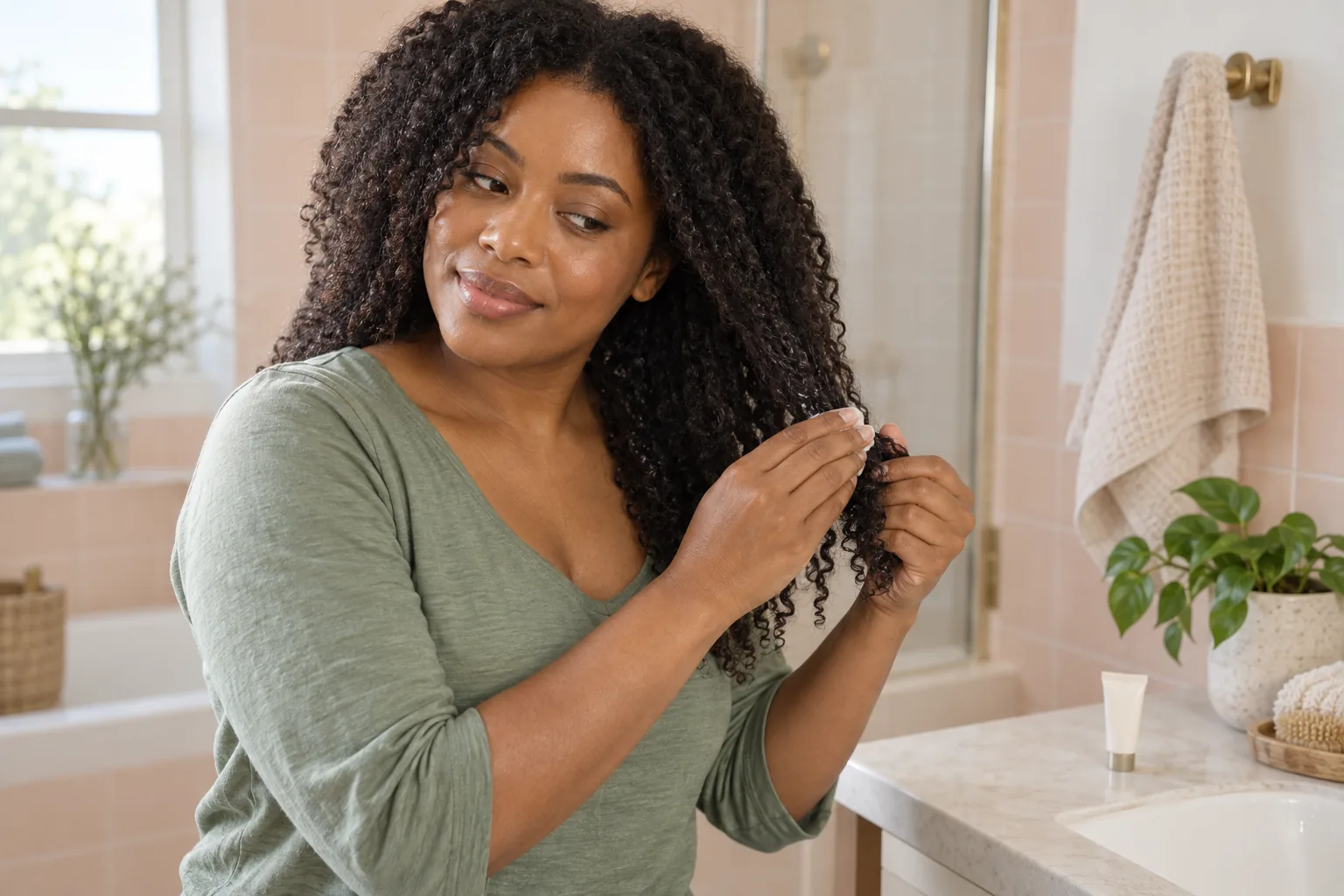
Skip laundry shortcuts and recognise a different problem
Keep fabric softener, dryer sheets and household anti-static sprays out of your hair routine. Products intended for clothing are not interchangeable with hair cosmetics. Likewise, do not improvise with metal objects, electrical devices or improvised grounding methods near the scalp. An internet hack that involves charge is not automatically useful or suitable for contact with hair and skin. There is no need to turn a dressing-room inconvenience into a home electrical experiment.
Stop a handling routine that causes pain, burning or persistent itching. Sudden shedding, a new scalp change or ongoing breakage needs a different conversation from a few strands lifting after a sweater. Seek an appropriate healthcare professional for symptoms and a hair professional for practical styling questions. This article cannot identify a scalp condition, diagnose damage or determine from a picture why a particular strand is short.
Describe the timing and your adjustments at a styling consultation. An ordinary unfiltered photo can help; a smooth edited result is not evidence of real behaviour. Our salon-planning guide separates visual references from an in-person assessment.
Finish with one repeatable change, not a perfect-hair test
Choose one change for the next few ordinary outings: dress before the final adjustment, reduce unnecessary brushing, or arrange long lengths away from a collar. Keep a short note about when the flyaways appear and whether the routine feels easier. You are not running a controlled experiment; weather, clothes and hair condition can vary. The note is simply a way to remember which choice was comfortable enough to repeat.
If gathering the hair helps with clothing contact, use a loose braid or another comfortable arrangement you already know. Avoid tension at the scalp and check that it does not interfere with a helmet, hearing aids or other equipment. Do not keep tightening the style to capture every small strand. When loose hair feels better, wear it loose and use the clothing sequence instead. A routine should leave you with options.
Finish when your hair is comfortable. Revisit persistent triggers or ask for help rather than buying several solutions. Judge the routine by wearability, not a requirement that every hair stay still.