
Haircut planning
How to plan a haircut while growing out bangs
Choose the next shape, manage the in-between lengths, and give your stylist a clear destination for the front of your haircut.
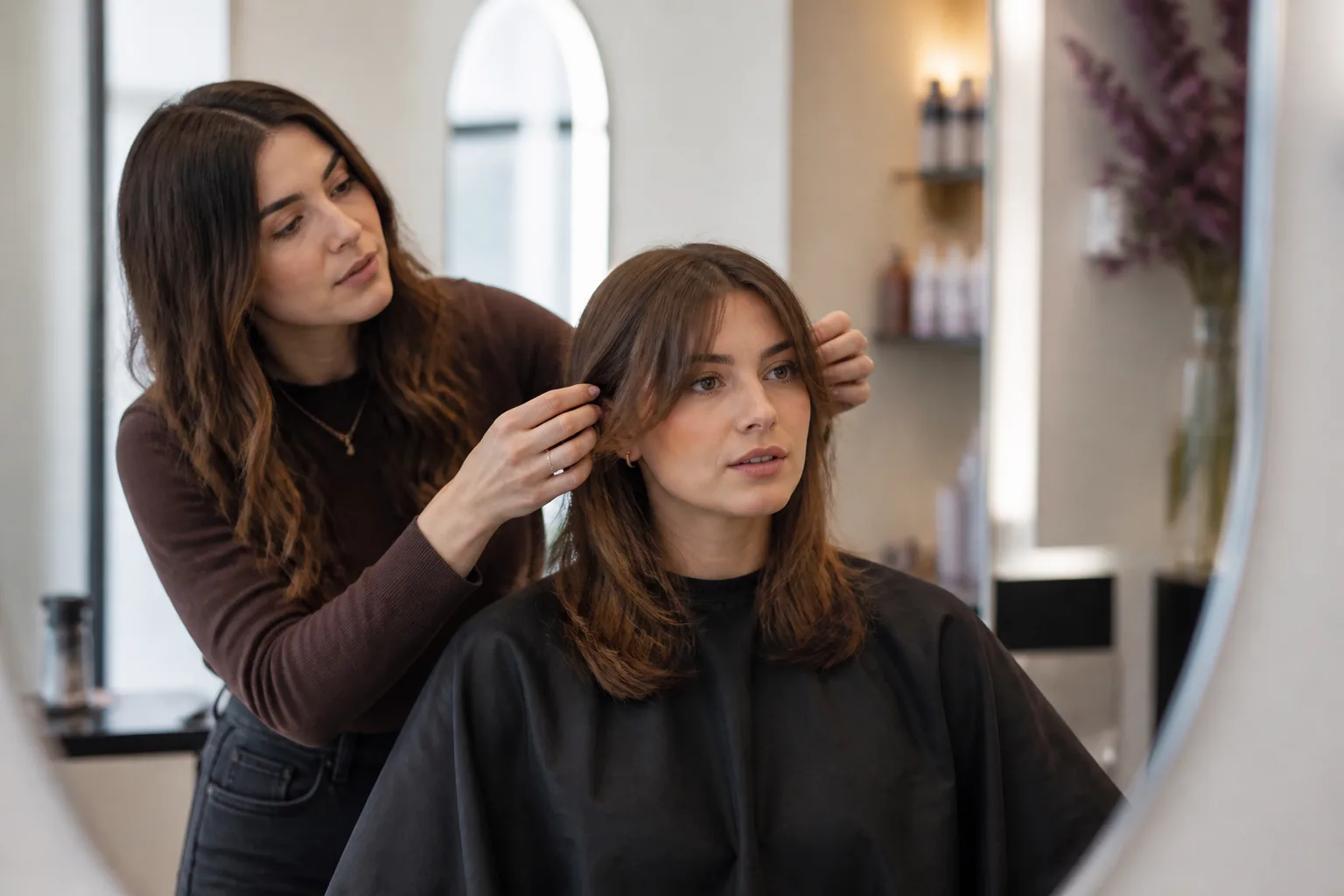
Growing out bangs is not one haircut decision followed by a long wait. The front changes its relationship to your eyes, cheekbones, ears, part, and the rest of the haircut several times before it reaches a tuckable or blended length. A useful plan gives each stage a purpose instead of treating every in-between week as a problem to cut away.
Hair Muse can help you compare visible directions such as a center opening, a side sweep, longer face framing, or a front that blends into the perimeter. It cannot predict growth speed, strand movement, or the exact day a section will stay behind your ear. Use previews to choose a destination and discuss proportions, then let a stylist assess your real front sections and decide how to connect them safely into the haircut.
Choose a destination before you choose the next trim
Start with the result you are moving toward. You may want the former fringe to become cheekbone-length face framing, merge into long layers, reach the jaw, or eventually disappear into a one-length outline. Those destinations call for different choices at the next appointment. A stylist who knows the goal can preserve useful length, adjust the surrounding shape, and avoid repeatedly rebuilding a shorter fringe simply because the current stage feels untidy.
Describe the destination in terms of both appearance and function. Decide whether you want the front to open away from the face, cross the forehead, tuck behind the ears, fit into a ponytail, or remain deliberately separated from the rest. Rank those needs. A front section may look softly layered before it becomes reliably tuckable, while keeping it heavy enough for an updo may limit how much it can be texturized. The order of priorities gives the plan direction when every preference cannot be met at once.
- Final relationship to the shortest face-framing point
- Preferred part or freedom to change the part
- Need to tuck, pin, tie back, or wear the front loose
- Maximum styling time you will repeat on an ordinary day
Record the front at its current length
Photograph the hair fully dry and arranged as you normally wear it. Take a straight-on view, both sides, and a view with the front tucked or pinned in your usual way. Include the whole head so the stylist can judge how the short section relates to the overall length and volume. Avoid filters, portrait blur, and an unusually polished blowout if that finish is not part of your routine. The goal is to document the actual transition, not to make it look finished already.
Add notes about what changes through the day. One side may separate sooner, the ends may turn outward at cheek level, or the section may fall into your eyes after movement. If glasses, headphones, a helmet, or frequent ear-tucking affect the front, show that interaction. Also identify anything you have been trimming yourself. A stylist needs to know whether the center, corners, and side connections are at different stages before deciding what should be left alone and what can be refined.
Bring the awkward version as well as the styled version. It shows which problem the next shape actually needs to solve.
Separate length progress from shape maintenance
Growing the front does not always mean avoiding every haircut, and a tidy appointment does not have to mean shortening the section you are trying to preserve. The stylist may recommend adjusting the perimeter, connecting neighboring pieces, refining weight, or leaving the former bangs untouched. Which approach is useful depends on your destination, current geometry, texture, density, and tolerance for an uneven-looking transition. Ask exactly which strands would be cut and how that serves the longer plan.
Be cautious about repeatedly correcting the front to make each temporary stage look like a complete fringe. Small trims can be appropriate, but if the target length keeps moving back, ask whether the appointment is maintaining the current look or progressing toward the stated destination. Neither goal is automatically wrong. The important point is to choose consciously. Agree on a minimum length to protect and on the areas where reshaping is acceptable, rather than using the broad instruction to ‘just blend it.’
Compare transition shapes one variable at a time
Use one clear, front-facing source photo with the hairline and current front sections visible. In Hair Muse, compare a small set of directions using the same image. Keep the overall length stable while you explore a center opening, side sweep, or longer face frame. Then keep the preferred front stable while you compare a fuller perimeter with more visible layering. This makes it easier to tell whether you like the front itself or the way the rest of the haircut supports it.
Review the previews for broad proportion rather than strand-level truth. A generated image may lengthen the bangs, invent a part, make both sides symmetrical, change density, or place hair behind an ear without showing whether it would stay there. Reject any result that alters your face or starting structure enough to confuse the decision. Label useful images with the visible idea you want to discuss: ‘opening begins here,’ ‘shortest point near the cheekbone,’ or ‘front connects gradually into this length.’
A preview can clarify the next silhouette. It cannot provide a growth calendar or prove that the front will hold a pictured direction.


Plan around the part and natural movement
The same growing fringe can feel shorter, fuller, or more separated when the part changes. Observe where your hair naturally opens after washing and compare it with the part you prefer to wear. A center part may distribute the front into two balanced sections; a side part may place more length and weight on one side. Neither is universally easier. The practical choice depends on growth direction, texture, density, and how much daily redirection you accept.
Show the stylist any front lift, split, curl, or stronger bend before it is styled away. Ask where the shortest section is likely to sit when dry and whether the proposed connection works with that movement. If you want freedom to alternate the part, say so before the cut because a highly side-specific shape may look different when reversed. A preview can help you decide which opening you prefer visually, but only the real hair can show how much control the change requires.
Build a routine for the in-between stage
Choose one low-effort way to wear the front loose and one reliable fallback. The loose option might involve setting the part while damp, directing the ends away from the face, or using the small amount of product your stylist recommends. The fallback might be a clip, pin, headband, braid, or tuck. Test whether it stays comfortable during work, exercise, and the later days of your wash cycle instead of judging it only in front of the mirror after styling.
State your limits clearly. If you do not want to use heat every day, do not base the transition on a reference whose defining movement depends on a round brush or hot tool. Ask the stylist to demonstrate an ordinary-day method and, if you want one, a more finished option. The haircut and routine should work together, but the routine does not need to disguise every sign that the front is growing. A flexible solution is often more realistic than forcing one fixed shape at every length.
- Loose option for a normal day
- Secure option for work, wind, or exercise
- Method for refreshing only the front section
- Backup part or accessory for an uncooperative day
Use checkpoints instead of a promised timeline
Avoid building the plan around a guaranteed number of weeks. Growth is individual, and the practical milestone depends on where the section starts, how it bends, and what you need it to do. Use observable checkpoints instead: the ends clear the eyes, reach a chosen facial landmark, remain behind the ear for your routine, or join the shortest layer. These markers make it easier to decide whether the next appointment should preserve length or refine the connection.
At each checkpoint, take the same front and side photos and reassess the destination. You may discover that a cheekbone-length frame suits you well enough to keep, or that the section needs more length before it can enter your usual ponytail. Changing the destination is allowed; repeatedly cutting without naming the new goal is what creates confusion. Ask the salon when they would like to review the shape and what signs should prompt an earlier consultation rather than trimming the front impulsively at home.
Turn the plan into a precise salon brief
Bring your current photos, two or three focused previews, and a short statement of the destination. For each image, point to the feature you mean rather than asking for an exact copy. Explain which length must be protected, where you are open to removing weight or adjusting the surrounding haircut, and how you need the front to function. Mention your part, normal texture, styling limit, glasses or accessories, and any regular tied-back style that the new connection must support.
End with a preferred route and an acceptable fallback. Your preferred route might preserve every millimeter of the front while changing the rest of the shape; the fallback might allow a slightly shorter corner so the transition connects more cleanly. Let the stylist revise those options after examining the real hair. Before leaving, confirm what was cut, the next visible checkpoint, the home routine, and what not to trim between visits. That shared map turns growing out bangs from an indefinite wait into a series of deliberate decisions.