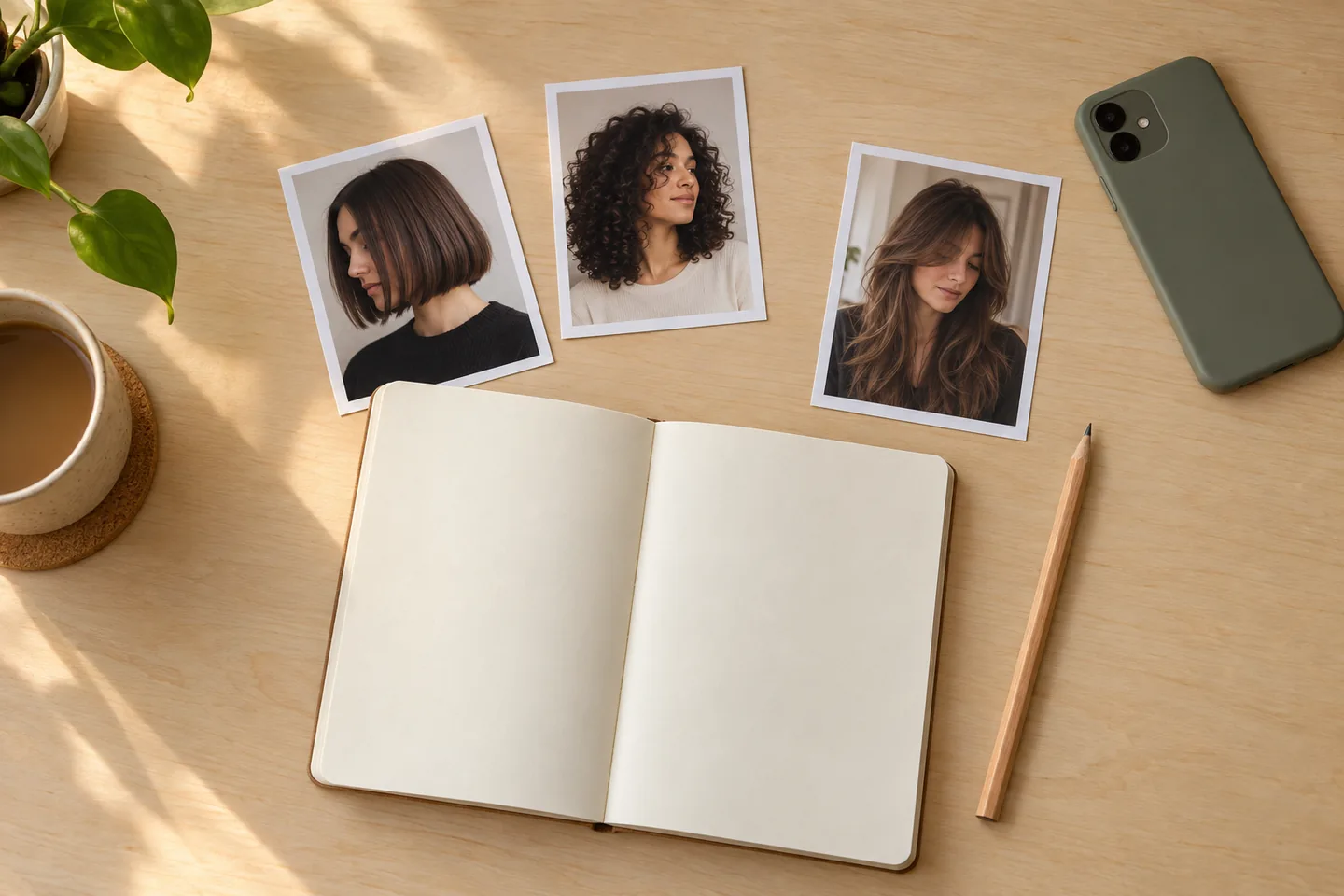
Face framing and personal choice
Hairstyles for round faces, without hiding yours
Choose the hair outline you enjoy rather than a rule about making your face smaller. Keep texture, comfort and an honest portrait in the decision.
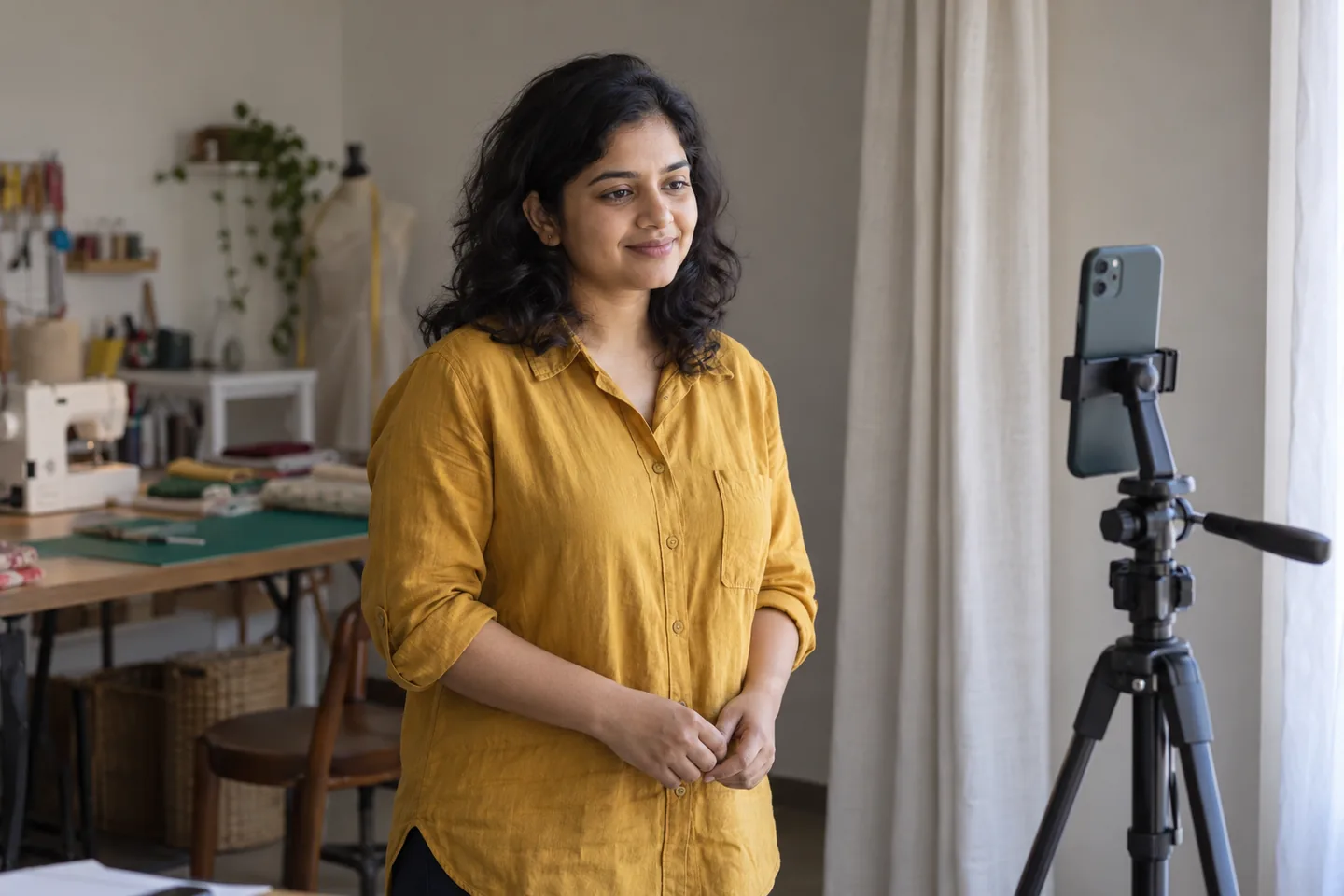
Searching for hairstyles for round faces can leave you with a narrow instruction: hide the cheeks, add height and avoid short hair. That is not useful if you like your face, want a bob or enjoy full curls at the sides. The real decision is which hair outline you enjoy, what your hair can do and how much daily work you want. Your face need not resemble a different shape before a haircut is allowed to suit you.
Begin with one visible preference: more open cheeks, a softer front edge or a shorter overall outline. This guide turns that preference into a small comparison and a practical salon brief. Hair Muse can help explore hairstyle directions on your own portrait. It cannot certify your face category, measure an ideal proportion or guarantee the behaviour of the finished cut. Keep your actual face and ordinary hair texture as the reference throughout.
Choose hairstyles for round faces by preference, not correction
Treat round as a description, not a test. A photograph changes when the head turns, the camera moves closer or hair falls across a cheek. Instead of seeking a perfect category, look at an ordinary straight-on picture and name your preference: a visible jaw, an open forehead, softness beside the temples or a compact shape. These are specific requests you can discuss without judging the face underneath.
Write one priority and one boundary before collecting inspiration. For example: a shorter outline, but no daily curl straightening. Or: an open cheek, with front pieces that stay out of my eyes at work. Neither automatically requires crown height or a deep side part. A shape you genuinely like is a better starting point than an unwanted corrective haircut. Keep the boundary beside the reference when a polished image becomes tempting.
Separate the fringe opening from the overall length
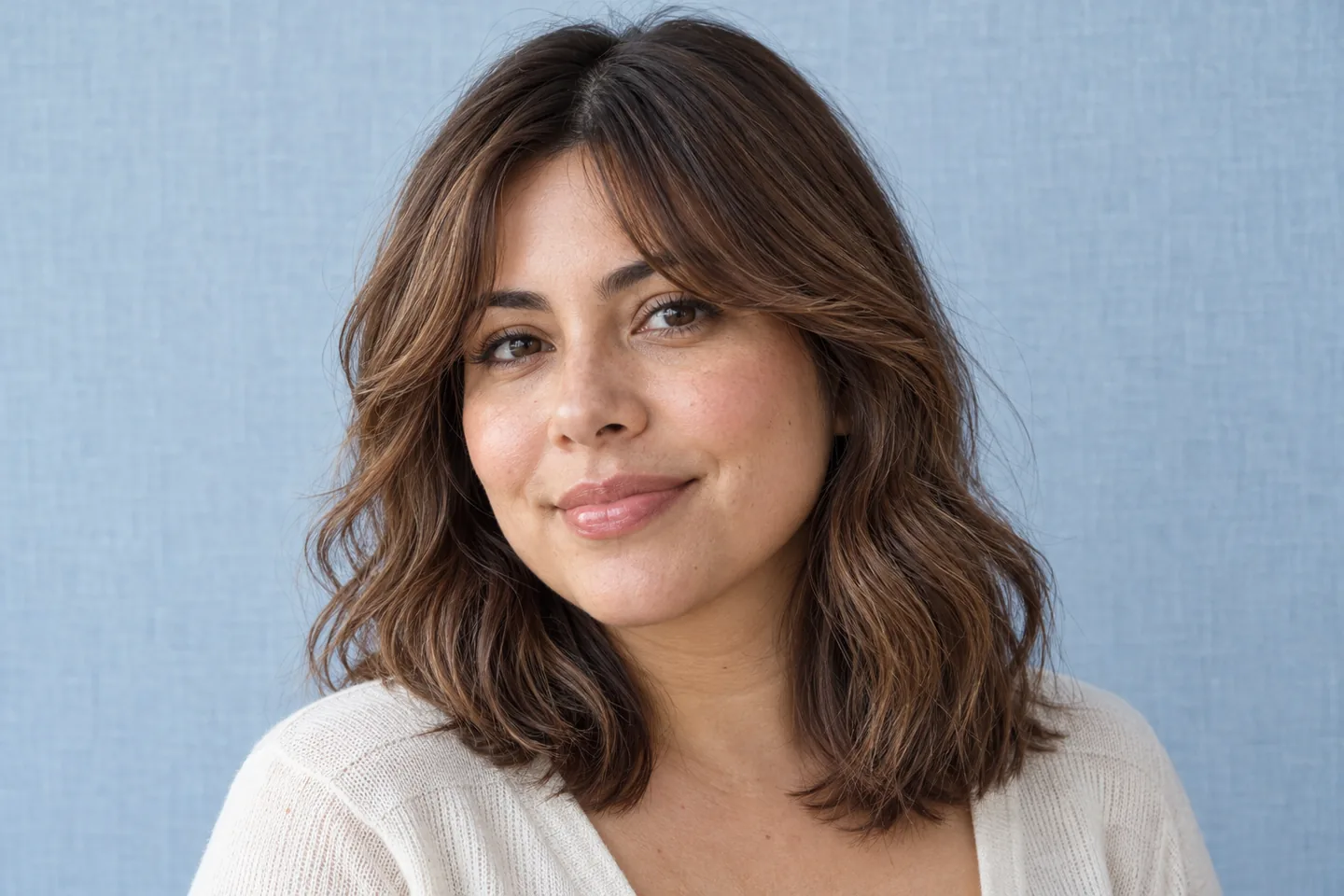
A fringe changes the front edge; a shorter cut changes the whole perimeter. Compare those decisions separately. If you like a bob reference, first notice whether you are responding to its jaw-level ends or the opening above the eyebrows. You can admire one without requesting the other. Look at where the front pieces end when dry, whether they sit near the eyes and how they connect to the sides. Do not assume that a soft-looking fringe needs no daily arrangement simply because it appears relaxed in a photograph.
Jean Louis David's fringe guide invites readers to consider preferred features, texture and length. Use those consultation questions, not its face-shape prescriptions as universal rules. For your own brief, choose a priority such as keeping the eyebrows visible or avoiding a short front section that cannot tuck away. Ask the stylist to assess growth direction and the finish you normally wear. A preview may clarify how open you want the front to feel, but it cannot establish whether a fringe will separate that way after sleeping, washing or moving outdoors.
Keep the side fullness you actually enjoy
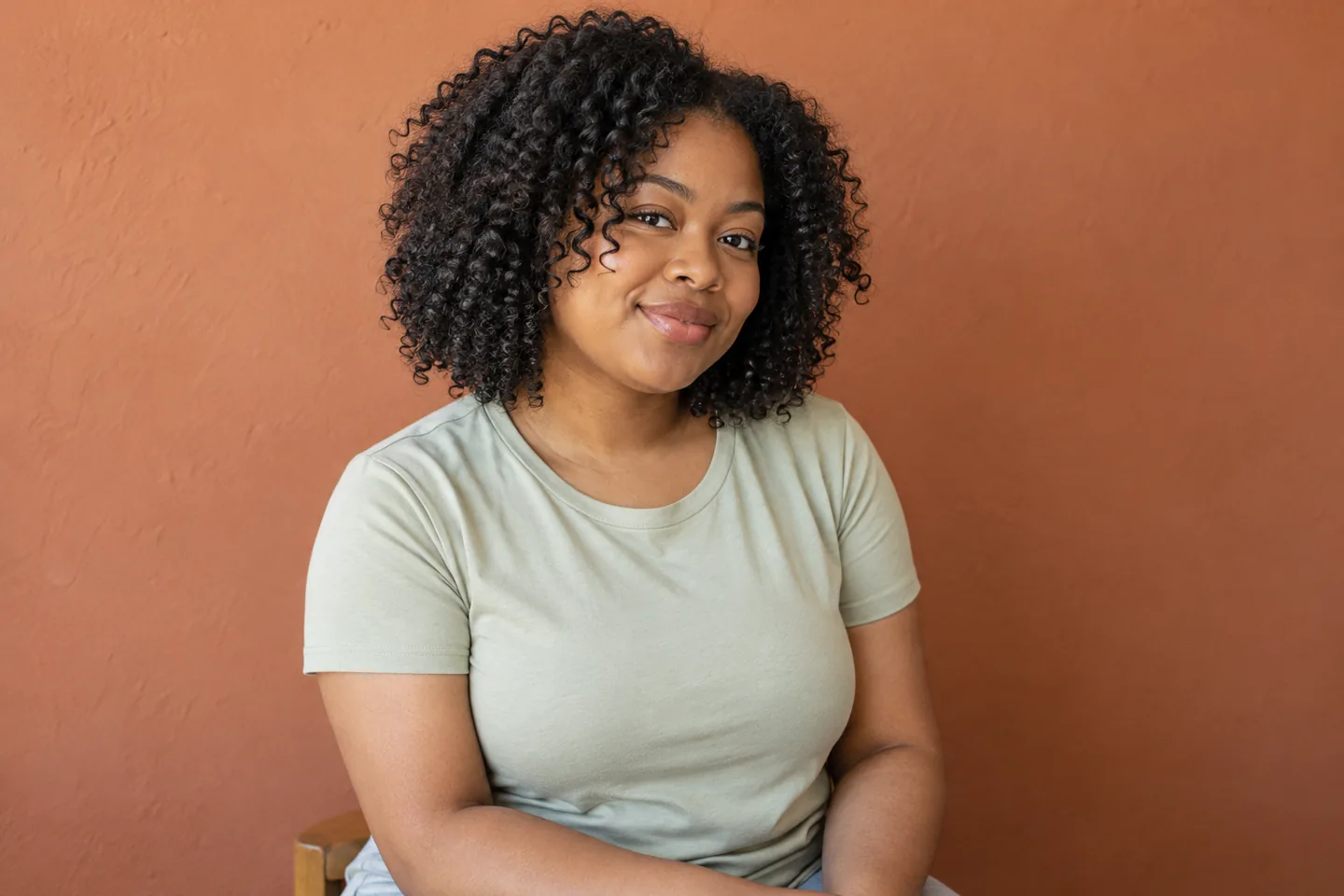
There is no need to erase lateral fullness just because a guide labels your face round. If you enjoy a rounded curly silhouette, make that a positive part of the request. Look at where the widest hair area sits and how it relates to the lower edge, then decide whether you like the combination. You may want a more compact shape, an airy outline or the volume you already have. Describe that preference without turning it into a rule that every curl must fall below the cheek or every side must lie flat.
Record your dry everyday texture before comparing styles. A smooth reference and a curly starting point can differ in more than length, making the attractive detail hard to identify. Keep an ordinary curl photograph even if another image looks more polished. If the part is the uncertain variable, our parting comparison helps separate that change from a new cut. You do not have to move the part merely because a face-shape list says to. Ask what an alternative would involve on your real growth pattern, rather than assuming a generated arrangement will stay in place.
Make the original portrait a fair starting point
Use a clear portrait with a level head, even light and enough room to see the current hair outline. Keep the face unobstructed without pulling the hair into a completely unfamiliar arrangement. Choose the camera distance and position once, then keep that original for the comparison. Do not move closer to make one style look more dramatic or tilt the head to make another seem longer. Apple's camera guide describes grid and level tools that can help with composition; they do not measure facial proportions or determine a suitable haircut.
Check the original before opening any preview. Can you see both hair edges, the forehead and the end length you intend to discuss? Is the expression ordinary rather than an exaggerated angle you cannot repeat? Remove obvious beauty-filter effects from the source you choose. If the image already changes the face or blurs the hairline, it cannot serve as an honest baseline. Keep a separate side picture for the stylist when useful, but do not pretend that a front portrait answers what happens behind the ears or across the nape.
Give Hair Muse one question, not a new identity
Start with the same original portrait in Hair Muse and explore a small set of available hairstyle directions. If your question is the lower endpoint, keep colour and texture as close as possible while comparing lengths. If it is the forehead opening, avoid adding a major colour change at the same time. The app can help you notice which visible framing you prefer, but it is not a face-slimming prescription or an objective attractiveness score. You remain free to prefer the option that a generic round-face chart would exclude.
Compare each useful result with the original immediately. Reject an image if the jaw, cheeks, eyes or head position change enough to explain the preference. Also reject an apparently attractive cut if its hair texture is not a direction you actually want. Save only the results that communicate a recognisable hairstyle question. This workflow does not promise a dedicated round-face filter, exact fringe-length control or a measurable simulation. Hair Muse is free to download; some previews or usage levels may require an in-app purchase. Check current access before planning a long series of attempts.
Test the ordinary morning that the portrait leaves out
For each remaining direction, ask what you would do after washing, on a rushed morning and when you need the hair away from your face. A short front piece may need a different arrangement from your current longer one. A smooth outline may depend on a finish you do not normally use. These are questions for the consultation, not reasons to abandon every new idea. Write the practical uncertainty next to the image so that the photograph does not silently answer it for you. A pleasing frame cannot demonstrate drying time or comfort.
Choose which compromise you would accept. You might prefer a longer front opening that stays familiar, a short outline with a different gathering routine, or no cut until a current fringe has grown. Ask how the proposed style would work with your dry texture and available styling time. Do not use extra tension, repeated heat or a forced part merely to reproduce a screen image. The shortlist should fit an ordinary week, including days when the hair is less polished than the inspiration picture. That is a more meaningful test than whether one carefully posed portrait looks flattering.
Keep a small shortlist with a reason for every image
Keep one familiar direction and one genuinely different alternative, rather than collecting a large gallery of tiny variations. Give each a plain-language reason: open cheek and familiar length; shorter outline with no new fringe; natural curls with a clearer perimeter. Include the original as a baseline, not as a bad before picture. If you cannot explain what you prefer without mentioning a thinner-looking face, return to the hair details and check whether the image has changed your features. The comparison should clarify a haircut choice, not reward an unrelated digital alteration.
Keep inspiration and preview in separate roles. An inspiration image shows a real style on another person; a generated portrait illustrates a possible direction around you. Neither proves that your hair will reproduce the example. Do not compare different identities as if they were before and after results. If the two shortlisted options require different textures or maintenance, say so explicitly. You can decide to keep the current cut after this exercise. A useful planning process does not have to end with the most dramatic change, or with another generated image after the decision is already clear.
Bring a request about hair, not a demand for a different face
Show the stylist your original, the small shortlist and your practical boundary. Explain which front opening, side fullness and lower endpoint you like, and ask what is feasible from the current cut. Discuss density, growth direction and the dry finish in person instead of treating a portrait as a technical assessment. If you are considering a bob, our length guide can help name the endpoint more clearly. Ask to agree on that endpoint and any shorter front pieces before cutting, rather than leaving everything to the phrase suitable for a round face.
A useful brief might say: keep my natural curl fullness, leave my eyes clear and discuss a shorter perimeter that does not require daily straightening. Another reader may want a straight jaw-length bob with a visible cheek. Both are legitimate preferences to assess. Choose the version you understand and want to maintain. There is no obligation to hide roundness, maximise height or make a face-shape label disappear. The successful outcome is a clear, realistic hair decision that still feels like you.