
Short haircut decisions
French bob checklist for a cut you can live with
Choose the dry endpoint, separate the fringe decision and check the exposed nape before turning a short-bob reference into a salon request.

A French bob can look wonderfully simple in a photograph and still leave several decisions unresolved. Will the ends sit at your chin when dry? Does the fringe need resetting before work? Can you still tuck the sides away? Those questions matter more than copying a picture's mood. A short shape places its perimeter close to your face and exposes more of the neck, so a small change in length can feel substantial even when both versions carry the same style name.
Start with the hair you actually wear on an ordinary morning. This guide helps you define the short outline, assess the front separately and bring clear boundaries to the salon. Hair Muse can help you explore the overall visual effect on your own photo, but a preview cannot establish your curl spring, the cutting method or the final result. The photographs here illustrate different planning steps; they are not a before-and-after test or a promise about your hair.
French bob planning starts with three separate choices
Treat the style as three decisions: where the lower edge sits, how the front frames the forehead, and how much natural movement remains visible. You might want a short perimeter but no new fringe, or a soft fringe while keeping a slightly longer side. Give each choice a reason. Perhaps you want to see more of your jaw, avoid hair touching a necklace, or retain an easy ear tuck. A reason gives the stylist something useful to adapt when your reference and your own hair differ.
Do not begin by deciding which face shape is allowed to wear the cut. Look instead at the balance you personally enjoy when the hair is loose. A compact dark outline may feel strong; a broken wave pattern may feel softer. Neither is an objective improvement. If the real uncertainty is whether you want a short bob at all, settle the broad length question before adding a fringe and texture change. Combining all three immediately makes it difficult to recognise which part of a preview you liked.
Agree the endpoint on dry hair, with your head level
The French bob generally refers to a short outline around the chin or higher, often accompanied by a fringe and visible texture. That is a starting description, not one mandatory measurement. On your own dry hair, indicate where you would be comfortable seeing the front finish. Keep your head level and shoulders relaxed. Looking downward in a mirror changes the relationship between your chin, neck and hair; stretching a wave straight also hides information that the finished haircut needs to respect.
Choose a preferred endpoint and a shortest acceptable boundary. They need not be the same. You might like an image just above the chin but want the first appointment to retain a little more length while you learn the routine. Explain that boundary before cutting begins. A temporary fold or loose tuck can suggest how much neck will show, but it cannot reproduce a cut perimeter. Leave the scissors to a professional, and ask how the chosen endpoint will be checked once your hair has dried into its normal pattern.
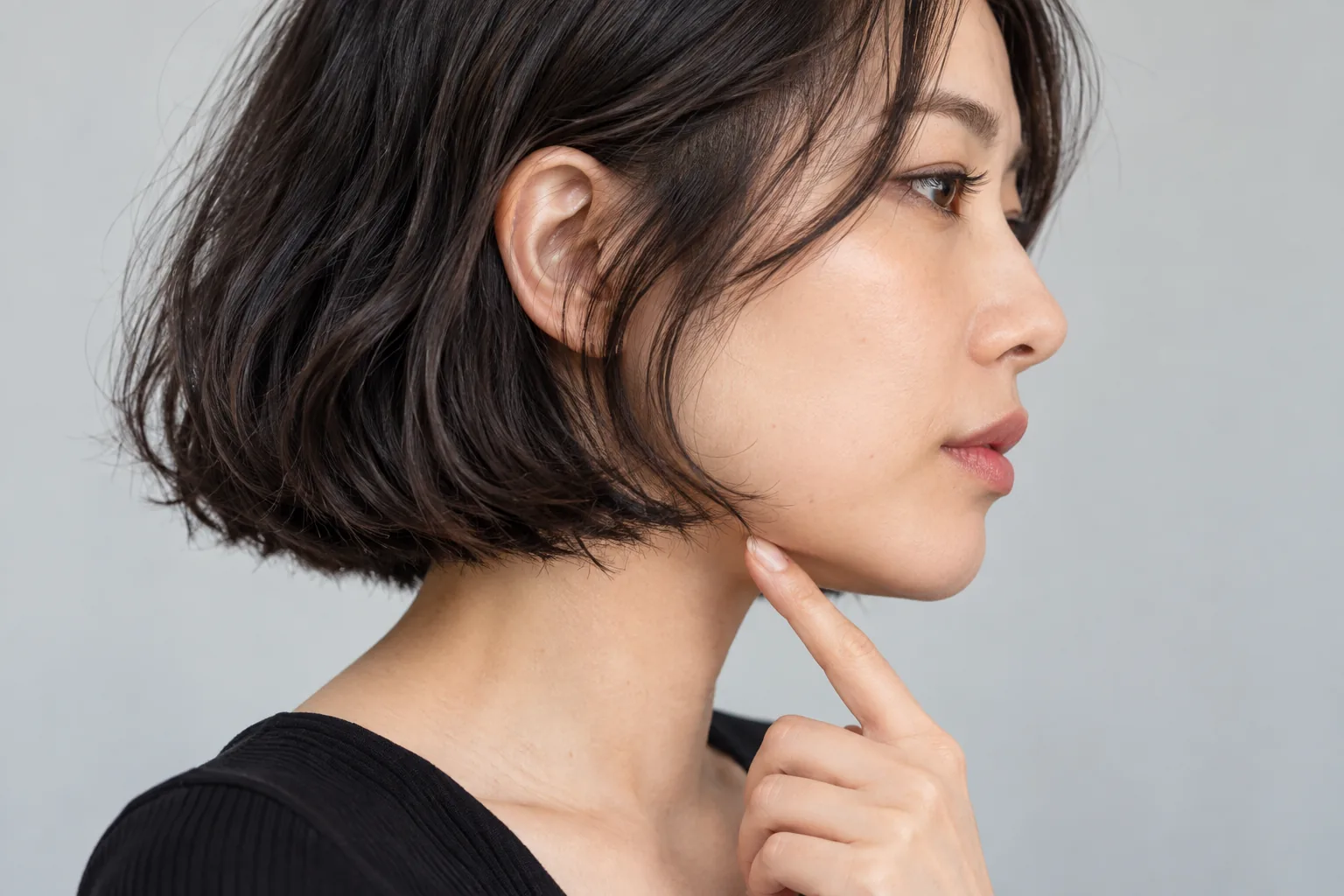
Let natural texture explain the side shape
Look at your normal dry hair from the front and side before smoothing it into a reference style. Where does a wave turn outward? Does one side sit higher after washing? Are the ends dense or see-through? Describe those observations rather than asking the stylist to remove all volume. At a short length, the location of fullness matters: weight beside the cheek, near the jaw and at the back can create different impressions even when the front endpoint is similar.
Bring one photograph of your everyday finish along with the inspiration image. If you normally wear curls, say whether you want them to remain grouped or prefer a more expanded shape. If your hair is straight, decide whether the appeal is the sharp edge itself or waves that someone created for the photo. Ask the stylist what would require styling and what can come from the cut. A photograph cannot tell you exactly how much internal weight to remove, and a texture label alone is not a cutting instruction.
Make the fringe a second decision, not an automatic extra
Before choosing a fringe, notice your front growth direction, your usual part and whether you touch the hair around your eyes during the day. Put on the glasses you regularly wear. A fringe that looks appealing above an unobstructed face may feel different against frames or after a hat comes off. You can indicate the space you want to keep clear, but folding longer hair across the forehead does not predict how a freshly cut fringe will settle.
Decide what you can comfortably maintain: an open front, a light fringe, or a fuller line. Ask how the front could be adjusted later without shortening the entire bob. Keeping the front unchanged at the first appointment can also be a deliberate choice, especially if length is already a major change. Do not add a very short fringe merely because it makes the reference look more recognisably French. Your tolerance for a reset, a trim and hair near the eyes belongs in the decision from the beginning.

Use one clear photo for a controlled Hair Muse comparison
Take a front-facing portrait in even daylight with the whole current hair outline visible. Keep your expression and head angle neutral, and avoid a filter that smooths the face or changes the hairline. In Hair Muse, explore a short bob direction on that source photo. First compare two meaningful lengths while keeping the colour and fringe direction as similar as possible. Then, if the shorter outline still appeals, consider the front. Use the comparison to describe your preference, not to extract centimetres from generated pixels.
Reject a result that changes your face substantially, invents unrealistic density or makes the hairline hard to read. Save a small shortlist you can explain: one preferred outline and perhaps one slightly longer fallback. Describe the relevant difference in your own words. Hair Muse is free to download, while some previews or usage levels may require an in-app purchase. It is a visual planning aid, not a simulation of hair physics, a guarantee of an available exact preset, or an assessment of salon feasibility.

Discuss the nape and ear tuck outside the front preview
A front view leaves important parts of a short bob unresolved. Ask where the back will finish, whether the nape will be exposed and how the line connects to the sides. Tell the stylist if you dislike a clipped neck or a strongly raised back. Do not assume that a front-facing preview specifies either detail. A back reference can help communicate an outline, but it should show a real haircut rather than an image whose hidden geometry you are guessing.
Try your ordinary movements during the consultation: turn your head, tuck a side behind your ear and look down as you would at a desk. Explain if you depend on a ponytail for work or exercise. A very short bob may leave sections that cannot reach the same tie; tighter pulling is not a useful solution. Discuss comfortable clips, a soft band or a longer starting length. If the stylist proposes a different back shape, ask what visible problem it solves and confirm the amount of neck you are willing to expose.
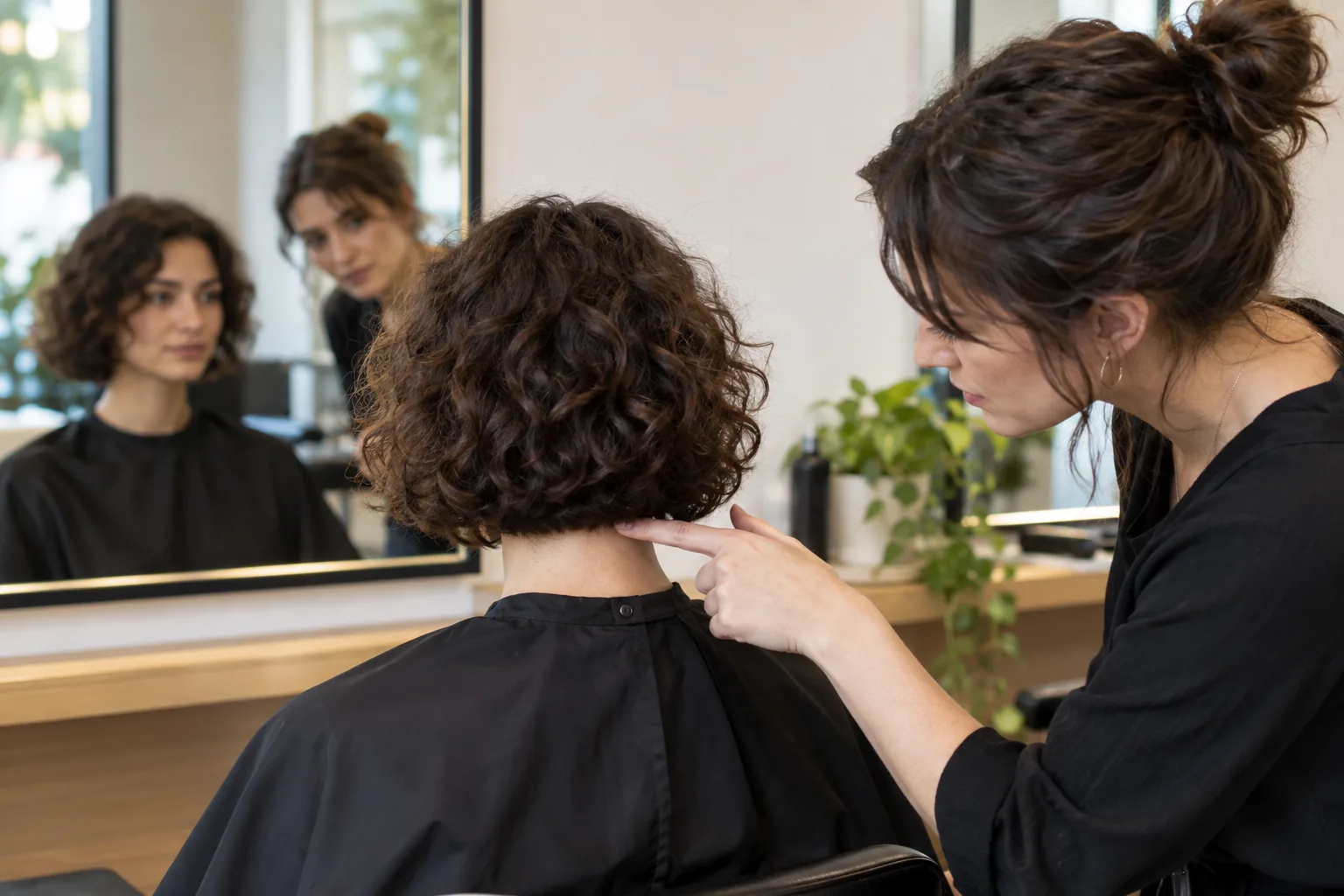
Test the ordinary morning, not the styled photograph
Describe a realistic morning to your stylist. Do you wash at night, leave with damp hair, wear a headset, or need the front clear while cooking? Choose the two habits that are hardest to change. Ask for a demonstration of the finish you are willing to repeat and whether it depends on tools you already use. The word effortless in a caption is not evidence that your own version will require no work. Product recommendations should follow an observed need rather than becoming the price of liking the haircut.
If the proposed finish relies on heat, factor that into the decision. The American Academy of Dermatology advises limiting heat exposure; a short cut does not make repeated hot-tool use harmless. Ask about an acceptable finish with less styling, then decide whether you like that version too. Agree a review based on how the fringe, perimeter and comfort change, rather than copying a universal trim interval. You can prefer a softer grown-out outline while still wanting the front kept clear; those are separate maintenance choices.
Leave with a brief that can survive a change of reference
Summarise the decision before the appointment proceeds: your preferred dry front endpoint, the shortest acceptable boundary, the chosen front, the nape you want and your everyday finish. Add one thing you do not want, such as a very short fringe or a clipped neck. Show the saved preview alongside your current hair photo. Ask the stylist to explain any adaptation in plain language, including whether it changes the length, fullness or amount of styling you expected.
A workable decision might be to keep the first cut a little longer, postpone the fringe or choose a different bob altogether. That is useful information from the planning process. Before leaving, check the dry front and side with your head level, look at the back and practise the small reset you discussed. Keep those observations for the next review. The goal is a short shape you can recognise and manage in your own life, with agreed boundaries rather than a promise to reproduce every strand in a photograph.