
Haircut planning
How to compare a haircut with and without glasses
A focused way to judge fringe, face framing, temple comfort, and everyday balance when your frames are part of the look.

Glasses are not an obstacle to finding a haircut. They are simply one of the visible, practical elements that the cut needs to share space with. A fringe can overlap a frame, a side section can sit over or under the arms, and a shape that feels balanced without glasses can read differently once the frames return. Comparing both versions helps you separate a haircut preference from a single styled photograph.
An AI hairstyle preview can support that comparison when you keep the source photo and haircut direction consistent. It cannot tell you how real strands will catch on a hinge, how a fringe will move through the day, or how a cut should be constructed for your texture. The useful outcome is a short list of visual preferences and comfort questions that a qualified stylist can assess in person.
Treat your glasses as part of the everyday baseline
Start with the pair you wear most often. The relevant details are not whether the frames are fashionable or supposedly suited to a face shape, but how they occupy space: the height of the top rim, the width at the temples, the thickness of the arms, and where the frames sit on the nose. These features change the area available for a fringe and the way side pieces fall.
Take one clear front-facing photo with the glasses in their normal position and a second without them. Keep your head, expression, parting, crop, distance, and light as similar as possible. If you regularly alternate between two very different pairs, finish the first comparison before repeating it with the second. Changing frames, haircut, pose, and lighting at once makes it hard to understand what changed your reaction.
- Everyday pair: the frames that should guide the first comparison
- Stable conditions: the same source setup, hair condition, crop, and light
- Real placement: glasses resting where you actually wear them, not pushed up for the photo
Compare the eye and brow area before judging the whole look
The upper edge of a frame and the lower edge of a fringe can create a visually busy band around the eyes. That is not automatically a problem. Some people enjoy the strong layered effect; others prefer a little separation. In each preview, look at how much brow and forehead remains visible, whether the fringe repeatedly meets the frame, and whether the eyes still feel like the point of focus you want.
Describe the relationship rather than labeling it flattering or unflattering. You might prefer a fringe that clears the top rim, separates near the center, or extends beyond the outer corners before joining the side sections. These are useful design observations. A stylist can then explain how length, density, growth direction, and normal styling may affect that relationship on your actual hair.
A useful note is specific: “I like a little space between the fringe and the top of my frames.”
Check what happens at the temples and frame arms
The temple is where hair and glasses interact most physically. Short pieces may sit above the arm, longer pieces may cover it, and some lengths may switch between the two as you move. In a still image, inspect where the side section begins and whether it appears light, full, tucked, or pushed outward. Then test the same zone with your current hair by putting the glasses on, taking them off, and tucking the section behind the ear.
A preview cannot reproduce the exact thickness, bend, spring, or friction of your strands. It may show an elegant section lying perfectly beside the frame even when your hair tends to lift there. Treat that clean edge as a direction, not a promise. If temple comfort matters, bring the physical glasses to the appointment and ask the stylist to check the proposed length while you wear them normally.
Review side pieces, ears, and the profile together
Turn to a consistent side photo after the front comparison. Look at how the frame arm travels toward the ear, whether the haircut leaves that line visible, and where the shortest side pieces end. A cut may feel open from the front but place a dense section directly over the hinge from the side. Another may expose the ear more than expected when the hair is tucked back.
Decide which actions need to remain easy. You may want to tuck both sides, keep one side forward, remove your glasses without rearranging the hair, or switch between glasses and contact lenses. These are routine choices, not style rules. Add them to the comparison so that the selected shape supports how you actually move through the day.
- Glasses on: does the side section sit where you expect?
- Glasses off: does the haircut still feel complete to you?
- Hair tucked: is the ear and temple area a shape you enjoy?
- Frames removed and replaced: do the same strands need constant resetting?

Build a controlled preview set
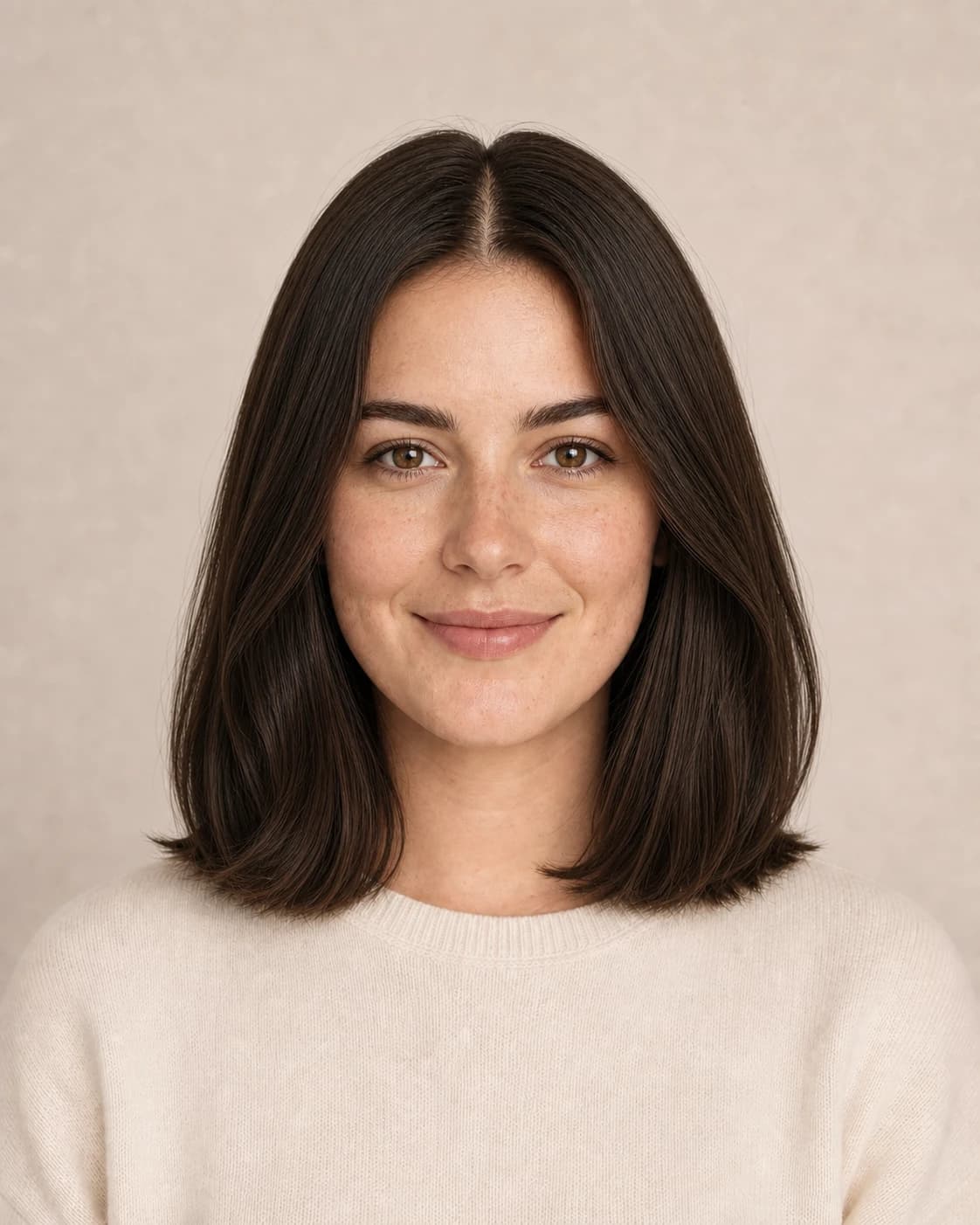
Use one well-lit portrait and compare only two or three versions of the same haircut idea. For example, keep the overall length and texture direction stable while testing an eyebrow-length fringe, a split longer fringe, and no fringe. Or keep the fringe fixed while comparing face-framing pieces that finish near the cheek, jaw, or below the frame arm. A small controlled set reveals more than a gallery of unrelated looks.
Make both a glasses-on and glasses-off version when the tool and source photos allow it, but do not expect the generated haircut to remain perfectly identical across separate images. Look for repeated preferences instead: more space above the frame, a softer temple section, a visible ear, or a longer piece that can be tucked. If one render changes the face, frames, or haircut too much, discard it rather than explaining away the inconsistency.
Compare relationships, not pixels. Generated images are visual drafts and may not preserve exact geometry between versions.
Separate frame impact from haircut impact
When you review the images, cover one variable at a time. First look at the haircut outline from a distance: overall length, width, crown, and perimeter. Then zoom in on the eye, temple, and ear zones. Finally compare the same haircut without the glasses. This sequence helps reveal whether you dislike the haircut itself or only a crowded overlap at one point.
It can also show that a minor adjustment is enough. A little more separation in the fringe, a longer temple piece, a different parting, or less bulk beside the hinge may preserve the haircut direction you liked. Do not redesign the entire cut simply because one generated detail looks awkward. Mark the local issue and let a stylist consider ways to address it without compromising the structure.
Turn the comparison into a salon brief
Bring the glasses you wear most, your unedited source photo, and no more than two or three selected previews. For each image, identify one detail to keep and one question to resolve. You might want to preserve an open fringe while asking whether the side length will catch on the arm, or keep a cheek-length piece while checking whether it can tuck securely behind the ear.
Explain when you wear glasses and how often you change pairs. Show the stylist how you normally position the frames and how you move the hair when putting them on. The stylist can assess density, texture, growth patterns, current length, and the real contact points around the temple and ear. That physical assessment is what turns a visual preference into a workable cutting and styling plan.
- Visual priority: the fringe, outline, or face-framing relationship you want to keep
- Comfort priority: the area that must not pull, catch, or need repeated adjustment
- Flexibility priority: how the cut should work with glasses on, off, or changed
- Professional question: what the preview cannot reveal about structure or behavior
Choose the version that survives an ordinary day
Before committing, run a simple movement check with your current hair and glasses. Look down, turn your head, tuck and untuck the sides, remove the frames with one hand, and put them back on. Notice which areas you automatically adjust. You are not trying to simulate the future cut exactly; you are identifying the habits and contact points that the plan should respect.
Finish with a preferred version and a more adaptable alternative. The second might use a longer fringe, fewer short temple pieces, or enough side length to move above, below, or behind the frame arm. A good choice does not need to make the glasses disappear or turn them into the centerpiece. It should let the haircut and frames coexist in a way that feels visually clear, physically comfortable, and realistic for your routine.